TrekGuider @trekguider
Backpack or Rolling Bag? A Solo Traveler's Route Checklist
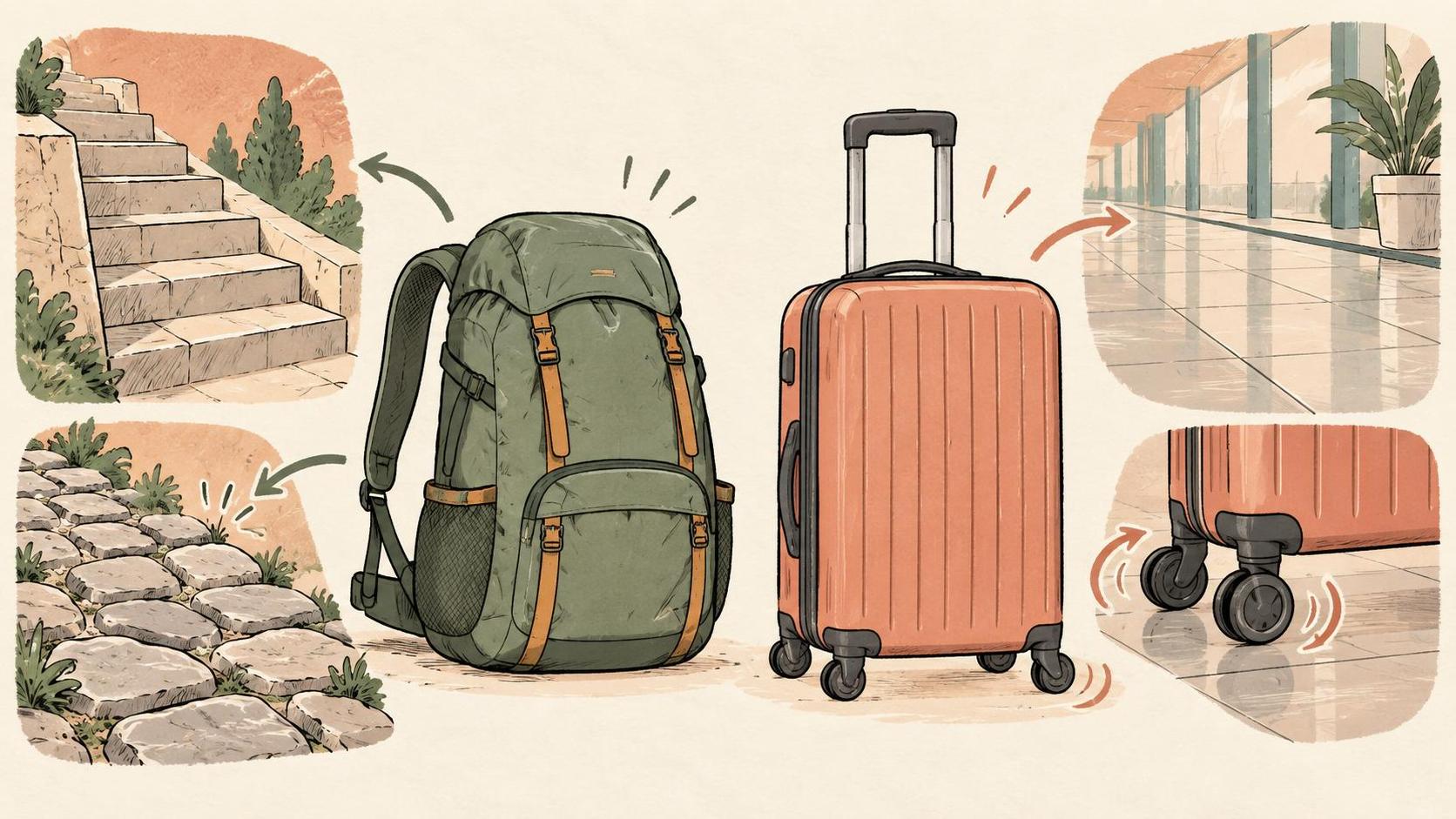
You do not need a universal answer to the backpack-versus-rolling-bag question. You need a bag that works on your route and that you can manage without help. This checklist turns your itinerary into a set of practical tests, from the arrival terminal to your room. Finish by trying your shortlisted bag with the load you actually plan to take.
Start with your actual route
Write down how you will get from each arrival point to your accommodation, including transfers between vehicles and the final walk. Note which parts are confirmed and which you still need to check. If a detail is uncertain, such as whether your lodging has a lift, ask before treating it as part of your plan. The broader solo travel packing guide can help you decide what belongs in the bag before you compare ways to carry it.
For each leg, picture yourself moving both the main bag and any day bag you will carry. A smooth airport floor may be easy with wheels, while the walk after a train or bus could be the harder part. Give extra attention to the legs you cannot shorten or avoid. The choice should fit those stretches, not just the easiest few minutes of the trip.
Count stairs and awkward lifts
Mark every place where wheels stop helping: steps, boarding points, a raised doorway or a walk-up room. You do not need a perfect stair count. You need to know whether lifting the bag is an occasional inconvenience or a repeated part of the day. Check the route into your lodging as well as the route to it.
A rolling bag still has to be lifted at times, so ask whether you can raise your packed bag safely and set it down in control. For a backpack, ask whether you can put it on and take it off in the space available. If neither feels manageable, reduce the load or reconsider the route instead of assuming you can rely on help.
- Record steps or other lift points on each transfer.
- Check whether your room is reached by stairs or a lift.
- Identify where you would need to handle the bag while holding another item.
Check the ground under your bag
Separate smooth flooring from rough paving, gravel and other uneven stretches. Then estimate how long you would travel across each surface with luggage. A short patch may be easy to carry a wheeled bag across; a longer walk changes the decision. If you cannot confirm the surface, keep that uncertainty on your list for the loaded test.
Think about where you would need a free hand. A backpack may leave your hands available while walking, but only if its load is comfortable for you. A rolling bag avoids wearing that load on your back, but it occupies a hand while you pull or guide it. Neither advantage matters if the bag is difficult for you to control.
Compare the trade-offs, not the labels
Use your route notes to make a provisional choice. Do not assume that every backpack is light, every rolling bag is easy to lift or every wheeled route is smooth. Compare the specific bags you could take, including how much each weighs empty and how easily you can access what you need during a transfer.
If your trip includes frequent stairs or rough walking surfaces, give carrying and lifting greater weight in the decision. If it is mostly smooth, level travel, check whether rolling lets you move more comfortably. Either way, the best option is the one whose difficult moments you can handle with your planned load.
| Trip factor | Backpack question | Rolling-bag question |
|---|---|---|
| Stairs | Can you wear the load comfortably? | Can you lift the packed bag? |
| Uneven ground | Can you carry it for that stretch? | Can you carry it where it will not roll? |
| Long smooth walk | Can you sustain the load? | Can you guide it comfortably? |
| Transfers | Can you put it on and remove it easily? | Can you control it alongside your other items? |
Verify baggage rules before you commit
If you plan to fly, check the current baggage terms for every carrier on your booking. Look at the allowance attached to your specific fare, not just a general page about cabin bags. Record permitted dimensions and weight, what counts as a separate personal item, and any charges or steps that apply if your bag cannot travel in the cabin.
Measure each shortlisted bag as it will travel, including its wheels, handle and any filled exterior pockets. Weigh it with the items you expect to pack. Do not treat a bag marketed as carry-on size as proof that it meets your booking's terms. If a limit is unclear, resolve it with the carrier before making the bag your plan.
Test a realistic load
Pack the clothes, toiletries, electronics and other items you expect to bring. Include the day bag if you will carry one separately. If the load is too heavy or awkward, revise the contents before judging the luggage. A seven-day carry-on laundry plan is one way to see whether a planned wash could reduce the clothing you need to carry.
Try the bag in a safe setting that approximates your trip: walk for a sustained period, turn through a narrow space, stop to retrieve an item and lift it onto a stable surface you can reach. If you can test both candidates, use the same contents. Notice strain, balance and how easily you recover after each stop, rather than judging only the first minute.
Make the choice and name its weak point
Write a one-sentence decision: which bag you will take and which part of the itinerary decided it. Then name the drawback you still expect to manage. For a backpack, that might be a long walk with the load on your shoulders; for a rolling bag, it might be a set of steps where you must carry it.
Plan around that weak point before departure. You might lighten the load, confirm a step-free route or allow more time for a difficult transfer. Repeat the loaded test after any substantial packing change. The goal is not a perfect bag for every trip, but a choice whose limitations you know before you leave.



Comments 0
No comments yet
Be the first to share your experience!
You May Also Like
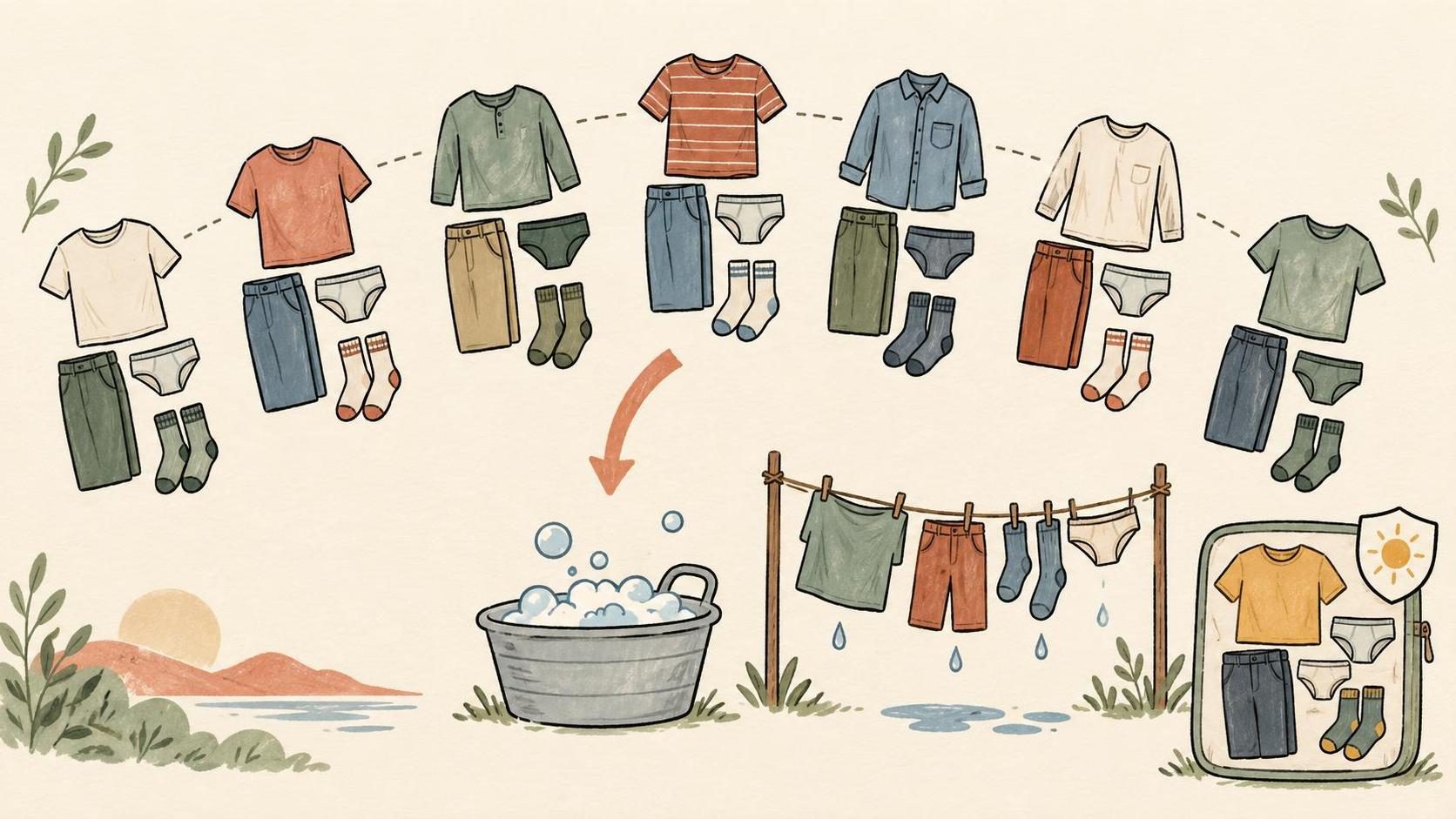
A Seven-Day Carry-On Laundry Plan for Solo Travelers


11 Essential Solo Travel Safety Tips You Need to Know

How to Meet People While Traveling Solo (Without Being Awkward)

The 10 Best Countries for a First Solo Trip in 2026

The Minimalist Solo Travel Packing List: A Complete Guide