

TrekGuider @trekguider
A Seven-Day Carry-On Laundry Plan for Solo Travelers
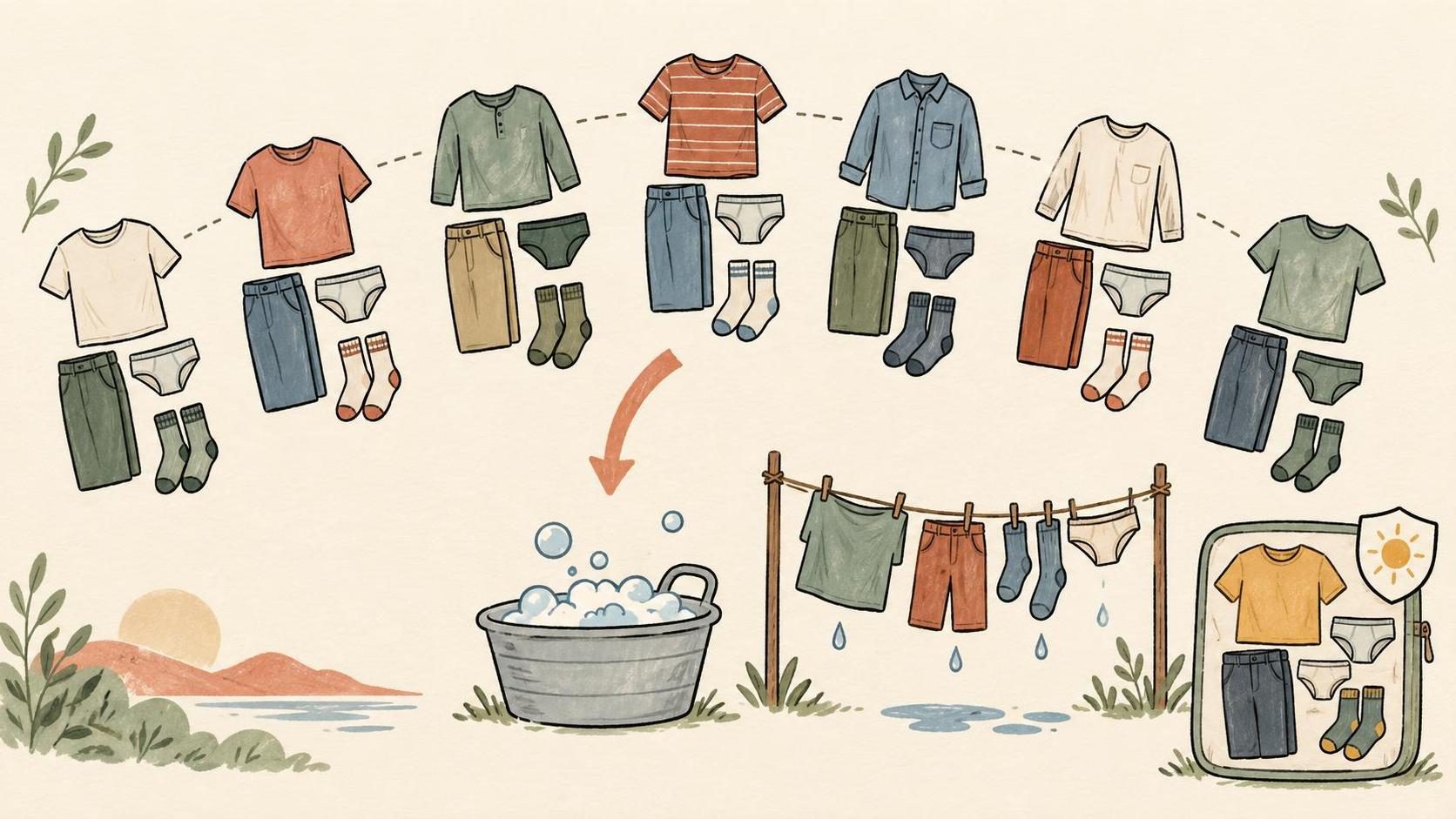
You do not need a fresh outfit for every day of a one-week solo trip, but you do need a plan for when clothes get dirty. This checklist helps you choose one laundry opportunity, map a small carry-on clothing rotation and protect a dry backup. It is a working example, not a universal garment count: adjust it for your activities, access to laundry and the care labels on your clothes.
Choose the laundry stop before you leave
Put one laundry window around day four on your itinerary. Look for an option you can actually use near that night's accommodation, such as a guest-access washer, a laundromat or a laundry service. Check opening hours, access rules, payment method and whether you must collect a service wash later. If none fits, move the stop to another day or bring enough clean clothes to cover the gap.
Leave room on both sides of the stop. Washing may be possible on day four without everything being ready to wear on day five. If you change accommodation the next morning, a service with a later collection time or a place to hang clothes may be a poor fit. Ask your host about laundry access rather than assuming you can wash or hang items in the room.
Check the clothes and the rules
For this example, start with three tops, two bottoms and five sets of underwear and socks, counting what you wear in transit. Set aside one top and one underwear-and-socks set as your clean reserve. This is a planning model, not a recommendation to wear dirty clothes: add items if your activities, comfort or access to washing call for them. The broader solo travel packing guide covers the bag-level decisions this laundry plan leaves out.
Read each garment's care label before assigning it to the laundry stop. Check whether it can be machine washed, which temperature and drying methods are permitted, and whether it needs separate handling. Do not put an item in a dryer simply to make the schedule work. If you plan to wash anything by hand, confirm that your accommodation permits it and has an appropriate place for the item to dry without dripping on furniture or floors.
Map the seven days
The table shows when to use clean items and when to check what needs washing. It does not prescribe how often to rewear a top or bottom. Make that call from the garment's condition, your activity and your comfort; wash sooner if the example stops fitting your trip.
| Day | Clothing decision | Laundry decision |
|---|---|---|
| 1 | Wear your travel outfit and set 1. | Keep the reserve top and set separate. |
| 2 | Change to set 2; choose a suitable top. | Place used items in the laundry bag. |
| 3 | Change to set 3; assess tops and bottoms. | Confirm tomorrow's laundry access. |
| 4 | Wear set 4 and a clean or suitable outfit. | Wash used items without washing your reserve. |
| 5 | Use the dry reserve if washed items are damp. | Check whether the washed items are ready. |
| 6 | Use clean, dry items from the wash. | Arrange another wash or supplies if they are not ready. |
| 7 | Wear a clean, dry outfit for departure. | Do not pack damp items against dry clothes. |
Keep a genuinely dry outfit in reserve
Protect the reserve top and fifth underwear-and-socks set from the day-four wash. Your second bottom can serve as the dry bottom if you need to wash the first, but only if you have kept it clean and available. Before starting laundry, identify exactly what you will wear while the load is being processed. If that leaves you without a complete wearable outfit, reduce the load or move the wash.
A separate bag or compartment can help you avoid mixing clean reserves with used clothing. It is a reminder, not a substitute for checking the clothes: a spare that got wet or dirty during the trip is no longer your dry backup. Reassess the plan each evening rather than waiting until you have worn the last clean set.
If the wash is still damp
Wear the dry reserve on day five and give permitted items more time in an appropriate drying space. Follow the care label and accommodation rules; do not improvise with prohibited heat or hang dripping garments where they could cause damage. Drying needs vary by garment and conditions, so treat the next day's outfit as a backup rather than a drying-time promise.
If items remain damp after you use the reserve, change the plan before you run out of wearable clothes. Check whether a permitted dryer, laundry service or another wash stop is available, or obtain a needed basic item locally. Keep wet items apart from dry clothes while you solve the problem, and check them before packing for your next move.
Run the final pre-trip check
Lay out the travel outfit, the protected reserve and the items intended for the day-four wash. Check care labels, then verify the laundry option against your actual itinerary, including when you can use it and where clothes may dry. If an early departure, strenuous activity or limited laundry access breaks the seven-day example, adjust the rotation now rather than relying on an untested drying window.
- I have a workable laundry opportunity and a fallback if it is unavailable.
- I know what I will wear while clothes are being washed.
- My reserve top and underwear-and-socks set will stay clean and dry.
- My washing and drying plan follows care labels and accommodation rules.




Comments 0
No comments yet
Be the first to share your experience!
You May Also Like

Walt Disney World to Open Seven New Attractions on the Same Day May 26


Universal Kids Resort in Frisco Confirms 31 Attractions Across Seven Lands

Japan's Seven Stars Luxury Train Launches New Kyushu Itineraries

Ginger Goa, Arpora opens in North Goa

Bilt adds Amtrak Guest Rewards points transfers
