



About
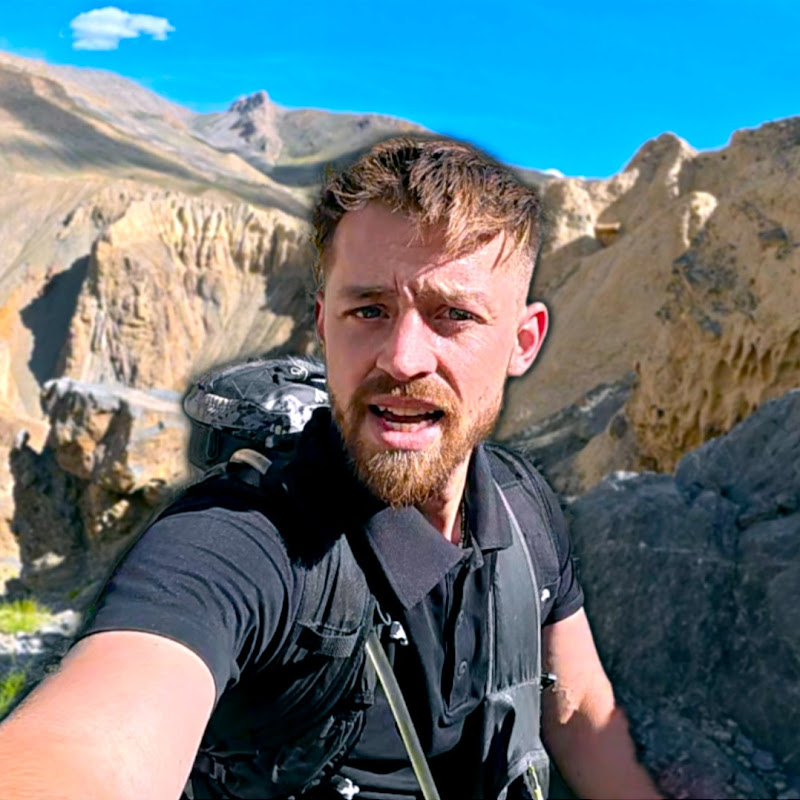
In the fall of 2025, Harry Jackson, a British national from Felixstowe, Suffolk, was just another adventure vlogger chronicling a massive overland journey. Operating under the handle “wehatethecold,” his YouTube channel was a modest affair, documenting his ambitious motorcycle trip from Thailand to the United Kingdom for a small but dedicated audience. His stated mission was personal: “Throwing myself into weird situations to overcome fear.” He had no idea how profoundly that mission would be tested. When he rolled into Kathmandu, Nepal, his journey collided with a nation on the brink of revolt, transforming his travelogue into a vital source of frontline citizen journalism and catapulting him into the international spotlight.
wehatethecold: History and Growth
Before the global recognition, Harry Jackson’s story was one of personal struggle and recovery. On his official GoFundMe fundraising page, he is unflinchingly candid, identifying as a “recovering addict.” He details a harrowing past where, by the age of 22, he had endured four hospitalizations, multiple overdoses, and a seizure directly related to his addiction. He credits a crucial six-month course of paid therapy with saving his life, a private intervention he pursued due to what he saw as a lack of accessible support from the UK’s National Health Service (NHS). This experience would become the bedrock of his later philanthropic work.
The “wehatethecold” YouTube channel, created on September 14, 2022, was an extension of his new path. The channel’s central narrative was the “Thailand to UK on 2 Wheels” journey, an arduous expedition that also included a 3,600km solo bicycle trek through Vietnam. His content veered into niche interests like war history and geopolitics, with videos exploring former CIA bases in Laos. The channel grew slowly, and by early September 2025, it had amassed a following of approximately 7,000 subscribers, with his videos typically garnering fewer than 50,000 views.
This trajectory was permanently altered upon his arrival in Nepal. His plan was simple: arrange to fly his motorcycle to Dubai to continue the trip west. Instead, he found himself in the epicenter of the “Gen Z protests,” a wave of civil unrest initially sparked by a government ban on 26 social media platforms that had metastasized into a broader movement against state corruption. On or around September 9, 2025, confined by a government-imposed curfew, Jackson uploaded “The side of Nepal the media won’t show you 🇳🇵.” The video was a raw, unfiltered document of the chaos, capturing street-level footage of burning vehicles near the parliament complex, clashes between protestors and riot police, and the deployment of tear gas.
The impact was immediate and explosive. The video went viral, accumulating over 29 million views. In a matter of days, the channel’s subscriber count surged from 7,000 to over 470,000, continuing its climb to the current 694,000. A little-known travel vlog had become a global phenomenon.
wehatethecold: Content and Style
Jackson’s content has always been defined by its raw, long-form, first-person style. He did not adopt the persona of a journalist in Nepal; rather, the world began to see his established vlogging style as a form of journalism. The unfiltered, immersive quality that characterized his earlier travel videos—exploring remote locations and sharing personal reflections—was precisely what made his protest coverage so compelling and authentic to a global audience starved for on-the-ground perspectives. He never altered his approach; the context surrounding him changed dramatically, proving the power of his existing format when applied to a high-stakes, breaking news event.
How wehatethecold Makes Money
Beyond YouTube, Jackson has cultivated a digital network under the consistent “wehatethecold” brand. His official website, wehatethecold.com, serves as a hub for written content, with a stated mission of creating a library of in-depth travel guides authored by locals or long-term residents. A dedicated page on the site listing his camera equipment strongly indicates the use of affiliate marketing for monetization. Research confirmed that a similarly named domain, ihatethecold.com, was an unrelated and now-defunct Canadian e-commerce business that sold hand warmers, with no connection to Jackson.
Direct fan support is a cornerstone of his model. He operates a Patreon account (patreon.com/wehatethecold), offering subscribers access to exclusive content like extended cuts, deleted scenes, and early video releases. For more casual, one-time contributions, he utilizes the platform Buy Me a Coffee (buymeacoffee.com/wehatethecold), often framing it in his video descriptions as a way for viewers to buy him a cup of tea. While his primary presence is on YouTube and Instagram (@wehatethecold), no official, creator-verified accounts have been authenticated on X (formerly Twitter) or Facebook. A TikTok account, @WeHateTheCold, was mentioned in one media report but remains unconfirmed, as it is not linked from any of Jackson’s high-confidence platforms.
wehatethecold's Collaborations
The viral nature of his Nepal footage drew significant media attention. Outlets including the Hindustan Times, NDTV, India Today, and the UK-based East Anglian Daily Times covered his story, consistently framing him as an “accidental reporter” or “unlikely conflict reporter.” This narrative highlighted his unique position as an independent creator providing a view of the unrest largely inaccessible to traditional news crews.
Rather than pivoting to Western media, Jackson engaged directly with the Nepali creative community. He participated in an exclusive interview with a local channel called “Top News” and appeared on podcasts with hosts Sajan Shrestha and Bibha Thapa. This approach demonstrated a reciprocal respect, allowing him to share his experience with the community at the heart of the story while simultaneously elevating the platforms of local Nepali creators.
wehatethecold: Public Reception
The public reception to Jackson’s work in Kathmandu was overwhelmingly positive, especially among the protestors themselves, who reportedly thanked him for bringing global awareness to their cause. However, his newfound prominence brought significant challenges. The channel’s most critical video, “The side of Nepal the media won’t show you 🇳🇵”, was abruptly removed from YouTube following a copyright claim filed by an entity identified as “Culture Machine Music.”
Jackson immediately contested the takedown, declaring it was composed entirely of his own footage with no copyrighted music. He publicly labeled the action a “cover up of history and a completely false accusation.” His audience rallied behind him, with discussions on platforms like Reddit condemning the move as a blatant, politically motivated act of censorship designed to suppress documentation of the protests. Following Jackson’s formal dispute and the public outcry, YouTube eventually reinstated the video. The incident stands as a stark example on how automated copyright systems like Content ID can be weaponized, intentionally or not, to temporarily silence vital works of citizen journalism.
wehatethecold: Philanthropy
A central pillar of the “wehatethecold” brand is its philanthropic mission. Jackson operates a GoFundMe campaign titled “Thailand to UK on 2-wheels for mental health and addiction,” directly linking his physical journey with his personal cause. The fundraiser’s page provides the most detailed public account of his own history with addiction and recovery, creating a powerful, authentic link between his past, his present adventure, and his goal to help others. He explicitly states in his video descriptions that “100% goes to charity,” aiming to fund mental health and addiction services he believes are under-supported by the public health system in the United Kingdom.
wehatethecold Today
Harry Jackson began a journey to conquer his own fears and ended up documenting a nation’s fight for its future. His transformation from a niche travel vlogger into an internationally cited source of news was not a planned career move but the consequence of being in the right place at a historic moment, armed with a camera and an unfiltered style that resonated globally. Today, with a subscriber base of 694,000 and over 40 million total views, his channel exists in a unique space between adventure travelogue and citizen journalism. The “accidental reporter” from Suffolk continues his journey, his platform now amplified, carrying both the story of his own recovery and the unfiltered stories of the world he travels through.