


About
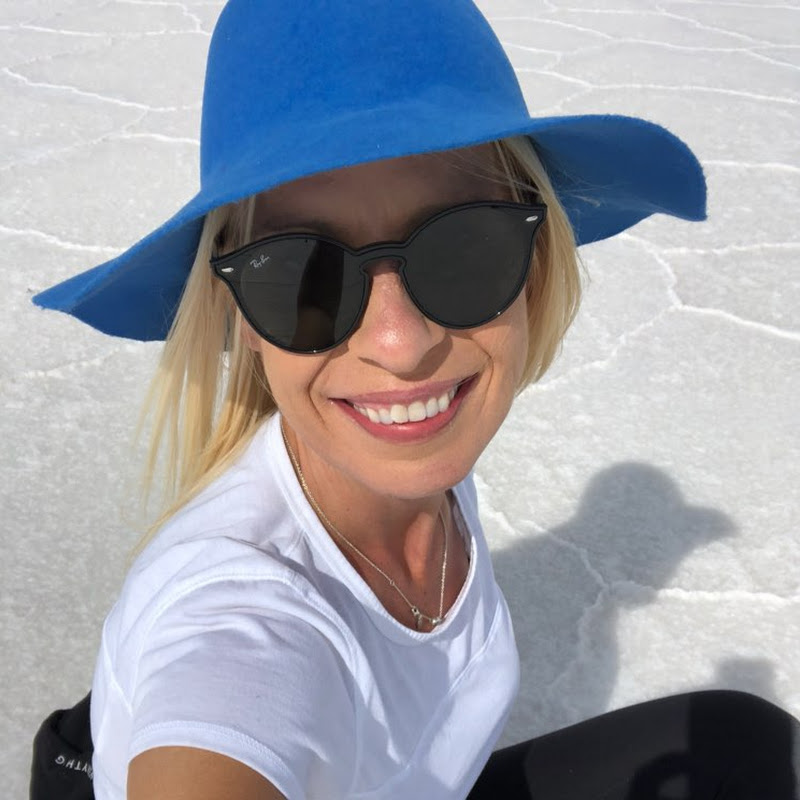
Emma Witters, the 57-year-old Scottish vlogger known to her 142,000 subscribers as “Wandering Emma,” built a channel on a singular premise: to travel to the world’s most misunderstood places and find the humanity the headlines ignored. From the markets of Baghdad to Taliban-controlled Afghanistan, her camera captured a world of warmth and resilience. Her final, three-month journey through the Occupied West Bank in early 2025 produced her most politically charged and resonant work. Weeks later, on July 11, 2025, she died at her home in Scotland. It was then that the very work meant to foster understanding was weaponized, her legacy becoming the subject of a viral disinformation campaign that falsely claimed she was a martyr murdered abroad.
Wandering Emma: History and Growth
Born in Hawick, a town in the Scottish Borders, Emma Witters developed a fierce independence and a passion for travel early on, hitchhiking solo across Europe at the age of 21. For 22 years, she lived in the United States, where she raised two daughters, Alice and Charlotte, with her husband, Steve. With her children grown, she returned to the immersive, long-term travel that defined her youth.
On December 27, 2019, she launched the “Wandering Emma” YouTube channel. Her mission, laid out in her channel’s description, was unambiguous: “i just want to show you all the world is not this big bad place and no matter the colour of our skins or the difference in culture, we are all the same.”
The channel’s growth was steady, built on vlogs from destinations like Pakistan and Lebanon. Her viewership accelerated significantly following a series from post-conflict Iraq in 2022, where her solo explorations of Mosul and Baghdad nightlife drew a dedicated audience. It was during this trip, on March 8, 2022, that she was captured in a photograph by Agence France-Presse (AFP) while visiting the National Museum of Baghdad. Her subsequent solo travels through Afghanistan in 2022 and 2023, documenting daily life after the Taliban’s return to power, cemented her reputation for fearless, on-the-ground vlogging.
Wandering Emma: Content and Style
Witters’ content was defined by her perspective as a solo woman navigating regions largely devoid of Western tourists. Her style was raw and personal, often featuring long, unscripted conversations with locals, her interactions facilitated by translation apps and a palpable sense of genuine curiosity. She deliberately sought experiences that would stand in direct contradiction to mainstream media narratives, focusing on themes of hospitality and the quiet resilience of everyday people.
While her early work was broadly cultural, her content grew increasingly political. This evolution culminated in her final series from early 2025, filmed during a three-month solo trip across the Occupied West Bank. Here, her vlogging became a form of direct testimony. She documented life in cities like Jenin, Nablus, and Tulkarm, and stayed in refugee camps, including Dheisheh near Bethlehem. One video was titled with the politically charged term “Apartheid City” to describe Hebron. Her vlogs from this period, filmed in April and May, highlighted the kindness of Palestinians she met while offering a critical view of the Israeli occupation. She chronicled the challenges of her work, noting in one video description how a corrupted SD card forced her to return to Balata camp in Nablus to re-film lost footage.
How Wandering Emma Makes Money
Witters operated as a fully independent creator, funding her travels not through brand sponsorships or merchandise, but through a direct-support model from her audience. Her monetization network was a transparent network of digital tip jars. Links to her Patreon (user ID: 59285767), Cash App ($EmmaWitters), and PayPal were included in nearly every video description. The PayPal username, “blondescot,” served as another personal identifier linking her online persona to her Scottish roots. A “Buy Me a Coffee” link was also frequently mentioned.
Her digital footprint was anchored by her YouTube channel (@WanderingEmma) but extended to a significant presence on Instagram (@emmawitters_), where she had nearly 50,000 followers. She also maintained a TikTok account (@wanderingemma68) for shorter clips and a Facebook page. A critical piece of her digital identity was her Couchsurfing profile (emma-witters), which predated her YouTube fame and corroborated her extensive travel history to 44 countries, her personal philosophy, and her life as a mother of two. No verified Twitter or X account was found to be associated with her.
Wandering Emma's Collaborations
Witters’ work was overwhelmingly a solo endeavor. Her “collaborations” were informal and organic, occurring on the ground with the people she met. These included local contacts like her guide Mahdi in Nablus, journalists in Jenin, and the numerous families and shopkeepers who appeared in her videos, always with what she stated was their consent. There is no record of her engaging in formal collaborations with other major travel vloggers or content creators.
Wandering Emma: Public Reception
During her lifetime, Witters’ work was not without criticism. An article by Newsworthy.org, discussing her vlogs from Afghanistan, situated her within a trend of Western influencers whose content could be interpreted as “travel-glossing” the Taliban’s rule by focusing on tourism while women’s rights were being systematically dismantled.
The defining controversy, however, erupted posthumously. Emma Witters was pronounced dead at 10:00 AM on Friday, July 11, 2025, at a property on Renwick Terrace in her hometown of Hawick, Scotland. Police Scotland issued a formal statement confirming the details and stating unequivocally that “there are not believed to be any suspicious circumstances.”
Almost immediately, a coordinated disinformation campaign ignited on TikTok and X. The false narrative, often accompanied by a video of an unrelated woman, claimed that Witters had been murdered by the Israel Defense Forces (IDF) in the West Bank. This claim, plausible to those who had followed her recent critical reporting from the region, spread rapidly. It gained a surface of legitimacy when it was briefly repeated in articles by the Daily Record and syndicated to Yahoo News before the outlets corrected their reporting.
The motive behind the campaign was clear: to exploit the potent symbolism of her final vlogs. Her sympathetic portrayal of Palestinian life made her death an opportunity for propagandists to construct a martyr narrative. The debunking came from official sources. The Police Scotland statement was widely reported by STV News, The National, and the Border Telegraph. The UK-based fact-checking organization Full Fact published a detailed analysis tracing the misinformation and rated the claim that she was killed in the West Bank as “false.”
Wandering Emma: Philanthropy
While Witters’ content often served to humanize the difficult living conditions of the people she encountered—such as a man named Shadi in Balata camp whose tin roof let in the rain—there is no record of her organizing formal philanthropic campaigns or initiatives. Her impact was intended to be one of changing perceptions through personal storytelling.
Wandering Emma Today
Emma Witters’ legacy is twofold. She was a dedicated traveler who used her platform to offer an unfiltered, human-level view of places often reduced to caricature. She succeeded in her mission to show the profound kindness that exists in the shadow of conflict and hardship. Yet, her story is also a stark cautionary tale for the digital age. In death, her identity was hijacked, and her work—intended to bridge cultural divides—was twisted into a weapon in an information war, proving that in the modern media landscape, even a legacy of truth-seeking can be corrupted into a powerful lie.