


About
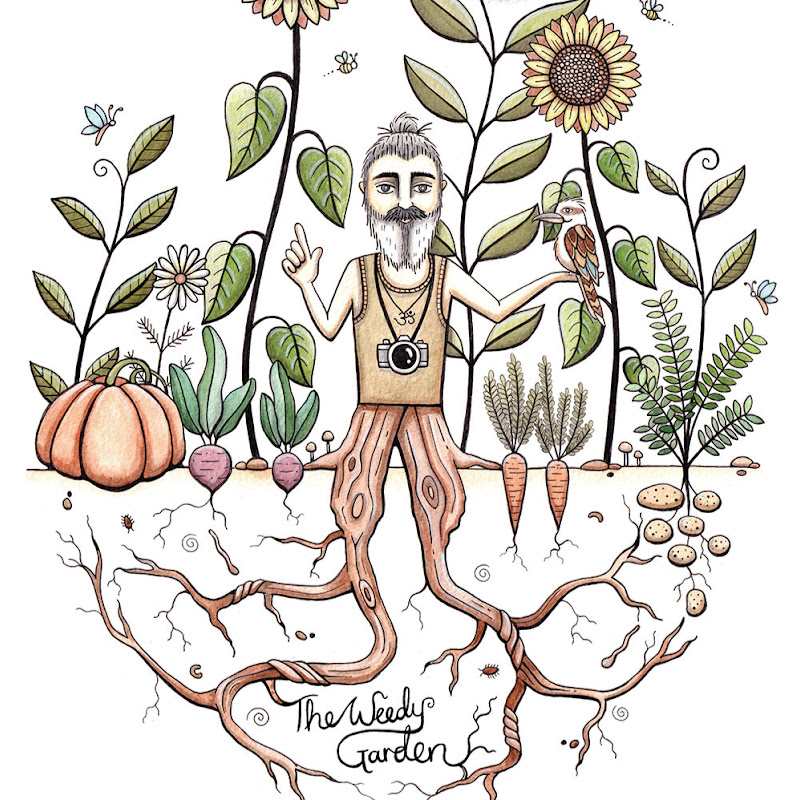
In March 2020, as the world ground to a halt, the three-decade international career of award-winning photographer David Trood abruptly ended. The COVID-19 pandemic had shuttered borders and canceled assignments, grounding a man who had spent his life capturing stories in over 40 countries for clients like National Geographic and the BBC. From this professional crisis, on a bare, weedy hill in Northern NSW, Australia, a new project took root. On May 11, 2020, Trood uploaded his first video to a YouTube channel he called "The Weedy Garden." It was the beginning of a profound pivot, one that would see him trade global travel for a self-sufficient "survival garden" and, in the process, build a multi-platform media brand that blends high-art cinematography with the earthy principles of permaculture.
The Weedy Garden: History and Growth
Before he was "Weedy" the gardener, David Trood was an Australian-born photographer operating at the highest levels of the industry, based for much of his career in Denmark. His client list was a roll call of global institutions: Time magazine, Microsoft, Ikea, Lonely Planet, Sony, The Royal House of Denmark, and the advertising giant Saatchi & Saatchi. He documented a stage construction for the band Metallica and built a portfolio of over 4,600 stock photographs and 94 video clips as a valued contributor to Getty Images.
His work earned him significant accolades. In May 2006, Trood was named a Hasselblad Master, a highly prestigious title within the professional photography community. He also received a "2nd Place - Merit of Excellence" in the People category at the 2nd Annual Photography Masters Cup International Color Awards. His official portfolio, which features a commissioned portrait of Crown Prince Frederik of Denmark, showcases a career defined by capturing the dynamic between humanity and the natural world.
The 2020 lockdown became the catalyst for applying this lifelong artistic focus to a new canvas. On a property in Northern NSW, Trood began what he called a "life long dream" of creating an organic garden to enrich his health, soul, and overall wellbeing—a concept he terms "The Feel Good Factor." The YouTube channel, created on May 11, 2020, was conceived as a way to put his camera gear to good use, documenting his own learning journey in real-time. The project's growth was explosive. What began on a "bare, weedy hill" evolved into a channel that, by late 2024, had amassed over 307,000 subscribers and more than 19.3 million views across over 220 videos. It's a brand so distinct that it should not be confused with an unrelated children's picture book of the same name by author Margaret Renkl, scheduled for publication in 2026.
The Weedy Garden's Content and Style
The Weedy Garden is distinguished from its peers in the crowded gardening genre by Trood's professional eye. His videos are not simple vlogs; they are cinematic, often poetic, narratives with production values that viewers have compared to professional nature documentaries. The content is built on a foundation of permaculture and organic methods, spanning a range of formats.
Long-form, documentary-style episodes chronicle major projects, while shorter tutorials provide practical how-to guides on topics from building the perfect dragon fruit trellis to breeding Lactobacillus bacteria serum (a video with over 212,000 views). Informal vlogs titled "Weedy's Walkabout" offer personal updates, and a steady stream of YouTube Shorts deliver quick tips and highlights. The channel's most-viewed Short, "THE WORLD'S LARGEST EARTHWORM! 🪱😲," with over 561,000 views, showcases Trood's ability to capture the surprising wonders of nature. His most popular long-form video, "GROW YOUR OWN MEDICINE - 5 Medicinal Herbs you need to know," has been viewed over 693,000 times, indicating a strong audience appetite for actionable, self-sufficiency-focused content.
The project's artistic and narrative pinnacle is the feature-length film Down the Carrot Hole. Premiering to a full house at the Nimbin Bush Theatre on December 21, 2022, the film is a comprehensive origin story of the garden's first two years. It has been lauded by viewers as a "love letter to Mother Earth," cementing the channel's foundational story.
How The Weedy Garden Makes Money
The Weedy Garden operates on a well-designed and self-reinforcing business model that intertwines content, community, and commerce. Philanthropic projects are not an expense but the central engine driving the entire enterprise.
Monetization is diverse and multi-layered. Standard revenue streams include YouTube ad monetization and direct audience support through Patreon, the YouTube "Thanks" feature, and a direct donation page on his website, theweedygarden.com. When essential camera equipment failed, Trood successfully raised funds for replacements via a campaign on mycause.com.au.
The model's core innovation is the "Win a Garden Makeover" contest, a formal trade promotion operated by The Weedy Garden (ABN: 24 204 075 393). Entry requires the purchase of a $50 digital art design by an artist named Izwoz. The funds from these sales power a prize package of substantial value—one recent contest was valued at $29,300—which includes a complete garden transformation for the winner, featuring a permaculture design by Geoff Lawton, up to 100 trees, a Flow Hive, a wood chipper, and installation by Trood and a volunteer team. This makeover then becomes a multi-part, emotionally resonant video series, attracting a larger audience and restarting the cycle with greater momentum.
The official website serves as a central hub for this system. Its e-commerce store sells branded merchandise, like "Weedy's Garden Pants," and digital products such as the "2025 Moon Planting Guide." A curated network of affiliate partnerships with suppliers like Daleys Nursery, Flow Hive, and Chipease provides another significant revenue stream. Further diversifying his income, Trood monetizes his film Down the Carrot Hole through digital rentals and offers in-person tours and on-site accommodation at his property.
The Weedy Garden's Collaborations
David Trood has strategically positioned himself within a network of credible experts and media personalities, amplifying his reach and authority. His most significant collaborator is Costa Georgiadis, the popular host of the ABC television program Gardening Australia. Georgiadis has appeared in multiple "Weedy Garden Makeover" videos, lending his expertise and celebrity to community projects in Crossley, Victoria, and Naracoorte, South Australia.
Trood openly refers to renowned designer Geoff Lawton as his teacher and friend, promoting Lawton's online Permaculture Design Certificate courses via an affiliate link. He enhances his content's educational depth by collaborating with subject matter experts, including Elle Jenkins of Australian Medicinal Herbs and Yana from the specialist nursery Rare Dragon Fruit. The makeover projects themselves are a showcase of collaboration, involving a team of community volunteers, such as Chris and Stu, and specialists like bee-keeper "B-Rad" of humbleapiarist.com and sign maker Peter Schwarzel, alongside commercial partners who contribute products and services.
The Weedy Garden: Public Reception
Public reception for The Weedy Garden has been overwhelmingly positive, a fact underscored by a feature on ABC's flagship program, Gardening Australia, which profiled Trood's inspirational career pivot. Within niche communities on platforms like Reddit and Permies.com, the channel is praised for its high production quality and authentic tone. Its educational value has been recognized by organizations like the U.S.-based schoolgardens.org, which lists it as a recommended resource.
A comprehensive review of public records and online forums reveals a notable absence of significant controversies, platform sanctions, or legal disputes. The only instance of critique discovered was a civil Reddit discussion where a user sought clarification on a composting technique involving Lactobacillus (LAB) serum. The conversation remained educational and constructive, highlighting the generally positive and supportive nature of the channel's community.
The Weedy Garden: Philanthropy
The channel's community-focused initiatives are central to its identity. The "Weedy Garden Makeover," described by Trood as a "random act of Weedy Garden Community Kindness," is the primary philanthropic vehicle. These projects mobilize volunteers from across Australia to transform a winner's space into a productive food forest.
A notable example is the makeover for a winner named Jodie in Crossley, Victoria. The project was multi-faceted, including the construction of the "world's strongest compost bay" from reclaimed bricks, a handcrafted "Seat of Tranquility," and a unique "432 Hz Bee Circle." This feature, a six-meter-wide planting of lavender and rosemary around a Flow Hive, was designed to harness the natural buzzing frequency of bees during "buzz pollination" (400-500 Hz), which passes through the 432 Hz frequency believed by some to be a natural, healing tone.
The Crossley project also established a "koala-friendly food forest" to support a local Koala Rescue Sanctuary. Native gum species favored by koalas were planted for coppicing, providing a regenerative food source for animals in care. Building on this success, Trood launched the "Greening your School" program, which uses funds from the makeover giveaway to provide fully funded food gardens to Australian primary schools.
The Weedy Garden Today
David Trood has successfully executed one of the most compelling creator pivots of the lockdown era. By applying the mastery of his former craft to a new passion, he transformed a personal "survival garden" into a thriving, multi-faceted brand. From a bare, weedy hill, Trood did not just grow a garden—he cultivated an international community and a new, more grounded definition of wealth.