



About
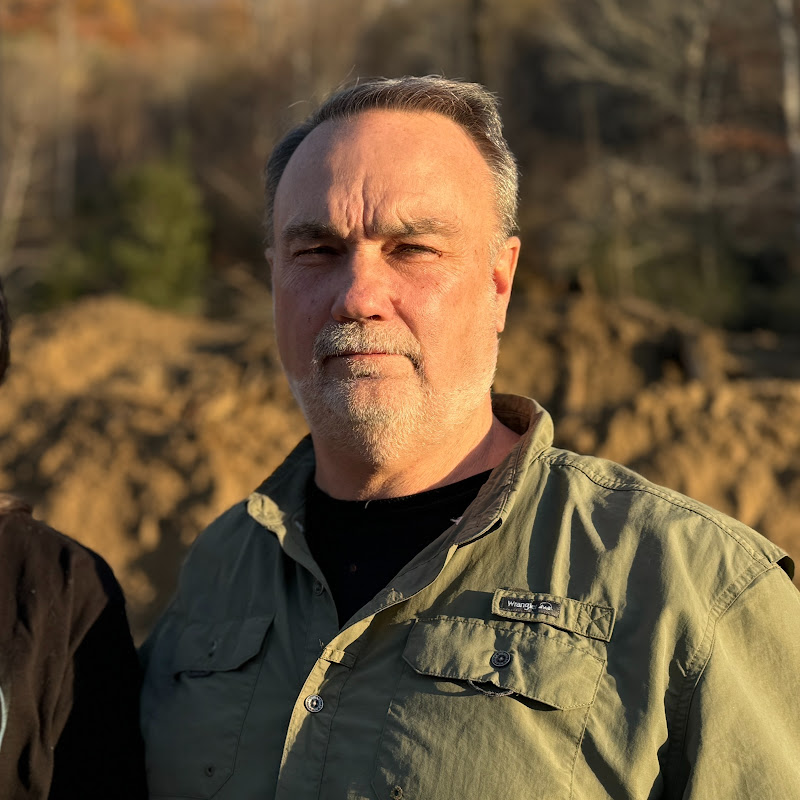
In the digital landscape, John Ward is an anomaly. From his home in LaFollette, Tennessee, he operates “The Appalachian Channel with John Ward,” a media entity that has quietly evolved from a niche passion project into a potent cultural and economic force in one of America’s most misunderstood regions. With a subscriber base that has surged past 200,000, Ward has become more than a vlogger; he is a digital archivist, a grassroots economic engine, and a community organizer for a global audience captivated by his mission: to document the people, places, and traditions of a “disappearing Appalachia” before they are gone forever. His work is a direct counter-narrative to entrenched stereotypes, built not on broad summaries but on the granular details of everyday life—from the family histories behind a century-old general store to the secrets of a perfect batch of Mamaw’s chicken and dumplings.
The Appalachian Channel with John Ward: History and Growth
John Ward is a product of the very world he documents. A lifelong resident of Campbell County, Tennessee, and a 1985 graduate of Campbell County High School, his credibility is rooted in an authenticity that cannot be manufactured. Before his pivot to digital media, Ward was self-employed, operating a local iPhone repair business. His journey into content creation was a slow burn. The YouTube channel was first established on March 17, 2010, but it lay largely dormant for over a decade. The decisive shift occurred in March 2021, when Ward closed his repair business and committed to becoming a full-time YouTuber.
The channel’s growth trajectory has been explosive. As of late November 2023, Ward had a respectable 89,000 YouTube subscribers. By mid-2024, that number had more than doubled, crossing the 200,000 milestone. This acceleration was fueled by a series of viral hits that served as gateways for new viewers, such as “Inside Ewing’s Mennonite Dutch Treat Store,” which garnered over two million views, and a feature on an 84-year-old North Carolinian’s collection of vintage cars that amassed 2.8 million views. These videos showcased Ward’s talent for unearthing compelling stories in seemingly ordinary places, transforming local curiosities into global phenomena.
The Appalachian Channel with John Ward: Content and Style
Ward’s initial production style was a proof to a lean, run-and-gun methodology. Armed with little more than an iPhone, a gimbal for stabilization, a wireless microphone, and an occasional drone for aerial shots, he cultivated an unpolished aesthetic that reinforced his “everyman” persona and put his subjects at ease. This approachable style became the bedrock of his two foundational content pillars. The first, cultural and historical preservation, involves long-form documentary explorations of “mom-and-pop” businesses like the R.M. Brooks store in Rugby, the 1888 Priddy’s General Store, and the B&B Market, which has operated since 1941. These are not mere tours, but oral histories capturing the lineage of the families who run them.
The second pillar is intimate human-interest storytelling. Ward profiles unique Appalachian residents, allowing them to narrate their life experiences unfiltered. Figures like Eddie Wortham, presented as a “REAL Mountain Man,” and a nonagenarian named Ralph have become recurring, beloved characters in the channel’s universe, fostering deep close bonds with the audience.
Building on this foundation, Ward has strategically diversified his content. The recent construction of a dedicated studio has enabled a push into food and cooking, featuring traditional recipes and collaborators like Bridget Denise. A niche playlist, “Appalachian Car Stories,” caters to vintage automobile enthusiasts with features on barn finds like a 1955 Chevy Bel Air. Most significantly, Ward has made a calculated foray into the massive true-crime genre. In a departure from his stated goal of showing only “the good sides of Appalachia,” he has produced investigative pieces on unsettling local cases, including the disappearance of Scott and Tracy Hawkins on August 6, 2021, and the ongoing mystery of Summer Wells, who vanished on June 15, 2021. This strategic pivot, often in collaboration with established creators, represents a move to capture a new, highly engaged, and monetizable audience.
How The Appalachian Channel with John Ward Makes Money
The Appalachian Channel operates on a well-organized hybrid financial model that blends platform revenue with an exceptionally strong direct-patronage system. According to Ward, significant income from YouTube advertising is a relatively recent development; he noted in early 2023 that he only began earning “a little money from YouTube” in October 2022. The financial bedrock of his enterprise has been direct support from his viewers. Ward openly solicits contributions, prominently featuring a PayPal link and his physical mailing address—John Ward, 312 Beverly Hills Lane, LaFollette, TN 37766—for those who prefer to send checks. This transforms his audience from passive viewers into active patrons invested in his mission.
This financial stability has enabled a critical investment in physical infrastructure: a newly constructed “barndominium” that now serves as “The Appalachian Channel Studios.” This facility signals a new era of professionalization, equipped with a dedicated kitchen set for cooking segments, a designed space for podcasts and interviews, and a garage-turned-woodshop. This move reduces his reliance on constant travel and positions him as a multi-format media producer capable of creating a more diverse slate of studio-based content.
The Appalachian Channel with John Ward's Collaborations
The channel’s expansion has been significantly amplified by strategic collaborations. The most vital partnership is with Olivia Vitale, who runs the true-crime YouTube channel “Chronicles of Olivia,” a media entity in its own right with 410,000 subscribers. Their collaboration is deeply symbiotic. Vitale frequently co-hosts segments on The Appalachian Channel, from food tours to cooking videos, lending her large audience and journalistic credibility to Ward’s true-crime ventures. In return, she gains access to Ward’s authentic Appalachian network and a platform to display a more lifestyle-oriented side of her brand. The new studio is explicitly presented as a shared creative space for their joint projects, solidifying a long-term co-production alliance.
Ward also features other creators, such as Bridget Denise, who maintains her own presence on Facebook (“Life with Bridget Denise”) and TikTok (“Busy Bridget”), to host cooking segments. Beyond formal collaborators, the local business owners and residents featured in his videos function as a network of de facto partners, forming the recurring cast of characters that give the channel its deep sense of community and narrative continuity.
The Appalachian Channel with John Ward: Public Reception
The channel’s reception is overwhelmingly positive, with an audience that actively participates in the content. Ward’s practice of announcing filming locations in advance often turns his shoots into impromptu meet-and-greets, and his features have demonstrably driven tourist traffic to the small businesses he profiles. However, the channel’s high-trust, informal model was severely tested by its most significant public controversy.
Following Hurricane Helene, Ward used his platform to solicit aid for victims, directing his audience to donate to a recovery effort associated with an individual named Rosalie Toro and an entity called “Camp Rosebuds.” Subsequently, alleging he had uncovered fraud, Ward posted an “Urgent” video warning of a “Helene Scam.” He instructed his followers to “STOP PAYMENT on ALL CHECKS” and publicly shared Toro’s personal phone number for donors to demand refunds. What followed was an aggressive public counter-offensive. Ward labeled Toro a “scammer” and leveled a series of grave allegations, claiming she had previously run an unlicensed charity in Florida, mishandled approximately $800,000, and was responsible for the deaths of up to 50 animals.
This high-risk strategy of aggressive transparency appears to have successfully shored up his core audience, who accepted his narrative of being a deceived protector of his community. While the channel’s growth continued unabated, the incident created a permanent reputational liability, leaving a digital footprint of serious allegations that could deter future corporate partners.
The Appalachian Channel with John Ward: Philanthropy
The Hurricane Helene controversy appears to have been a powerful learning experience, catalyzing a professionalization of Ward’s philanthropic work. He has a proven track record of mobilizing his community for good, successfully promoting a GoFundMe campaign for a family of six left homeless by the hurricane that raised nearly $100,000 and provided them with a Ford F250 truck and a large RV.
More importantly, Ward has since shifted from promoting third-party fundraisers to establishing his own branded initiative: “The Appalachian Channel Mobile Food Pantry.” This project, partly inspired by the personal experiences of his son, Dustin, aims to provide food and essential supplies to the unhoused population in Knoxville. By creating an Amazon Gift List for direct donations of goods, Ward has taken full control over the logistics and distribution of aid, effectively eliminating the third-party risk that led to the earlier controversy.
The Appalachian Channel with John Ward Today
John Ward stands at a strategic inflection point, having successfully guided The Appalachian Channel from a one-man passion project to an influential small media enterprise. His greatest strengths—his deep-rooted authenticity and the profound trust he has cultivated with his audience—are also the source of his greatest vulnerabilities. The enterprise is almost entirely dependent on him personally, and the Hurricane Helene incident remains a permanent reputational scar. As he navigates the brand’s expansion into the potentially divisive true-crime genre, he risks alienating the very audience drawn to his initial “feel-good” mission. The channel’s future success hinges on Ward’s ability to professionalize his operations to match his growing influence, building more robust structures for his financial and philanthropic work without sacrificing the authentic, personal connection that is the true foundation of his remarkable success.