


About
On September 17, 2015, a YouTube channel named Slyfox Family was created. Over eight years, founders Andrew and Hannah Slyfox would build it to over 1.6 million subscribers and nearly 400 million views, documenting their family life and building a digital brand anchored by a romantic origin story and a promise of wholesome, aspirational content. But that foundation proved to be the brand's greatest vulnerability. The dissolution of the founders' marriage triggered a fundamental split, fracturing the brand and forcing both principals onto very different entrepreneurial paths. The full arc of Slyfox Family — rise, crisis, reinvention — illustrates the lifecycle and inherent risks of personality-driven creator brands.
Slyfox Family: The Origin Story and Rise to 1.6 Million Subscribers
The brand was built on a powerful and consistently reinforced origin story. Andrew and Hannah Slyfox, whose legal surname is Brown, met on MySpace. As detailed in a "Short History" paragraph appended to their videos for years, they "found love at first sight…no joke…got engaged within 5 days of knowing each other and got married a few days after that!" That whirlwind romance was the foundational narrative, immediately indoctrinating new viewers into an idealized story that set them apart from other family vloggers.
Andrew Brown grew up playing music in church and has lived with Type 1 Diabetes for more than two decades. His professional background was in the culinary arts, achieving the title of Executive Chef at age 28 before his YouTube career. Hannah, maiden name Parker, also grew up in a musical church environment and had lived in California, Utah, and Tennessee. Together, they built a community they branded the "#Slyfoxers" or "Slyfox Club," fostering connection through live Q&A sessions and a P.O. Box in Menifee, California, which served as a physical touchpoint for their most loyal fans.
The strategy worked. On January 4, 2018, the industry publication Tubefilter featured the family in its "YouTube Millionaires" series to mark their crossing one million subscribers. In the interview, Andrew attributed their success to "The right personality, the right message, the right content, thumbnails, and titles," combined with consistency. This demonstrated a clear understanding of both content creation and the YouTube algorithm that was well ahead of many peers at the time.
Slyfox Family Content: Clean Family Vlogs, Travel, and Challenges
The channel's programming was crafted to appeal to a family audience, with an explicit promise of "clean family friendly PG content." Andrew publicly expressed his disgust for channels using inappropriate thumbnails, reinforcing his commitment to a safe viewing environment. The content architecture was intentionally diverse, moving beyond daily vlogs to include 24-hour challenges, pranks, travelogues, and shopping hauls, ensuring a dynamic stream that could capture various audience segments.
Central to the content were children Jaedyn and Caspian. Viewers watched Jaedyn celebrate birthdays from age 10 to 13, get her ears pierced, and navigate teenage crushes. Andrew stated a consent policy in 2018: "If at any point one of the kids ask to not be vlogged the camera is off of them." Caspian, three when vlogging began, was featured in toy unboxings and milestones like his first haircut. He was given a spin-off channel, @CaspianSlyfox, which has 14,500 subscribers but contains only six videos — a largely undeveloped brand extension that never gained momentum.
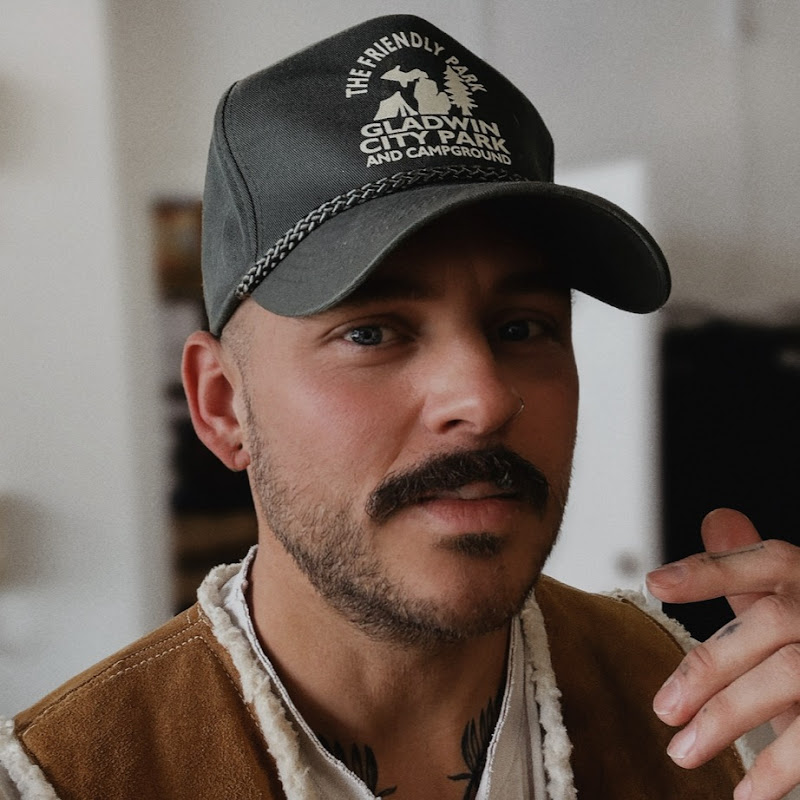
After the divorce, the channel's voice shifted from collective "we" to singular "I": "Hi! Andrew (Drew), I'm bringing high-quality, family-oriented videos to YouTube." Programming pivoted to reflect single fatherhood, with titles like "Single Dad tried to dye my hair…" and documentation of a nearly 40-hour cross-country move in a Tesla — with three people, one bird, and one dog — from California to Michigan.
How Slyfox Family Made Money — and How the Divorce Split the Business
Before the split, the family operated an integrated commercial system. The primary venture was Slyfox Threads, an online apparel company Hannah founded in 2013 in Temecula, California. Based in Temecula, California, it evolved from "an aesthetic for the whole family" to a "mom club" mission, with all items "Designed by Hannah Slyfox." The YouTube channel was its main marketing funnel. Alongside Slyfox Threads, the family ran a separate merchandise portal (merch.slyfoxfamily.com), secured brand sponsorships with Nickelodeon and Toyota, and used affiliate marketing linking to their vlogging camera setup, including a Sony Cyber-shot and GoPro cameras.
The divorce shattered this model, leading to a complete bifurcation of business interests.
Andrew pivoted to a creator-as-mentor model, launching "YouTube Vlogger University & Community." He uses the legacy 1.61-million-subscriber channel as a lead-generation tool, funneling viewers to coaching services through influenced.app and a Calendly booking page. He also launched the "Vlogger University Podcast," though a video description's Apple Podcasts link directs to a "Smiley House Podcast," indicating a possible rebranding or an error in the listing.
Hannah transformed Slyfox Threads from a direct-to-consumer brand into a full-scale B2B merchandising development and consulting agency. Her site, hannahslyfox.com, showcases "Full Scale Merch Development" for other influencers. Her client roster includes Krista Horton (founder of Horton Rum), Lindsey Gurk, and child influencers Mila & Emma. The site cites impressive metrics: "$0 to $3 million in sales in less than one year" for a client and "Over 50,000 units" sold.
Slyfox Family Collaborations and Creator Network
During their rise, the Slyfox Family participated actively in the collaborative family vlogging system. They maintained friendships and created content with The LaBrant Family, the Foley family, SmellyBelly, and Piper DeYoung. Their children frequently appeared in each other's vlogs, with Caspian's friendship with Everleigh from The LaBrant Family being a recurring feature.
Slyfox Family: The Divorce and Its Public Impact
The brand's most significant public event was the divorce itself. Andrew announced the separation in a video titled "The Truth About My Marriage, The Story I Never Wanted To Tell," taking control of the public narrative. He created a playlist, "My Full Divorce Story," marking the channel's shift toward a more personal, somber theme. This was a unilateral decision to control the public narrative around the separation.
The audience reaction reflected how effective their pre-split branding had been: viewers expressed shock and devastation that the couple who "seemed so happy and in love" had separated. The impact on viewership was immediate and measurable. While the divorce announcement got 84,000 views, subsequent vlogs dropped to between 18,000 and 21,000, suggesting a large portion of the legacy audience wasn't engaged with the channel's new direction. The event exposed the "founder risk" inherent in brands built on personal relationships — the divorce was both a private matter and an existential crisis for the business.
Slyfox Family: Philanthropy
In 2018, Andrew stated the family was "in the process of working with nonprofits to provide clothing for homeless moms, single moms going through tough times around the world, and poverty stricken countries" through Slyfox Threads. Further details on the status of this initiative are not publicly available.
Slyfox Family Today
The Slyfox Family no longer exists in its original form. The brand has split into three components: the legacy YouTube channel, now serving as a content archive and Andrew's personal marketing funnel; Andrew's creator-education brand, which monetizes his past success; and Hannah Slyfox's B2B merchandising agency, which has decoupled her professional success from her personal life. Both founders navigated a potentially career-ending event by launching new businesses leveraging their accumulated expertise. The Slyfox Family channel remains a digital monument to their former partnership, while its creators have reinvented themselves for separate, independent futures in the creator economy — both successfully proving that accumulated expertise can outlast any single brand.