



About
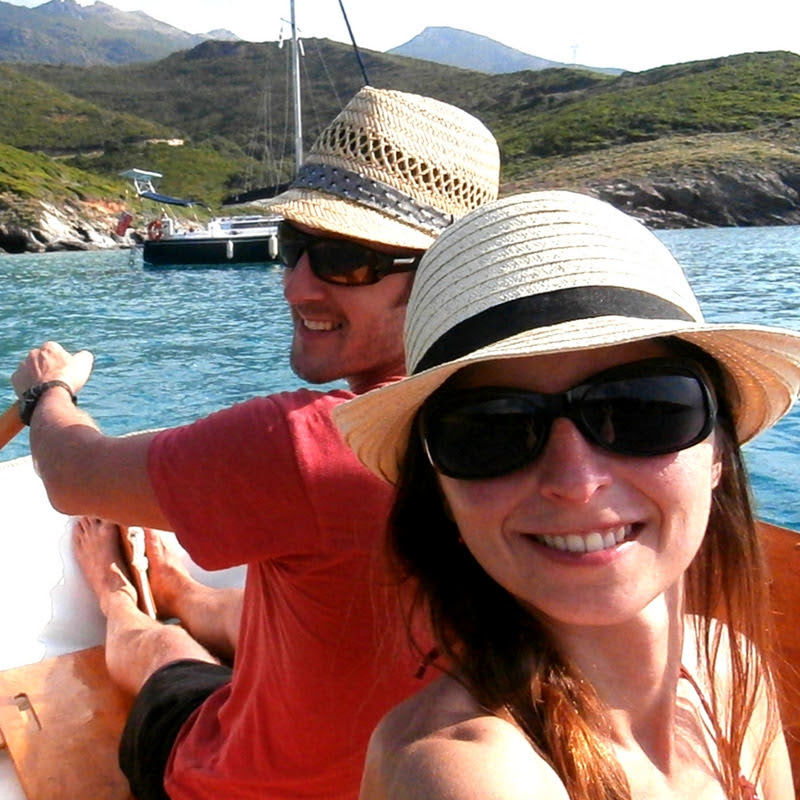
On the surface, the YouTube channel Sailing Britaly is another entry in the popular genre of aspirational seafaring life. It features Rosie Gabrielle, a charismatic Canadian adventurer, and her partner Chris Linder, a seasoned Austrian sailor, chronicling their life aboard a 2008 Beneteau Oceanis 46 named “Alia.” Yet, beneath the sun-drenched Mediterranean vistas lies a complex story of a dramatic brand pivot, a divided audience, and a series of controversies that challenge the very authenticity of their narrative. The channel, a fusion of two starkly different worlds, now navigates the choppy waters of public perception, balancing a massive legacy subscriber base against the exacting standards of the global sailing community.
Sailing Britaly: How It Started
The channel’s origins bear little resemblance to its current form. The initial architect was Rosie Gabrielle, a Canadian national who built a significant following as a solo motorcycle adventurer, photographer, and videographer. Her extensive travels through the Middle East and Central Asia, particularly a high-profile tour of Pakistan where she was recognized as a cultural ambassador, cemented her reputation as a fearless explorer. Her content was raw, personal, and focused on cultural immersion.
The channel’s trajectory permanently shifted in early 2022 when Gabrielle met Chris Linder. An Austrian national with over 15 years of professional sailing experience, Linder represented a completely different kind of adventure. By March 2022, he officially joined the channel, and the brand pivoted from two wheels on land to a hull in the water. This union also birthed the name “Sailing Britaly,” a portmanteau that has become a persistent point of confusion among viewers, given Gabrielle is Canadian and Linder is Austrian.
Sailing Britaly Content: Evolution and Style
The rebranding to a sailing channel was absolute. The couple purchased “Alia” for approximately €150,000 and began a new chapter focused on the maritime lifestyle. The core content pillars became the extensive refit and maintenance of their vessel, the rhythms of daily life at sea, and, crucially, the interpersonal dynamics of a couple navigating a relationship in a confined space.
A central theme, and a source of both appeal and conflict, is the “expert and the novice” dynamic. Chris Linder’s deep technical knowledge is constantly contrasted with Rosie Gabrielle’s self-described status as a “total newbie” to sailing. This contrast shapes their video narratives, framing their journey as one of learning and adaptation. The style evolved from Rosie’s solitary, introspective travelogs to a partnership-driven reality series set against the backdrop of the sea.
How Sailing Britaly Makes Money
Sailing Britaly operates a multi-stream revenue model typical of established creator channels. Beyond standard YouTube AdSense, a significant income source is their Patreon community. Patrons are offered a tiered system of benefits, including early access to videos, participation in private Q&A sessions, and personalized postcards sent from their various destinations.
Affiliate marketing forms another key pillar, with partnerships ranging from broad-based platforms like Amazon to specialized sailing gear companies. This is supplemented by direct-to-consumer sales of branded merchandise, such as t-shirts and hats. The entire business enterprise is built to support their life aboard “Alia” and fund the ongoing, and often expensive, realities of boat ownership.
Sailing Britaly: Public Reception
The channel’s audience is a fractured landscape. Data indicates their viewership skews towards an older demographic, primarily males aged 45-65+ located in North America, Europe, and Australia/New Zealand. However, a significant analytical disconnect exists between their subscriber count, which exceeds 500,000, and their average video views, which often hover between 50,000 and 100,000. This suggests a large, passive subscriber base inherited from Rosie’s pre-sailing motorcycle era, an audience that may not be fully engaged with the new maritime content.
This pivot has not been without significant friction. The couple has weathered three distinct waves of criticism. The first stems from Gabrielle’s pre-sailing career, where she faced accusations of perpetuating “white savior” tropes during her Pakistan tour. One prominent Pakistani blogger noted at the time, “Her narrative often flattens the complexities of our culture into a backdrop for her personal journey.”
The second, and more persistent, controversy comes directly from the online sailing community. Segments of this experienced audience have criticized the couple for being “dangerously inexperienced,” particularly in the channel’s early days. The sentiment was captured by a user on a prominent sailing forum who stated, “They’re a prime example of the ‘YouTube sailor’ phenomenon—more focused on cameras than seamanship.” In this context, they are often contrasted unfavorably with channels like Sailing La Vagabonde, which are perceived as having earned their stripes through extensive, well-documented experience.
Finally, the channel’s financial model has come under fire. Former patrons have lodged accusations of a lack of transparency, alleging that funds solicited for specific “boat upgrades” were instead used for personal travel. While these claims remain largely unsubstantiated, their circulation in online forums has damaged the channel’s reputation within certain critical circles.
Sailing Britaly Today
Today, Rosie Gabrielle and Chris Linder continue to sail the Mediterranean, producing their weekly chronicle of life aboard “Alia.” The core tension of their channel—the expert sailor and the novice adventurer—remains their most compelling narrative device and their greatest liability. It attracts a broad audience fascinated by the learning process and the relationship dynamic, yet it simultaneously fuels the skepticism of sailing purists who demand a higher level of technical proficiency. The future of Sailing Britaly depends entirely on their ability to navigate this deep divide, satisfying two fundamentally different audiences while charting their own course through the contentious seas of online content creation.