

About
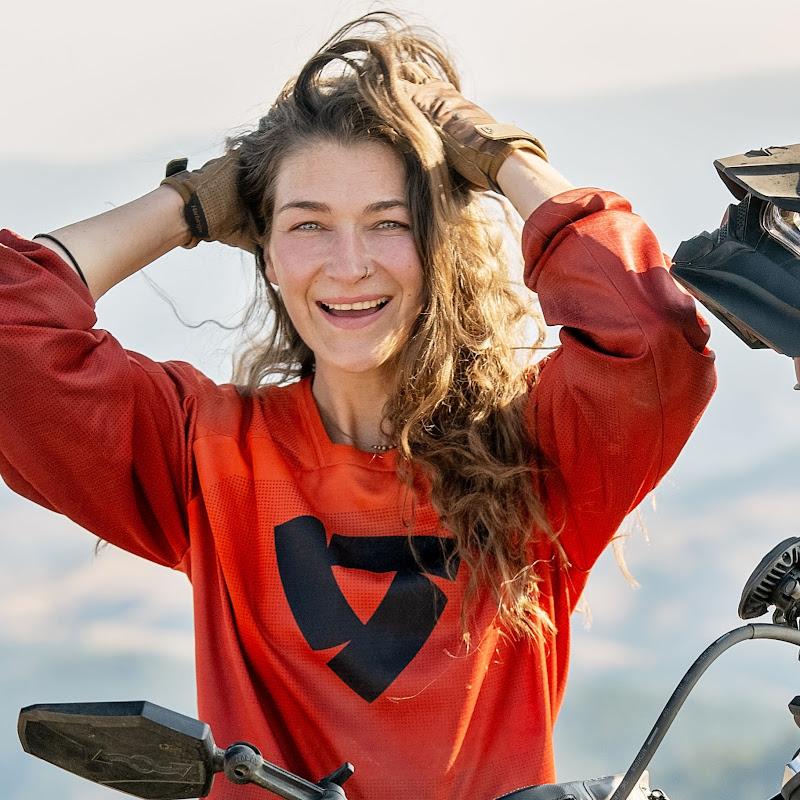
Rosie Gabrielle’s digital identity is built on a foundation of grit, vulnerability, and the transformative power of a motorcycle engine. A Canadian national from Vancouver, British Columbia, she has carefully crafted a public persona as a solo female adventurer, a photographer, and a video creator whose journeys are as much about internal healing as they are about traversing physical landscapes. Her story is more than one of travel, but a complex, public narrative of overcoming chronic illness, confronting deep-seated anxiety, and undertaking a spiritual quest that would ultimately lead her to a new faith and a new home in Pakistan. This journey, however, has also thrust her into the center of a charged debate about cultural representation, privilege, and the precarious role of the foreign influencer in a post-colonial world.
Rosie Gabrielle: History and Growth
Long before she became a fixture on YouTube, Gabrielle’s life was defined by a restless search for meaning far from her Canadian roots. Her travels began around 2004, with what was intended to be a “gap year” in Southeast Asia that stretched into a “gap decade.” It was there, at age 19, that she discovered a profound distaste for the insulated world of tourist buses, feeling she was missing “everything in between.” A weekend trip from Mae Hong Son, Thailand, to the Myanmar border solidified her conviction. She bought a Honda Dream 125cc—the widespread local workhorse—and, navigating with only a paper map, rode an estimated 12,000 kilometers solo across Thailand, Laos, Vietnam, and Cambodia.
Her path then led her to the Middle East, where she settled in Oman for over a decade. The move was initially pragmatic; needing to earn money, she successfully auditioned for a band and accepted a singing contract. Later, she pivoted to entrepreneurship, establishing her own photography company in Muscat. Photography remains a core skill and a financial pillar; she still freelances during winter months to fund her travels. This extended residency in Oman provided deep, sustained exposure to Muslim culture, an experience that would become foundational to her later life.
The catalyst for her vlogging career was tragedy. The death of a friend sparked a sharp realization that she was “killing myself now for a future that may not exist.” miserable from overwork, she decided to channel her energy into creating her own video content, aiming to share her unique perspective as a “so-called ‘vulnerable female’ on a motorcycle.”
This public journey has been set against a backdrop of severe personal challenges, which she shares with uncommon transparency. For 18 years, she has endured a debilitating condition causing constant, widespread pain, first diagnosed as Fibromyalgia and later identified as chronic Lyme disease. She also openly documents her long-term struggles with severe anxiety and depression, crediting a Sadhguru inner engineering program in Tennessee with providing tools to help manage them. The physical toll of her life is stark; during the COVID-19 pandemic, she was stranded in Sri Lanka and required an emergency five-hour bowel resectioning surgery, followed by a complicated recovery.
Rosie Gabrielle: Content and Style
Gabrielle’s content has evolved through distinct narrative phases. The foundational archetype is the “solo female adventurer,” a brand identity she consistently promotes. Her early travel series established a powerful formula: recount the dire warnings received before entering a country, then systematically dismantle them with footage of overwhelming kindness and safety. This framing positions her as a courageous myth-buster.
Over time, this archetype deepened, integrating a central theme of spiritual and personal healing. Her physical journeys became explicitly framed as therapeutic quests. Video titles like “HEARTBROKEN - How riding saved my life” and “I Was About to GIVE UP – This Electric Dirtbike Changed Everything” transform the motorcycle from a mere vehicle into a tool for salvation. Her recent content reveals the mental strain of her profession, discussing a period of intense burnout in 2025 where she questioned if she could ever film again.
The most significant evolution has been the shift away from a “solo” narrative. After her marriage to Pakistani vlogger Adeel Amer, her content now frequently features him, marked by hashtags like #couplegoals and #travellingcouple. This pivot from a lone woman against the world to one half of an international, cross-cultural partnership has opened new narrative avenues, exploring the dynamics of a life built on the road together.
How Rosie Gabrielle Makes Money
Gabrielle operates a well-organized and diversified creator business that prioritizes brand partnerships over direct fan funding. Her digital network is centered on her YouTube channel, which has amassed over 647,000 subscribers, with Instagram serving as a vital platform for major life announcements, such as her conversion to Islam and her marriage.
Her revenue is heavily driven by affiliate marketing within the adventure travel sector. Her video descriptions are layered with links and discount codes for partners including retailer Rocky Mountain ATV/MC; headset manufacturer Cardo, offering a 10% discount; and 79Bike, for which she provides the code “ROSIE” for a $100 CAN discount on their electric dirtbikes. She also promotes the tools of her trade, such as the music licensing service Musicbed.
Direct sponsorships are another key pillar. Brands like Quad Lock have sponsored entire videos. During her extensive 2019 Pakistan tour, she received crucial in-kind support: SA Gardens provided a BMW motorcycle for her southern route, Car Craft supplied a Tekkon motorcycle for the north, and Highroadcollection Vancouver furnished her riding gear.
In stark contrast, direct fan funding is a negligible part of her business model. Her Patreon page, according to analytics from Graphtreon, has only 5 paying members, generating an estimated $36 per month and placing her at a low 26,937th rank among video creators on the platform. While she lists specific patrons—Sandra Collins, Barbara English, John Bottomly, Abdur-Rahman, Volker Wehder, and Mary Hoffman—in her videos, the extremely low conversion rate suggests this is not a strategic priority.
Rosie Gabrielle's Collaborations
The most significant collaborator in Gabrielle’s personal and professional life is her husband, Adeel Amer (@adeelamer, @adeelonwheels), a Pakistani traveler and vlogger who now features prominently in her content. Beyond this central partnership, she collaborates with other creators in her niche, such as a documented joint trip to the Kalasha Valleys with Jack and Hanna of the channel @onemoreadv.
Her influence has also earned her a place in official industry circles. In April 2019, at the height of her solo Pakistan tour, she was invited to be a speaker at the Pakistan Tourism Summit in Islamabad, a public validation of her role as a key figure in promoting the country’s image abroad.
Rosie Gabrielle: Public Reception
The defining chapter of Gabrielle’s career has been her deep engagement with Pakistan. Spurred by the positive impact of her Oman series, she embarked on an 11,000-kilometer, nearly 10-month solo tour of the country in 2019. Her self-declared mission was to counter negative international media portrayals and present a “softer image of the country.” The journey, which took her from Lahore in the south to the remote Shimshal valley in the north, became the catalyst for a profound personal transformation. She credits the “humbled grace” of the Pakistani people with leading her to convert to Islam in January 2020 and, subsequently, to marry Adeel Amer in March 2021.
Initially, her reception in Pakistan was overwhelmingly positive. Major media outlets like The Express Tribune and Dawn celebrated her journey, and she was lauded as a de facto tourism ambassador. This honeymoon period, however, came to an abrupt halt in June 2021.
Using her Instagram platform, Gabrielle amplified what she described as concerns from locals in the Hunza Valley about a recent influx of domestic tourists for a music festival. She made strong allegations, claiming the visitors were bringing “bad behaviours, drugs, vulgarity, rave parties and leaving a lot of TRASH,” which was “destroying a culture.”
The backlash was immediate and fierce. Prominent Pakistani actor Ushna Shah publicly branded her a “condescending, ‘white saviour’ wannabe” and called for the government to “stop handing out YouTube visas.” Another actor, Khaqan Shahnawaz, who attended the festival, refuted her claims, stating there was a “clear no drug policy” and accusing her of “using old pictures to defame us.” He also suggested a financial motive, speculating she feared local influencers would begin to take the promotional contracts once given to foreigners.
Forced onto the defensive, Gabrielle asserted her right to critique as an insider: “I LIVE here and I married a Pakistan. My children will be Pakistan and I am a responsible citizen of this country.” This incident was a critical stress test, exposing latent tensions. A February 2019 article in Images, a subsidiary of Dawn, had already highlighted the societal double standard where foreign women like Gabrielle are afforded a freedom of movement not granted to local “desi women.” The Hunza controversy brought this critique of privilege, previously confined to online forums discussing the “Gora complex,” into the national spotlight.
Rosie Gabrielle: Philanthropy
While the dossier does not detail specific philanthropic donations, Gabrielle’s primary impact has been in the realm of “soft power.” Her extensive and positive documentation of Pakistan has functioned as a highly effective, non-state public diplomacy campaign. By leveraging her significant platform to project an image of hospitality and safety, she has had a tangible influence on international perceptions of the country, particularly within the global adventure travel community. The Hunza controversy, however, starkly delineated the limits of this influence, revealing that her “soft power” is most welcome when it aligns with the host culture’s preferred self-image.
Rosie Gabrielle Today
Rosie Gabrielle remains a strong figure in the creator economy, having successfully navigated multiple evolutions of her personal brand—from solo adventurer to spiritual convert to international traveling partner. Her narrative is a strong example in cohesion, weaving together personal struggle, grand adventure, and spiritual discovery into a single, compelling story. Her future trajectory is now closely tied to Pakistan, no longer as a visitor but as a resident and stakeholder. Having pivoted from an external admirer to an internal critic, she must now navigate the delicate and complex space between insider and outsider. Her ability to manage this dynamic, tested so severely by the Hunza controversy, will ultimately determine the long-term sustainability of her unique and powerful voice.