


About
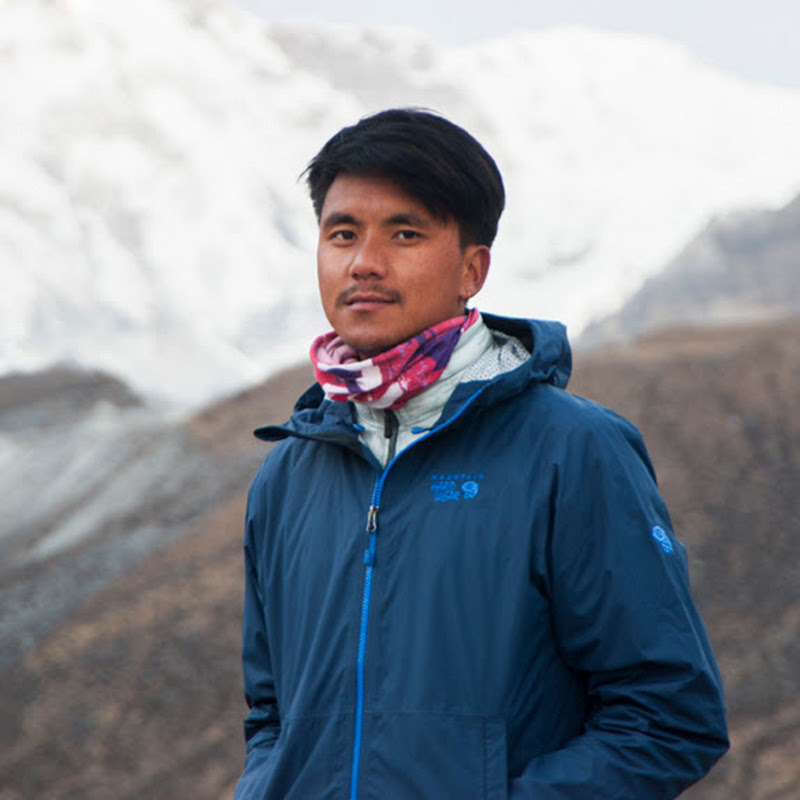
In the thin air above 8,000 meters, a new archetype of Himalayan professional is taking shape, and Pega Sherpa is its model. He is a key figure in a quiet but profound evolution, transforming the role of the Nepali guide from legendary high-altitude porter to fully credentialed, multi-faceted mountain professional. His career represents a rare synthesis: the elite technical skill forged on the world’s highest peaks, a formal academic background, a dedicated pursuit of the highest international guiding certifications, and a demonstrated social and environmental conscience. His self-described identity—“Guide, Climber, Trekker and Social Worker”—is not a list of jobs but a concise summary of a holistic and modern professional ethos. Esteemed expedition outfitter Climbing the Seven Summits (CTSS) calls him “One of the world’s best Himalayan guides” and one of their “most sought-after private guides on Everest.” Here is the story of how he earned that reputation.
The Alpinist’s Ledger: A Career Forged Above 8,000 Meters
Pega Sherpa’s professional standing is built upon a strong foundation of extensive and diverse experience in the world’s most demanding mountain environments. His climbing ledger is a portfolio perfectly calibrated for the modern, high-end commercial expedition market, demonstrating mastery from introductory trekking peaks to the “death zone” above 8,000 meters.
His record includes 13 confirmed summits on 8,000-meter peaks, a key metric of elite high-altitude competency. This experience is concentrated on the most sought-after and logistically complex giants of Nepal’s Khumbu region: * Mount Everest (8,848 m): Nine expeditions resulting in seven successful summits. * Lhotse (8,516 m): Two successful summits of the world’s fourth-highest peak, which requires navigating the same hazardous lower sections as Everest before tackling its distinct and technical upper couloir. * Cho Oyu (8,188 m): Two successful summits of the world’s sixth-highest peak, often a preparatory climb for Everest.
Beyond these marquee objectives, his resume reveals a deep expeditionary versatility. He has led multiple expeditions to challenging 7,000-meter peaks like Putha Hiunchuli (7,246 m) and Baruntse (7,129 m). His successful 2022 expedition to Baruntse with “Team Namas,” documented on his YouTube channel, was the first successful summit of the peak in three years and involved the critical task of fixing ropes on the route. His experience is equally extensive on Nepal’s popular trekking peaks—the entry point for most Himalayan climbers—with multiple expeditions to Lobuche Peak, Island Peak, Mera Peak, and Yala Peak. This comprehensive geographical and technical knowledge, extending to trekking guide work across the Everest, Annapurna, Langtang, and Manaslu regions, allows him to serve as a single, consistent private guide for a client over several years, from a first 6,000-meter peak to a final summit push on Everest.
The Professional Ascent: Qualifications and Philosophy
Pega Sherpa’s extensive field experience is reinforced by a robust portfolio of formal training from both Nepali and international institutions. He holds Basic and Advanced climbing certifications from the Nepal Mountaineering Association (NMA) and the highly regarded Khumbu Climbing Centre (KCC), a non-profit vocational program dedicated to increasing the safety of Nepali climbers. To meet the expectations of his international clientele, he has pursued advanced training in the United States, earning a Wilderness First Responder (WFR) certification from the University of New Mexico and completing an elite technical course with Rigging for Rescue.
Perhaps the most unique credential in his profile is a Bachelor’s degree in Social Work. This academic background provides an ethical and intellectual framework that informs his approach to client management, community responsibility, and environmental stewardship, elevating his practice from a technical vocation to a profession grounded in a wider understanding of human and environmental systems.
The most significant indicator of his professional trajectory is his formal status as an “Aspirant Guide” with the Nepal National Mountain Guide Association (NNMGA). This is not a trainee status but an advanced stage within the rigorous, multi-year certification process for the International Federation of Mountain Guides Associations (IFMGA)—the global gold standard. The pursuit of full IFMGA certification is a strategic career decision, positioning him to achieve full parity, autonomy, and recognition as an elite professional on the international stage, commanding the highest rates and appealing to the most safety-conscious clientele.
Business Architecture: The Guide as Elite Asset
In a time often dominated by social media self-promotion, Pega Sherpa embodies a “quiet professional” archetype. His YouTube channel, established in 2014, contains only 11 videos. This modest digital footprint is not a sign of technological aversion but a deliberate professional strategy. Instead of building a mass-market brand, he has cultivated his reputation through elite performance, allowing premier guide services to market him as an exclusive asset.
His primary professional affiliation is with Climbing the Seven Summits (CTSS), a world-renowned, high-cost expedition operator. CTSS markets him as a top-tier private guide, and his services are in such high demand that his schedule is booked out years in advance, with 2026 and 2027 already filled. This role places him in charge of the safety and success of clients who represent the wealthiest and most discerning segment of the global mountaineering market, on expeditions where costs can exceed $70,000.
He complements this international work by leading expeditions for Namas Adventure, a respected Nepali-owned company. This demonstrates his versatility and strong connection to the local guiding community. His third institutional anchor is his role as a Climbing Instructor at the Khumbu Climbing Centre. This prestigious, non-commercial position allows him to participate directly in the education and professional development of the next generation of Sherpa climbers. These three affiliations create a powerful “cycle” effect: his commercial success with CTSS lends him the prestige to teach at the KCC, and his teaching refines the skills that drive that success.
Public Reception: The “Guide as Mentor”
The dossier contains no record of controversies. Instead, independent client testimonials provide a consistent and detailed portrait of Pega Sherpa’s guiding philosophy. A 2024 Everest summiteer who hired him as a private guide praised his proactive approach to risk management, noting, “he did not ‘follow the herd’ but considered optimal routes for my capabilities.” The same client lauded his focus on skill development—“I am now a much better climber, thanks to Pega’s patient coaching”—and his calm competence during a crisis: “Pega’s competence in handling my evacuation due to unanticipated health issues was exemplary.”
Reviews from his work with Namas Adventure on introductory courses and trekking peaks echo these themes, with clients highlighting how he was “genuinely invested in our learning experience… answering endless questions and patiently explaining technical and safety information.” This feedback codifies a distinct “Guide as Mentor” philosophy. In the luxury adventure market, clients are investing in a transformative experience of personal growth and skill acquisition. Pega delivers precisely this pedagogical value, creating immense client loyalty and justifying his premium status.
Impact: Stewardship in Action
The most tangible application of his social work background is his public advocacy for improved human waste management in the Himalayas. His YouTube channel features a dedicated instructional video on the proper use of WAG (Waste Alleviation and Gelling) bags, directly addressing the severe environmental and public health crisis caused by the accumulation of human waste at high-altitude camps.
In the video’s description, he explicitly notes that while packing out human waste has been “mandatorily practiced for decades” on mountains in North America and Antarctica, it is the “first time happening here in Himalayas.” By creating and disseminating this educational content, Pega uses his credibility as an elite guide to tackle a difficult but critical issue. He is not passively waiting for regulations to be imposed; he is proactively leading a cultural shift from within the Nepali guiding community, demonstrating a deep sense of ownership for the ecological health of the mountains that are both his workplace and his home.
The Future of Himalayan Guiding
Pega Sherpa has already dismantled the outdated hierarchy that often separated the “Western guide” from the “climbing Sherpa.” His pursuit of full IFMGA certification, his role as a sought-after private guide for a top international company, and his position as an instructor to his own community confirm his status as a leader. He is positioned for a long and influential career that could see him become a senior expedition operator, a key policymaker within the NNMGA, or an even more prominent public advocate for sustainable mountaineering. He is not just climbing mountains; he is building a durable legacy and shaping the very future of his profession. He represents the ideal of the modern Himalayan guide: technically superb, professionally credentialed, ethically grounded, and globally respected.