

About
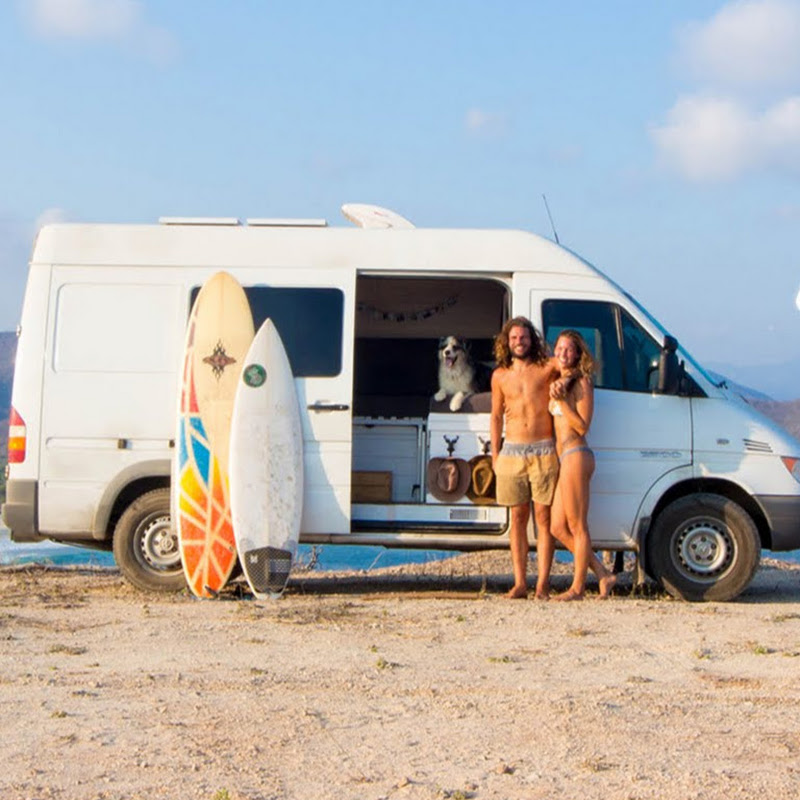
They were the aspirational ideal of a generation. Max Bidstrup, an Australian, and Lee MacMillan, a Canadian, were the sun-kissed faces of the #VanLife movement, their journey chronicled for a devoted audience of nearly half a million subscribers on their YouTube channel, 'Max & Lee'. Their brand was built on a simple, powerful formula: a self-built Sprinter van, a loving relationship, an adventurous dog named Occy, and the open road stretching from Canada to the tip of Argentina. For two years, across 13 countries and over 60,000 kilometers, they broadcast a life of freedom. But on March 26, 2021, that curated dream collided with a brutal reality. Lee MacMillan, at just 28 years old, was dead. Her story is more than about the end of a journey, but about the immense pressures of a life lived online, the devastating real-world consequences of cyberbullying, and a community's struggle to forge a legacy of hope from an unimaginable tragedy.
Max & Lee: Origins and Growth
The 'Max & Lee' channel, officially created on March 26, 2018, was the digital culmination of a journey that began around 2016. The venture was a partnership between Max Bidstrup, a former paramedic from Australia, and Lee MacMillan, a vibrant creative from Barrie, Ontario, Canada. Together with their Australian Shepherd, Occy, they became a single, marketable unit, a brand solidified by their joint Instagram handle, @maxandlee_.
Their content documented a colossal overland expedition down the Americas. The channel quickly gained traction, amassing 485,000 subscribers and accumulating over 56 million views across 105 videos. The appeal was rooted in a delicate balance. They offered the escapist fantasy of travel—captured in what they called "beautiful drone footage"—while simultaneously professing an unfiltered honesty about the lifestyle's profound challenges. They spoke of emotional highs that were "higher than anything I've ever experienced" and lows that were "lower and darker than I've ever experienced living normally." For a significant portion of their audience, they were more than entertainers; they were a "beacon of hope," their journey a tangible blueprint for an alternative way of life. The brand's success, however, was fused with the public narrative of their romantic relationship, a fusion that proved to be its greatest strength and its most catastrophic vulnerability.
Max & Lee Content and Style
The core of the 'Max & Lee' channel was the journey itself. Videos provided a blend of practical advice—from purchasing and converting a van to the complex logistics of international border crossings—and aspirational travel documentary. The visual style was polished and cheerful, projecting an image of idyllic freedom. This carefully crafted aesthetic was paired with a deliberate effort to show the unglamorous side of their life on the road: mechanical failures, homesickness, and the emotional toll of constant movement. This perceived authenticity deepened the bond with their followers, who were invested not just in the destinations, but in the couple's shared narrative.
In January 2020, they announced their separation, a split that had occurred in late 2019. This was not just a personal breakup; it was the dissolution of a brand. The news shocked their fanbase and initiated a period of intense online speculation that followers dubbed the "Lee/Max drama."
How Max & Lee Made Money
The 'Max & Lee' brand was a well-organized monetization engine fueled by their large and engaged audience. Their income streams were diverse, built on a combination of YouTube ad revenue, affiliate marketing, and direct brand sponsorships. Their video descriptions reveal a carefully constructed network of partnerships. They held deals with major lifestyle and tech brands, including power station manufacturer Jackery for its 1000W model, Surfshark VPN with the promo code "OCCY" for an 85% discount, and Trade Coffee. Their content was supported by licensed music from MusicBed and clothing from brands like Indigo Luna.
As their content later shifted towards individual van build projects, their monetization became even more granular. They promoted a vast array of specialized products, directing followers to specific suppliers: RV Labs for latches, ARB for refrigerators, Dunn & Watson for heavy-duty drawer slides, RedArc for battery management systems, Xantrex for power inverters, and SolarKing for 200ah lithium batteries.
Max & Lee's Network
Following their separation, both Max and Lee leveraged their shared network to launch their solo careers. Lee embarked on a new van tour of Morocco with other social media creators, though it was cut short by the COVID-19 pandemic. Max, in his new life in Australia, would later collaborate closely with fellow creators Kendall and Glenn, inviting them to move onto his property to form an "official commune." His most candid public reflections on his grief and trauma came during a long-form interview with fellow travel vloggers and close friends on the 'Reroot with Eamon and Bec' podcast.
Max & Lee: Public Reception and Tragedy
Lee MacMillan's final year was a portrait of immense courage under an unimaginable strain. Publicly, she launched her solo channel, 'Life with Lee', and became a vocal advocate for mental health, openly discussing her personal battles with depression and anxiety. Her raw honesty resonated deeply; one viewer credited a video she posted in December 2020 with saving their life. She was actively seeking professional help from a therapist and was surrounded, by all accounts, by a loving network of family and friends.
This support system, however, was pitted against a modern and insidious threat. According to her family and her partner at the time of her death, Jordan Chiu, Lee's mental health struggle was "compounded in her last months of life by persistent and often vicious cyber-bullying." Her father, Wil MacMillan, gave a specific account of an "online commentator who profited from 'roasting' her in a YouTube video," which incited a "pile on" from his followers. The van life community identified this harasser as a YouTuber known as 'Dave 2D' (a separate individual from the well-known tech reviewer), who allegedly built his own brand by gatekeeping the community and accusing influencers like Lee of not being "real vanlifers." A video attacking Lee was reportedly posted just two days before her death. Lee herself alluded to the harassment in Instagram stories, writing about her fear of sharing her new relationship due to "unsolicited opinions" from anonymous profiles.
On Friday, March 26, 2021, Lee MacMillan died by suicide in Santa Barbara, California. According to the Santa Barbara Police Department, she had been reported as a missing and at-risk person after leaving her home without her phone, wallet, keys, or car. She had been expressing suicidal ideation for a month prior. She was struck by a train near the intersection of State Street and Hollister Road. She was 28 years old.
Max & Lee: The #SpeakUpForLee Legacy
The response to Lee's death was immediate and powerful. Her family and friends channeled their grief into the #SpeakUpForLee campaign, a movement with a dual mission: to destigmatize mental illness and to "drive home the point that cyberbullying has real life consequences." The hashtag became a rallying cry to spread the message that "mental health is just as real as physical health."
To give the movement a financial engine, a GoFundMe was established. The community's response was overwhelming, raising $100,000 in the first 24 hours and ultimately surpassing $152,000. These funds were used to establish the Lee MacMillan Fund, which distributed the money to five mental health organizations. A key recipient was St. Michael's Hospital's Centre for Depression and Suicide Studies in Canada. There, the donations are funding critical scientific research into the biological basis of depression and supporting the creation of the Family & Friends of Individuals at Risk of Suicide Training (FIRST) Program—a first-of-its-kind initiative designed to equip support networks with the skills to help those at risk.
Max & Lee Today
In the aftermath of the tragedy, Max Bidstrup's life has been a quiet but profound repudiation of the lifestyle he once championed. After returning to Australia, his content on his 'Max & Occy' channel—named for himself and his beloved dog, who has since passed away after 14 years—shifted from perpetual motion to deep-rooted stability. He purchased land in the Australian rainforest and began documenting the construction of an off-grid homestead. He has been open about his own struggles with grief and PTSD from his former paramedic career, but has made a conscious, public decision to keep his current romantic relationship private and off-camera. The story of 'Max & Lee' leaves a dual legacy: a devastating reminder about the unique pressures of influencer culture, and a powerful reflection of a community's ability to turn grief into a movement for change through the #SpeakUpForLee initiative.