



About
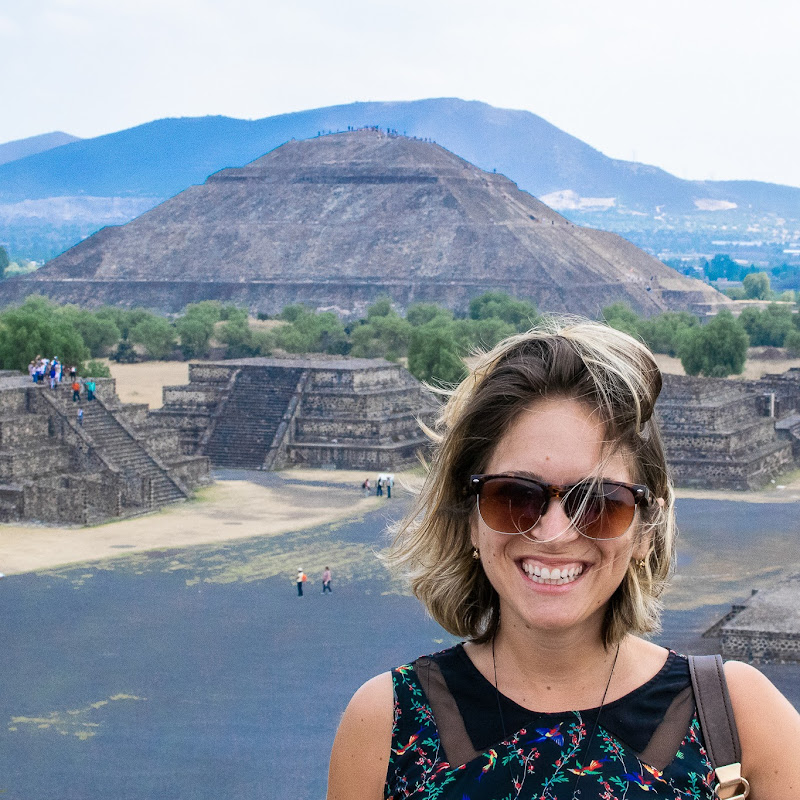
Laura Bronner says she moved to Mexico on July 8, 2016, nearly six years into what was supposed to be a single gap year. The American writer made Mexico the foundation of Eternal Expat, her travel publishing business, and a central subject of her YouTube channel. Her destination guides and personal travel stories give food a prominent place, exploring markets, regional dishes and local routines. Alongside films from Oaxaca to the Oregon coast, she has written Mexican guidebooks and taken on commissions for Lonely Planet.
A New Zealand Gap Year Becomes a Life Abroad
Bronner describes herself as originally from New York. She says she attended Babson College from 2006 to 2010 and played varsity women’s lacrosse. In her account of her relationship with Luke, her longtime partner, they met while studying abroad in Switzerland in 2008. Nearly two years of long-distance dating followed before they left together in 2010.
Travel was not yet the intended career. Bronner says her plan after graduation was to spend a year away, then return to the United States for postgraduate study in politics. Instead, their departure in September 2010 began a succession of overseas homes and jobs. They arrived in New Zealand without employment arranged and with only tentative accommodation plans.
Even their move within New Zealand nearly changed course. Bronner recalls being in Auckland and hearing about earthquake damage in Christchurch, where they planned to live. They considered cancelling, but reassurance from their prospective landlord persuaded them to continue. She subsequently worked for Christchurch City Council, followed by farm work exchanged for food and accommodation. She credits the community, friendships and work, alongside the experience of further earthquakes, with helping them grow more confident as adults and travellers.
Her New Zealand memories also include buying a station wagon, an air mattress and a camping stove, then living out of the vehicle for six weeks. In Australia, she recounts a two-year chapter that included living in Sydney and working for an Australian software company. Her travels there took in a rented campervan journey from Darwin to Cairns, buses from Cairns to Sydney and a visit to Uluru.
Bronner has repeatedly pushed back against the idea that these years were an uninterrupted paid holiday. She explains that working-holiday visas allowed her to earn money in New Zealand and Australia. The recurring problem was the cycle: take a job, save, quit, travel and eventually need another job.
The Korean Classroom She Left in 2015
A year teaching English in South Korea gave Bronner savings, but also a clearer sense of the work she did not want to keep doing. She says she disliked her employer, the emphasis on tests and the pressure placed on children. She also felt disadvantaged as a woman and a foreign teacher, while acknowledging that other teachers had different experiences.
Her account balances that dissatisfaction with friendships, greater compassion and more confidence navigating unfamiliar places. She and Luke studied Korean for an hour a day, five weekdays a week, and she says they became able to manage everyday conversations. She also credits teaching with allowing her to save more than US$15,000.
In her ten-year reflection on becoming a travel writer, Bronner dates her departure from the teaching job to April 10, 2015. She remembers being tired, frequently sick and dissatisfied with jobs that were not building the career she wanted. Her goal became work she could continue doing when she moved to another country, rather than another temporary position after her savings ran down.
Writing offered a possible route. Bronner recalls keeping a diary-like travel blog, An American Abroad, and writing unpaid pieces while living in Australia. Shortly before leaving Korea, she secured paid work through a copywriting company, producing hotel descriptions for sites including Booking.com and Hotels.com. These were assignments she could carry into her next trip.
She describes the journey that followed as five months in Asia during 2015, taking in Japan, Taiwan, the Philippines, Vietnam, Cambodia, Thailand and Laos. She learned to dive in the Philippines, and several Southeast Asian stays lasted roughly a month. Afterwards came time with family in the United States, time in Britain and two months of housesitting around Paris and Copenhagen. Travel continued, but she was beginning to change how she paid for it.
Turning Eternal Expat into Paid Work
Bronner gives May 2016 as the start of Eternal Expat. She says she initially intended it as a portfolio that would help her win assignments from editors. Her YouTube account was created on May 16 that year, adding another outlet to the writing career she was trying to establish.
An unsolicited approach from a Lonely Planet editor became a professional turning point. Bronner recalls receiving the message while working during a trip to Puerto Viejo, Costa Rica. The editor had found her website, and she describes the resulting commission as the moment she began to regard herself as a travel writer. Her subsequent Lonely Planet work has included a Mexico City weekend guide in 2021, an article about Aztec history in 2024 and a Mexico City day-trip guide in 2025.
The website itself took longer to become a livelihood. According to Bronner, it earned nothing during its first year, when hotel descriptions and automotive articles written for search engines continued to pay her bills. In a 2024 interview with travel writer Tim Leffel, she said meaningful advertising and affiliate revenue took about two years to develop. After approximately two and a half years, she stopped her remaining copywriting work.
Her reason for making videos was personal as well as professional. “I want to be the old lady everyone comes to for a good story,” Bronner says. She presents filming as a way of preserving experiences, alongside sharing destination guides, practical information and her own travels.
The food focus was already present in her writing before the channel’s creation. Speaking to TurtlesTravel in January 2015, she connected understanding a destination with tasting its food. She described researching regional dishes, visiting markets and taking cooking classes. Her preference was for slower travel that allowed her to become familiar with ordinary local life, an approach that later carried into her videos.
Mexico, Lithuania and the Return to Seattle
Bronner describes Mexico City as the place where she brought travel writing, destination publishing and video together into a livelihood she could take elsewhere. Luke remained her partner and travelling companion. She identifies him as a soccer coach whose work helped determine their moves to Mexico City, Lithuania and later Seattle.
The pandemic disrupted their Mexican life. Bronner recounts leaving Mexico City for a period near the beach, and she dates her move to Baja California Sur to 2021. The region became another subject for her publishing, alongside the capital and other parts of Mexico.
Her guidebooks cover Mexico City, Mérida and its surroundings, Guanajuato, and Baja California Sur. The Mexico City book received an updated edition in February 2023. These publications gave her work another form beyond individual articles and videos, drawing together the destinations that had become central to her career.
In her March 2026 essay for Business Insider Germany, Bronner dates their arrival in a small Lithuanian town to July 2021. She contrasts the long summer days of their arrival with later isolation and difficult winters. In her telling, moving repeatedly had exposed a problem that another destination could not readily solve: she lacked a community and people she could call during lonely mornings.
She continued developing her publishing work during the European chapter. Bronner says she founded The Spain Travel Guru in March 2023 as a test of whether she could repeat her earlier success with Eternal Expat. By June 2024, she reported that it was attracting about 65,000 monthly readers through organic search.
By mid-2024, she was back in the United States, and her July writing placed her in Seattle. She later explained that she had initially resisted returning because it felt inconsistent with the life abroad she had publicly championed. She had previously spoken to Expat Focus about the costs of distance: missing weddings, watching nieces and nephews grow up from afar and being absent as her parents aged. In her later account, returning brought meaningful friendships and greater everyday ease.
The move also changed her view of what her work could support. Writing from Seattle in July 2024, Bronner reflected that she had originally hoped only to earn enough to keep travelling and live in comparatively inexpensive countries. She said the business was now supporting her in a more costly setting than she had once envisaged.
Oaxaca Markets and a First Class C RV Trip
Returning to the United States did not remove Mexico from Bronner’s travels. Her 2025 Mexican journeys included a two-day visit to Veracruz, Mil Islas in Oaxaca and a road trip to Capulálpam in Oaxaca’s Northern Sierra. She also explored Oaxaca City’s markets and regional food, mezcal production and day trips into the surrounding region.
At the same time, she was travelling more widely within the United States. Her spring and summer journeys took in Vashon Island and Whidbey Island, Death Valley, Red Rock Canyon and excursions around Las Vegas. She also documented what she described as her first time camping alone.
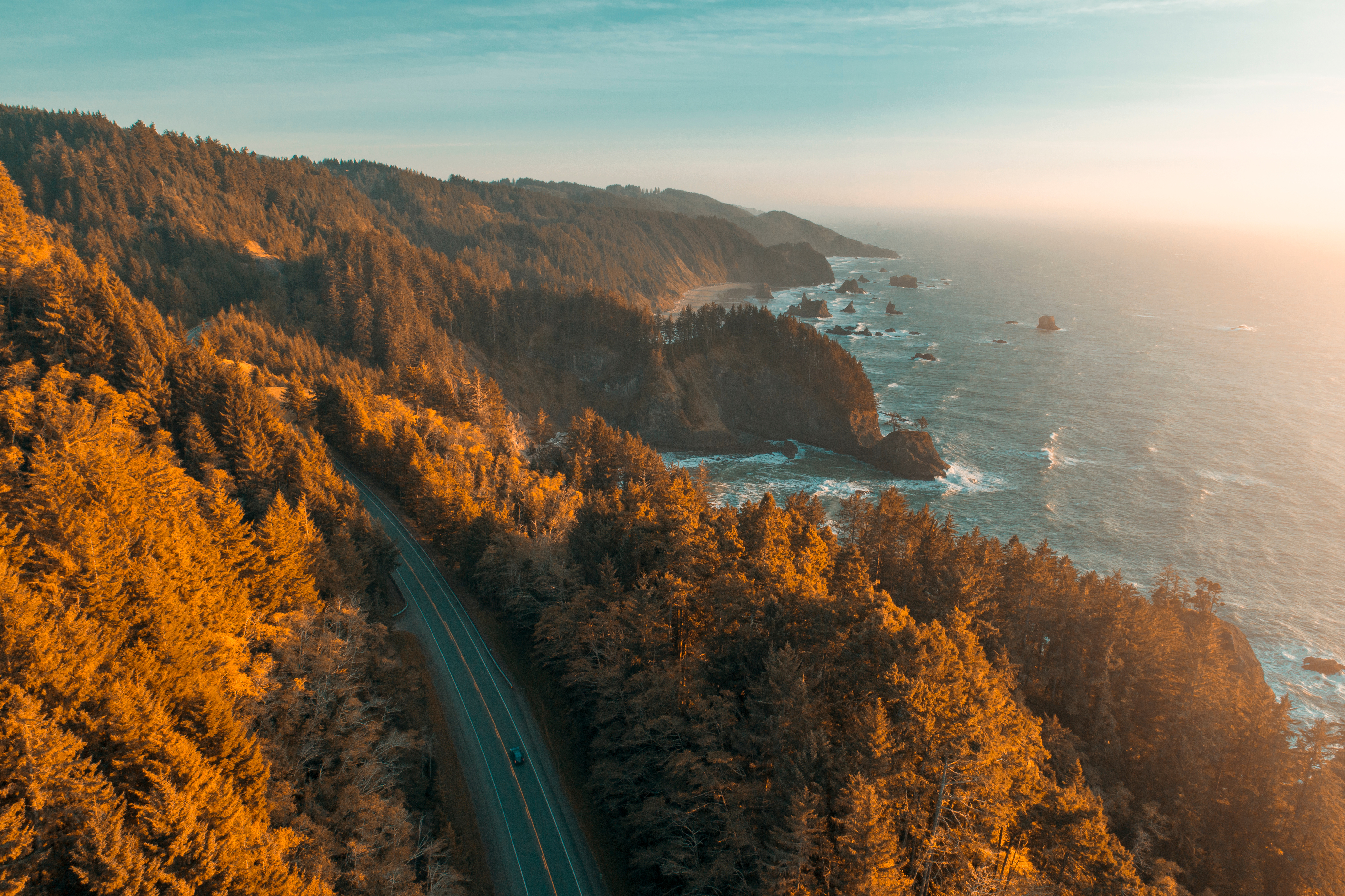
On the Oregon coast, Bronner tried a Class C RV for the first time, according to her account of the trip. Stops included Cannon Beach, Oswald West State Park and Cape Meares. Vehicle-based travel had been part of her life since the New Zealand station wagon and Australian campervan, but this journey added a different kind of vehicle and an American coastal route to that history.
By October 2026, her channel had about 55,000 subscribers and nearly 500 videos, with destination guides and personal travel stories remaining central to its identity.
Sewing, Printed Guidebooks and Less Scrolling
Alongside the travel, Bronner became more candid about the pressures on the work that supported it. In April 2025, marking ten years since leaving Korea, she questioned the future of independent travel writing. She was concerned about changes in search traffic and shrinking editorial opportunities, and considered part-time work or renewed copywriting while reaffirming that she wanted to keep writing.
By April 2026, another interest was competing for her attention. Bronner wrote that she had received a sewing machine for her 38th birthday and become absorbed in learning to sew. The hobby had temporarily displaced writing. She also described working with colleagues, reading, hiking and walking around Seattle’s Lake Union.
In June 2026, she wrote about returning to printed guidebooks and travelling with less reliance on digital tools. She recalled using books in Glasgow and on a Northern California–San Francisco road trip, while still valuing independent blogs for restaurant information.
The same newsletter also addressed the economics of online travel writing. Bronner criticised AI reuse of independent writers’ work without credit or the advertising and affiliate returns that had helped support it. Her interest in printed books sat alongside that concern about the systems through which travel writing was being found and consumed.
In her September 2, 2026 essay, “What I Read in August,” Bronner said she had largely withdrawn from social media apart from Substack. Reading had replaced scrolling, and she also wrote about taking part in a work-related book club.
Products
No products yet
Laura Bronner hasn’t published any products yet. Check back soon!
Travel Insights
No Travel Insights yet
Laura Bronner hasn’t shared any Travel Insights yet. Stay tuned!