


About
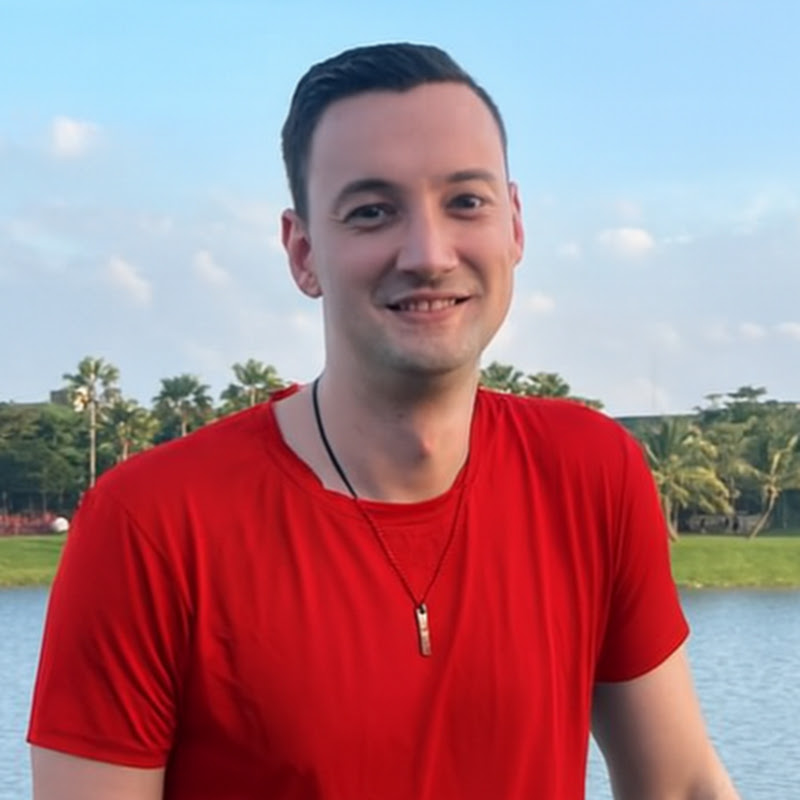
Ken Döscher, the German national behind the vast digital travel brand “Ken Abroad,” has built a following of millions on a simple, compelling premise: to show the “real sides” of a country, far from the curated experiences of tourism and the often-fraught narratives of mainstream media. His persona is that of an independent verifier, a traveler venturing into the world’s street markets and local neighborhoods to form his own conclusions. This mission has propelled him from a solo vlogger to the operator of a well-organized, multi-platform media business. It has also, in a turn that defines his recent career, placed his work directly at the center of a global information war, where his quest for on-the-ground authenticity was co-opted by one of the world’s most powerful state-run media apparatuses.
Ken Abroad: History and Growth
The digital foundation for the Ken Abroad brand was laid on January 25, 2009, with the creation of its primary YouTube channel. For over a decade, it remained a background project until circa 2020, when Döscher, born around 1992 and hailing from Wiefelstede, Germany, transitioned into a full-time content creator. His early work focused heavily on Southeast Asia, where his approachable, ground-level style resonated with viewers and his audience, which he calls “#teamabroad,” began to grow.
A pivotal moment in cementing his brand’s community-focused identity occurred in November 2020. During a visit to Melaka’s Jonker Walk in Malaysia, a historic market crippled by the economic fallout of the COVID-19 pandemic, Döscher filmed himself supporting the struggling local economy. The resulting video gained significant media attention, with outlets like Yahoo News Malaysia highlighting his actions. The coverage defined his early public image as a creator with a conscience. This early success was a springboard, allowing him to expand his travel footprint and, with it, the complexity and scale of his operations.
Ken Abroad: Content and Style
Döscher’s content is defined by a first-person, documentary-style approach. He prioritizes unfiltered experiences—exploring local markets, tasting street food, and initiating conversations with residents to understand daily life beyond the headlines. A recurring thematic device in his videos is the framing of his journey as an investigation. Titles frequently question whether a destination is “overrated” or if media portrayals are accurate, positioning him as an impartial observer seeking ground truth.
His content has also evolved personally. Initially the archetypal solo male travel vlogger, Döscher has broadened his narrative arcs by including his girlfriend, Lisa, and his mother in his travels to destinations like Singapore and Malaysia. This shift introduced a relational, family-oriented dynamic to his channel, widening his appeal and adding new layers to his on-screen persona.
How Ken Abroad Makes Money
Behind the camera, Ken Döscher operates a mature, diversified digital media business, legally registered under his own name. This is made clear by the “Impressum” on his official website, kenabroad.com—a legal notice mandated by German law (§ 5 TMG)—which lists his full name, physical address in Wiefelstede, and contact details. Further confirmation of this linkage exists on the e-learning platform Udemy, where the URL for his course prominently features the slug /user/ken-doescher/.
His business strategy is built on a well-organized three-channel YouTube architecture. The primary “Ken Abroad” channel serves as the flagship for long-form, polished vlogs. A secondary channel, “Ken Abroad Life,” offers more personal, behind-the-scenes content to cultivate a core community, while “Ken Abroad Shorts” is dedicated entirely to vertical, short-form videos optimized for discovery.
Monetization is multi-faceted and extends far beyond YouTube ad revenue:
- Direct-to-Consumer Products: Döscher authors and sells a series of e-book travel guides for countries including Thailand, Malaysia, Sri Lanka, and the Philippines, priced between $9.99 and $19.98. He also markets a “Travel Content Creator” course on Udemy and sells branded apparel, such as the “Ken Abroad Shirt,” through a Creator Spring store.
- Affiliate Marketing: His video descriptions are populated with affiliate links to key travel partners, including Holafly for eSIMs (promoted with his discount code KENABROAD), Booking.com for accommodations, and Skyscanner for flights.
- Direct Audience Funding: Viewers can support him directly through the Buy Me a Coffee platform, where donations are measured in $3 units, or via a direct PayPal.me link.
This robust infrastructure, with its multiple revenue streams and clear legal compliance, marks Ken Abroad as a professional, full-time media operation.
Ken Abroad's Collaborations
To manage his commercial growth, Döscher is represented by the influencer management agency Ruthless Talent. This professional relationship facilitates brand partnerships and sponsorships, such as a collaboration with the camera company Insta360 for a video filmed in the Philippines. He also engages in strategic collaborations with fellow YouTube creators, having produced joint videos with the channel @Filipina_life in Manila and with his friend from @travelescapesOFFICIAL during a series in Mexico.
Ken Abroad: Public Reception
In early 2024, Döscher’s content took a significant and controversial turn when he began publishing a series of vlogs from the Xinjiang Uyghur Autonomous Region in China. The region is a subject of intense international scrutiny and widespread allegations of severe human rights abuses against the Uyghur Muslim population. Döscher explicitly framed his visit as an act of independent journalism, stating in his video from the regional capital, Urumqi, “This region is all over western media for not so good reasons. But as usual, I am curious to see things with my own eyes.”
His vlogs from Urumqi and Kashgar depicted scenes of normal daily life. He documented visits to bustling markets, interactions with local Uyghur residents, and observed that there were many mosques, adding that he had no issues entering the region. The content he produced was soon amplified. In an article dated August 25, 2024, the Global Times, a newspaper affiliated with the Chinese Communist Party, prominently featured Döscher’s work. The state-run outlet used his videos as evidence from a foreign observer to support its official narrative, claiming his vlogs help reveal a “diverse, peaceful China” and serve as a direct rebuttal to Western media reports of oppression. For the Chinese state, Döscher’s “on-the-ground” perspective became a powerful tool. Regardless of his intent, his content was appropriated by state-level actors and deployed within an international information campaign.
Ken Abroad: Philanthropy
Long before the Xinjiang controversy, Döscher’s brand was associated with positive, community-level impact. In November 2020, during the economic devastation of the pandemic, he visited Jonker Walk in Melaka, Malaysia. In a widely-circulated video, he systematically purchased an item from every stall that remained open, providing a direct financial injection to local vendors struggling to survive the collapse of tourism. The act was lauded by regional media outlets, which praised his “kind and generous heart” and cemented an image of a traveler who cared deeply about the communities he visited.
Ken Abroad Today
Ken Döscher’s career embodies the complex and precarious role of the modern travel creator. He has successfully built a powerful, multi-platform brand and a well-organized business on a promise of authentic, independent reporting. Yet that very brand positioning—the skeptical outsider seeking an unfiltered truth—made his work uniquely valuable to state propagandists. His journey from being celebrated for small acts of kindness in Malaysia to being featured in Chinese state media illustrates a critical tension. In the contemporary information network, the line between independent observation and unwitting participation in geopolitical narratives has become perilously thin, and a creator’s quest to see the world “with their own eyes” can result in their perspective being used by others for entirely different ends.