



About
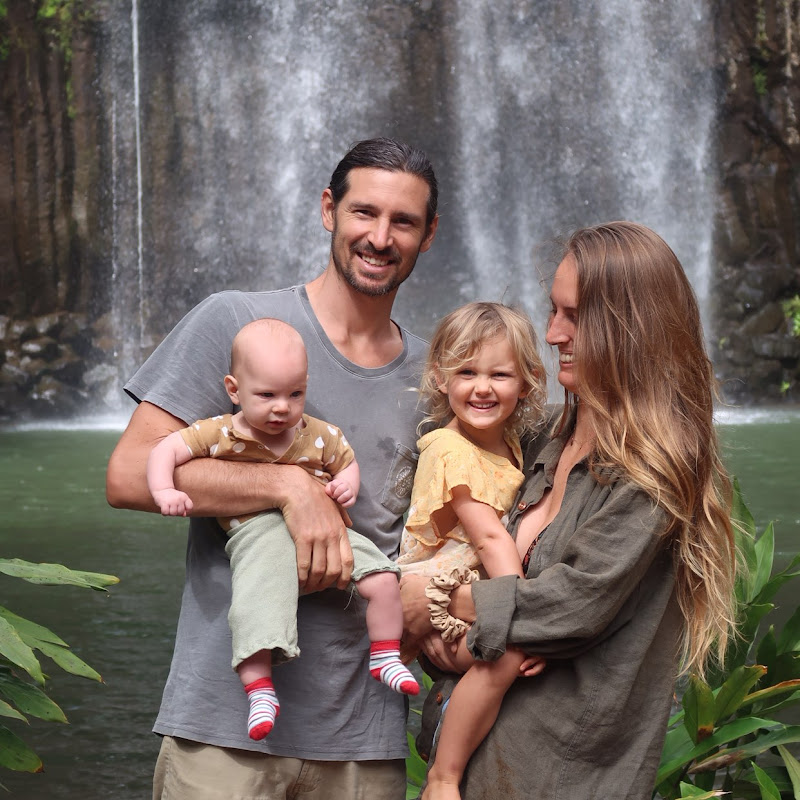
Jinti Fell, an Australian content creator, built an empire on the sun-drenched aesthetics of nomadic family life. Alongside her partner, Chris Sibraa, she became a definitive face of the “van life” movement, documenting a minimalist, vegan existence for an audience of hundreds of thousands. But the open road has its end. In a deliberate and divisive pivot, Fell has traded the broad appeal of travel vlogging for the high-conviction, controversial world of unassisted home birthing, engineering a new brand identity that is both more resilient and more polarizing than its predecessor.
Jinti Fell: History and Growth
The Jinti Fell story begins not with a van, but with a rejection. In a March 21, 2015, blog post, Fell detailed the “inner conflict” of her three years at university on Australia’s Gold Coast, a period defined by the feeling that the conventional path was for the “wrong reasons.” This disillusionment propelled her to leave, take a job at a rural winery, and prepare to “hit the road indefinitely.”
The catalyst for her digital career arrived with the birth of her first child, Ayana, on January 22, 2016. Four months later, on May 20, 2016, the “Jinti Fell” YouTube channel was created. Fell and Sibraa sold their belongings, converted a Ford Transit van, and began chronicling their nomadic journey. This era, lasting from roughly 2016 to 2020, defined their public image. Their content, a blend of family travel, slow living, and van conversions—first the van, then a bus—resonated deeply, amassing nearly 50 million views by March 2022. As their family grew to include sons Eyeam and Tashi, they became leading figures in the growing nomadic lifestyle niche.
Around 2020, the constant motion began to slow. The family’s content shifted to reflect a more stationary existence in their converted bus. By March 2022, the transition was complete. The family moved into a 135-year-old house in rural Australia, a conscious decision to “grow roots” and focus on homeschooling. Her public biography now identifies her as a “Mother of 4,” indicating the birth of a fourth child since that time.
Jinti Fell: Content and Style
Initially, Fell’s channel was a textbook example of the van life genre, filled with practical conversion guides and idyllic family vlogs. The content strategy was closely linked to her personal life stages. As she and her family evolved, so did the videos, moving from travelogues to explorations of personal philosophies, including a video titled “Why I don’t wear a bra, make-up or deodorant.”
This public performance of authenticity, however, exacted a psychological price. In multiple podcast interviews, Fell described herself as a “high achiever and people-pleaser” who became consumed by the need for external validation from her growing audience. This led to what she termed an “ego death,” a period where she felt a constant “pressure to be someone” and to “uphold an image.” The result was creative burnout and a sense that she was “watering down” her own voice to avoid controversy with viewers and sponsors.
In a candid TikTok video, she explained her subsequent hiatus from YouTube as a necessary period of “soul searching” to become “stronger in who I am,” free from the weight of “outside opinions.” This introspective period directly informed the next, more radical phase of her career.
How Jinti Fell Makes Money
Jinti Fell has constructed a well-organized and diversified business model that has matured from typical influencer revenue streams into a robust network of self-owned products. Her early monetization relied on brand sponsorships with companies like the online learning platform Skillshare and personalized haircare brand Function of Beauty.
Her most significant brand collaboration was with the ethical fashion label Indigo Luna, with whom she co-created a clothing line launched around June 29, 2020. The collection was heavily promoted with affiliate links and a 10% discount code, “JINTIFELL.” She also promoted other brands, such as Hara the label and Kokoh & Koi, with 15% discount codes.
The creator’s business strategy has since shifted decisively toward higher-margin, self-owned assets. Her official website, jintifell.com, now functions as a sales portal for her flagship product: “The Birth Diaries.” Priced at $97, the five-hour audio series details her philosophy and experience with “intuition led pregnancy & birth.” This is complemented by “The Motherhood Diaries,” a premium community hosted on the Skool platform with a striking price point of $999 per month. To a lesser extent, she maintains a Depop store under the handle @jinti, reselling “ethically made, natural fibers” from her personal wardrobe, and once operated an Etsy shop that is now inactive. This strategic pivot marks a deliberate move toward financial and creative autonomy, insulating her brand from the very third-party pressures she has described as compromising her voice.
Jinti Fell's Collaborations
Fell’s professional network is built around brands that align with her ethos of sustainability and natural living. Beyond the Indigo Luna partnership, her most significant collaborations have been her guest appearances on podcasts like “Reroot with Eamon and Bec” and the “SuperFeast Podcast.” These long-form interviews have served as crucial platforms for her to articulate the complex personal and philosophical shifts that have redefined her public identity.
Jinti Fell: Public Reception
For years, veganism was a non-negotiable pillar of the Jinti Fell brand. Her decision to abandon it became the first major fissure in her public image. Around 2021, Fell confirmed she had reintroduced animal products into her family’s diet. She explained the change on a podcast as part of a “dark night of the soul,” prompted by pregnancy and postpartum cravings she interpreted as a sign of nutrient deficiency.
The announcement drew sharp criticism from online vegan communities. A September 2021 Reddit thread framed it as another instance of a vegan influencer “falling to the dark side,” with commentators speculating that her health issues were the result of an improperly supplemented diet, not a fundamental flaw in veganism. The move placed Fell within a wider, controversial trend of influencers who built their platforms on veganism before publicly renouncing it. Even before this shift, online forums hosted discussions from viewers expressing concern over her family’s perceived thinness.
More recently, Fell’s brand has coalesced around her advocacy for “free birthing”—the practice of giving birth without medical professionals present. She has documented her journey from a hospital birth for her first child to three subsequent births “completely outside the medical system.” This stance, the foundation for her “The Birth Diaries” course, is inherently controversial. It also represents a masterful strategic pivot. By moving from the crowded, generalized markets of van life and veganism to the specialized niche of unassisted birth, Fell has cultivated a smaller but deeply loyal audience that shares her core convictions, creating a defensible brand that is far less susceptible to mainstream criticism.
Jinti Fell Today
Jinti Fell has navigated a complex and telling evolution. The nomadic, vegan vlogger who once captured the escapist dreams of millions has been replaced by a grounded, and far more contentious, lifestyle entrepreneur. Having shed the pressures of mass-market appeal that led to her creative burnout, she has rebuilt her brand on the bedrock of a controversial but high-conviction philosophy. Her current business model, centered on high-priced, self-owned digital products like “The Birth Diaries” and “The Motherhood Diaries,” reflects a creator who has seized complete control of her narrative and monetization. Jinti Fell’s journey is a example of the deliberate transformation from a widely popular influencer into a highly specialized, and profitable, authority in a niche of her own making.