


About
On July 22, 2013, a YouTube channel was quietly established in the United States. Operating under the handle @discoverventures, it offered a simple promise in its description: “One video a week.” For years, it has operated from the shadows, its creator or creators maintaining a disciplined and absolute anonymity. Yet, this obscure entity has become a example of algorithmic mastery, amassing over 31 million views and a subscriber base approaching 143,000 across just 85 videos. The engine of this success is a repeatable, provocative, and highly controversial content formula that explicitly leverages the allure of “extremely beautiful women” to dominate a specific travel niche, all while avoiding any discernible public identity.
Discover Ventures: History and Growth
The public record of Discover Ventures begins and ends with its YouTube channel statistics. Created in 2013 and categorized under broad tags like Tourism, Society, and Film, its operational history is marked not by a public-facing personality but by a steady accumulation of viewership. Unlike the vast majority of creators who build personal brands to foster community and unlock sponsorships, Discover Ventures has pursued the opposite path. A complete absence of verifiable information identifies the individual or group behind the channel. This anonymity is not an oversight but a deliberate, foundational choice that has dictated every aspect of its strategy.
The generic name “Discover Ventures” has required rigorous forensic disambiguation to isolate the channel from a sea of unrelated corporate entities. These include Social Discovery Group (SDG), a global tech investment firm founded by Dmitry Volkov that was an investor in Patreon’s Series F funding round; Find Ventures, a now-defunct non-profit startup accelerator in Washington state co-founded by Elizabeth Scallon and Justin Brotman; and Funded Ventures, a St. Louis-based financial firm associated with principals Ryan Bowman and Brian Wolfe. Other dismissed entities range from DigVentures, a UK-based archaeology social enterprise, to the media conglomerate Warner Bros. Discovery and DiVentures, a US-based scuba diving company. This meticulous process confirms the YouTube channel operates as a singular, isolated media entity with no known corporate backing or public leadership.
Discover Ventures: Content and Style
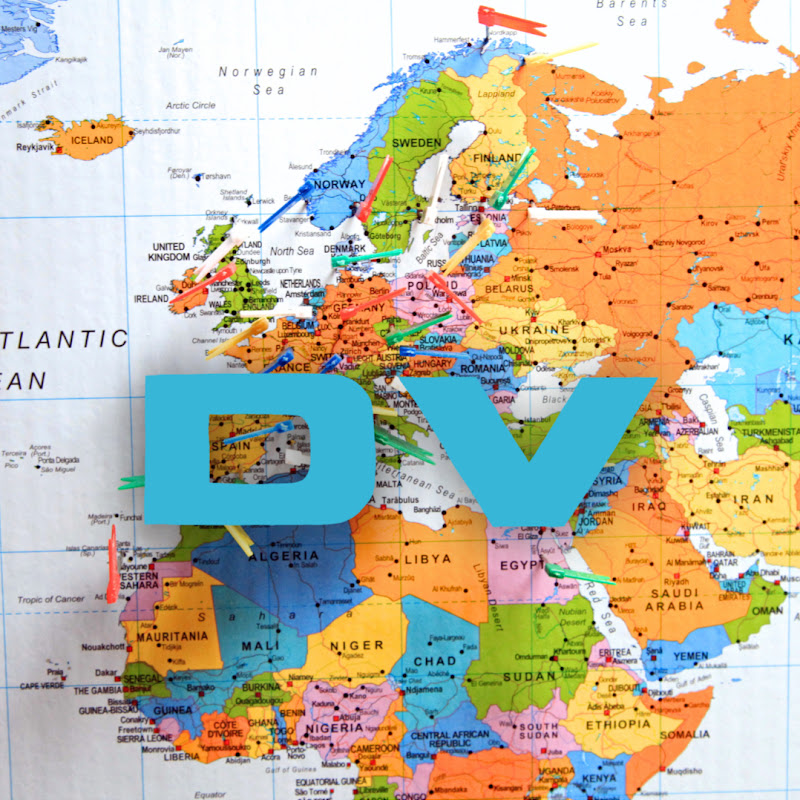
The channel’s content consists of standard travel documentaries, typically 10 to 20 minutes in length, each profiling a single country. The geographic scope is wide, with a heavy concentration on European nations—Estonia, Norway, Austria, and Bosnia and Herzegovina among them—but also extending to destinations like Pakistan, Argentina, and Russia. The videos themselves are conventional, featuring montages of location footage overlaid with a narrative voiceover discussing topics from economic conditions to cultural norms.
The conventional nature of the content, however, is masked by a highly unconventional and calculated marketing strategy. A defining and repeated element is a specific titling formula: “Life in! - The Country of EXTREMELY BEAUTIFUL WOMEN and PRISTINE [NATURE/ARCHITECTURE]”. This template is not arbitrary clickbait but a potent branding mechanism. The strategy employs a dual-pronged psychological appeal: the explicit reference to “beautiful women” targets a specific demographic interested in international dating or so-called romance tourism, while the mention of “pristine” landscapes or cities appeals to a broader audience of conventional travel enthusiasts.
This formula has been the catalyst for the channel’s most viral successes. “Life In FINLAND - The Country of EXTREMELY BEAUTIFUL WOMEN and PRISTINE NATURE” has achieved a massive 11 million views. Similar titles applied to other countries have yielded massive returns, including “Life in CZECH REPUBLIC…” with 1.9 million views and “Life In SWEDEN 2024!…” with 1.2 million. The strategy, while undeniably effective at generating high click-through rates prized by YouTube’s recommendation algorithm, fundamentally relies on the objectification of women and national stereotypes as its primary marketing tool.
How Discover Ventures Makes Money
The channel’s business architecture is a proof to its commitment to anonymity. Its sole confirmed digital footprint is on YouTube. Systematic searches reveal no official presence on Instagram, Facebook, X (formerly Twitter), or TikTok. This YouTube-exclusive approach is a strategic outlier, forgoing the common “hub-and-spoke” model that creators use to build multi-platform brands. While this simplifies operations, it leaves the channel highly vulnerable to any shifts in YouTube’s algorithms or monetization policies.
Given its millions of views, the channel’s primary and likely sole revenue stream is the YouTube Partner Program, which generates passive income from AdSense advertisements. This model perfectly complements the anonymous strategy, as it requires no direct interaction with sponsors, customers, or partners.
A comprehensive investigation into alternative revenue streams reveals a systematic decision to avoid them. There is no Patreon for direct fan support, no official merchandise store, and no affiliate marketing links or sponsorship disclosures in any video descriptions. The decision to forgo these lucrative avenues is telling; each would require a public-facing identity, business infrastructure, and communication that would shatter the creator’s anonymity.
Discover Ventures's Collaborations
Discover Ventures operates in a self-contained network. Research reveals no evidence of media coverage, press interviews, or collaborations with other YouTube creators. While its videos are algorithmically served alongside content from other travel vloggers, this is a function of the platform, not active partnership. This isolation reinforces the profile of a creator who deliberately avoids the networking and cross-promotion that are standard practice within the YouTube community, choosing instead to rely entirely on the power of the algorithm.
Discover Ventures: Public Reception
The channel presents a significant paradox. Despite a titling strategy that explicitly objectifies women and could be seen as promoting sex tourism, there is a notable absence of documented public controversy or media backlash. Searches for criticism directed at the channel are uniformly empty.
This lack of public outcry is striking. Feedback in the video comment sections is often positive, revealing a profound disconnect between the provocative marketing and the audience’s perception of the content. On the Finland video, a user identifying as a 58-year-old Finnish man wrote, “Thank you so much… you said so many great things about Finland.” Similarly, on the Czech Republic video, a commenter claiming to be an American expat living there since 1992 called it an “amazing place to live and work” and even offered to assist the creator.
This feedback suggests the channel has found a formula that works on two levels. The sensationalist titles attract clicks and appease the algorithm, while the conventional documentary-style content is perceived by many viewers as a benign or even flattering travelogue. The channel has managed to leverage a controversial hook to achieve massive viewership while remaining just below the threshold of mainstream scrutiny from journalists, media critics, or social commentators.
Discover Ventures Today
Discover Ventures exists as a unique and uniquely successful anomaly in the digital media landscape. It is a ghost in the machine—a channel with no face, no name, and no public brand, yet one that has mastered a specific, algorithm-friendly formula to generate tens of millions of views. By coupling a provocative, objectifying titling strategy with conventional travel content, its anonymous creator has built a powerful viewership engine fueled entirely by passive ad revenue. The channel’s success demonstrates a potent, if unsettling, path to victory on YouTube: one that prioritizes algorithmic appeal over community, anonymity over personality, and controversy as a tool for reach, all while managing to operate just outside the glare of public criticism.