



About
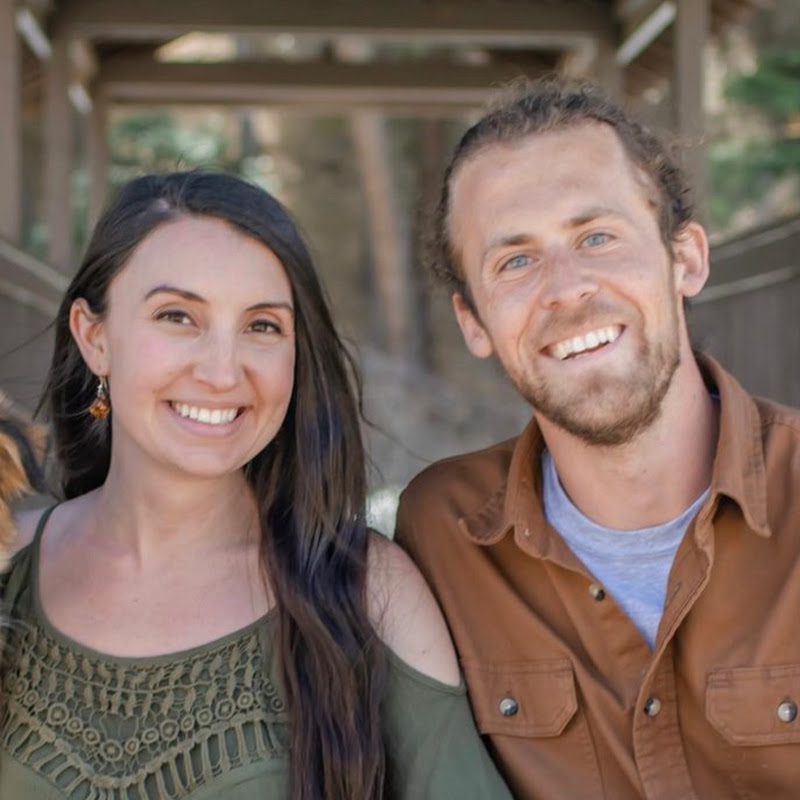
In October 2017 the Daily Mail introduced Anna French as a 27-year-old who had left a New York job for a Ford Transit. Her YouTube channel had existed since 2 May 2013. On 11 December 2021 she renamed it Anna and Ryan: she and Ryan Thompson were marrying the following July, and he was already working off camera. Anna is the on-camera storyteller. Ryan, her husband, is a graphic designer, web developer, photographer, and builder. The films run from solo van life and budget travel into a marriage, a son, rescue dogs, farm animals, and acreage in southern Colorado, often with her mother, retired Army colonel Felicia French. By 27 October 2026 the channel held 195 videos and about 88,300 subscribers.
Ten Schools, a Fiji Clinic, and Sydney
Anna has said she was born in Germany to a U.S. Army family and had been through 10 schools by the end of high school. She calls that pattern inevitable. October 2017 coverage called her 27, and in November 2025 she said she was 35, ages that put her birth in 1989 or 1990. Felicia served more than 32 years. Anna has written that her mother was an Army nurse and medevac helicopter pilot, later a senior medical advisor. In an April 2024 Cañon City Daily Record profile, Felicia said she returned to the United States in 1991 after the birth in Germany and later flew medevac in the New York Army Reserves. Once retired, she began graduate study in sustainability at Arizona State University. Anna has written that the two became "campus coffee buddies" while earning related degrees.
Anna says her bachelor's, awarded in 2012, was in sustainability and global health, and that choosing a major at 18 was difficult. A climate-change study-abroad trip to Australia and Fiji with about 30 students, and a village clinic in Fiji, turned her toward global health. She says she fitted in three study-abroad programs, two on university scholarships. Press in 2017 described her as from Phoenix and said she had studied in England as well as Australia. Her own account centers on Arizona, and on Australia and Fiji. Feeling lost and underqualified, she applied to the Peace Corps and to graduate school. When the University of Sydney accepted her for a master's in international development, she bought a one-way ticket. She has written that the acceptance arrived the day an Australian partner landed in Phoenix. She lived with him in Sydney, finished the degree, interned at Save the Children, and in June and July 2013 spent a crowdfunded month in Jinja with Arise and Shine Uganda, a community-development group. She calls Uganda her first real solo trip, and says the master's "bought time."
The Notice, Then a Van Named Casper
For about five years she worked in international organizations and nonprofits on the rights of women and children. She describes the posts as sustainability support, project support, English teaching, assistance to an executive, and operations. Around December 2014 she joined a children's foundation in Tanzania. In the June 2015 essay "Paradise Comes at a Price," six months there are a blur of hope and frustration: work with dozens of girls, and a growing doubt about aid from outside. She has said that as an adult she lived in New York City, Australia, Tanzania, Peru, Arizona, and Colorado.
New York ended in burnout. She has written that she was executive assistant to the chief executive and founder of an international nonprofit, that the job drained her, that she failed to keep boundaries, and that her health gave way. She says that married boss harassed her, and that the same period brought back sexual assaults she places at 14, 18, and 22. "I burnt out at 26-years-old," she wrote, and her body "demanded my resignation." On 15 January 2017 she gave two weeks' notice. On 1 February she flew to Japan and spent about two months in Japan, Thailand, Cambodia, Vietnam, and China, trekking, on the Mekong and the Great Wall, and learning to scuba dive. She has called the decision a breakdown. Travel and remote work followed, partly because subletting the Manhattan apartment, about $1,766 a month, let her keep the lease. She has put later road costs at about $347 a month, from savings, freelance writing, web design, and affiliate income.
The trips were already the thread. She has written about Inca sites in the Andes, a roughly six-day summit of Kilimanjaro after a seven-year dream, swimming with crocodiles in Australia, diving with manta rays in Thailand, and whitewater on the Nile. Felicia joined some of them, including Kilimanjaro, Machu Picchu, and parts of the Appalachian Trail. At 15, Anna, her mother, her grandmother, and a dog spent a month in a rented RV through national parks in Utah, Idaho, Montana, and Wyoming, the month she later credited with planting the van. She has claimed every U.S. state, about 50 to 53 countries, and either five or six continents.
In May 2017 she bought an empty 2016 Ford Transit low-roof cargo van, named it Casper, and spent about two months converting it with her mother. Contemporary press put the build near $2,000. She has since said it cost less than $3,500. With her dog Cagney she crossed the western United States and Canada, through Yosemite, Lassen, the Redwoods, Sequoia, Zion, Canyonlands, Arches, Grand Teton, Yellowstone, Glacier, Banff, and Jasper, and volunteered on a farm in Oregon. After Asia she set out to build a remote career around travel, human rights, conservation, and writing, and founded Spin the Globe Project, her blog on ethical travel and another way of living. Media Drum World ran its van feature on 6 October 2017, the day after the Daily Mail.
Full-time life on the road paused more than once. In 2018 she spent about 80 days in Central America with Skylar, a friend she said she had known since high school and climbed with in college. They volunteered through Worldpackers and Workaway and filmed "The Giving Journey," a documentary on responsible voluntourism that she released to Patreon supporters. They broke up. She has written about that relationship as a bruising one. She worked on Felicia's 2018 campaign for the Arizona House: a loss by 577 votes, she has written, with Casper as the vehicle through more than 30 rural towns. She has also written that during the first van year she came home for campaign work and remodeled Casper before heading out again. In 2021 she said she had worked on two of her mother's campaigns. Felicia's 2020 run for the Arizona State Senate lost. When Felicia thru-hiked the 800-mile Arizona Trail, Anna resupplied her from the van and looked after a dog named Bailey. The two hiked the Grand Canyon from rim to rim.
On 29 May 2019 she was full-time in Casper with Cagney again, calling herself a nomadic digital storyteller and the founder of Spin the Globe. Solo Female Van Life: Living On The Road Full-Time (Again)! was the breakout, at about 1.1 million views. That November, Tiny Home Tours walked through the Transit as a custom high-top.
A Bicycle South of Glacier
Ryan describes himself as a formally trained multimedia graphic designer, front-end web developer, and photographer based in Colorado, shooting mostly landscape and outdoor work and selling prints. In the early 2020s he said he had designed for more than six years and photographed for more than ten, with client work in logos, print, and websites. He developed Peak Project, a nonprofit aimed at trails and wildlife in the Adirondacks, and he freelances as a designer, developer, and photographer.
In 2019 he converted a 2014 Ford Econoline with a raised roof. Bought as a wheelchair-accessible van with a lift, it was gutted and named Topanga. He has written that he and the van started in New York, crossed 34 states and more than 20 national parks, and that he was heading west for photographs. Anna's account puts that build in upstate New York in the summer of 2019, while she was still in Arizona.
Her December 2020 film and their 2022 wedding plans tell the meeting the same way. In summer 2019, just south of Glacier National Park, Casper stuck on a riverbank while she traveled with Cagney. Ryan was nearby with a bicycle and a phone. Once the van was free she asked to camp on the small gravel patch beside him. They toured each other's vans and stayed up until 4 a.m. On an early date, a 10-mile hike to a glacier, they found they both wanted an off-grid tiny house and a garden. They caravanned in separate vans through New Orleans, Big Bend, and White Sands. She invited him to a friend's wedding in northern India. They backpacked in and spent three days at the wedding. Cagney died around this period. They adopted rescue dogs, Nova and Juniper. COVID and another stretch of Felicia's campaign left them quarantining in northern Arizona with her. Anna has said that if they could date through that, they could take on the next, harder thing.
Five Acres in the San Luis Valley
In September 2020 they bought a fixer-upper of about 760 square feet on 5 acres in the high desert of southern Colorado, overlooking the Rockies, with wild horses on the mesa. Ryan places the house in the San Luis Valley. He sold Topanga, bought the place with Anna, and kept freelancing. The first project was a ground-mounted solar system. He traded his van for a truck. By Anna's January 2023 telling, he had proposed on a winter hike. They adopted another puppy, married, started a garden and chickens, composted food scraps, and built a small glamp site for extra income. They sold Casper, bought a larger Ford E-350 shuttle bus, and spent about five months visiting family and leaving an off-grid winter. One summer she rafted the Colorado for nearly a month while Ryan renovated Felicia's cabin in Arizona. Five puppies appeared on the land. They fostered them, kept two, and closed that stretch with four dogs and four chickens. A short on 2 January 2023, about the off-grid journey, reached about 1.5 million views.
In December 2021 they said the wedding would be in July. The plans named a South Africa honeymoon, diving and a safari, and a longer aim: a farm with chickens, goats, llamas, "and some humans." In November 2022, after two years in the small house, they moved to a larger off-grid house nearby. Anna described it then as about 1,100 square feet on 40 acres, with a shed they meant to turn into a tiny house for her mother. They rented the first house out, renovated it, and eventually sold it.
River, a Well, and a 10-Kilowatt Array
On 1 July 2023 Anna said a baby was expected in early November and that the first trimester had been rough. She later named the child River. By February 2024 she was describing a newborn on the farm. The April 2024 profile of Felicia noted a first grandchild the year before, and Felicia's time between Arizona and Fremont County. Anna has said the pregnancy became high risk and that isolation in the remote house pushed her "over the edge," so they moved closer to hospitals, groceries, and people. In April 2026 she said her mother took on the mortgage, which let them hold the first house longer. The newer home had a well and grid power, sat on 35 acres, and was rural and closer to town. They later sold the first house, rolled that money into the new place, pay Felicia "rent" as equity, and plan to assume the mortgage. She has called the family help a privilege.
She has described three years fully off the grid, then a snowstorm and a 24-hour outage in the on-grid house, with a newborn and no heat. In 2024, she said, Ryan dug holes for a ground-mount foundation and they installed a 10-kilowatt array that cut a winter electric bill from about $550 a month to about $12. Batteries followed, because the panels went dead when the grid did.
Alpacas, Another Transit, and the Wedding Bill
By the end of 2024 she counted 2 alpacas, 2 goats, 2 sheep, and 21 hens, a shed turned into a coop, and river runs in inflatable kayaks. A giant busy board for the baby spread widely and, she said, suggested a new business. Felicia moved from the basement into the tiny house, and the basement became a short-term rental. On 29 December 2024 Anna looked back on keeping a baby alive, breastfeeding past a one-year goal, a first flight with River, selling a camper and buying a school bus to convert, and selling two houses while Ryan traveled to renovate them. She said she "sampled being a single mom" in that stretch. She described a hard postpartum period as a fog, or a black hole, that she eventually left, beside the ordinary losses and gains of homestead animals.
In April 2023 she put the YouTube audience above 92,000 subscribers. By 27 October 2026 it stood at about 88,300, with lifetime views around 16.2 million.
In November 2025 she said she was 35, working partly as a remote social-media manager for a nonprofit, and walking trails Ryan had built on the 35 acres, with Felicia sometimes in the tiny house. They milk a Nigerian dwarf goat. In 2026 they began converting another Ford Transit. By 18 October the build was on episode three, the floor, beside a run of money diaries that included a 22 September film on trying to retire by 40 and a short on eight income streams. On 22 October she posted "Let's Normalize Anxiety Medication," marking six months on Lexapro. On 25 October 2026 she priced the 70-guest mountain wedding at $14,612, against $15,034 in gifts. Their parents covered about two-thirds, she said. She and Ryan put the rest on a new Chase Sapphire Preferred card, paid it off, and used the points for a Galápagos honeymoon, after one combined bachelor and bachelorette trip.
Products
No products yet
Anna and Ryan hasn’t published any products yet. Check back soon!
Travel Insights
No Travel Insights yet
Anna and Ryan hasn’t shared any Travel Insights yet. Stay tuned!