
Avoid These 5 Affiliate Landing Page Mistakes for Better Conversions

TrekGuider @trekguider
You’ve done the work. You’ve mastered the keyword research, built the perfect post, and watched the traffic roll in. But the commissions aren’t following. It’s the sound of silence that every creator dreads—the digital equivalent of pouring water into a leaky bucket.
This is the silent killer of affiliate income. You see the industry reports—like the one stating the average monthly income for travel affiliates is a staggering $13,847—and it feels like a world away. The problem isn't your content or your traffic; it's the subtle, conversion-killing mistakes baked into your affiliate landing pages. These pages are the most critical link in your monetization chain, where even the smallest leaks can lead to a massive loss in revenue over time.

The good news is that these leaks are entirely fixable. This guide is your diagnostic toolkit. We will dissect the five most common and costly mistakes that plague travel creator landing pages and provide you with the exact, actionable fixes to plug the leaks, optimize your user’s journey, and dramatically increase your conversion rates. This is how you turn traffic into income. For a complete command of the entire affiliate ecosystem, from program selection to advanced strategy, our definitive pillar page, [Travel Affiliate Programs: The 2026 Ultimate Guide], is your essential command center.
Mistake #1: Inducing “Analysis Paralysis” with Too Many Choices
You want to be helpful, so you provide your audience with every possible option. Your guide to the "Best Hotels in Paris" lists 25 different properties, each with a detailed description.
Your intentions are noble, but the psychological effect is catastrophic. You’ve just triggered "analysis paralysis." Faced with a wall of options, the human brain defaults to the easiest choice: none at all. The reader feels overwhelmed, their decision-making stalls, and they click the "back" button—taking their wallet with them.
The Fix: Become a Ruthless Curator and Guide
Your audience doesn't want a directory; they want your expert opinion. Your job is to eliminate the noise and guide them to the best decision for them.
The Rule of Three (or Five): Drastically cut down your recommendations. Instead of 25 options, present a highly curated list of the top 3-5. This immediately makes the choice feel manageable and authoritative.
Declare a "Top Pick": Go a step further and anoint a clear winner. Use visually distinct callout boxes to segment your top pick for different types of travelers. For example:
Top Pick for Luxury: The Ritz Paris
Top Pick for Families: Le Bristol Paris
Top Pick for Budget Travelers: Generator Paris
Use Comparison Tables: For head-to-head reviews, a well-structured comparison table is your most powerful tool. It allows users to scan key features, pros, and cons at a glance, making their decision process simple and logical. This visual clarity is highly effective at driving clicks to your preferred options.

By curating your recommendations, you shift from being a simple list-maker to a trusted advisor, a role that is infinitely more valuable and profitable.
Mistake #2: Using Weak, Generic Calls-to-Action (CTAs)
Your Call-to-Action is the single most important element for turning a reader into a buyer. It's the final instruction you give them. Yet, countless affiliate landing pages are littered with the weakest CTAs imaginable: a simple, uninspiring "Click Here" or a generic "Buy Now" button lost in a sea of text. These CTAs are passionless, vague, and fail to communicate any value. They don't motivate, they don't direct, and they certainly don't convert.
The Fix: Craft Compelling, Specific, and Visually Dominant CTAs
A high-converting CTA is a masterclass in micro-copywriting and visual psychology. It must be specific, benefit-oriented, and impossible to ignore.
Use Action-Oriented, Specific Language: Your CTA text should tell the user exactly what they will get when they click. Instead of "Click Here," use powerful, descriptive language that aligns with the user's goal.
"Check Prices & Availability on Viator"
"See the Latest Reviews on Tripadvisor"
"Get a Free Quote from SafetyWing"
Make It a Button, Not a Link: Simple text links are easy to miss. Encase your CTAs in visually distinct buttons that stand out from the rest of your content. Use a bold, contrasting color that draws the eye but still fits your brand's palette.
Create a Sense of Urgency (When Appropriate): Language that implies scarcity or timeliness can be a powerful motivator. Phrases like "Book Now Before It Sells Out" or "Check Today's Prices" can encourage immediate action, especially for time-sensitive bookings like tours and hotels.
Pro-Tip: A/B test your CTAs relentlessly. Test a red button versus a green one. Test "Check Prices" versus "Check Availability." Small changes in language and color can lead to surprisingly large lifts in conversion rates. Use data, not guesswork, to find your winning combination.

Mistake #3: A Critical Lack of Trust Signals
In the digital world, a click on an affiliate link is an act of trust. The user is trusting that your recommendation is genuine, that the link is safe, and that the product or service on the other side is legitimate. If your page is missing the key signals that build this trust, a skeptical user will never make that leap. They will assume you're just trying to make a quick buck, and their browser tab will close before you can say "commission."
The Fix: Engineer Your Page to Radiate Credibility
Trust isn't a given; it must be earned. Weave these essential trust signals into the very fabric of your affiliate landing pages.
Radical Transparency: Your FTC disclosure is non-negotiable. Place a clear, easy-to-read disclosure at the very top of your post, before any affiliate links appear. This isn't just a legal requirement; it's a sign of honesty that savvy readers actively look for.
Show, Don't Just Tell: Share your genuine, personal experience. Instead of just listing a product's features, tell the story of how you used it. Include your own photos and videos of the product in action. This authentic proof is a thousand times more powerful than a stock photo.
Leverage Social Proof: Humans are social creatures. We look to others to validate our decisions. Incorporate social proof directly into your content by including screenshots of positive reviews, user ratings, or testimonials.
Acknowledge the Flaws: No product is perfect. Mentioning a minor drawback or clarifying who a product is not for makes your review exponentially more believable. This balanced perspective proves you are an honest broker, not a blind salesperson.
Pro-Tip: Don't underestimate the power of video. With industry projections showing that video will account for 55% of all affiliate traffic by 2025, embedding a short, authentic video review of a product can be the most powerful trust signal in your arsenal.
Ready to Build Your Own High-Trust Product?
The most successful creators know that affiliate income is just one piece of the puzzle. The ultimate trust signal is having the expertise to create and sell your own digital products. This offers unparalleled profit margins and authority. But where do you start?
Our free [Digital Product Ideas Guide] is packed with dozens of proven, profitable ideas specifically for travel creators. Download it today for the blueprint to building your own content empire.
Mistake #4: Ignoring the Conversion-Killing Impact of Page Load Speed
This is the invisible mistake that can sabotage even the most perfectly designed page. In a world of fleeting attention spans, speed is everything. If your page takes more than a few seconds to load, your visitor is gone—often before your headline even appears. They will simply not wait. All the work you put into your content, CTAs, and trust signals becomes irrelevant if the page itself fails the first and most important test.
The Fix: Obsess Over Milliseconds
Optimizing your page speed is one of the highest-leverage activities you can undertake. According to industry data, a mere 1-second delay in page load can reduce conversions by a staggering 7%.
Compress Every Image: Large, unoptimized image files are the number one cause of slow pages. Use a free tool like TinyPNG to compress every single image before you upload it to your site.
Choose a Lightweight Theme: Not all website themes are created equal. Avoid bloated, feature-heavy themes that are loaded with unnecessary code. Opt for a clean, lightweight, and well-coded theme that is built for speed.
Leverage a Content Delivery Network (CDN): A CDN stores copies of your site on servers around the world. When a user visits your page, the content is delivered from the server closest to them, dramatically reducing load times.

Mistake #5: Adopting a "Set It and Forget It" Mindset
You’ve published your perfectly optimized affiliate landing page. The job is done, right? Wrong. This is one of the most pervasive and costly mistakes creators make. An affiliate landing page is not a static museum piece; it is a dynamic business asset that requires ongoing monitoring and optimization. The digital landscape changes, offers expire, and user behavior evolves. A page that is left untouched for a year is a page that is leaking money.
The Fix: Become a Data-Driven Optimizer
The highest-earning affiliates are relentless testers. They treat their affiliate landing pages like a science experiment, constantly forming hypotheses and using data to find out what works best.
Track Everything: Use Google Analytics to understand user behavior. Where are they coming from? How long are they staying? At what point are they dropping off? Use your affiliate network's dashboard to see which links are getting the most clicks and generating the most revenue.
A/B Test Your Key Elements: Systematically test variations of your most important page elements. Create two versions of your page with one single difference—a new headline, a different main image, a relocated CTA button—and use software to show each version to 50% of your traffic. The data will give you a clear winner.
Take Full Control: The ultimate act of optimization is to create an asset where you control every variable—the product, the price and the page. By selling your own digital products on a platform like the [TrekGuider Seller Platform], you move beyond optimizing for a 5% commission and start optimizing for 100% of the revenue. It's the final step from affiliate to entrepreneur.
Pro-Tip: Use a link management plugin like ThirstyAffiliates or Pretty Links. These tools not only create shorter, cleaner URLs but also provide detailed click-tracking analytics. This allows you to see exactly which links within a single post are performing best, giving you invaluable data for your optimization efforts.

Frequently Asked Questions (FAQ)
1. How many CTAs should I have on one landing page? There's no magic number, but the key is relevance and clarity. Have one primary, visually dominant CTA for your main recommendation. You can then have secondary, contextual text-link CTAs where appropriate. The goal is to guide, not overwhelm.
2. Can a "busy" design with lots of colors and fonts hurt conversions? Absolutely. A cluttered design creates cognitive friction, making it hard for a user to find the information they need and identify the action you want them to take. A clean, simple design with plenty of white space and a clear visual hierarchy will almost always convert better.
3. How do I know if my page is fast enough? Use Google's free PageSpeed Insights tool. Just enter your URL, and it will give you a detailed report on your page's performance for both mobile and desktop, along with specific recommendations for improvement. Aim for a "Good" score in the green.
Your Blueprint for High-Converting Pages
You now have a professional-grade audit for your most valuable content. By systematically finding and fixing these five common mistakes, you can transform your underperforming affiliate landing pages from leaky buckets into high-efficiency conversion machines. The difference between a page that earns $50 a month and one that earns $5,000 is often just a handful of strategic optimizations.
Don't let these simple errors continue to cost you money. Pick one of your highest-traffic posts, run it through this checklist, and implement the fixes. By moving from a "set it and forget it" mindset to one of a data-driven optimizer, you take back control of your income and build a more profitable, resilient, and successful travel content business.
Don't Miss Out! Subscribe for Exclusive Content
Subscribe



Comments 0
No comments yet
Be the first to share your experience!
Dont Miss Out! Subscribe for Exclusive Content

FTC Affiliate Disclosure Essentials: Stay Compliant as a Travel Creator


Essential Affiliate Tools: From Tracking to Full Optimization

Affiliate Keyword Research Mastery for Travel Blogs

Booking.com Affiliate Program Review: Pros, Cons, and Earnings Potential

Decoding Affiliate Commission Rates: Benchmarks for Travel Creators

7 Proven Affiliate Marketing Tips to Skyrocket Travel Income
11 Essential Solo Travel Safety Tips You Need to Know
TrekGuider @trekguider
Let's be honest: the idea of solo travel is a mix of exhilaration and pure terror. It’s the ultimate promise of freedom, shadowed by the persistent question, "But will I be safe?" The thought of navigating an unfamiliar city alone, fending off unwanted attention, or feeling vulnerable can be enough to keep the most adventurous spirit grounded. This anxiety is real, and it can paralyze your plans or, worse, follow you on your trip, robbing you of the joy you set out to find.
But safety isn’t a matter of luck; it’s a matter of skill. It’s a mindset you can cultivate and a set of practices you can master. This guide is your new playbook. We’ve distilled insights from security experts, psychologists, and veteran solo travelers into 11 essential, gender-neutral solo travel safety tips. This isn't a list of warnings designed to scare you. It’s a practical framework for building unshakeable confidence, mastering situational awareness, and empowering yourself to explore the globe. While these strategies are crucial for any solo traveler, they are one part of a larger safety ecosystem, which we cover in our comprehensive guide to [The Ultimate Guide to Travel Safety: A 2026 Playbook].

The Foundation: Building Unshakeable Confidence and Awareness
True safety begins in your mind long before your boots hit the ground. It’s a foundation built on proactive awareness and a confident mindset. By mastering these core principles, you transform yourself from a potential target into a "hard target"—someone who looks like they know exactly what they’re doing, even when they're just soaking it all in.
1. Master the Art of Situational Awareness
Situational awareness is not paranoia; it's a state of relaxed observation. Security experts emphasize that it’s about consciously understanding your environment by first establishing a baseline and then learning to spot anomalies.
Establish a Baseline: Wherever you are—a train station, a market, a park—take a moment to observe the normal rhythm. How are people walking? What’s the general noise level? This is the "normal" for that environment.
Identify Anomalies: Once you know the baseline, things that deviate will immediately stand out: someone moving against the flow of foot traffic, wearing a heavy coat in hot weather, or loitering without purpose near an entrance. These anomalies are your early warning system.
Limit Distractions: "Tunnel vision" is a solo traveler’s enemy. Keep your headphones out and your phone in your pocket when walking through crowded areas. Keep your head up.
Practice Active Scanning: Make a habit of periodically looking around in a full 360-degree arc. This simple act keeps you aware of who is behind and beside you, preventing you from being caught by surprise.
Project Confident Body Language: Your posture speaks volumes. Walk with a purposeful stride, keep your head held high, and make brief, deliberate eye contact with those around you. This non-verbally communicates that you are aware and not an easy target.
2. Trust Your Intuition—It's Your Best Guide
Psychologists and security experts agree: that "gut feeling" is a real and powerful threat-detection tool. It's your subconscious mind recognizing thousands of tiny cues that something is wrong long before your conscious mind can articulate why. If a person, a street, or a situation feels "off," do not ignore it. Treat that feeling as a valid warning. Cross the street, leave the bar, get in a taxi—do whatever you need to do to honor that instinct without apology or hesitation.
3. Build Confidence with "Practice Runs" Before You Go
The confidence to navigate a foreign capital alone isn't born on the plane; it's built at home. Start with small, local "practice runs" to build your self-reliance.
Take yourself on a solo date to a new restaurant or movie in your own city.
Spend an afternoon exploring a neighborhood you don’t know well, navigating by yourself.
Take a solo day trip to a nearby town using only public transportation.
These small wins prove to yourself that you are capable and resourceful, which is the bedrock of the confidence you'll carry with you across the globe.

Navigating Like a Pro: Practical Solo Travel Safety Tips
Once you’ve calibrated your internal compass with a confident mindset, it’s time to translate that awareness into action. How you move, what you wear, and how you interact with your environment are the practical skills that complete your safety toolkit.
4. Walk with Purpose, Navigate with Discretion
Looking lost is like wearing a sign that says "vulnerable." Your goal is to navigate with quiet confidence.
Plan Before You Leave: Study your route before you walk out the door of your hotel or hostel. Having a clear mental map allows you to walk with purpose, which is a powerful deterrent.
Be Discreet with Maps: Avoid standing on a busy corner staring at a large paper map or your phone. If you need to check your directions, step into a shop, cafe, or hotel lobby to reorient yourself away from prying eyes.
Manage Your Tourist Gear: An expensive camera hanging around your neck and a bulky backpack are clear signals that you're a tourist. Keep your camera in a non-descript bag until you’re ready to use it, and consider using a more subtle crossbody bag for daily exploring instead of a large daypack.
5. Dress to Blend, Not to Stand Out
Your clothing is your first and most obvious cultural handshake. Observe what locals are wearing and aim for a similar level of formality.
Avoid Loud Logos: Leave the clothing with your home country's flag, university, or sports team logos at home. Opt for neutral, less conspicuous attire.
Respect Local Norms: In more conservative regions, dressing modestly (covering shoulders and knees) is not just a sign of respect; it’s a key safety strategy that helps you blend in and avoid unwanted attention.
Pro-Tip: Pack a lightweight scarf. It takes up almost no space and is incredibly versatile. You can use it to cover your head when entering a religious site, cover your shoulders for modesty, or add a layer of warmth.
6. Learn a Few Key Local Phrases
You don't need to be fluent, but knowing a few words in the local language is a massive confidence booster and a sign of respect. Focus on the essentials:
Hello
Please
Thank you
Excuse me
Do you speak English?
Being able to handle simple transactions or politely ask for help shows you've made an effort and can make interactions much smoother.

Your Safe Haven: Accommodation and Socializing Strategies
As a solo traveler, where you stay and how you choose to meet people are critical safety decisions. Your accommodation is your sanctuary, and your social life should be a source of joy, not anxiety.
7. Perform a 60-Second Hotel Security Sweep
The moment you first enter your hotel room or rental, take a minute to perform this essential security check.
Prop the Door: Keep the door propped open with your luggage while you do a quick visual sweep to ensure the room is empty (check the closet, behind the shower curtain, under the bed).
Test the Locks: Close the door and test every lock from the inside—the deadbolt, the security chain, and the latch. They should all feel solid.
Find Your Exits & Count: Locate the fire escape map on the back of the door. Identify the two nearest exits and count the number of doors between your room and the closest one. Fire safety experts stress this is crucial for navigating in a dark or smoke-filled hallway.
Check for Privacy: Ensure windows and any connecting doors lock properly. Close the curtains fully.
8. Choose Social Accommodations for Safe Connections
Hostels are the original social network for travelers and remain one of the best and safest ways to meet people. They are designed for interaction, with common areas and organized events like walking tours or group dinners. Even if you book a private room in a hostel, you get the benefit of privacy combined with a built-in, vetted community right outside your door.
9. Join Group Tours and Classes to Meet Like-Minded People
A shared interest is a natural foundation for friendship. Signing up for group activities is a fantastic way to connect with other travelers and locals in a structured, safe environment.
Free Walking Tours: Most major cities have them. They're a great way to get oriented and chat with fellow travelers.
Specialty Day Tours: A food tour or historical excursion brings together people with a common passion.
Local Classes: A cooking workshop or language class provides an authentic cultural experience and an easy way to start conversations.
Pro-Tip: If you connect with people on a tour, suggest meeting up later in a public place. "A few of us are going to grab a bite at that market we saw, want to join?" is a low-pressure way to extend the connection.

Your Digital Safety Net
In the modern era, technology provides some of the most powerful solo travel safety tips. Your smartphone can be your lifeline, your map, and your guardian angel—if you set it up correctly.
10. Arm Yourself with Personal Safety Apps
Before you leave, download a personal safety app and set it up with your trusted contacts back home. These apps can share your location, send distress signals, and even connect you with emergency services.
bSafe: A comprehensive app that features a voice-activated SOS alarm, live location sharing ("Follow Me"), and even automatically records video and audio during an emergency.
Noonlight: Acts as a silent panic button. You press and hold a button on the screen when you feel unsafe. If you release it and don't enter your PIN within 10 seconds, it automatically sends your location to professional dispatchers who coordinate with local police.
Life360: Excellent for creating a private location-sharing map ("Circle") with family or friends. It includes an SOS alert that messages your entire circle and can even detect if you've been in a car crash.
11. Keep Your Trusted Contacts in the Loop
Beyond apps, make a habit of sharing your itinerary with someone back home before you leave. A quick text or email saying, "Just arrived at my hostel in Lisbon, all is good!" provides peace of mind for both you and them.

A Note for Women Traveling Solo
While all the tips in this guide are universal, women often face a unique set of challenges and cultural nuances on the road. For advice tailored specifically to navigating these issues—from understanding cultural dress codes to responding to harassment and leveraging female-focused networks—our specialized guide is an essential resource.
Deep Dive: The Solo Female Traveler's Playbook
Ready for a resource that speaks directly to the female experience? Download our free, in-depth [Solo Female Travel Safety Guide] for expert advice on cultural etiquette, empowerment, and staying safe and confident on your own terms.
Solo Travel Safety FAQ
A prepared mind is a safe mind. Here are answers to a few common questions that solo travelers ask.
1. What's the best way to handle street harassment?
Security experts advise a tiered response. First, try to ignore it. Often, a harasser's goal is a reaction. Avoid eye contact and keep walking with purpose as if you heard nothing. If they persist, get loud and firm. Use a strong voice and say a simple command like "Stop" or "Leave me alone." Finally, your priority is to get to a safe place. Duck into a busy shop, hotel lobby, or cafe. Don't lead them back to where you're staying.
2. Are hostels really safe for solo travelers?
Yes, reputable hostels are generally very safe. They are designed for travelers and often have excellent security measures like key-card access, 24/7 reception, and lockers for your valuables (bring your own padlock). They are one of the best ways to meet other travelers in a secure environment. Read recent reviews before booking, and consider choosing a female-only dorm if it makes you more comfortable.
3. How can I avoid looking like a tourist?
It's a combination of the tips above. Navigate with discretion (plan your route in advance), dress to blend in (avoid flashy logos and follow local clothing norms), and manage your tourist gear (keep the big camera in a bag). The biggest factor, however, is confident body language. Walk like you belong there, and most people will assume you do.

The World is Waiting
Solo travel is one of the most rewarding experiences a person can have. It will challenge you, change you, and fill your life with stories. The goal of these solo travel safety tips is not to make you fearful, but to make you fearless. By replacing anxiety with awareness and confidence with preparation, you give yourself the freedom to say "yes" to adventure and to fully embrace the incredible journey of discovering the world, and yourself, on your own.
Now that you're equipped with the strategies for a safe and confident solo journey, you can focus on the bigger picture. For a complete master guide to planning every aspect of your next adventure, from budgeting and packing to booking and logistics, our all-encompassing [Travel Guide] is the only resource you'll ever need.
Don't Miss Out! Subscribe for Exclusive Content
SubscribeComments 0
No comments yet
Be the first to share your experience!
Dont Miss Out! Subscribe for Exclusive Content

Ultimate USA Holidays Guide: Top Picks
FTC Affiliate Disclosure Essentials: Stay Compliant as a Travel Creator
Essential Affiliate Tools: From Tracking to Full Optimization
Booking.com Affiliate Program Review: Pros, Cons, and Earnings Potential
Decoding Affiliate Commission Rates: Benchmarks for Travel Creators

Amazon Associates for Travel: Strategies to Maximize Commissions
Solo Travel Packing: Pack for Freedom, Not Fear
TrekGuider @trekguider
Forget every checklist you’ve ever downloaded. The internet is littered with lists of what to pack, but they all miss the fundamental point. For a solo traveler, the contents of your bag are secondary. What truly matters is the system behind it. Mainstream packing advice is a trap, designed for travelers who can lean on a partner. But for you, every ounce and every decision is a direct reflection of your independence.
The secret the pros know is this: packing isn’t a chore you endure before a trip. It is the first, most critical act of the adventure itself. It’s a declaration of self-reliance. Getting it wrong leads to the classic traveler mistakes: wrestling an overstuffed bag on a crowded train, becoming an obvious target, or having a minor inconvenience like a dead phone escalate into a genuine crisis in an unfamiliar city.
This is not another packing list. This is a manifesto on the philosophy of smart travel. We’re going to dismantle the conventional wisdom and replace it with a set of battle-tested systems. These are the solo travel packing hacks that go beyond gear, transforming your bag from a burdensome anchor into a strategic asset for a safer, more mobile, and profoundly more liberating journey. Of course, packing is just one piece of the puzzle. For the complete playbook on traveling alone, be sure to consult our master resource on Anxious to Adventurous: Solo Travel Tips for Confidence.

The Mindset Shift: Why Your Bag is Your Most Important Travel Companion
For a solo traveler, your pack is your superpower. It’s your home, your toolkit, and your shield. Embracing this mindset is the key. A masterful packing strategy isn’t about what you leave behind; it’s about what you gain—freedom from the tyranny of heavy luggage, the anxiety of unpreparedness, and the vulnerability that comes with looking like a lost tourist.
This philosophy is built on three core pillars:
Radical Self-Reliance: You are your entire support system. Every item must be a tool that empowers your independence, from a simple roll of duct tape for on-the-fly repairs to a power bank that ensures you are never without your digital lifeline.
Calculated Efficiency: Your time and energy are your most precious resources. An intelligently organized bag means less time spent rummaging for a charging cable and more time savoring a sunset. It means navigating cobblestone streets and endless train station stairs with ease, not exhaustion.
Proactive Security: A smart packer moves with confidence, and confidence is a powerful deterrent. This isn't about paranoia; it's about preparation. It’s choosing and organizing your gear in a way that makes you a "hard target," so you can focus on the joy of discovery.
System 1: The Capsule Wardrobe - A Masterclass in Infinite Style, Minimal Space
The Philosophy: More Options from Fewer Items
The capsule wardrobe isn't just a space-saving technique; it's a strategic weapon against decision fatigue. The goal is to create a small, curated collection of versatile, interchangeable clothing. This ensures you feel confident and appropriate in any situation, from a morning market stroll to an impromptu dinner invitation, without ever having to waste mental energy on what to wear.
The Method in Action
This system works by making smart, upfront choices. For example, a common framework for a one-week trip is the 5-4-3-2-1 guideline: 5 sets of socks/underwear, 4 tops, 3 bottoms, 2 pairs of shoes, and 1 layering piece. But the real magic is in the details.
Invest in high-performance fabrics. Merino wool is the undisputed champion for solo travelers; it’s temperature-regulating, moisture-wicking, and naturally odor-resistant, meaning you can wear it multiple times without washing. One merino wool shirt does the work of three cotton ones.
Build on a neutral palette. Sticking to a base of colors that all work together (black, grey, navy, tan) creates dozens of potential outfits. You can then add personality with a lightweight, colorful scarf or a unique accessory—items that provide maximum visual impact for minimal packing space.
System 2: Modular Organization - The Secret to Effortless Efficiency & Discretion
The Philosophy: A Place for Everything, and Everything in Its Place
How you organize your bag is a strategic choice. A chaotic bag bleeds time and energy. Worse, it forces you to expose your entire inventory just to find one item, a critical vulnerability in a shared hostel dorm. The goal is to create a modular system that allows you to access exactly what you need, when you need it, without disrupting anything else.
The Method in Action
The cornerstone of modular organization is compartmentalization.
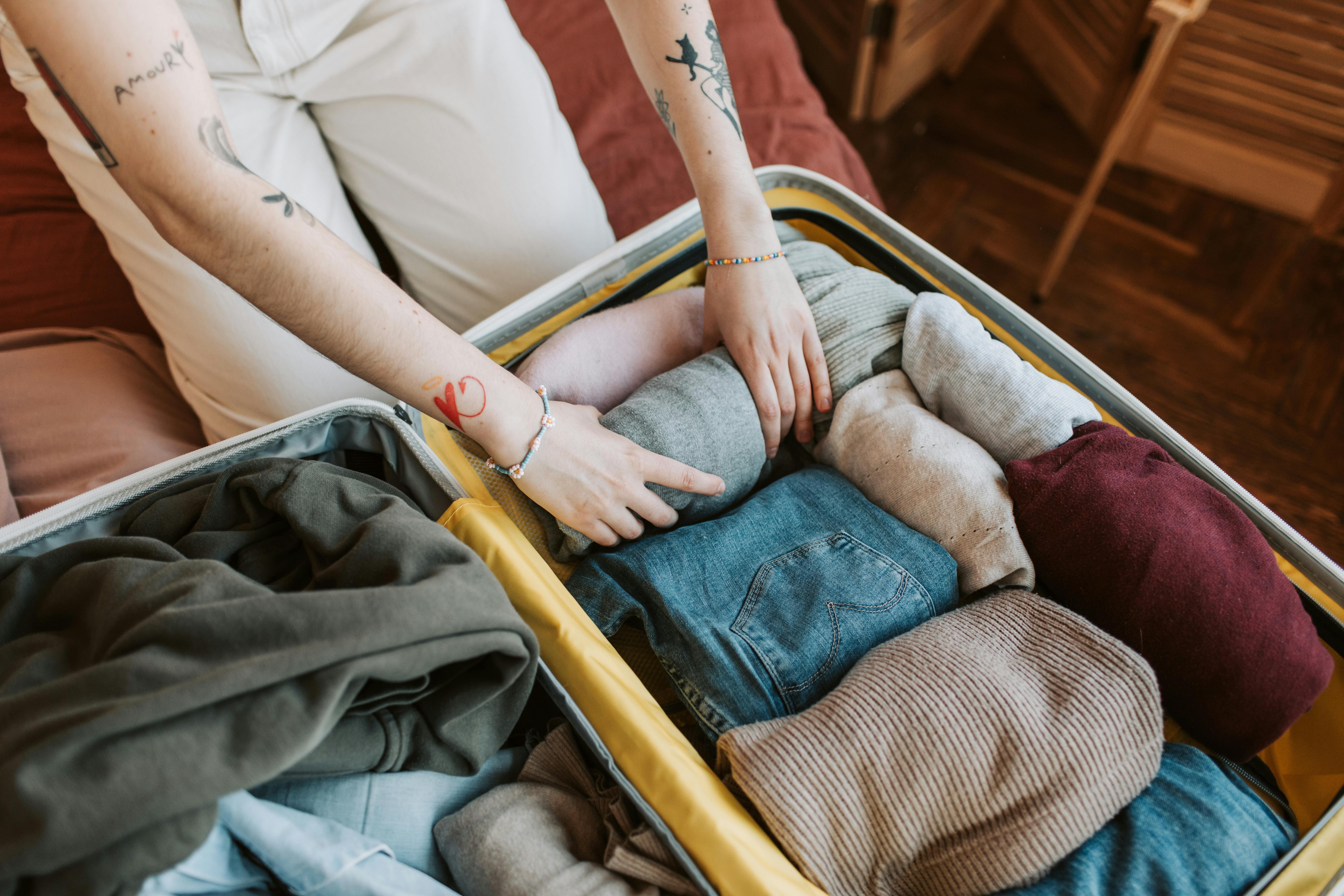
Packing cubes are the gold standard. They aren’t just for compression; they turn your backpack into a tidy chest of drawers. By using different colored cubes for different categories (e.g., blue for tops, red for bottoms, grey for electronics), you can retrieve an item in seconds, discreetly and efficiently.
The rolling method is foundational. Tightly rolling your clothes is superior to folding. It minimizes wrinkles and allows you to see every piece of clothing at a glance within your packing cube, eliminating the need to dig.
System 3: The Fortress of Self-Reliance - Your Security & Problem-Solving Toolkit
The Philosophy: Prepare for the Worst, Enjoy the Best
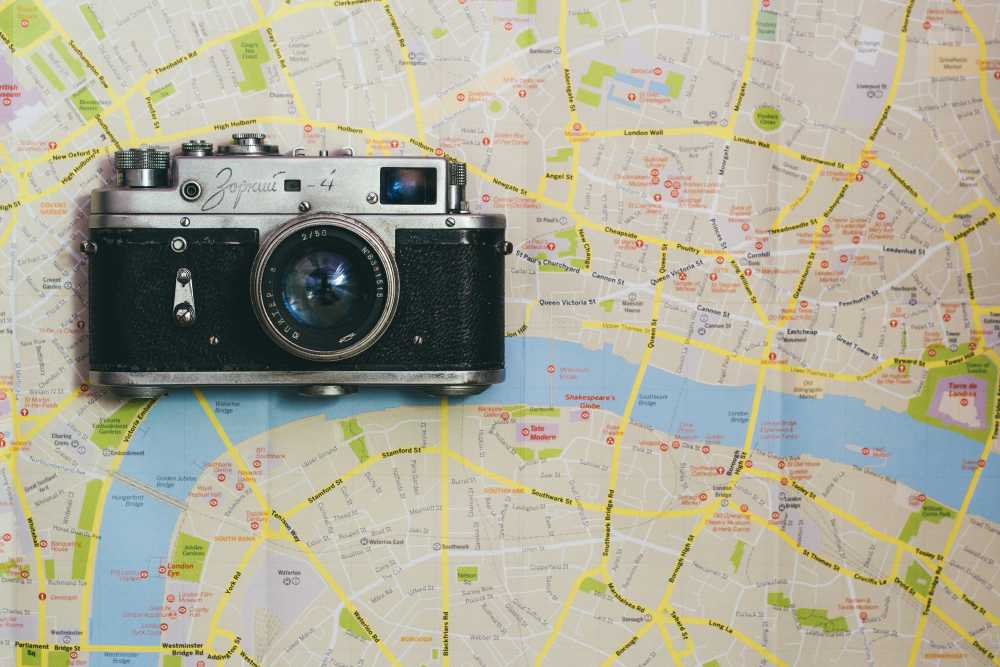
True freedom on the road doesn't come from hoping problems won't arise. It comes from the quiet confidence that you can handle them when they do. This system is about building a portable fortress of security and a toolkit for self-reliance, so you can explore with an unshakeable peace of mind.
The Three Layers of Your Fortress
Layer 1: Proactive Gear Security
The goal here is to make yourself a less appealing target. Opportunistic thieves look for easy wins.
Carry a decoy wallet with a small amount of local currency and some expired cards. If confronted, you can hand it over without losing your essential documents.
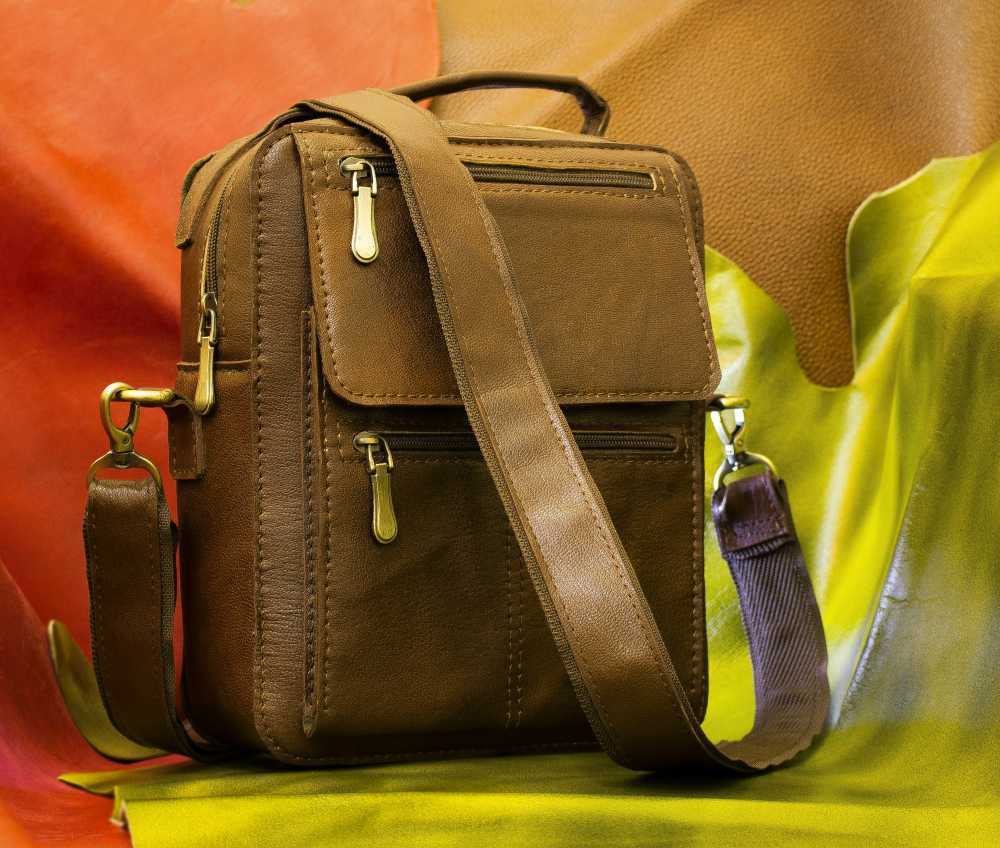
Use a simple carabiner to clip the zippers of your daypack together. It’s not a high-security lock, but it’s an effective deterrent against a pickpocket trying to subtly slide your bag open in a crowd.
Layer 2: Personal & Digital Safety
Your well-being is paramount. These items are non-negotiable.
A rubber door stop is one of the most effective, low-cost security tools you can carry. Shoved under your hotel or Airbnb door, it provides a powerful physical barrier against unwanted entry.
Your phone is your lifeline. A dead phone is a safety crisis. Always carry a fully charged power bank (at least 10,000mAh).
Public Wi-Fi is a hunting ground for data thieves. Using a VPN on your phone and laptop is essential to protect your banking information and passwords.
Layer 3: The "MacGyver" Multi-Tools
When you’re alone, small problems can become major headaches. The MacGyver mindset is about packing a few multi-purpose items that can solve countless issues.
Wrap a few feet of duct tape around a water bottle or pen. It can repair a broken sandal, patch a backpack, or serve as a makeshift bandage.
A bandana or sarong is the ultimate multi-tool. It can be a towel, a sun shield, a dust mask, a makeshift bag, or a privacy screen.
Beyond the Gear: Packing for the Solo Experience
Expert packing goes beyond the purely practical. It’s also about packing for your emotional well-being and enhancing the unique moments that solo travel offers.
Pack a sensory comfort item. Loneliness can strike unexpectedly. Something small that connects you to home—a few of your favorite tea bags, a familiar scent, a silk pillowcase—can be an incredible comfort.
Bring a social icebreaker. A simple deck of playing cards placed on a table in a hostel common room is a universal invitation to connect with other travelers, breaking down language and cultural barriers instantly.
Empower your inner photographer. Don't let being solo stop you from getting great photos. A small, flexible mini tripod allows you to use your phone's self-timer for stunning shots that aren't just selfies. The "video screenshot hack" is another pro move: record a short video of yourself moving through a scene, then scrub through it later to pull out perfect, candid-looking still images.

Conclusion: Stop Packing, Start Preparing
You now possess the framework. The difference between an amateur and an expert traveler isn't what they pack, but how they think. It’s the understanding that a capsule wardrobe is about mental clarity, modular organization is about efficiency, and a fortress of self-reliance is about absolute freedom.
This guide was the "why." You have the philosophy.
Now it's time for the "what." To put these systems into practice, you need the right tools. We've compiled everything—every piece of gear, every item of clothing, every essential document—into one definitive resource.
Your next step is clear. Take these principles and build your ultimate kit with our . It’s the tactical playbook that will bring this strategy to life.
Don't Miss Out! Subscribe for Exclusive Content
SubscribeComments 0
No comments yet
Be the first to share your experience!
Dont Miss Out! Subscribe for Exclusive Content
Ultimate USA Holidays Guide: Top Picks
FTC Affiliate Disclosure Essentials: Stay Compliant as a Travel Creator
Essential Affiliate Tools: From Tracking to Full Optimization
Booking.com Affiliate Program Review: Pros, Cons, and Earnings Potential
Decoding Affiliate Commission Rates: Benchmarks for Travel Creators