
How to Start a Travel Blog in 2026 (For Profit)

TrekGuider @trekguider
Do you find yourself endlessly scrolling through travel photos, dreaming of turning your own adventures into something more? The idea of starting a travel blog is captivating—a path to sharing your stories, connecting with a global community, and building a life of freedom. But that initial spark is often extinguished by a wave of overwhelm. The market seems impossibly crowded, the technical steps feel like learning a new language, and the road from passion project to profitable business is shrouded in mystery.
You see other creators living the dream, and you know you have the stories and the drive. But the fear of pouring your heart, time, and savings into a simple online diary that never earns a dime is paralyzing. You're not looking to build a hobby; you're looking to build a real asset, a brand, a business. You need more than just another checklist—you need a battle-tested business plan.
This is that plan. Forget the outdated advice. This is your comprehensive, step-by-step playbook on how to start a travel blog that is engineered for profit from day one. We’ll move beyond the basics of setting up a website and dive deep into the strategy of building a modern media brand. The goal isn't just to get you a byline; it's to get you paid. Before you can join the ranks of The Best Travel Blogs to Follow in 2026, you need a rock-solid foundation, and that’s exactly what we’re going to build—right now.
Why Start a Travel Blog in 2026? The Shift to Media Entrepreneur
Let's address the elephant in the room: is travel blogging still a viable business? The answer is an emphatic yes, but the game has fundamentally changed. The global travel blogging market, valued at an impressive $4.5 billion in 2026, is projected to double to $9 billion by 2032. That growth isn't for hobbyists; it's for savvy creators who understand the key market shift.

Success is no longer about simply documenting your trips. The most successful bloggers are evolving from content creators into media entrepreneurs. They are building focused, niche brands that serve a specific audience with unparalleled expertise. They understand that their blog is not the final product; it is the marketing engine for their actual products. This guide is built on that modern, profitable philosophy.
Phase 1: Building Your Brand Foundation (Before You Touch a Computer)
The single biggest mistake new bloggers make is rushing the technical setup. In 2026, the strategic barriers to success are significantly higher than the technical ones. Dedicate 80% of your initial effort to this phase, and you’ll be miles ahead of the competition.

Step 1: Niche Down to Stand Out
The era of the generalist travel blog is over. To succeed, you cannot be everything to everyone. You must become the undisputed, go-to expert for a specific audience. This is called "niching down," and frankly, it’s the most critical strategic decision you'll make. A narrow focus allows you to build deep expertise, attract a loyal and targeted audience, and charge premium prices for your knowledge.
Based on current market trends, here are five sub-niches with significant growth and commercial potential for 2026:
Accessible Travel: This historically underserved market caters to travelers with disabilities, offering content on wheelchair-friendly destinations and sensory-friendly experiences.
National Parks for Families: This niche combines the booming interest in outdoor, domestic travel with the evergreen family market, providing guides on kid-friendly hikes and lodging.
Vegan Food Travel: A highly specific subset of the food travel niche, this area serves a passionate and growing demographic with guides to plant-based restaurants and cooking classes worldwide.
Digital Nomad & Remote Work Lifestyle: With the explosion of remote work, this niche focuses on the logistics of the lifestyle—managing visas, finding reliable WiFi, and balancing work with travel.
Sustainable & Eco-Tourism: Driven by a powerful wave of consumer consciousness, this niche highlights eco-friendly accommodations, low-impact tours, and tips for responsible travel.
Step 2: Define Your Ideal Reader
Once you have your niche, get granular. Create a detailed profile of your ideal reader. Don't just think about demographics; think about psychographics.
What are their biggest travel-related frustrations?
What does their dream trip look like, and what's stopping them from taking it?
What kind of budget are they working with?
What questions do they type into Google at 11 PM while trip planning?
Understanding their pain points is the key to creating content and products they will feel were made just for them.
Step 3: Choose a Brandable Blog Name
Your blog name is a critical piece of your brand identity. It should be memorable, easy to spell, and hint at what your blog is about. Follow this practical framework to find the perfect name:
Keyword Brainstorming: List words associated with your niche, tone, and audience. For a "Sustainable & Eco-Tourism" blog, you might list: Green, Conscious, Atlas, Compass, Earth, Kind, Trek, Journey, Collective.
Apply Naming Formulas: Experiment with common conventions using your keywords.
Niche-Specific: The Vegan Voyager, The Frugal Flier
Alliteration: Roaming Roads, Compass Chronicles
Evocative & Abstract: The Saffron Trail, Velvet Atlas
Modern & Simple: The Travel Edit, Trip Theory
Verify Availability: This is non-negotiable. Your chosen name must be available as a .com domain. A ".com" is the universal standard and signals professionalism. Simultaneously, check if the name is available as a consistent handle on your primary social media platforms (Instagram, TikTok, Pinterest, etc.).
Conduct Conflict Avoidance: Do a quick Google search to ensure the name isn't already heavily associated with another major brand.
Pro-Tip: Your blog name is your brand's first impression. A short, memorable, and easily pronounceable name with an available .com domain is the gold standard for building a serious online business.
Step 4: Secure Your Digital Real Estate
Found a name that's available? Don't wait. Immediately purchase the .com domain and create the social media accounts. This secures your brand identity across the web, even if you don't plan to use all the platforms right away.
Phase 2: The Smart Launchpad — Build Your Business, Not Just a Website
With your brand strategy set, it's time to build your blog's home. For years, this meant wrestling with web hosting, WordPress installations, themes, and a dozen plugins before you could even write a word. This was the slow, expensive, and technically frustrating path.
In 2026, the smartest creators are skipping that entire phase. Instead of building a house from scratch on an empty plot of land, they're launching their business from a penthouse suite in a bustling city. They are plugging directly into a marketplace ecosystem like TrekGuider, which is designed specifically for travel entrepreneurs. This approach lets you bypass the technical headaches and focus on what actually drives your business forward: creating high-value content and selling digital products.

Step 5: Launch Your Professional Creator Page in Minutes
Instead of buying a domain and hosting, your first step is to set up your professional creator page on the TrekGuider marketplace. This is your new home base, a beautiful, pre-built landing page that establishes your brand's credibility from day one—no coding or design skills required. Within minutes, you can have:
A professional bio and profile photo that tells your story.
A showcase for your digital products, front and center.
A feed of your latest articles published on the platform.
Direct links to all your social media channels.
A built-in donation feature for your audience to support you directly.
Step 6: Upload Your Digital Products and Start Selling
The old way involved researching and configuring complex e-commerce plugins. The TrekGuider way is to simply upload your digital products. Whether you've created a custom map, an in-depth city guide, a PDF itinerary, or an e-book, our platform is built to handle the sale and delivery. You can start monetizing your expertise immediately by listing your products in our catalog, where they're discoverable by a global audience of travelers ready to buy.
Step 7: Publish Your First Articles and Tap into a New Audience
Forget worrying about SEO plugins and site speed. Your blog now lives within our Articles and News section. You can publish your high-quality, long-form content directly onto the platform. Every article you publish is automatically featured on your creator page and becomes discoverable to the entire TrekGuider community. You're not just writing for your existing audience; you're tapping into a built-in stream of traffic from day one, dramatically accelerating your growth.
Step 8: Focus on Creation, Not Maintenance
By building your presence on our marketplace, you eliminate the hidden work that plagues self-hosted bloggers: website security, plugin updates, theme compatibility issues, and performance optimization. We handle the entire technical infrastructure. Your time is freed up to focus on the only two things that will grow your income: creating exceptional content that helps travelers and developing valuable digital products they want to buy. This is the ultimate accelerator for building a travel blog for profit.
Phase 3: Content Strategy & Launching for Profit
With your brand strategy in place and your website built, you're ready to focus on the two things that will actually grow your business: creating world-class content and intelligent monetization.
Step 9: Develop Your Foundational Content Strategy
Before you write a single word, plan your first 10-20 "pillar" articles. These are in-depth, foundational posts that cover the core topics of your niche. A solid content strategy ensures you are purposefully creating assets that will attract your ideal reader and rank in search engines. This is the real secret behind how to start a travel blog that gets traffic. For example, if your niche is "National Parks for Families," your pillar posts might be "The Ultimate Guide to Visiting Yellowstone with Kids" and "10 Best Toddler-Friendly Hikes in Zion National Park."
Step 10: Writing and Publishing Your First Posts
With your content plan in place, it's time to create. Focus on producing the highest quality content possible. Your goal is to be so incredibly helpful that your readers feel like they've struck gold. Write in-depth, solve their problems, and let your unique personality shine through. Publish at least 5-10 of your pillar articles before you officially "launch" your blog to the world.
Step 11: Monetization: Planning for Profit from Day One
A profitable blog diversifies its income. While there are five primary monetization models, one stands far above the rest for long-term, scalable profit.
The future is selling your own digital products.
While display ads seem like the easiest path, they are the least profitable. To make a significant income, you need massive traffic. Digital products, on the other hand, allow you to generate substantial revenue with a much smaller, more engaged audience. The data is clear: recent blogger surveys show the average revenue per 1,000 visitors (RPM) for digital products can be as high as $283.64, compared to just $33.80 for ads.

A simple calculation shows that if just 0.2% of 50,000 monthly visitors (100 people) buy your $30 digital product, you earn $3,000. That same traffic might only generate $1,000-$2,000 from ads. This is the core of the modern travel creator's business model. Instead of earning pennies from ads, you build valuable assets that solve your audience's problems directly.
A few examples of high-value digital products include:
A hyper-detailed "7-Day Off-the-Beaten-Path Itinerary for Kyoto."
A Lightroom "Tropical Blues & Greens" preset pack.
A comprehensive travel planning template for Notion or Google Sheets.
An e-book like "The Ultimate Guide to Travel Hacking."
And when you're ready to sell your own itineraries, templates, or photo presets, a platform like the TrekGuider Platform gives you the tools to build your own digital storefront, connect directly with your customers, and build a sustainable business you control.
Frequently Asked Questions
How much does it really cost to start a travel blog?
While you can start for a very low cost, plan for a realistic initial investment of $150-$200 for your first year. This covers three years of quality hosting (like Hostinger, to lock in low rates), your domain name, and a premium theme. Think of it as the startup cost for your business.
How long does it take to make money travel blogging?
Treat it like a business, not a get-rich-quick scheme. It typically takes 6-12 months of consistent, high-quality content creation and promotion before you start seeing meaningful traffic from search engines. Most bloggers start earning their first significant income in the 12-24 month range.
Do I need to be traveling full-time to have a travel blog?
Absolutely not. Some of the most successful blogs are run by people with full-time jobs who are experts on a specific destination or travel style (e.g., weekend trips, maximizing vacation days). Your expertise and the value you provide are far more important than being a full-time nomad.
Your Journey as a Creator Starts Now
Starting a travel blog in 2026 is less about being a writer and more about being an entrepreneur. It's about building a focused brand, serving a specific audience with undeniable value, and creating assets that generate income long after you've hit "publish." You are no longer just a traveler; you are the CEO of your own media company.
The path from dreamer to doer is paved with strategic action. You now have the complete playbook for how to start a travel blog for profit in 2026. The overwhelm is gone, replaced by a clear, step-by-step plan.
Your journey starts now. Take the first step, choose your niche, and start building the travel media brand of your dreams.
Meta Data Suggestions:
SEO Meta Title (59 characters): How to Start a Travel Blog in 2026 (For Profit)
URL Slug: how-to-start-a-travel-blog
SEO Meta Description (154 characters): A step-by-step business playbook for aspiring creators. Learn how to start a travel blog for profit, from niche selection and tech setup to monetization.
Don't Miss Out! Subscribe for Exclusive Content
Subscribe



Comments 0
No comments yet
Be the first to share your experience!
Dont Miss Out! Subscribe for Exclusive Content

FTC Affiliate Disclosure Essentials: Stay Compliant as a Travel Creator


Essential Affiliate Tools: From Tracking to Full Optimization

Avoid These 5 Affiliate Landing Page Mistakes for Better Conversions

Affiliate Keyword Research Mastery for Travel Blogs

Booking.com Affiliate Program Review: Pros, Cons, and Earnings Potential

Decoding Affiliate Commission Rates: Benchmarks for Travel Creators
A Midwest Family Road Trip That Actually Wows Kids
TrekGuider @trekguider
Planning a family road trip through the Midwest can feel like a gamble. You're dreaming of open roads and unforgettable memories, but you're worried about endless stretches of flat highway, the inevitable chorus of "Are we there yet?", and the challenge of keeping everyone—from toddlers to teens—genuinely engaged. The real challenge isn't just finding a destination; it's crafting an adventure that truly feels exciting.
That anxiety can paralyze your planning. You want to create cherished memories, but you're afraid a Midwest trip will fall flat, leaving the kids glued to their screens and you feeling like you wasted precious vacation time.
What if we told you that the Midwest is hiding some of the country’s most spectacular scenic drives, unique adventures, and family-friendly destinations? This is your complete playbook for unlocking that magic. It’s a step-by-step guide to transforming apprehension into anticipation. Using these strategies alongside our comprehensive Family Travel Ideas: The 2026 Guide to Unforgettable Trips will empower you to plan a journey your family will not only survive but truly love.

Why a Midwest Family Road Trip is America’s Best-Kept Secret
While coastal destinations and sprawling national parks out west get much of the attention, a Midwest family road trip offers a unique combination of advantages that are hard to beat.
Let's be honest: the Midwest is the unsung hero of American travel. It’s where your travel budget breathes a sigh of relief and where genuine discovery replaces battling crowds for the same old photo op.
Your Budget Goes Further: This is the most significant advantage. Gas, food, lodging, and attraction prices are often considerably lower than in other popular tourist regions. This allows your travel budget to stretch, meaning you can do more, see more, and stress less about every little expense.
Fewer Crowds, More Discovery: Forget waiting in long lines or jockeying for a photo op. Many of the Midwest’s most beautiful spots, from stunning lakeshores to dramatic canyons, feel like your own private discovery. This creates a more relaxed and immersive experience where your family can connect with the place, and each other.
Authentic Americana at Its Best: The Midwest is the heartland for a reason. A road trip here is a journey through charming small towns, historic river ports, and quirky roadside attractions that feel like a step back in time. It’s an opportunity to connect with a different pace of life and create genuine memories.
A Surprisingly Diverse Landscape: The stereotype of a flat, boring landscape couldn't be more wrong. The Midwest is home to towering sand dunes, lush forests filled with waterfalls, dramatic rock formations carved by ancient glaciers, and the majestic, ocean-like Great Lakes. The natural diversity is astounding and offers a perfect playground for families who love the outdoors.

Convinced? Good. Now, let's trade theory for asphalt. We’ve mapped out four distinct, battle-tested blueprints for a Midwest family road trip that delivers on that promise of adventure and charm.
Curated Midwest Family Road Trip Itineraries
Forget aimless driving. These routes are packed with compelling stops, stunning scenery, and activities for all ages. They are proven blueprints for a successful Midwest family road trip.
1. The Great River Road: A Journey Along the Mississippi
Following the course of the mighty Mississippi River, this National Scenic Byway offers a captivating journey through the heart of America. While the full route is immense, the stretches through Wisconsin, Iowa, and Illinois are particularly rich for a family adventure.
Route Snapshot: Start in Red Wing, Minnesota, and wind your way south to Hannibal, Missouri. This 300-mile segment can be comfortably enjoyed over 3-5 days.
Can't-Miss Stops:
National Eagle Center (Wabasha, MN): Get an up-close look at resident bald and golden eagles and learn about their importance to the river's ecosystem.
Pikes Peak State Park (McGregor, IA): Offering one of the most iconic views of the Mississippi River Valley, this park features easy, family-friendly hiking trails to stunning overlooks.
Galena, Illinois: This beautifully preserved 19th-century town is a treasure. Stroll the historic Main Street and take a trolley tour to learn about its rich history.
Mark Twain Boyhood Home & Museum (Hannibal, MO): Step directly into the world of Tom Sawyer and Huckleberry Finn. It’s a magical experience for kids and adults alike.

2. Michigan's Gold Coast: Lake Michigan Circle Tour
The eastern shore of Lake Michigan boasts some of the most beautiful freshwater coastline in the world, with towering sand dunes, charming beach towns, and impossibly blue water. The iconic M-22 scenic highway is the star of this show.
Route Snapshot: A 4-7 day trip starting from Traverse City, heading south along the coast to Saugatuck.
Sample 5-Day Itinerary:
Day 1: Traverse City: Arrive in the "Cherry Capital of the World." Explore downtown and relax on the beaches of Grand Traverse Bay.
Day 2: Sleeping Bear Dunes National Lakeshore: Dedicate a full day to this natural wonder. The Dune Climb is a rite of passage with a rewarding view.
Day 3: M-22 South: Slowly make your way down the coast, stopping in idyllic towns like Frankfort and Manistee.
Day 4: Silver Lake Sand Dunes: For a dose of adrenaline, rent a dune buggy or take a guided tour across the massive dunes.
Day 5: Saugatuck/Douglas: End your trip in these charming sister art towns. Browse galleries and enjoy a final sunset over Lake Michigan.
Pro-Tip: Pack a cooler with lunch and snacks before driving the Pierce Stocking Scenic Drive in Sleeping Bear Dunes. The pull-offs and picnic areas offer million-dollar views, making for a much more memorable and affordable lunch.

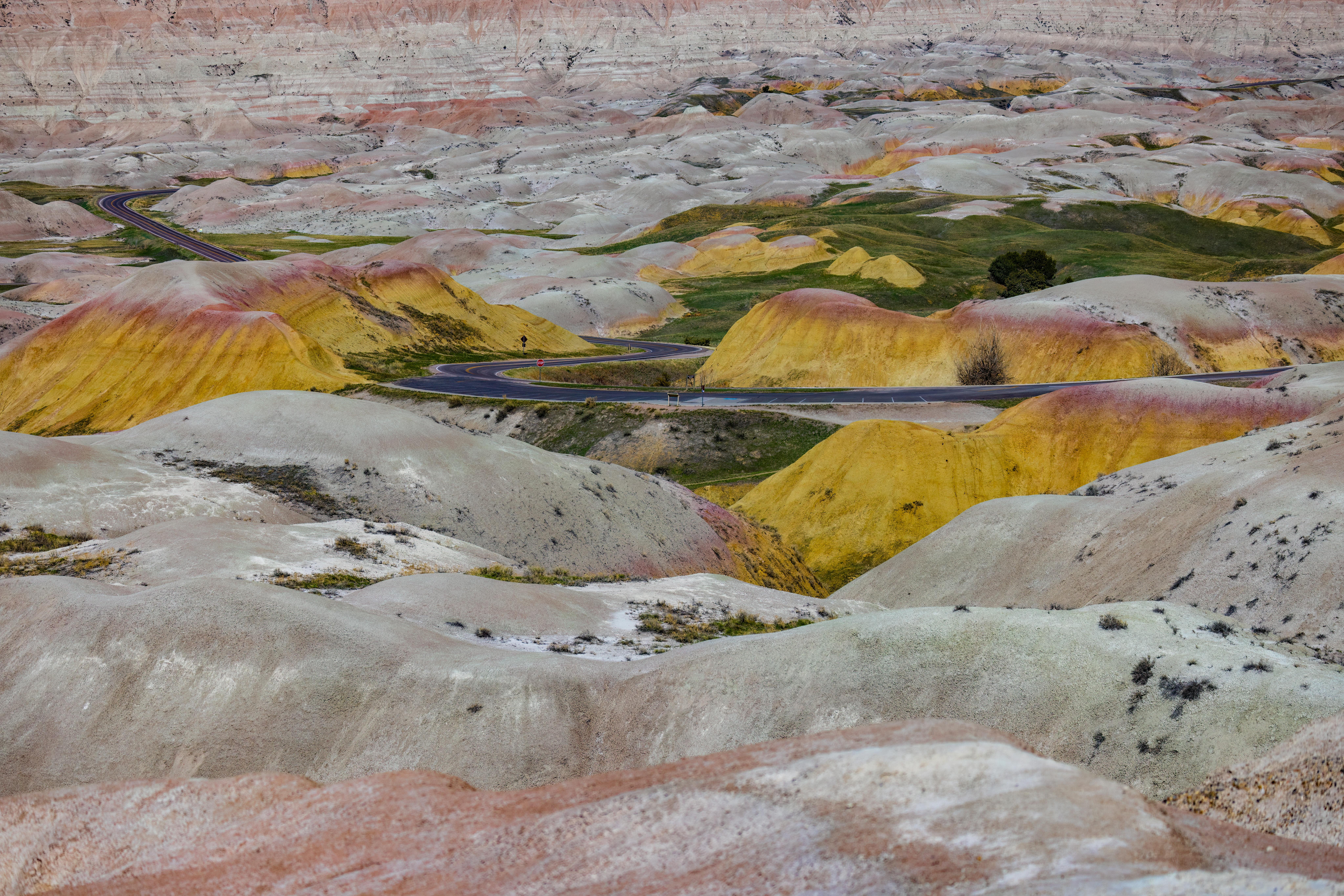
3. The Black Hills & Badlands Loop, South Dakota
This route packs an incredible amount of iconic American landmarks and otherworldly landscapes into a manageable loop. It’s an epic adventure that feels worlds away from the everyday and is one of our favorite 4 Unforgettable National Park Family Travel Ideas.
Route Snapshot: A 4-6 day loop starting and ending in Rapid City, South Dakota.
Must-Do Experiences:
Badlands National Park: Drive the Badlands Loop Road (Highway 240), stopping at the overlooks to marvel at the surreal, eroded buttes.
Custer State Park: Drive the Wildlife Loop Road for near-guaranteed sightings of massive bison herds, pronghorn, and cheeky prairie dogs.
Mount Rushmore National Memorial: See the iconic monument and walk the Presidential Trail for different perspectives. The evening lighting ceremony is a must.
Wall Drug Store: No trip is complete without stopping at this world-famous roadside attraction. It’s a kitschy, fun-filled labyrinth that kids will absolutely love.
4. Ohio's Hocking Hills Scenic Byway
For families who love to hike, this corner of southeastern Ohio is a paradise. The Hocking Hills Scenic Byway connects a series of state parks renowned for their stunning gorges, recessed caves, and beautiful waterfalls.
Route Snapshot: Perfect for a long weekend (2-4 days), based out of the towns of Logan or Nelsonville.
Key Hiking & Activity Hubs:
Old Man's Cave: The most popular area, featuring a spectacular gorge with multiple waterfalls and a fantastic 1-2 hour hiking loop.
Ash Cave: The largest recess cave in the state, accessible via an easy, flat, and wheelchair/stroller-friendly trail.
Cedar Falls: A powerful waterfall in a wild, scenic gorge with a beautiful hiking trail.
Rock House: The only true cave in the park, this tunnel-like corridor is an adventurous spot for kids to explore.

Stay Organized on the Open Road
Feeling inspired by these National Park adventures? Don't let the planning details slow you down. Our free National Park Road Trip Checklist is the perfect tool to ensure you have everything you need, from the right gear to the must-have snacks, for a smooth and memorable journey.
The Ultimate Midwest Road Trip Planning Toolkit
A great itinerary is only half the battle. Flawless execution comes from smart planning.
Budgeting for Your Midwest Adventure
Your money goes further in the Midwest. Maximize your budget with these tips:
Picnic Power: Pack a cooler. Many scenic drives, state parks, and roadside stops have beautiful picnic areas. Eating one meal a day this way can save a family of four $50-$80 daily.
State Park Perks: Annual passes for state parks can offer incredible value if you plan to visit multiple parks within one state.
Look for Free Attractions: From hiking trails to small-town museums, the Midwest is full of free, enriching experiences.
Packing Smart for Four-Season Weather
Midwest weather is famously unpredictable. The key is layering.
The Holy Trinity: Always pack a lightweight rain jacket, a fleece or sweatshirt, and a mix of short and long-sleeved shirts for everyone, regardless of the season.
Footwear is Key: Pack comfortable, broken-in walking shoes. Include waterproof hiking shoes if you plan to visit places like Hocking Hills.
The Analog & Digital Car Kit: Don't forget a first-aid kit, jumper cables, a portable phone charger, and a physical road atlas. Download maps and playlists for offline use.

Pro-Tip: Create a "Go-Box" for the car. Use a plastic bin and stock it with essentials: paper towels, wet wipes, hand sanitizer, sunscreen, bug spray, and trash bags. Keeping it all in one place prevents frantic searching.
The Commander’s Guide to In-Car Harmony
The real challenge of a road trip isn't the driving; it's managing the tiny humans in the back seat. Check out The Sanity-Saving System for Your Next Family Road Trip for our full strategy.
Set the Terms of Engagement: Before you leave, have a family meeting. Discuss the route, set expectations for driving time, and agree on rules for screen time and snacks.
Embrace the Surprise Stop: The best memories often come from unplanned detours. Build buffer time into your schedule to explore that quirky museum or scenic overlook.
The Snack Bag is Sacred: Do not underestimate the power of snacks. Pack a mix of healthy options and special "road trip only" treats to diffuse budding meltdowns.
Frequently Asked Questions
What is the best time of year for a Midwest road trip?
The ideal time is from late spring to early fall (May through October). This window offers the most pleasant weather for hiking and outdoor activities, with fall providing the added bonus of spectacular foliage, especially in Michigan and along the Mississippi River.
Is the Midwest really just flat cornfields?
Absolutely not! This is the biggest misconception about the region. As this guide shows, the Midwest is home to incredibly diverse landscapes, including the towering sand dunes of Lake Michigan, the dramatic cliffs of Pictured Rocks, the otherworldly Badlands of South Dakota, and the lush, waterfall-filled gorges of Hocking Hills, Ohio.
How much should I budget for a Midwest family road trip?
One of the Midwest's biggest advantages is its affordability. Compared to popular coastal destinations, you can expect to spend significantly less on lodging, food, and attractions. A family of four can often travel comfortably on $150-$250 per day, especially when using tips like picnicking.
What are some can't-miss states for a Midwest family road trip?
Based on the variety of attractions, Michigan is fantastic for its stunning coastline and dunes. South Dakota offers iconic national parks and monuments. Ohio's Hocking Hills region is a paradise for hikers, and the states along the Great River Road (like Wisconsin and Iowa) are rich in history and scenic beauty.
Your Midwest Adventure Awaits
The Midwest is not "flyover" country; it’s "drive-through" country in the best possible way. It’s a region of surprising beauty, authentic charm, and boundless opportunities for family connection. This guide has given you the blueprints and the tools to move from dreaming to doing.
A successful trip isn’t about a perfect, problem-free journey; it’s about creating a shared story of discovery and laughter on the open road. Pick a route, start planning, and get ready to create a treasure trove of memories your family will cherish for years to come.
Read the full guide: Family Travel Ideas: The 2026 Guide to Unforgettable Trips
Don't Miss Out! Subscribe for Exclusive Content
SubscribeComments 0
No comments yet
Be the first to share your experience!
Dont Miss Out! Subscribe for Exclusive Content

San Francisco Cherry Blossoms: A Local's Guide to the Blooms

Halloween SF: Haunts Without Horrors

SF Festivals: 7 Must-See Lineups

Christmas SF: Lights & Wharf Wonders

SF Pride: 6 Route & Party Hacks

Chinese New Year SF: Parade Essentials
Solo Travel Packing: Pack for Freedom, Not Fear
TrekGuider @trekguider
Forget every checklist you’ve ever downloaded. The internet is littered with lists of what to pack, but they all miss the fundamental point. For a solo traveler, the contents of your bag are secondary. What truly matters is the system behind it. Mainstream packing advice is a trap, designed for travelers who can lean on a partner. But for you, every ounce and every decision is a direct reflection of your independence.
The secret the pros know is this: packing isn’t a chore you endure before a trip. It is the first, most critical act of the adventure itself. It’s a declaration of self-reliance. Getting it wrong leads to the classic traveler mistakes: wrestling an overstuffed bag on a crowded train, becoming an obvious target, or having a minor inconvenience like a dead phone escalate into a genuine crisis in an unfamiliar city.
This is not another packing list. This is a manifesto on the philosophy of smart travel. We’re going to dismantle the conventional wisdom and replace it with a set of battle-tested systems. These are the solo travel packing hacks that go beyond gear, transforming your bag from a burdensome anchor into a strategic asset for a safer, more mobile, and profoundly more liberating journey. Of course, packing is just one piece of the puzzle. For the complete playbook on traveling alone, be sure to consult our master resource on Anxious to Adventurous: Solo Travel Tips for Confidence.

The Mindset Shift: Why Your Bag is Your Most Important Travel Companion
For a solo traveler, your pack is your superpower. It’s your home, your toolkit, and your shield. Embracing this mindset is the key. A masterful packing strategy isn’t about what you leave behind; it’s about what you gain—freedom from the tyranny of heavy luggage, the anxiety of unpreparedness, and the vulnerability that comes with looking like a lost tourist.
This philosophy is built on three core pillars:
Radical Self-Reliance: You are your entire support system. Every item must be a tool that empowers your independence, from a simple roll of duct tape for on-the-fly repairs to a power bank that ensures you are never without your digital lifeline.
Calculated Efficiency: Your time and energy are your most precious resources. An intelligently organized bag means less time spent rummaging for a charging cable and more time savoring a sunset. It means navigating cobblestone streets and endless train station stairs with ease, not exhaustion.
Proactive Security: A smart packer moves with confidence, and confidence is a powerful deterrent. This isn't about paranoia; it's about preparation. It’s choosing and organizing your gear in a way that makes you a "hard target," so you can focus on the joy of discovery.
System 1: The Capsule Wardrobe - A Masterclass in Infinite Style, Minimal Space
The Philosophy: More Options from Fewer Items
The capsule wardrobe isn't just a space-saving technique; it's a strategic weapon against decision fatigue. The goal is to create a small, curated collection of versatile, interchangeable clothing. This ensures you feel confident and appropriate in any situation, from a morning market stroll to an impromptu dinner invitation, without ever having to waste mental energy on what to wear.
The Method in Action
This system works by making smart, upfront choices. For example, a common framework for a one-week trip is the 5-4-3-2-1 guideline: 5 sets of socks/underwear, 4 tops, 3 bottoms, 2 pairs of shoes, and 1 layering piece. But the real magic is in the details.
Invest in high-performance fabrics. Merino wool is the undisputed champion for solo travelers; it’s temperature-regulating, moisture-wicking, and naturally odor-resistant, meaning you can wear it multiple times without washing. One merino wool shirt does the work of three cotton ones.
Build on a neutral palette. Sticking to a base of colors that all work together (black, grey, navy, tan) creates dozens of potential outfits. You can then add personality with a lightweight, colorful scarf or a unique accessory—items that provide maximum visual impact for minimal packing space.
System 2: Modular Organization - The Secret to Effortless Efficiency & Discretion
The Philosophy: A Place for Everything, and Everything in Its Place
How you organize your bag is a strategic choice. A chaotic bag bleeds time and energy. Worse, it forces you to expose your entire inventory just to find one item, a critical vulnerability in a shared hostel dorm. The goal is to create a modular system that allows you to access exactly what you need, when you need it, without disrupting anything else.
The Method in Action
The key element of modular organization is compartmentalization.
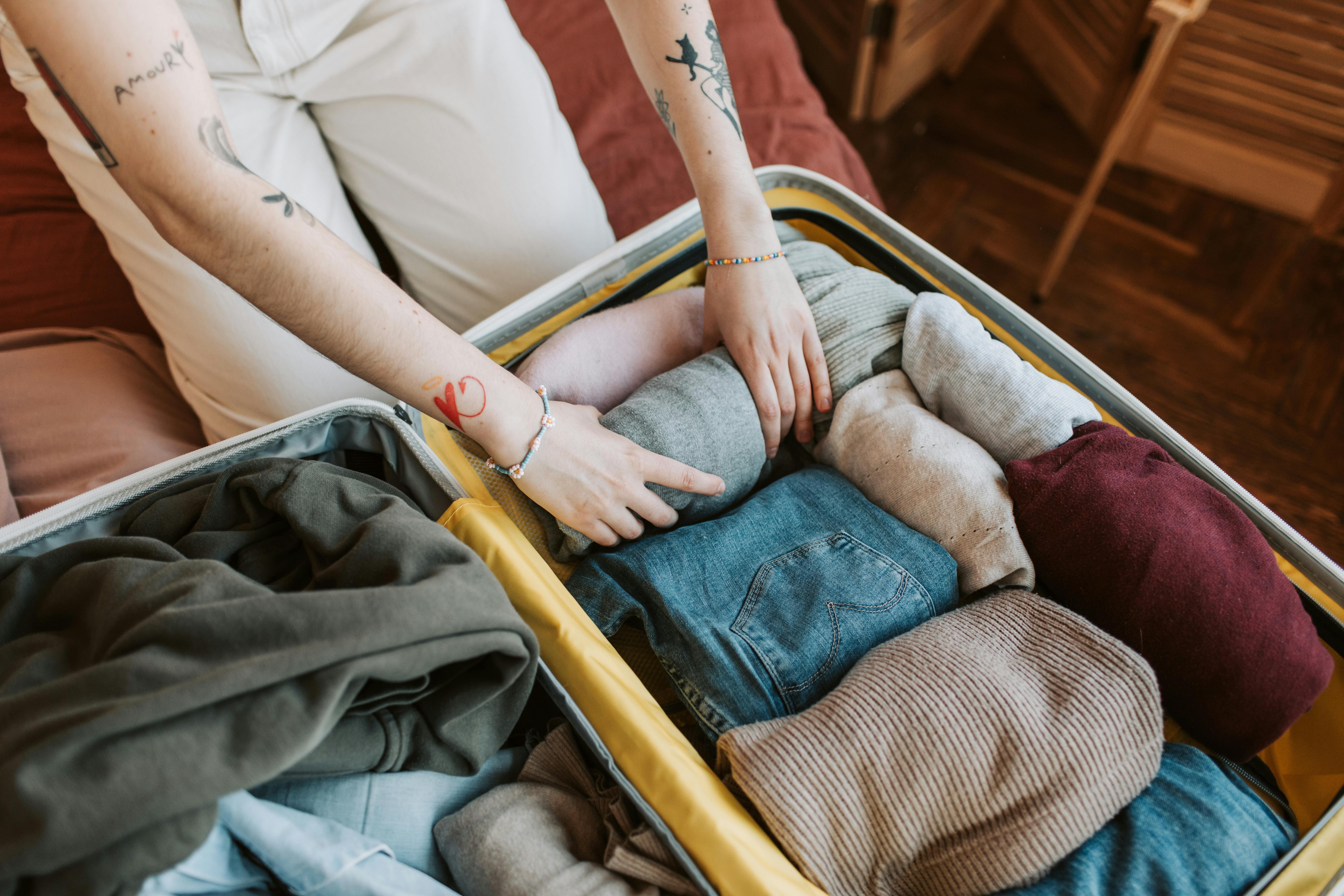
Packing cubes are the gold standard. They aren’t just for compression; they turn your backpack into a tidy chest of drawers. By using different colored cubes for different categories (e.g., blue for tops, red for bottoms, grey for electronics), you can retrieve an item in seconds, discreetly and efficiently.
The rolling method is foundational. Tightly rolling your clothes is superior to folding. It minimizes wrinkles and allows you to see every piece of clothing at a glance within your packing cube, eliminating the need to dig.
System 3: The Fortress of Self-Reliance - Your Security & Problem-Solving Toolkit
The Philosophy: Prepare for the Worst, Enjoy the Best
True freedom on the road doesn't come from hoping problems won't arise. It comes from the quiet confidence that you can handle them when they do. This system is about building a portable fortress of security and a toolkit for self-reliance, so you can explore with an unshakeable peace of mind.
The Three Layers of Your Fortress
Layer 1: Proactive Gear Security
The goal here is to make yourself a less appealing target. Opportunistic thieves look for easy wins.
Carry a decoy wallet with a small amount of local currency and some expired cards. If confronted, you can hand it over without losing your essential documents.
Use a simple carabiner to clip the zippers of your daypack together. It’s not a high-security lock, but it’s an effective deterrent against a pickpocket trying to subtly slide your bag open in a crowd.
Layer 2: Personal & Digital Safety
Your well-being matters most. These items are non-negotiable.
A rubber door stop is one of the most effective, low-cost security tools you can carry. Shoved under your hotel or Airbnb door, it provides a powerful physical barrier against unwanted entry.
Your phone is your lifeline. A dead phone is a safety crisis. Always carry a fully charged power bank (at least 10,000mAh).
Public Wi-Fi is a hunting ground for data thieves. Using a VPN on your phone and laptop is essential to protect your banking information and passwords.
Layer 3: The "MacGyver" Multi-Tools
When you’re alone, small problems can become major headaches. The MacGyver mindset is about packing a few multi-purpose items that can solve countless issues.
Wrap a few feet of duct tape around a water bottle or pen. It can repair a broken sandal, patch a backpack, or serve as a makeshift bandage.
A bandana or sarong is the ultimate multi-tool. It can be a towel, a sun shield, a dust mask, a makeshift bag, or a privacy screen.
Beyond the Gear: Packing for the Solo Experience
Expert packing goes beyond the purely practical. It’s also about packing for your emotional well-being and enhancing the unique moments that solo travel offers.
Pack a sensory comfort item. Loneliness can strike unexpectedly. Something small that connects you to home—a few of your favorite tea bags, a familiar scent, a silk pillowcase—can be an incredible comfort.
Bring a social icebreaker. A simple deck of playing cards placed on a table in a hostel common room is a universal invitation to connect with other travelers, breaking down language and cultural barriers instantly.
Empower your inner photographer. Don't let being solo stop you from getting great photos. A small, flexible mini tripod allows you to use your phone's self-timer for stunning shots that aren't just selfies. The "video screenshot hack" is another pro move: record a short video of yourself moving through a scene, then scrub through it later to pull out perfect, candid-looking still images.

Conclusion: Stop Packing, Start Preparing
You now possess the framework. The difference between an amateur and an expert traveler isn't what they pack, but how they think. It’s the understanding that a capsule wardrobe is about mental clarity, modular organization is about efficiency, and a fortress of self-reliance is about absolute freedom.
This guide was the "why." You have the philosophy.
Now it's time for the "what." To put these systems into practice, you need the right tools. We've compiled everything—every piece of gear, every item of clothing, every essential document—into one definitive resource.
Your next step is clear. Take these principles and build your ultimate kit with our . It’s the tactical playbook that will bring this strategy to life.
Read the full guide: Anxious to Adventurous: The Ultimate Guide to Solo Travel Confidence
Don't Miss Out! Subscribe for Exclusive Content
SubscribeComments 0
No comments yet
Be the first to share your experience!
Dont Miss Out! Subscribe for Exclusive Content

Ultimate USA Holidays Guide: Top Picks
FTC Affiliate Disclosure Essentials: Stay Compliant as a Travel Creator
Essential Affiliate Tools: From Tracking to Full Optimization
Booking.com Affiliate Program Review: Pros, Cons, and Earnings Potential
Decoding Affiliate Commission Rates: Benchmarks for Travel Creators
