
SF Pride: 6 Route & Party Hacks

TrekGuider @trekguider
Picture it: a river of rainbow flags, glitter, and pure, unadulterated joy flowing down Market Street. The air thrums with music, cheers, and the collective heartbeat of hundreds of thousands celebrating love, identity, and resilience. This isn't just any parade; this is the legendary San Francisco Pride Parade. But for every person lost in the moment, there's another lost in the crowd, wrestling with a dead phone, a terrible view, and no idea where their friends have vanished. The sheer scale of SF Pride can be overwhelming, threatening to turn a day of pure celebration into a stressful logistical nightmare.
You’ve imagined yourself at the heart of the action, capturing the perfect photo, feeling that powerful sense of community. The reality, however, could be getting stuck behind a seven-foot-tall person, unable to see a single float, with your phone battery blinking at 3% and no cell service to find your crew. The difference between an unforgettable experience and a frustrating ordeal isn't luck—it's preparation. You deserve to experience every ounce of joy this iconic event has to offer, without the chaos and confusion that can so easily derail the day.
This is your definitive guide to conquering the celebration. We’re giving you six battle-tested route and party hacks to navigate the pride parade San Francisco like a seasoned pro. Forget the stress; this playbook ensures you soak in the history, master the logistics, and create memories that will last a lifetime, all while staying safe and comfortable.

Before You Go: Essential Prep for the Pride Parade San Francisco
Before you even think about your rainbow outfit, a little prep work will set the stage for a flawless day. The SF Pride Parade is more than a party; it’s a powerful legacy. Born from the first "gay-in" in 1970 and commemorating the key 1969 Stonewall Uprising, this event has evolved from a protest into a global platform for activism and celebration. In the 1980s, it became a crucial front line for raising AIDS awareness, and today it continues to champion the diverse spectrum of the LGBTQ+ community. Understanding this history enriches the entire experience, transforming it from a spectacle into a meaningful pilgrimage.
The 2026 SF Pride Parade is scheduled for Sunday, the last Sunday of Juneth, with the first contingents stepping off at 10:30 AM. To be ready, your day pack is your most critical asset. Here’s a non-negotiable checklist:
Hydration: Pack a reusable water bottle. There are water stations, but having your own is crucial for staying hydrated in the California sun.
Sun Protection: Sunscreen, a hat, and sunglasses are absolutely essential. There is very little shade along the parade route.
Layered Clothing: San Francisco weather is famously fickle. What starts as a chilly, foggy morning can quickly turn into a warm, sunny afternoon. A light jacket or hoodie you can tie around your waist is the smartest move you can make.
Comfortable Shoes: You will be on your feet for hours, walking and standing. Prioritize comfort over style; your feet will thank you by the end of the day.
Portable Power Bank: Your phone will be working overtime as your camera, map, and communication device. A fully charged power bank is an absolute must-have.
Snacks: While there are food vendors, lines can be long and prices high. Pack some energy bars or other easy-to-eat snacks to keep your energy levels up.
Finally, let's talk safety. SF Pride is known for its strong security measures, including advanced weapon detection technology at key entry points. While organizers work hard to create a secure environment, personal safety matters most in any large crowd. Familiarize yourself with basic protocols, like being aware of your surroundings and keeping your valuables secure. For a comprehensive look at staying safe while traveling, our Solo Female Travel Safety Guide offers invaluable tips that apply to everyone, regardless of gender, in any crowded event scenario.
Hack #1: Master the Market Street Route for the Pride Parade San Francisco
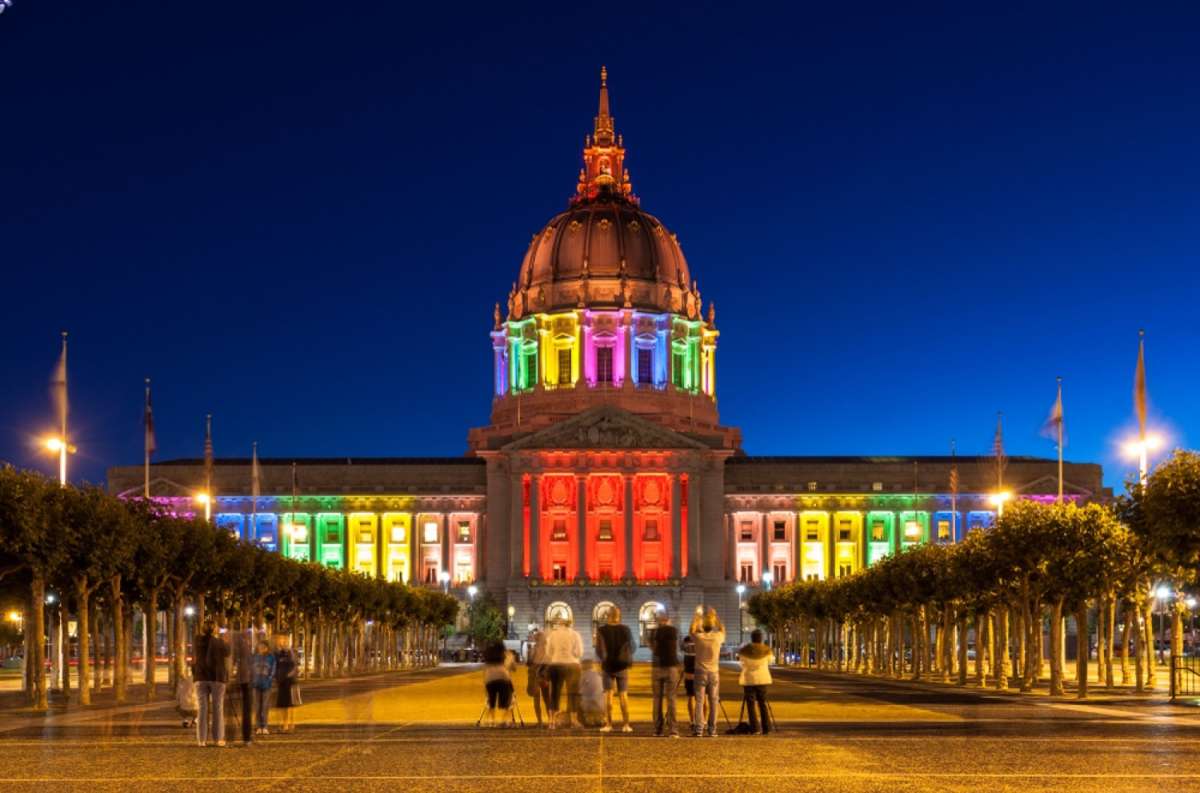
The parade route is deceptively simple: it runs straight down Market Street, starting at Beale Street and culminating at 8th Street, right by the Civic Center Plaza. The challenge isn't knowing the route; it's knowing where on the route to be and when to be there.
The Hack: Arrive by 9 AM and choose your zone strategically. The parade officially starts at 10:30 AM, but the sidewalks begin filling up much earlier. Arriving an hour and a half beforehand allows you to claim a prime spot without having to battle the late-coming masses.
Here’s a breakdown of the route's key zones to help you decide on your ideal viewing experience:
The Starting Zone (Beale to Montgomery Street): This area is often less crowded, especially right at the beginning. You'll see all the contingents when they are fresh, energized, and at their most organized. It’s a fantastic spot for photographers who want clean shots of the floats and performers before the crowds swell. The energy here is one of joyful anticipation.
The Commercial Core (Montgomery to Powell Street): This is the heart of the parade and, consequently, the most packed section. The tall buildings create a canyon-like effect, amplifying the sound and energy. It’s an intense and exhilarating place to be, but not for the faint of heart. If you want to be in the thick of it, this is your spot, but be prepared for a tight squeeze.
The Climax Zone (Powell to 8th Street): As the parade approaches its end at the Civic Center, the energy reaches a fever pitch. This is where the performers give their all, knowing they’re approaching the main celebration. The crowd here is dense but incredibly vibrant. Positioning yourself near 8th Street gives you a head start on moving into the Civic Center Plaza for the post-parade festivities.
Pro-Tip: For a less obstructed view and better photos, try to secure a spot on the south side of Market Street. In the late morning and early afternoon, the sun will be mostly at your back, beautifully illuminating the parade without forcing you to squint. This side is often just slightly less congested than the north side.
Hack #2: The Transportation Game Plan - Ditch the Car, Embrace Public Transit
Let’s be perfectly clear: driving to the SF Pride Parade is a recipe for disaster. Street closures are extensive, parking is virtually non-existent and astronomically expensive, and navigating the gridlock will drain your celebratory spirit before you even arrive.
The Hack: Make BART (Bay Area Rapid Transit) and Muni your best friends for the day. San Francisco’s public transit system is designed to handle massive events like this, and it is by far the most efficient way to get to and from the parade.
Here’s your transit strategy:
BART: The underground trains are the fastest way to get downtown from the East Bay, the Peninsula, or other parts of the city. The key is choosing the right station to exit.
Embarcadero Station: Puts you right near the start of the parade. A great option if you plan to arrive early and watch from the beginning.
Montgomery Station: A perfect middle-ground, placing you in the energetic core of the route. It’s one of the busiest stations, so be prepared for crowds.
Powell Station: Another central option, close to the cable car turnaround and a major shopping area. Like Montgomery, expect it to be very busy.
Civic Center Station: This is your stop if you want to head directly to the post-parade celebration or watch the parade's final leg.
Muni: The city’s network of buses and light rail (Muni Metro) is another excellent choice. The F-Market & Wharves historic streetcar will be rerouted, but the Muni Metro lines run directly under Market Street, using the same stations as BART. Many bus lines will have detours, so be sure to check the SFMTA website or your favorite transit app for real-time updates on the day of the event.
Rideshare services like Uber and Lyft will be operating, but expect heavy surge pricing and designated drop-off/pick-up zones that may be several blocks away from Market Street to avoid the worst of the congestion. Public transit remains the most reliable and cost-effective option.

Hack #3: The Civic Center Celebration - Your Post-Parade HQ
The last float crossing 8th Street doesn't mark the end of the day—it marks the beginning of the next phase. The parade flows directly into the massive Pride Celebration at Civic Center Plaza, a sprawling festival with multiple stages of live music, DJs, inspiring speakers, hundreds of community booths, art installations, and food vendors.
The Hack: Have a concrete plan for navigating the festival, especially for meeting your group. Cell service in and around Civic Center Plaza can become extremely unreliable due to the sheer number of people. A "we'll find each other" approach will likely fail.
Follow these steps for a seamless transition from parade to party:
Establish a Hyper-Specific Meeting Point: Before you separate, agree on a meeting spot that is impossible to mistake. "By the main stage" is too vague. Instead, choose something like, "At the base of the statue of James Lick, on the side facing the library," or "Directly in front of the main entrance to the Asian Art Museum." Set specific times to meet there (e.g., 2 PM and 4 PM).
Pace Yourself and Hydrate: The celebration runs for hours after the parade. It's a marathon, not a sprint. Continue to drink water, find moments of shade, and don't forget to eat.
Explore with Purpose: Don't just wander aimlessly. The community booths are the soul of the celebration. You can connect with dozens of non-profits, activist groups, and local organizations. It’s an incredible opportunity to learn, connect, and find your community.
Know Your Exits: Take a moment upon arrival to orient yourself and identify the main exit points from the plaza. Knowing how to get out quickly in case of an emergency or if you simply feel overwhelmed is a smart move.

Hack #4: Beyond Market Street - Unofficial Parties & Neighborhood Vibes
The official parade and Civic Center festival are the main events, but the spirit of Pride permeates the entire city, becoming a vibrant key element of the city’s festive calendar—a calendar we explore in our broader guide to San Francisco Holidays: Bay Area Buzz.
The Hack: Dip out of the main event for a few hours to experience a different, more intimate side of Pride.
The Castro District: As the historic heart of San Francisco's LGBTQ+ community, the Castro is ground zero for Pride weekend. The streets become a massive, vibrant block party. While it will be just as crowded as the parade, the atmosphere is different—more neighborhood-focused and less structured. Grab a drink at a historic bar, watch the impromptu dance parties, and soak in the history.
Dolores Park: On Pride Sunday, the park's famous "Gay Beach" area expands to cover nearly the entire lawn. It transforms into a massive, sun-drenched picnic party. The vibe is more relaxed and bohemian than the official festival. Pack a blanket, bring some snacks, and enjoy people-watching in one of the city's most beautiful settings.
SoMa (South of Market): This neighborhood is home to many of the city's most famous clubs and venues. Throughout Pride weekend, these spaces host a huge variety of official and unofficial after-parties, from daytime DJ sets to late-night dance events. Check event listings in advance, as many of the most popular parties sell out.

Hack #5: Tech & Safety - Your Digital Toolkit for a Seamless Day
In a modern festival environment, your smartphone is your most powerful tool—if you use it wisely.
The Hack: Prep your phone and apps to be your digital command center for the day.
The Power Bank is Non-Negotiable: We mentioned it before, but it bears repeating. A dead phone means no photos, no map, and no way to contact your friends. A fully charged portable power bank is the single most important piece of tech you can bring.
Master Your Communication Apps: Standard text messages can be delayed when cell networks are overloaded. Use a data-based messaging app like WhatsApp or Signal for your group chat. Their delivery is often more reliable in dense crowds. Use the "Share Live Location" feature for a set period (e.g., 15 minutes) if you get separated and need to find your way back to your group.
Download Offline Maps: Before you leave home, download an offline map of the downtown San Francisco area in your map app of choice. Even if you lose all cell service, your phone's GPS will still work, allowing you to see your location on the map and navigate.
Embrace Official Resources: Check the official SF Pride website in the days leading up to the event. If they release an official app, download it. It will likely have the most accurate schedules, maps, and emergency alerts.
Pro-Tip: Take a screenshot of your planned meeting spots, the parade route map, and the contact info for everyone in your group. Create a dedicated photo album for these screenshots so you can access them instantly, even if your apps won't load due to poor connectivity.

Hack #6: The Exit Strategy - How to Leave Without the Headache
Just as important as your arrival plan is your exit strategy. When hundreds of thousands of people try to leave the same area at the same time, the public transit stations and rideshare zones become incredibly congested.
The Hack: Avoid leaving during the peak rush right as the festival winds down.
You have two primary strategies for a stress-free departure:
The Early Exit: If you've had your fill of the crowds and the main celebration, start making your way out before the final headliners take the stage at Civic Center. By leaving an hour before the official end time, you can beat the massive wave of people heading for the BART and Muni stations.
The Patient Wait: This is often the better option. Instead of rushing out with everyone else, wait it out. Find a restaurant or cafe a few blocks away from Civic Center, grab a bite to eat, and relax for an hour or so. Let the crowds on the transit platforms thin out. By the time you're done, your journey home will be far more pleasant.
If you're using a rideshare service, walk at least four or five blocks away from Market Street and Civic Center before you even attempt to request a ride. This will get you out of the most congested, no-pickup zones and will likely save you from the highest surge pricing.
Your Guide to an Unforgettable Pride
You are now armed with the knowledge to do more than just attend the pride parade San Francisco —you are ready to experience it with confidence, joy, and a sense of empowered preparedness. From mastering the Market Street route and navigating the Civic Center celebration to knowing the smartest ways to get there and back, you have the tools to craft a perfect day. This isn't just about avoiding stress; it's about creating space for the powerful moments of connection, celebration, and solidarity that define SF Pride. Go forth, celebrate loudly, and have an incredible time.
For a complete blueprint to planning your ultimate trip to the Bay Area, including deep dives into its other iconic holidays and hidden gems, be sure to explore our comprehensive Travel Guide.
Meta Data Suggestions:
SEO Meta Title: SF Pride: 6 Essential Hacks for the Parade Route & Parties
URL Slug: sf-pride-parade-route-party-hacks
SEO Meta Description: Master the SF Pride Parade! Get 6 expert hacks on navigating the Market Street route, finding the best parties, and staying safe in the crowds.
Don't Miss Out! Subscribe for Exclusive Content
Subscribe



Comments 0
No comments yet
Be the first to share your experience!
Dont Miss Out! Subscribe for Exclusive Content

San Francisco Cherry Blossoms: A Local's Guide to the Blooms


Halloween SF: Haunts Without Horrors

SF Festivals: 7 Must-See Lineups

Christmas SF: Lights & Wharf Wonders

Chinese New Year SF: Parade Essentials

San Francisco Holidays: Bay Area Buzz
6 Proven Models to Make Money Online Blogging
TrekGuider @trekguider
You’ve launched your travel blog, a digital space filled with your passion, expertise, and stunning photography. The problem? It feels more like an expensive hobby than a business. You're caught in a strategic fog, constantly hearing about different ways to monetize but paralyzed by the sheer number of options. Should you chase ad revenue, dive into affiliate marketing, or invest months creating a digital product?
This confusion is more than just frustrating; it's a barrier to growth. Every month spent hesitating is a month of lost income and mounting burnout. You see other creators achieving financial freedom and can't help but wonder what strategic blueprint they're following. You're putting in the work, but without a clear understanding of the fundamental business models, your efforts feel scattered and ineffective, keeping your dream of a profitable blog just out of reach.

It's time to trade that confusion for clarity. This article is your high-level strategy session. We will demystify the process by providing a strategic analysis of the six proven models to make money online blogging. We’ll move beyond tactics ("how") and focus on strategy ("what" and "why"), comparing the pros, cons, and profit potential of each approach. This is the essential framework you need to choose the right path for your blog and your goals. Think of this as your strategic map—for the full, step-by-step expedition, be sure to read our ultimate guide on How to Make Money Online: A Creator's Guide for 2026.
Model 1: Display Advertising (The Traffic Monetizer)
Display advertising is often the first monetization model bloggers think of. It involves placing ads on your website, typically managed through an ad network, and earning revenue based on the number of people who see or click on them. It’s a passive model that directly translates website traffic into income.
Pros:
Truly Passive Income: Once set up, ad networks automatically fill your ad spaces, generating revenue from your existing traffic without requiring any additional action per visitor.
Low Barrier to Entry (Theoretically): While premium networks have high traffic thresholds, the basic concept of placing ads is straightforward and doesn't require direct selling.
Cons:
Requires Massive Traffic: Meaningful revenue is almost entirely dependent on having a large and consistent stream of visitors. For context, our research shows only 4% of global creators earn over $100,000 per year, and those with high ad revenue are traffic powerhouses.
Can Degrade User Experience: Ads can be intrusive, slow down your website's loading speed, and detract from the professional aesthetic you’ve worked hard to create.
Who It's Best For: Established bloggers with high, consistent search engine traffic. This is typically not a lucrative model for beginners, but it becomes a reliable income floor for blogs with over 50,000 monthly sessions.
Pro-Tip: Aspiring bloggers should skip low-paying beginner networks like Google AdSense. Instead, focus 100% of your energy on growing traffic to meet the minimum requirements for premium ad networks like Mediavine (50,000 monthly sessions) or Raptive. The revenue difference is dramatic and can single-handedly take a blog's income past the $1,000/month mark.

Model 2: Affiliate Marketing (The Trusted Recommender)
Affiliate marketing is a performance-based model where you earn a commission for promoting another company’s products or services. You place a unique, trackable link in your content, and when a reader makes a purchase through that link, you receive a percentage of the sale. It allows you to monetize your genuine recommendations.
Pros:
Low Cost of Entry: You don't need to create a product, handle inventory, or manage customer service. You simply recommend products you already use and trust.
Scalable and Passive: A single, high-performing blog post with affiliate links can rank on Google for years, generating commissions long after you’ve hit publish.
Cons:
Dependency on Partners: You are reliant on the affiliate partner's terms. Commission rates can be changed or eliminated with little notice, as seen when Amazon dramatically cut its rates for many categories.
Reputational Risk: Your credibility is on the line. If you recommend a poor-quality product, you risk eroding the trust you've built with your audience, which is your most valuable asset.
Who It's Best For: Bloggers in any niche who have built a foundation of trust with their audience. It's an ideal "next step" after you've started generating traffic, as it allows you to monetize your expertise without the heavy lift of product creation.
Model 3: Digital Products (The Scalable Asset)
This is where you ascend the monetization ladder, transforming your expertise into scalable assets you own completely. This model involves creating and selling your own intangible products that can be distributed repeatedly online. For travel bloggers, this includes eBooks, online courses, itinerary templates, and Lightroom presets.
Pros:
Exceptionally High Profit Margins: With no inventory or shipping costs, digital products offer unparalleled profitability. The "create once, sell forever" model means nearly every sale after you recoup your time investment is pure profit.
Full Ownership and Control: You control the product, the pricing, the marketing, and the customer relationship. This insulates your business from the volatility of ad networks and affiliate partners.
Positions You as an Expert: Selling a high-quality product like a comprehensive Travel Guide solidifies your authority in your niche like nothing else. Once created, a platform like the TrekGuider marketplace gives you an immediate, professional storefront to connect with travelers actively seeking that expertise.
Cons:
Significant Upfront Investment: Creating a high-quality product requires a substantial investment of time, research, and effort before you ever make a dollar.
Requires Marketing and Sales Skills: You are responsible for everything, from building a high-converting sales page to handling customer service inquiries.
Who It's Best For: Established bloggers with a proven, engaged audience that has a specific problem you can solve. With the e-learning market alone projected to reach an incredible $848 billion by 2030, this model has the highest long-term ceiling for growth.
This is the model with the highest ceiling, but it requires the right tools to get started. That's why we built a launchpad for creators ready to build their own assets.

Your Creator Business Launchpad
Feeling inspired to build your own assets but not sure where to begin? The first step is to master the tools of the trade. Our The Travel Creator's Toolkit is a free collection of resources designed to help you streamline your workflow, create stunning content, and build a business that lasts. It includes templates, checklists, and guides to accelerate your journey from blogger to entrepreneur.
Download Your Free Travel Creator's Toolkit Now
Model 4: Services (The Cashflow Generator)
This is the most direct way to make money online blogging: selling your time, skills, or expertise. For a travel creator, this could mean freelance writing for tourism boards, offering social media management for hotels, providing one-on-one trip planning consultation, or offering photography services.
Pros:
Fastest Path to Significant Income: Services are often the quickest way to generate substantial revenue, especially for new creators who have a marketable skill but not yet a large audience.
Premium Pricing Potential: You can charge high rates based on your expertise and the value you deliver to a client.
Cons:
Not Scalable (Active Income): This model involves a direct trade of time for money. There is a hard ceiling on your potential earnings because there are only so many hours in a day. If you stop working, the income stops.
Can Lead to Burnout: Juggling client work with building your own blog can be demanding and can distract from creating the long-term assets that lead to passive income.
Who It's Best For: New bloggers with a professional skill (writing, photography, marketing) who need to generate income quickly. It's also great for experts in a specific field who want to validate their knowledge before packaging it into a more scalable digital product.
Pro-Tip: Frame your services as a strategic launchpad, not a permanent business model. Use the active income from freelance work to pay your bills and fund the time you need to invest in building scalable, passive income streams like affiliate content and digital products.
Model 5: Sponsored Content, the Right Way to Make Money Online Blogging with Brands
Also known as brand partnerships, this model involves collaborating with companies to create content that promotes their products or services in exchange for a fee. This can range from a single sponsored blog post to a long-term brand ambassadorship.
Pros:
Can Be Extremely Lucrative: Sponsored content can be a massive source of revenue. In fact, our 2026 Creator Monetization Report found that 69% of creators cite brand partnerships as their most profitable income stream.
Enhances Credibility: Partnering with respected brands that align with your values can enhance your own credibility and authority in your niche.
Cons:
Requires an Established, Engaged Audience: Brands want to see a strong track record and a clear return on their investment, which typically means you need a substantial and highly engaged following to attract premium partnerships.
Risk of Losing Audience Trust: Income can be inconsistent and dependent on securing new deals. More importantly, if a sponsorship feels inauthentic or is not disclosed transparently, it can permanently damage your relationship with your audience.
Who It's Best For: Influential bloggers with a highly engaged, niche audience. This model works best when you have a strong brand identity that is attractive to companies targeting your specific demographic.

Model 6: Subscriptions & Memberships (The Community Builder)
This model generates predictable, recurring revenue by charging a regular fee (monthly or annually) for access to exclusive content, a private community, or premium features. This could be a paid newsletter, a private Slack or Discord group, or a membership site with exclusive articles and videos.
Pros:
Predictable, Recurring Revenue: Subscriptions provide a stable and forecastable income stream, which is a huge advantage over the fluctuating nature of ad revenue or one-off product sales.
Fosters a Loyal Community: This model is designed to serve your most dedicated fans, creating a loyal and highly engaged community around your brand.
Cons:
Requires Constant Value Delivery: To prevent churn (cancellations), you must consistently deliver high-value, exclusive content. The pressure to "feed the beast" can be intense.
Subscriber Fatigue is Real: In a world saturated with subscriptions, convincing new members to sign up can be challenging.
Who It's Best For: Creators with a highly dedicated and engaged audience who are looking for a deeper connection. It's an advanced model that works best when you've already established significant authority and trust.
Frequently Asked Questions About Monetization Models
1. What's the best model for a brand new blogger?
For immediate income, Services are unmatched if you have a marketable skill like writing or design. However, for long-term, scalable growth, your initial focus should be on creating high-quality content that will eventually support Affiliate Marketing and Display Advertising once your traffic grows.
2. Is it better to focus on one model or do everything at once?
Focus on one, then stack. The most common mistake is trying to do everything and mastering nothing. Follow the "Monetization Ladder" concept. For example, master creating content that drives affiliate revenue. Once that system is working, use your authority to build and sell a Digital Product. Trying to launch a course, a membership, and a freelance business all at once is a recipe for burnout.
3. How much traffic do I really need for display ads to be worthwhile?
Don't even consider it until you can qualify for a premium ad network. The industry standard benchmarks are 50,000 monthly sessions for Mediavine or 100,000 monthly pageviews for Raptive. Anything less than that, and your time is far better spent on content creation and affiliate strategy.
Choosing Your Path

There is no single "best" way to make money online blogging. The most successful creators understand that these models are not mutually exclusive; they are rungs on a "Monetization Ladder." A new blogger might start by offering services to generate immediate cash flow. As their traffic grows, they add display advertising and affiliate marketing. Finally, with an established and trusting audience, they ascend to the highest rung by launching their own digital products and membership communities.
You now have the practical plan to analyze these models and choose the right one for your current stage. Don't fall into the trap of trying to do everything at once. Pick a path, master it, and then climb to the next rung. This is how you build a diversified, resilient, and highly profitable blogging business.
Read the full guide: The Travel Blog Business Plan: How to Make Real Money in 2026
Don't Miss Out! Subscribe for Exclusive Content
SubscribeComments 0
No comments yet
Be the first to share your experience!
Dont Miss Out! Subscribe for Exclusive Content

FTC Affiliate Disclosure Essentials: Stay Compliant as a Travel Creator

Essential Affiliate Tools: From Tracking to Full Optimization

Avoid These 5 Affiliate Landing Page Mistakes for Better Conversions

Affiliate Keyword Research Mastery for Travel Blogs

Booking.com Affiliate Program Review: Pros, Cons, and Earnings Potential

Decoding Affiliate Commission Rates: Benchmarks for Travel Creators
Social Media Affiliate Strategies Tailored for Travel Influencers
TrekGuider @trekguider
You’ve built a vibrant community. Your Instagram feed is a mix of breathtaking landscapes, your TikToks capture the chaotic magic of travel, and your audience hangs on your every recommendation. You have the influence, the engagement, and the trust. But when you look at your affiliate income, there’s a frustrating disconnect.
The links you drop in your bio get lost, your story swipe-ups fizzle out, and the revenue trickles in—a pale shadow of the value you provide daily.

This isn't just a feeling; it's a critical flaw in your business model. You see the industry reports—the affiliate marketing market soaring past $93 billion, with the average travel affiliate earning a reported $13,847 a month—and it feels like it’s happening in another universe. You’re a social-first creator stuck trying to implement a blog-first strategy, and it’s costing you a fortune.
This guide is your platform-specific playbook. We are moving beyond the blog-centric advice that doesn't fit your business. This is a deep dive into the world of social affiliate marketing, with tailored, actionable strategies designed specifically for Instagram, TikTok, and Pinterest. You will learn how to turn your engagement into a reliable, scalable income stream by meeting your audience where they are. For a complete command of the entire affiliate ecosystem, from program selection to legal compliance, our definitive pillar page, Travel Affiliate Programs: The 2026 Ultimate Guide, is your essential command center.
The Mindset Shift: From "Influencer" to "Social CEO"
Let’s start with a crucial shift in identity. The word "influencer" feels passive—you post, influence happens. But the creators truly cashing in operate as "Social CEOs." They don't just post; they build strategic, multi-platform funnels. They understand that their social media presence isn't just a gallery of their travels; it's a dynamic, high-value media business.

This mindset is grounded in the massive economic reality of our industry. The creator economy is forecasted to exceed $1.3 trillion by 2033, and the travel vertical is a major engine within it, accounting for about 16% of all affiliate revenue. As a Social CEO, your job is to architect a system that captures a professional share of that value. This means moving from random acts of linking to a deliberate, platform-aware social affiliate marketing strategy.
The Universal Rules of Social Affiliate Marketing
Before we dive into platform specifics, three universal rules form the bedrock of any successful social affiliate strategy. Mastering these principles is non-negotiable.
Rule #1: Trust is Your Only Currency (FTC Disclosure is Mandatory)
On social media, trust is earned in drops and lost in buckets. The fastest way to lose it is to be dishonest about your financial relationships. The U.S. Federal Trade Commission (FTC) legally requires you to clearly and conspicuously disclose any affiliate relationship. This isn't just a legal chore; it's a badge of honor that signals your professionalism.
On Instagram: Your disclosure (e.g., Ad:, #sponsored) must be within the first three lines of your caption, visible without a user having to click "...more."
On TikTok: Use the platform's built-in branded content toggle and include #ad or #sponsored in your caption.
On Pinterest: Always include a clear disclosure like #affiliate or #ad in your Pin description.
Rule #2: Value First, Link Second
No one follows you to be sold to. They follow you for your taste, your expertise, and your stories. A successful affiliate promotion on social media never feels like an ad; it feels like a genuinely helpful recommendation from a trusted friend. The affiliate link is simply the convenient next step for an audience you've already served.
Rule #3: The "Link in Bio" is Your Command Center
Most social platforms are notoriously stingy with clickable links. This makes your "Link in Bio" the most valuable piece of real estate you own. It is not a place for a single, lonely link. It is your central command center, your digital storefront.
Using a "link in bio" tool is essential. These tools create a simple, mobile-friendly micro-landing page where you can house all of your most important affiliate links, blog posts, discount codes, and offers.
Essential Tools: Linktree, Later, Stan Store, Beacons.
Think of your content as the beautiful window display and your "Link in Bio" as the front door to your store. Every piece of content should, in some way, guide your most engaged followers to that door.

Your Instagram Playbook: Mastering Visual Commerce
Instagram is the quintessential platform for travel creators, blending stunning visuals with deep community engagement. Here’s how to turn that engagement into a reliable social affiliate marketing engine.
Strategy 1: The High-Conversion "Link in Bio" Funnel
Your bio link is your primary sales channel. The goal is to create a seamless journey from your content to that link.
The Content: In your captions, Reels, and Stories, directly reference a solution you're offering. For example, "Want my complete packing list for a week in Italy? I've linked my go-to carry-on and all my favorite gear. Head to the link in my bio to grab it!"
The Link in Bio: Your landing page should be clean, visual, and easy to navigate. Use clear, action-oriented buttons like "My Favorite Travel Backpack" or "Shop My Camera Gear." Each button should lead directly to a product page or a curated list using your affiliate links.
Strategy 2: Monetizing Stories with Link Stickers & Interactive Tools
Instagram Stories are your most intimate and immediate channel. With a 24-hour lifespan, they are perfect for timely promotions and direct engagement.
The Link Sticker: This is your most powerful tool. Use it to link directly to affiliate products you're showing in the moment. When demonstrating your favorite travel tripod, add a link sticker that says "Get the Tripod Here!"
Polls & Quizzes: Use interactive tools to prime your audience. Before promoting a hotel booking site, run a poll: "Planning a trip in the next 3 months? YES / NOT YET." You can then follow up with a targeted Story for the "YES" voters.
Strategy 3: Turning Reels into Revenue Engines
Reels are your top-of-funnel discovery engine, reaching thousands of potential new followers. With video projected to account for a staggering 55% of all affiliate traffic by 2026, mastering Reels isn't just a good idea—it's a strategic imperative.
The Hook: Create short, value-packed videos that solve a specific problem. Think "3 Travel Tech Gadgets I Can't Live Without" or "How to Pack for 10 Days in a Carry-On."
The Verbal CTA: In your video, and in the first line of your caption, explicitly direct people to your bio. "You can find all of these linked in my bio under 'Favorite Travel Gear'!"
The Pinned Comment: After you post, leave a comment that says, "Everything is linked in my bio!" and pin it to the top.
Pro-Tip: Create a permanent Story Highlight on your profile titled "My Gear," "Travel Faves," or "Discounts." Populate it with your top-performing affiliate stories. This turns ephemeral content into an evergreen, 24/7 sales asset that new followers can discover at any time.

Your TikTok Playbook: Entertainment-Driven Sales
TikTok rewards authenticity and entertainment above all else. A hard sell will fail spectacularly. A clever, entertaining video that seamlessly integrates a product can go viral and drive incredible sales.
Strategy 1: The "Show, Don't Tell" Method
The best affiliate marketing on TikTok doesn't feel like marketing at all. It's about showing a product solving a problem in a real, and often humorous, way.
Example: Instead of talking about your favorite packing cubes, create a fast-paced, satisfying video showing a chaotic pile of clothes being magically organized into a tiny suitcase using the cubes, set to a trending sound. The value is demonstrated, not just described.
Strategy 2: Leveraging Trends for Affiliate Opportunities
TikTok is driven by trends—sounds, formats, and challenges. The smartest creators piggyback on these trends to showcase their affiliate products. If there's a trending sound about "things that just make sense," create a video showcasing "travel products that just make sense," featuring your top affiliate items.
Strategy 3: Building the Bridge from Video to Bio
Like with Instagram Reels, the funnel is key. Your video must be entertaining enough to stop the scroll, and your call-to-action must be clear enough to drive action.
Use On-Screen Text: Don't rely on the caption alone. Use TikTok's text tool to add "Link in Bio for all products!" directly onto the video.
Create a "Shopping List" in your Bio: Make it easy for your audience. Your "Link in Bio" page should have a section that mirrors your recent viral videos, like "As Seen in My TikToks," so users can find products instantly.

Your Pinterest Playbook: The Visual Search Engine for Buyers
Pinterest is not a social network; it's a visual search engine. Users are not there to connect; they are there to plan, discover, and buy. This makes it an incredibly powerful, and often overlooked, platform for affiliate marketing.
Strategy 1: Crafting Keyword-Rich, Shoppable Pins
Every Pin is an opportunity to rank in Pinterest's search results. Your goal is to create beautiful, helpful Pins that target users with high commercial intent.
Vertical Images: Create visually appealing Pins with text overlays that act as a headline (e.g., "The Ultimate Carry-On Packing List").
Keyword-Driven Descriptions: Write a detailed, helpful description using keywords a user would search for, like "best travel backpack for women," "what to pack for Europe," etc.
The Direct Link: Unlike other platforms, Pinterest allows you to put your affiliate link directly in the "Website" field of a standard Pin. Always disclose with #affiliate in the description.
Strategy 2: The Power of Idea Pins and Video Pins
These multi-page and video formats are heavily promoted by Pinterest's algorithm. Use them to create mini-tutorials or guides.
Example: Create an Idea Pin titled "5 Ways to Use Packing Cubes." Each page can showcase a different tip, and the final page can direct users to your affiliate link for the cubes.
Strategy 3: Creating Themed Boards that Convert
Think of your Pinterest boards as curated storefronts. Create highly specific boards like "Italy Summer Trip Essentials," "Digital Nomad Tech Gear," or "Cozy Cabin Getaway Style." Populate these boards with your affiliate Pins, creating a one-stop shop for users planning a specific type of trip.
Pro-Tip: Use a tool like Canva to create beautiful, branded Pin templates. This allows you to quickly produce a high volume of quality Pins, which is a key factor for growth on the platform. For every piece of content you create, you should aim to create 5-10 different Pin variations.

The Pro-Level Play: From Affiliate to Owner
One of the most advanced social affiliate marketing strategies is to diversify beyond one-time commissions and build a recurring revenue stream. The ultimate evolution for a creator is to move from promoting other people's products to selling their own. This is where referral programs for creator platforms become a high-margin secret weapon.
Instead of just earning from a product sale, you earn by introducing your community to a platform or service that will help them grow their own business. This creates a powerful win-win: your audience gets a valuable tool, and you build a more stable, passive income stream. This is the exact model we’ve built to empower creators with the TrekGuider Platform.
Our platform is designed for travel creators like you to sell your own digital products—itineraries, guides, presets, and more. Our referral program is the perfect high-margin addition to your social media strategy.
The Content Angle: Create content that empowers your community. Post a Reel about "How I Make Money While Traveling" and explain how you sell digital guides on TrekGuider, directing them to your referral link to get started. You're not just selling; you're sharing a business opportunity.

Your Social Empire Awaits
You are no longer just a creator sharing your passion; you are the CEO of a modern media company, and social media is your headquarters. By implementing these platform-specific social affiliate marketing strategies, you can finally bridge the gap between your influence and your income.
The path is clear. Build your command center with a "Link in Bio" tool. Master the funnels on Instagram and TikTok. Turn Pinterest into your visual sales engine. And layer in high-margin referral opportunities to build a truly resilient business.
Ready to Build Your Travel Content Business?
Download our free resource bundle, The Travel Creator's Toolkit. It’s packed with the checklists, content templates, and guides you need to put these steps into action and start building your affiliate income today.
Frequently Asked Questions (FAQ)
1. Can I really make a full-time income from affiliate marketing without a blog? Absolutely. While a blog is a powerful asset, a well-executed social-first strategy can generate a significant income. The key is to master the art of funneling your audience from your content to a centralized "link in bio" page where they can easily shop your recommendations.
2. How many followers do I need to start affiliate marketing? There is no magic number. A creator with 1,000 highly engaged, niche followers can often outperform one with 100,000 passive followers. Focus on building a deep, trusting relationship with your audience first. The income will follow.
3. What are the biggest mistakes to avoid? The top three mistakes are: not disclosing your affiliate links (which is illegal and erodes trust), being too "salesy" instead of providing value first, and not using a "link in bio" tool to organize your links effectively.
Read the full guide: The Travel Blogger's Playbook to Affiliate Marketing Mastery
Don't Miss Out! Subscribe for Exclusive Content
SubscribeComments 0
No comments yet
Be the first to share your experience!
Dont Miss Out! Subscribe for Exclusive Content
FTC Affiliate Disclosure Essentials: Stay Compliant as a Travel Creator
Essential Affiliate Tools: From Tracking to Full Optimization
Avoid These 5 Affiliate Landing Page Mistakes for Better Conversions
Affiliate Keyword Research Mastery for Travel Blogs
Booking.com Affiliate Program Review: Pros, Cons, and Earnings Potential
Decoding Affiliate Commission Rates: Benchmarks for Travel Creators
Affiliate Keyword Research Mastery for Travel Blogs
TrekGuider @trekguider
You’re doing everything right. Your destination guides are insightful, your photos are stunning, and your packing lists are careful. You’ve joined the affiliate programs, placed the links, and then... crickets. It’s the silent frustration that burns out thousands of talented travel creators.
You see the industry reports, like the one stating the average monthly income for travel affiliates is a staggering $13,847, and it feels like it’s happening in another universe. The chasm between the effort you pour into your work and the revenue trickling into your bank account isn't a reflection of your talent—it's a reflection of your strategy.
The solution is to stop writing into the void and start targeting your content with the precision of a sniper. The secret, the absolute bedrock of every successful affiliate business, is mastering affiliate keyword research. This isn't about SEO wizardry or gaming the system; it's about deeply understanding the language of your audience at the exact moment they are ready to buy. This guide is your definitive, step-by-step masterclass in finding the profitable keywords that will transform your travel blog from a passion project into a revenue-generating powerhouse. For a complete command of the entire affiliate landscape, our definitive pillar page, Travel Affiliate Programs: The 2026 Ultimate Guide, is your essential command center.

The Mindset Shift: From "What to Write" to "What to Target"
The most common mistake in content creation is brainstorming ideas in a vacuum. A creator thinks, "I'll write a post about my amazing trip to Rome." They produce a beautiful, engaging travelogue, sprinkle in a few links to hotels and tours, and then wonder why it doesn't make a dime.
But the highest-earning creators? They flip this model on its head. Their entire content strategy starts not with an idea, but with a question: "What are people who are ready to spend money on a trip to Rome searching for on Google?"
This is the critical difference between informational intent and commercial investigation intent.
Informational Intent: The user is in learning mode. They're searching for things like "what to do in Rome," "history of the Colosseum," or "how to pack a carry-on." This content is fantastic for building an audience, but it rarely leads directly to a sale.
Commercial Investigation Intent: The user has their wallet out. They are actively researching a purchase, comparing options, and looking for an expert to validate their final decision. This is where the money is.
Mastering affiliate keyword research is the disciplined process of finding these "commercial investigation" keywords and building your content around them. When you do this, you stop hoping for random sales and start attracting a steady stream of visitors who arrive on your blog primed to convert.

The Anatomy of a Money-Making Keyword
To find these golden-nugget keywords, you first need to know what they look like. Commercial investigation keywords typically fall into three high-value categories. If you build your content calendar around these formats, you are building a business designed for profit.
1. "Best Of" Keywords
This is the quintessential affiliate keyword. The user is overwhelmed with options and is looking for a trusted expert (you) to curate a list of the top choices.
Travel Examples:
"best carry-on luggage for international travel"
"best travel insurance for digital nomads"
"best hiking boots for rocky trails"
"best all-inclusive resorts in Mexico for families"
2. Comparison & "Vs" Keywords
These keywords are pure gold. The user has already done their initial research and has narrowed their options down to two or three contenders. They are at the final stage of their decision-making process.
Travel Examples:
"Viator vs GetYourGuide"
"SafetyWing vs World Nomads"
"Osprey Farpoint vs Porter"
"Booking.com vs Expedia"
3. Review Keywords
Here, the user is looking for a detailed, real-world verdict on a single product, tour, or service. They are one step away from clicking "buy" and are seeking that final piece of social proof and expert validation.
Travel Examples:
"G Adventures Peru tour review"
"Away Bigger Carry-On review"
"Nomatic travel pack review"
"SafetyWing insurance review"

The Affiliate Keyword Research Workflow: A Step-by-Step Tutorial
Theory is great, but execution is everything. Here is a simple, repeatable process for finding high-value affiliate keywords using a standard SEO tool like Ahrefs or Semrush.
Step 1: Brainstorm Your "Seed" Keywords
Begin by listing the broad topics, products, and services that are central to your niche. Don't filter yourself. If your niche is "luxury eco-tourism in Costa Rica," your seed keywords might include:
eco-lodge
Costa Rica tours
sustainable travel
adventure travel
bird watching gear
waterproof backpack
These terms are too broad to target on their own, but they are the seeds from which your entire profitable content strategy will grow.
Step 2: Use Commercial Modifiers to Find Gold
Now, take your seed keywords and plug them into your SEO tool's "Keywords Explorer." This is where you transform broad topics into specific, monetizable content ideas. Use the tool's filters to find phrases that contain your seed keyword plus a commercial modifier.
Commercial modifiers are the words that signal buying intent. Your core list should include:
best
review
vs
alternative
top
cheap
affordable
comparison
For example, using the seed keyword "eco-lodge," your research might uncover:
"best eco-lodges in Costa Rica"
"Pacuare Lodge Costa Rica review"
"Lapa Rios Lodge vs Pacuare Lodge"
"alternatives to luxury resorts in Costa Rica"
This single step will generate a treasure map of content ideas, each one pointing directly to a user with commercial intent.
Step 3: Analyze the SERP (Search Engine Results Page)
A keyword can look perfect in your SEO tool, but the real test is analyzing the live competition on Google. Before you commit to writing a single word, search for your target keyword and scrutinize the top 10 results.
Confirm the Intent: Are the top-ranking pages other blog posts, reviews, and listicles? That's a green light. If the page is dominated by the homepages of major brands or e-commerce category pages, it's a signal that Google doesn't think a blog post is the right answer, and it will be much harder to rank.
Scope Out the Competition: Are the top spots held by media behemoths like Forbes or Condé Nast Traveler? Or do you see other independent travel blogs like yours? If other creators are ranking, it's definitive proof that you can, too.
Find the "10x Content" Opportunity: Look for weaknesses in the current top-ranking articles. Are they outdated? Thin on detail? Lacking personal experience or high-quality photos? Your mission is to create a piece of content that is so much more thorough, helpful, and engaging that it's undeniably the best result for that search.
Step 4: Balance Keyword Difficulty (KD) and Search Volume
Your SEO tool will give you two final, crucial metrics:
Search Volume: An estimate of how many times a month people search for this term.
Keyword Difficulty (KD): A score (usually from 0-100) that estimates how hard it will be to rank on the first page of Google.
For a newer blog, the sweet spot is a keyword with a KD score under 30. Don't be put off by lower search volumes (e.g., 50-250 searches/month). These keywords are often far less competitive, and the traffic they bring is hyper-targeted and converts at a much higher rate.
Pro-Tip: Don't ignore long-tail keywords. These are longer, highly specific phrases like "best waterproof travel backpack for Southeast Asia monsoon season." They have low search volume, but the user searching for this knows exactly what they need. Ranking for these terms can be incredibly profitable.

Beyond Products: Keyword Research for Next-Level Opportunities
A truly sophisticated affiliate strategy evolves. Once you've mastered promoting products, you can apply the same affiliate keyword research principles to higher-margin opportunities like referral programs. This means shifting your focus from targeting consumers to targeting your peers: other creators.
The goal is to find what other creators are searching for when they're trying to grow their own businesses.
For example, the TrekGuider Seller Platform is built for travel creators to sell their own digital products—itineraries, guides, presets, and more. To attract other creators to the platform using your unique referral link, you would target keywords they are searching for:
"how to sell travel itineraries online"
"best platform for travel creators"
"make money as a travel blogger 2026"
"digital product ideas for travel creators"
"alternatives to Gumroad for travel guides"
By creating genuinely helpful content that solves these business-level problems, you can introduce your peers to a valuable tool and, through a referral program, earn a recurring revenue share from their success. This adds a powerful, diversified income stream that isn't dependent on one-off product sales.
Pro-Tip: The rise of video means your keyword research shouldn't be confined to your blog. According to industry projections, video will account for 55% of all affiliate traffic by 2026. The same keywords you find for your blog posts—"Away Bigger Carry-On review," "Best Hostels in Bangkok"—are the exact titles you should be using for your YouTube videos and TikToks to capture high-intent search traffic on those platforms as well.
The Travel Creator's Toolkit
Feeling ready to build your keyword strategy? Mastering affiliate keyword research is the first step. To help you organize your findings and build a complete, professional affiliate marketing system, we've created the ultimate resource bundle. It includes checklists, content templates, and keyword tracking sheets designed to accelerate your journey from beginner to pro.
Download Your Free Bundle: The Travel Creator's Toolkit

Frequently Asked Questions (FAQ)
1. What if two of my articles start ranking for the same keyword? Is that bad? This is called "keyword cannibalization," and yes, it can be a problem. It confuses Google about which page is the most important, potentially hurting the rankings of both. The best way to avoid this is to assign one primary target keyword to each article and ensure your content is distinct.
2. Should I ignore keywords with very low search volume (e.g., under 50 searches/month)? Absolutely not! These low-volume, long-tail keywords are often a goldmine. The competition is usually non-existent, and the user searching for such a specific phrase is often highly motivated and ready to buy. A page that gets only 20 visits a month but converts at 25% is a huge asset.
3. How long does it take to rank for a new keyword? For a newer blog, it can take 6-12 months for Google to fully trust your site and grant you authoritative rankings for competitive keywords. This is why consistency is key. The work you do on affiliate keyword research today is building a business asset that will pay you dividends for years to come.
Your Blueprint for a Profitable Content Strategy
You now possess the single most valuable skill for building a profitable travel blog. Affiliate keyword research is the foundation upon which every successful affiliate business is built. It elevates your content strategy from a game of chance into a predictable system for generating revenue.
By shifting your focus from simply "creating content" to "targeting commercial intent," you align your hard work directly with an audience that is actively looking for your expert guidance. You are no longer just a travel writer; you are a strategic business owner. You have the knowledge and the step-by-step process to find the keywords that will attract high-value traffic and drive consistent affiliate sales.
The path is clear. Stop writing into the void. Start targeting with precision. Your journey to becoming a top-earning travel creator begins with the very next keyword you choose.
Meta Data Suggestions:
SEO Meta Title (59 characters): Affiliate Keyword Research: A Masterclass for Travel Blogs
URL Slug: /affiliate-keyword-research-travel-blogs
SEO Meta Description (154 characters): Learn how to find profitable keywords with our step-by-step affiliate keyword research tutorial. Drive more sales and grow your travel blog's income today.
Read the full guide: The Travel Blogger's Playbook to Affiliate Marketing Mastery
Don't Miss Out! Subscribe for Exclusive Content
SubscribeComments 0
No comments yet
Be the first to share your experience!
Dont Miss Out! Subscribe for Exclusive Content
FTC Affiliate Disclosure Essentials: Stay Compliant as a Travel Creator
Essential Affiliate Tools: From Tracking to Full Optimization
Avoid These 5 Affiliate Landing Page Mistakes for Better Conversions
Booking.com Affiliate Program Review: Pros, Cons, and Earnings Potential
Decoding Affiliate Commission Rates: Benchmarks for Travel Creators
