
SF Pride: 6 Route & Party Hacks

TrekGuider @trekguider
Picture it: a river of rainbow flags, glitter, and pure, unadulterated joy flowing down Market Street. The air thrums with music, cheers, and the collective heartbeat of hundreds of thousands celebrating love, identity, and resilience. This isn't just any parade; this is the legendary San Francisco Pride Parade. But for every person lost in the moment, there's another lost in the crowd, wrestling with a dead phone, a terrible view, and no idea where their friends have vanished. The sheer scale of SF Pride can be overwhelming, threatening to turn a day of pure celebration into a stressful logistical nightmare.
You’ve imagined yourself at the heart of the action, capturing the perfect photo, feeling that powerful sense of community. The reality, however, could be getting stuck behind a seven-foot-tall person, unable to see a single float, with your phone battery blinking at 3% and no cell service to find your crew. The difference between an unforgettable experience and a frustrating ordeal isn't luck—it's preparation. You deserve to experience every ounce of joy this iconic event has to offer, without the chaos and confusion that can so easily derail the day.
This is your definitive guide to conquering the celebration. We’re giving you six battle-tested route and party hacks to navigate the pride parade San Francisco like a seasoned pro. Forget the stress; this playbook ensures you soak in the history, master the logistics, and create memories that will last a lifetime, all while staying safe and comfortable.

Before You Go: Essential Prep for the Pride Parade San Francisco
Before you even think about your rainbow outfit, a little prep work will set the stage for a flawless day. The SF Pride Parade is more than a party; it’s a powerful legacy. Born from the first "gay-in" in 1970 and commemorating the key 1969 Stonewall Uprising, this event has evolved from a protest into a global platform for activism and celebration. In the 1980s, it became a crucial front line for raising AIDS awareness, and today it continues to champion the diverse spectrum of the LGBTQ+ community. Understanding this history enriches the entire experience, transforming it from a spectacle into a meaningful pilgrimage.
The 2026 SF Pride Parade is scheduled for Sunday, the last Sunday of Juneth, with the first contingents stepping off at 10:30 AM. To be ready, your day pack is your most critical asset. Here’s a non-negotiable checklist:
Hydration: Pack a reusable water bottle. There are water stations, but having your own is crucial for staying hydrated in the California sun.
Sun Protection: Sunscreen, a hat, and sunglasses are absolutely essential. There is very little shade along the parade route.
Layered Clothing: San Francisco weather is famously fickle. What starts as a chilly, foggy morning can quickly turn into a warm, sunny afternoon. A light jacket or hoodie you can tie around your waist is the smartest move you can make.
Comfortable Shoes: You will be on your feet for hours, walking and standing. Prioritize comfort over style; your feet will thank you by the end of the day.
Portable Power Bank: Your phone will be working overtime as your camera, map, and communication device. A fully charged power bank is an absolute must-have.
Snacks: While there are food vendors, lines can be long and prices high. Pack some energy bars or other easy-to-eat snacks to keep your energy levels up.
Finally, let's talk safety. SF Pride is known for its strong security measures, including advanced weapon detection technology at key entry points. While organizers work hard to create a secure environment, personal safety matters most in any large crowd. Familiarize yourself with basic protocols, like being aware of your surroundings and keeping your valuables secure. For a comprehensive look at staying safe while traveling, our Solo Female Travel Safety Guide offers invaluable tips that apply to everyone, regardless of gender, in any crowded event scenario.
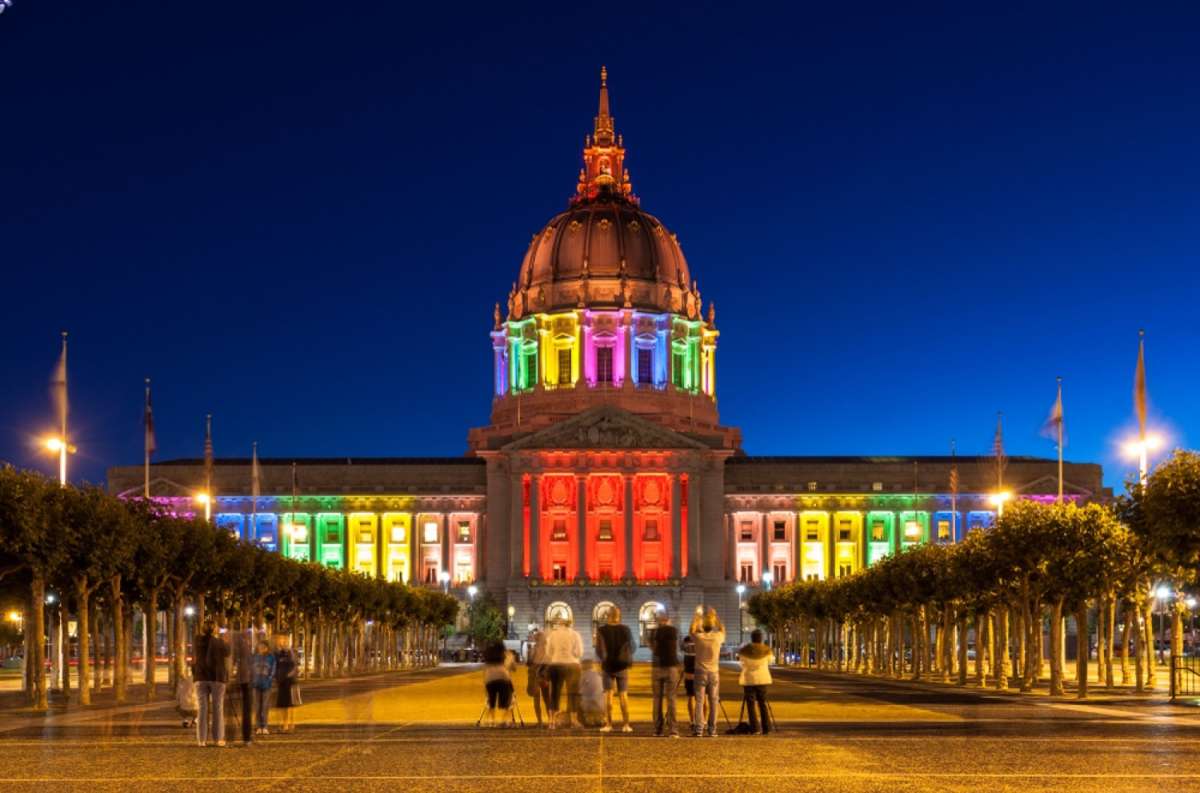
Hack #1: Master the Market Street Route for the Pride Parade San Francisco
The parade route is deceptively simple: it runs straight down Market Street, starting at Beale Street and culminating at 8th Street, right by the Civic Center Plaza. The challenge isn't knowing the route; it's knowing where on the route to be and when to be there.
The Hack: Arrive by 9 AM and choose your zone strategically. The parade officially starts at 10:30 AM, but the sidewalks begin filling up much earlier. Arriving an hour and a half beforehand allows you to claim a prime spot without having to battle the late-coming masses.
Here’s a breakdown of the route's key zones to help you decide on your ideal viewing experience:
The Starting Zone (Beale to Montgomery Street): This area is often less crowded, especially right at the beginning. You'll see all the contingents when they are fresh, energized, and at their most organized. It’s a fantastic spot for photographers who want clean shots of the floats and performers before the crowds swell. The energy here is one of joyful anticipation.
The Commercial Core (Montgomery to Powell Street): This is the heart of the parade and, consequently, the most packed section. The tall buildings create a canyon-like effect, amplifying the sound and energy. It’s an intense and exhilarating place to be, but not for the faint of heart. If you want to be in the thick of it, this is your spot, but be prepared for a tight squeeze.
The Climax Zone (Powell to 8th Street): As the parade approaches its end at the Civic Center, the energy reaches a fever pitch. This is where the performers give their all, knowing they’re approaching the main celebration. The crowd here is dense but incredibly vibrant. Positioning yourself near 8th Street gives you a head start on moving into the Civic Center Plaza for the post-parade festivities.
Pro-Tip: For a less obstructed view and better photos, try to secure a spot on the south side of Market Street. In the late morning and early afternoon, the sun will be mostly at your back, beautifully illuminating the parade without forcing you to squint. This side is often just slightly less congested than the north side.
Hack #2: The Transportation Game Plan - Ditch the Car, Embrace Public Transit
Let’s be perfectly clear: driving to the SF Pride Parade is a recipe for disaster. Street closures are extensive, parking is virtually non-existent and astronomically expensive, and navigating the gridlock will drain your celebratory spirit before you even arrive.
The Hack: Make BART (Bay Area Rapid Transit) and Muni your best friends for the day. San Francisco’s public transit system is designed to handle massive events like this, and it is by far the most efficient way to get to and from the parade.
Here’s your transit strategy:
BART: The underground trains are the fastest way to get downtown from the East Bay, the Peninsula, or other parts of the city. The key is choosing the right station to exit.
Embarcadero Station: Puts you right near the start of the parade. A great option if you plan to arrive early and watch from the beginning.
Montgomery Station: A perfect middle-ground, placing you in the energetic core of the route. It’s one of the busiest stations, so be prepared for crowds.
Powell Station: Another central option, close to the cable car turnaround and a major shopping area. Like Montgomery, expect it to be very busy.
Civic Center Station: This is your stop if you want to head directly to the post-parade celebration or watch the parade's final leg.
Muni: The city’s network of buses and light rail (Muni Metro) is another excellent choice. The F-Market & Wharves historic streetcar will be rerouted, but the Muni Metro lines run directly under Market Street, using the same stations as BART. Many bus lines will have detours, so be sure to check the SFMTA website or your favorite transit app for real-time updates on the day of the event.
Rideshare services like Uber and Lyft will be operating, but expect heavy surge pricing and designated drop-off/pick-up zones that may be several blocks away from Market Street to avoid the worst of the congestion. Public transit remains the most reliable and cost-effective option.

Hack #3: The Civic Center Celebration - Your Post-Parade HQ
The last float crossing 8th Street doesn't mark the end of the day—it marks the beginning of the next phase. The parade flows directly into the massive Pride Celebration at Civic Center Plaza, a sprawling festival with multiple stages of live music, DJs, inspiring speakers, hundreds of community booths, art installations, and food vendors.
The Hack: Have a concrete plan for navigating the festival, especially for meeting your group. Cell service in and around Civic Center Plaza can become extremely unreliable due to the sheer number of people. A "we'll find each other" approach will likely fail.
Follow these steps for a seamless transition from parade to party:
Establish a Hyper-Specific Meeting Point: Before you separate, agree on a meeting spot that is impossible to mistake. "By the main stage" is too vague. Instead, choose something like, "At the base of the statue of James Lick, on the side facing the library," or "Directly in front of the main entrance to the Asian Art Museum." Set specific times to meet there (e.g., 2 PM and 4 PM).
Pace Yourself and Hydrate: The celebration runs for hours after the parade. It's a marathon, not a sprint. Continue to drink water, find moments of shade, and don't forget to eat.
Explore with Purpose: Don't just wander aimlessly. The community booths are the soul of the celebration. You can connect with dozens of non-profits, activist groups, and local organizations. It’s an incredible opportunity to learn, connect, and find your community.
Know Your Exits: Take a moment upon arrival to orient yourself and identify the main exit points from the plaza. Knowing how to get out quickly in case of an emergency or if you simply feel overwhelmed is a smart move.

Hack #4: Beyond Market Street - Unofficial Parties & Neighborhood Vibes
The official parade and Civic Center festival are the main events, but the spirit of Pride permeates the entire city, becoming a vibrant key element of the city’s festive calendar—a calendar we explore in our broader guide to San Francisco Holidays: Bay Area Buzz.
The Hack: Dip out of the main event for a few hours to experience a different, more intimate side of Pride.
The Castro District: As the historic heart of San Francisco's LGBTQ+ community, the Castro is ground zero for Pride weekend. The streets become a massive, vibrant block party. While it will be just as crowded as the parade, the atmosphere is different—more neighborhood-focused and less structured. Grab a drink at a historic bar, watch the impromptu dance parties, and soak in the history.
Dolores Park: On Pride Sunday, the park's famous "Gay Beach" area expands to cover nearly the entire lawn. It transforms into a massive, sun-drenched picnic party. The vibe is more relaxed and bohemian than the official festival. Pack a blanket, bring some snacks, and enjoy people-watching in one of the city's most beautiful settings.
SoMa (South of Market): This neighborhood is home to many of the city's most famous clubs and venues. Throughout Pride weekend, these spaces host a huge variety of official and unofficial after-parties, from daytime DJ sets to late-night dance events. Check event listings in advance, as many of the most popular parties sell out.

Hack #5: Tech & Safety - Your Digital Toolkit for a Seamless Day
In a modern festival environment, your smartphone is your most powerful tool—if you use it wisely.
The Hack: Prep your phone and apps to be your digital command center for the day.
The Power Bank is Non-Negotiable: We mentioned it before, but it bears repeating. A dead phone means no photos, no map, and no way to contact your friends. A fully charged portable power bank is the single most important piece of tech you can bring.
Master Your Communication Apps: Standard text messages can be delayed when cell networks are overloaded. Use a data-based messaging app like WhatsApp or Signal for your group chat. Their delivery is often more reliable in dense crowds. Use the "Share Live Location" feature for a set period (e.g., 15 minutes) if you get separated and need to find your way back to your group.
Download Offline Maps: Before you leave home, download an offline map of the downtown San Francisco area in your map app of choice. Even if you lose all cell service, your phone's GPS will still work, allowing you to see your location on the map and navigate.
Embrace Official Resources: Check the official SF Pride website in the days leading up to the event. If they release an official app, download it. It will likely have the most accurate schedules, maps, and emergency alerts.
Pro-Tip: Take a screenshot of your planned meeting spots, the parade route map, and the contact info for everyone in your group. Create a dedicated photo album for these screenshots so you can access them instantly, even if your apps won't load due to poor connectivity.

Hack #6: The Exit Strategy - How to Leave Without the Headache
Just as important as your arrival plan is your exit strategy. When hundreds of thousands of people try to leave the same area at the same time, the public transit stations and rideshare zones become incredibly congested.
The Hack: Avoid leaving during the peak rush right as the festival winds down.
You have two primary strategies for a stress-free departure:
The Early Exit: If you've had your fill of the crowds and the main celebration, start making your way out before the final headliners take the stage at Civic Center. By leaving an hour before the official end time, you can beat the massive wave of people heading for the BART and Muni stations.
The Patient Wait: This is often the better option. Instead of rushing out with everyone else, wait it out. Find a restaurant or cafe a few blocks away from Civic Center, grab a bite to eat, and relax for an hour or so. Let the crowds on the transit platforms thin out. By the time you're done, your journey home will be far more pleasant.
If you're using a rideshare service, walk at least four or five blocks away from Market Street and Civic Center before you even attempt to request a ride. This will get you out of the most congested, no-pickup zones and will likely save you from the highest surge pricing.
Your Guide to an Unforgettable Pride
You are now armed with the knowledge to do more than just attend the pride parade San Francisco —you are ready to experience it with confidence, joy, and a sense of empowered preparedness. From mastering the Market Street route and navigating the Civic Center celebration to knowing the smartest ways to get there and back, you have the tools to craft a perfect day. This isn't just about avoiding stress; it's about creating space for the powerful moments of connection, celebration, and solidarity that define SF Pride. Go forth, celebrate loudly, and have an incredible time.
For a complete blueprint to planning your ultimate trip to the Bay Area, including deep dives into its other iconic holidays and hidden gems, be sure to explore our comprehensive Travel Guide.
Meta Data Suggestions:
SEO Meta Title: SF Pride: 6 Essential Hacks for the Parade Route & Parties
URL Slug: sf-pride-parade-route-party-hacks
SEO Meta Description: Master the SF Pride Parade! Get 6 expert hacks on navigating the Market Street route, finding the best parties, and staying safe in the crowds.
Don't Miss Out! Subscribe for Exclusive Content
Subscribe



Comments 0
No comments yet
Be the first to share your experience!
Dont Miss Out! Subscribe for Exclusive Content

San Francisco Cherry Blossoms: A Local's Guide to the Blooms


Halloween SF: Haunts Without Horrors

SF Festivals: 7 Must-See Lineups

Christmas SF: Lights & Wharf Wonders

Chinese New Year SF: Parade Essentials

San Francisco Holidays: Bay Area Buzz
5 Critical Affiliate Marketing Mistakes to Dodge in 2026
TrekGuider @trekguider
Let’s be honest. You’re creating fantastic travel content, but your affiliate dashboard looks like a ghost town. You’re putting in the hours, but the income isn’t following. It’s the single most frustrating part of this business, and it’s a sign that something is fundamentally wrong with your strategy.
You see the industry reports—the affiliate marketing world soaring past 93 billion, with the average travel affiliate earning a reported $13,847 a month—and it feels like it’s happening in another universe. It’s not. The difference is strategy. The highest-earning creators aren't just better at creating content; they're better at avoiding the invisible but critical affiliate marketing mistakes that silently sabotage a business.

This is your definitive "what not to do" playbook. We’re exposing the five most destructive pitfalls that derail even the most talented travel creators. Dodging these errors is the key to plugging the leaks in your strategy, protecting your brand, and finally building the profitable, resilient business you deserve. For a complete command of the entire affiliate ecosystem, from program selection to advanced conversion tactics, our definitive pillar page, Travel Affiliate Programs: The 2026 Ultimate Guide, is your essential command center.
Mistake #1: Ignoring the Law (The FTC Disclosure Fail)
Of all the affiliate marketing mistakes a creator can make, this one is the most dangerous. In the rush to monetize, many either forget to disclose their affiliate relationships or, more commonly, do it incorrectly. They bury a vague statement in the footer, hide it on a separate page, or tuck it into a block of hashtags. They treat it as a legal chore to be minimized.
Why It's Critical: This isn't just bad practice; it's illegal. In the U.S., the Federal Trade Commission (FTC) legally requires a "clear and conspicuous" disclosure of any "material connection" between you and a brand. Failing to comply can get you kicked out of affiliate programs and attract unwanted legal attention. More importantly, it shatters the single most valuable asset you own: your audience's trust. In the creator economy, transparency isn't just a virtue; it's a non-negotiable business strategy.
The Fix: Embrace Radical Transparency.
Your disclosure must be impossible to miss and easy to understand. It’s not a footnote; it’s a badge of honor that signals your professionalism. A compliant disclosure meets four simple criteria:
Placement: It must appear before any affiliate links. For a blog post, this means at the very top of the article.
Prominence: It must be easy to see, in a readable font and color.
Presentation: It must be in plain, simple language that anyone can understand.
Proximity: It must be on the same page as the links themselves.

Pro-Tip: A simple, friendly disclosure at the top of your post is perfect. Something like: (Heads up! This post contains affiliate links. If you book or buy something through one of my links, I may earn a small commission at no extra cost to you. This helps me keep the adventures coming. Thanks for your support!)
Mistake #2: Building Your Business on Rented Land (The "Social-Only" Trap)
You've built a thriving community on Instagram or TikTok. Your engagement is high, and your audience trusts you. So, you decide to run your entire affiliate business from that platform, relying on a "link in bio" tool as your sole monetization engine. This strategy is incredibly common, and it's one of the most fragile business models a creator can adopt.
Why It's Critical: When your business lives exclusively on a social media platform, you are building on rented land. You don't own your audience, you don't control the algorithm, and you don't set the rules. A single algorithm change can vaporize your reach overnight. In the worst-case scenario, your account can be suspended, and your entire business vanishes in an instant.

The Fix: Build Your Empire on an Owned Platform.
Your social media channels are phenomenal for audience engagement, but your website or blog is your single most important strategic asset. An owned platform is your digital home base.
It's an Asset You Control: You dictate the content, user experience, and monetization strategy, insulating your business from volatile algorithms.
It's a Long-Term Traffic Engine: A well-optimized blog post can rank on Google for years, becoming an evergreen asset that drives affiliate sales while you sleep.
It's Your Hub for Deeper Monetization: An owned platform is the perfect place to evolve beyond affiliate links and start selling your own digital products. Modern creator platforms like the TrekGuider Platform are designed specifically for this, giving you a central hub to publish your articles right alongside the premium guides, maps, and itineraries you sell—establishing you as a multi-faceted expert.
Mistake #3: Putting All Your Eggs in One Basket (The Over-Reliance Risk)
For many creators, "affiliate marketing" is synonymous with one program: Amazon Associates. It's easy to join and has an unmatched variety of products, so it's tempting to make it the beginning and end of your affiliate strategy. This hyper-focus on a single program is a ticking time bomb.
Why It's Critical: Relying on one affiliate program for the majority of your income is a high-risk gamble. That program holds all the power. They can—and do—change their terms with little warning. Amazon itself has famously slashed commission rates in key categories overnight, decimating the incomes of creators who were not diversified. If that program shuts down or terminates your account, your business is crippled.
The Fix: Build a Diversified and Resilient Affiliate Portfolio.
A professional affiliate marketer is like a smart investor: they diversify. Aim to build a strong portfolio of 3-5 core affiliate programs that align with your niche. A healthy mix for a travel creator should cover all aspects of a trip:
Accommodations: Expedia Group or Agoda
Tours & Activities: Viator or GetYourGuide
Travel Insurance: SafetyWing or World Nomads
Gear & Apparel: Amazon Associates plus a specialty retailer like REI
This diversification creates multiple, independent income streams. A negative change in one program will be a minor setback, not an existential threat to your business.

Mistake #4: Chasing Commissions, Not Solving Problems
You're researching programs and see two options for a travel backpack. Program A offers a 3% commission, while Program B offers a flashy 10%. You immediately sign up for Program B and start promoting that backpack, even though you know the one from Program A is a slightly better product for your audience. This is the siren song of high commissions, and it leads directly onto the rocks of broken trust.
Why It's Critical: This is the fastest way to destroy your brand. Your audience follows you for your authentic expertise. The moment they sense you are prioritizing your own paycheck over their best interests, that trust evaporates. They can smell a hard sell a mile away. Once trust is gone, your influence is gone, and your ability to earn any income—from any source—is gone with it.

The Fix: Adopt an "Audience-First" Mentality.
Your long-term success is directly proportional to the amount of trust you build. Make it your mission to recommend only the best possible solution for your audience, regardless of the commission.
Promote What You Use and Love: The most powerful reviews come from genuine, personal experience.
Be Radically Honest: If a product has flaws, mention them. This balanced perspective makes your praise exponentially more believable.
Solve the Problem, Don't Push the Product: Frame your content around solving your audience's problems. The product is simply the tool that helps them achieve their goal.
Pro-Tip: Often, the product with the lower commission rate can actually be more profitable if it has a higher conversion rate or a longer cookie duration. Always prioritize the best product for your audience; the trust you build will lead to far more sales in the long run.
Mistake #5: Not Reading the Fine Print (Violating Program Terms)
You've been approved for a new affiliate program and you're excited to get started. You skim the welcome email, grab your links, and start promoting. You don't bother to read the full Terms of Service because it's long, boring, and filled with legalese. This is a simple oversight that gets countless creators kicked out of programs, often with all of their pending commissions forfeited.
Why It's Critical: Every affiliate program has a strict set of rules, and ignorance is not an excuse. Violating these terms—even accidentally—can result in immediate and permanent termination. All the hard work you put into driving sales becomes worthless in an instant.

The Fix: Treat It Like a Business Contract (Because It Is).
Take 15 minutes to carefully read the Terms of Service for every program you join. Pay special attention to the most common violations:
PPC Bidding Restrictions: Most programs forbid you from bidding on their branded keywords (e.g., "G Adventures promo code") in Google Ads.
Self-Referrals: You are almost never allowed to use your own affiliate links to make personal purchases.
Link Cloaking Rules: Some programs have specific rules about how you can present or "cloak" their links.
Referral Program Terms: This applies equally to referral programs. You must understand the specific conditions for a successful conversion. For example, a platform might have bonus terms that require a referred user to make a purchase within a 7-day window for you to earn a commission. Ignoring these details means you do all the work of referring a new user without getting the reward.
Frequently Asked Questions (FAQ)
1. What's the single biggest mistake new affiliates make? The most common error is Mistake #4: chasing high commissions instead of solving their audience's problems. This erodes trust, which is the foundation of any successful creator business. Always recommend the best product, not just the one that pays the most.
2. How quickly can I fix these mistakes? You can start fixing them today. These aren't technical challenges; they are strategic shifts. You can add a proper disclosure to your top posts in minutes, decide to build out your own website this week, and diversify your program portfolio over the next month. It's about changing your approach.
3. Is it better to have a blog or just use social media for affiliate marketing? While you can earn money on social media, it's a high-risk strategy. As we covered in Mistake #2, a blog or website is an asset you own and control. The smartest strategy is to use social media to drive traffic to your owned platform, where you have full control over monetization and your audience relationship.
Build a Bulletproof Business Avoiding these critical affiliate marketing mistakes isn't about being restrictive; it's about being a professional. To build your business the right way from the ground up, with professional systems and a clear strategy, you need the right resources. Our ultimate resource bundle, The Travel Creator's Toolkit, is packed with the checklists, templates, and guides you need to start building a profitable and resilient content empire today. Download it for free and turn your passion into a profession.
Read the full guide: The Travel Blogger's Playbook to Affiliate Marketing Mastery
Don't Miss Out! Subscribe for Exclusive Content
SubscribeComments 0
No comments yet
Be the first to share your experience!
Dont Miss Out! Subscribe for Exclusive Content

Ultimate USA Holidays Guide: Top Picks

FTC Affiliate Disclosure Essentials: Stay Compliant as a Travel Creator

Essential Affiliate Tools: From Tracking to Full Optimization

Avoid These 5 Affiliate Landing Page Mistakes for Better Conversions

Affiliate Keyword Research Mastery for Travel Blogs

Booking.com Affiliate Program Review: Pros, Cons, and Earnings Potential
9 Family Travel Ideas for a Magical, Low-Stress Holiday
TrekGuider @trekguider
Does the thought of the holiday season fill you with equal parts excitement and dread? You dream of creating magical memories, but the reality is often a marathon of shopping, cooking, and hosting that leaves you completely exhausted. You want a special, connective experience, but the idea of planning a trip on top of it all feels like just one more impossible task.
What if you could trade that holiday chaos for genuine connection? A well-planned holiday trip isn’t another chore; it's the solution. It’s your chance to swap stressful routines for new traditions that are all your own. This guide is your blueprint for nine incredible family travel ideas for holidays across the United States that are both magical and manageable.
For a complete overview of planning your next family adventure, our Family Travel Ideas: The 2026 Guide to Unforgettable Trips is the perfect place to start. Consider this your permission slip to escape the holiday hustle and create a festive story you'll tell for years.

Why Trading Your Living Room for a New Destination is a Brilliant Idea
Choosing to travel during the holidays is about more than just a change of scenery; it's a strategic investment in your family's well-being. By stepping away from the pressures of home, you remove the endless checklist of "shoulds" and replace it with opportunities for real connection.
This simple change in scenery is a powerful tool. It allows your family to:
Forge Powerful New Traditions: Decorating the same tree is wonderful. But so is ice skating in a new city, watching a lighted boat parade for the first time, or sipping hot cocoa in a mountain town. Travel-based traditions become potent, multi-sensory memories that stand out with incredible clarity.
Outsource the Holiday Labor: Imagine a holiday where you don't have to cook a massive meal or clean for guests. A holiday trip allows you to enjoy the festive atmosphere while hotels, restaurants, and event planners do the heavy lifting.
Give the Gift of Experience: In a world cluttered with things, the gift of a shared adventure is priceless. It fosters curiosity, builds resilience, and creates a stronger family narrative that you will revisit long after the trip is over.
Timeless Winter Wonderlands
For families who dream of stepping into a real-life snow globe, these destinations are the masters of festive cheer, combining natural beauty with deeply rooted holiday traditions.

Leavenworth, Washington
Nestled in the Cascade Mountains, this Bavarian-style village undergoes a breathtaking transformation each winter. With its alpine architecture blanketed in snow and over half a million lights twinkling in the crisp mountain air, it’s about as close to a European Christmas market as you can get in the US.
Must-Do Activities: Witness the magical Village Lighting Festival on December weekends; take a horse-drawn sleigh ride through the snowy landscape; visit the Leavenworth Reindeer Farm for an up-close encounter.
Logistical Considerations: Leavenworth is a two-hour drive from Seattle. Accommodations book up months—sometimes a year—in advance for December, so early booking is non-negotiable.
Asheville, North Carolina
Asheville offers a sophisticated and enchanting holiday, anchored by the magnificent Biltmore Estate. The city itself is a hub of art, culture, and Appalachian charm, all decorated in its festive best.
Must-Do Activities: Experience Christmas at Biltmore, where America's largest home is adorned with dozens of Christmas trees. Marvel at the complex creations at The Omni Grove Park Inn's National Gingerbread House Competition.
Logistical Considerations: Purchase Biltmore tickets well in advance, as they sell out. The estate is vast, so plan for a full-day experience.
Woodstock, Vermont
Often called "the prettiest small town in America," Woodstock is the quintessential New England Christmas village. Think covered bridges, a town green dusted with snow, and historic homes adorned with classic wreaths.
Must-Do Activities: Don't miss the Wassail Weekend in mid-December, a festival complete with a horse-drawn parade and caroling. Visit the Billings Farm & Museum for a taste of a 19th-century Christmas.
Logistical Considerations: This small town gets very busy. Book accommodations early and be prepared for a cozy, low-key celebration focused on charm rather than spectacle. For more tips on planning a drive-to vacation, check out The Sanity-Saving System for Your Next Family Road Trip.
New York City, New York
Nowhere does holiday spectacle quite like the Big Apple. The energy is electric, and the city transforms into a glittering fantasy land of festive cheer. It's an iconic, can't-miss experience.
Must-Do Activities: Gaze at the Rockefeller Center Christmas Tree; stroll down Fifth Avenue to admire the elaborate window displays; explore the Bryant Park Winter Village; see the Rockettes in the Christmas Spectacular.
Logistical Considerations: Manage expectations with kids; the crowds can be overwhelming. Use the subway. Book hotels and show tickets as far in advance as possible.
Sun & Celebration: Festive Family Travel Ideas for Holidays in Warmer Climates
If your family’s idea of a white Christmas involves white sand beaches, these destinations trade winter coats for sunglasses without sacrificing an ounce of holiday spirit.

St. Augustine, Florida
America’s oldest city becomes one of its most dazzling during the holidays. The annual Nights of Lights festival is a world-class spectacle where the city's historic buildings are illuminated by more than three million tiny white lights.
Must-Do Activities: Take an Old Town Trolley's Famous Nights of Lights Tour; climb the St. Augustine Lighthouse for a breathtaking panoramic view; enjoy a lighted boat parade in Matanzas Bay.
Logistical Considerations: The lights are on from mid-November through January. Weekends are extremely busy; consider a weekday trip for a more relaxed experience.
San Antonio, Texas
The San Antonio River Walk becomes an absolute wonderland during the holidays. Millions of lights are draped from the cypress trees, reflecting in the water below for a truly enchanting effect.
Must-Do Activities: Take a narrated river cruise to experience the lights from the water; listen to the Ford Holiday Boat Caroling; explore the historic missions, which also host festive events.
Logistical Considerations: The lights are typically turned on the day after Thanksgiving. Book a hotel directly on the River Walk for the most immersive experience.
Key West, Florida
For a truly unique and quirky holiday, Key West delivers. Here, Santa hats are paired with flip-flops, and the festive spirit has a distinctly tropical, laid-back vibe.
Must-Do Activities: See the Key West Lighted Boat Parade; take a photo with the "Southernmost Point Buoy" decorated for the holidays; tour the historic inns on the annual Holiday Historic Inn Tour.
Logistical Considerations: December is peak season. Book everything far in advance. The atmosphere is festive but definitely not traditional—perfect for families seeking something different.
Culture & Quirky Charm
For families who want to go beyond the usual tinsel and trees, these destinations offer rich cultural traditions and one-of-a-kind holiday experiences.

Santa Fe, New Mexico
Experience a holiday season steeped in the unique cultural traditions of the Southwest. Santa Fe glows with a different kind of light: the soft, warm radiance of thousands of farolitos (paper bags filled with sand and a candle).
Must-Do Activities: The Canyon Road Farolito Walk on Christmas Eve is an unforgettable experience. Experience a Native American Pueblo feast day. Ski at nearby Ski Santa Fe.
Logistical Considerations: Santa Fe is at 7,200 feet elevation. Drink plenty of water to acclimate. The Farolito Walk draws huge crowds, so be prepared to walk and dress warmly.
Colonial Williamsburg, Virginia
Step back in time and experience the holidays as they were celebrated in 18th-century America. The traditions are authentic, rooted in history, and offer a peaceful alternative to modern holiday commercialism.
Must-Do Activities: Witness the Grand Illumination, a spectacular fireworks display. Take a candlelit tour of the historic buildings. Enjoy the simple, natural decorations of wreaths made from fruits and greenery.
Logistical Considerations: This is a very popular destination. Purchase tickets for specific tours and events in advance. It's an educational trip, ideal for school-aged children.
All Aboard! The Most Magical Holiday Train Rides
There is something inherently magical about trains during the holidays. These rolling adventures bring classic Christmas stories to life, captivating children and nostalgic adults alike.
The Polar Express (Various Locations)
Inspired by the beloved children's book, The Polar Express train rides are offered by dozens of heritage railroads across the country. Families, often dressed in pajamas, board for a journey to the "North Pole," complete with hot chocolate and a visit from Santa.
Popular Locations: Grand Canyon Railway (AZ), Great Smoky Mountains Railroad (NC), Durango & Silverton Narrow Gauge Railroad (CO).
Logistical Considerations: These are incredibly popular and often sell out by late summer. Book your tickets the moment they go on sale.
Make Holiday Flights Feel Like a Gift
Feeling anxious about navigating airports with kids during the busiest time of year? Our guide is packed with practical tips, checklists, and sanity-saving strategies to make the journey as joyful as the destination. Download your free Stress-Free Flying with Kids Guide and travel with confidence.
A Stress-Free Planning Checklist
The secret to a joyful holiday trip is planning ahead. The festive season is the busiest travel time of the year, and last-minute arrangements lead to stress and overspending. For an even deeper dive, see our guide on How to Make Family Travel Planning Actually Easy.

Pro-Tip: The best deals are often found by booking mid-week travel dates. Flying on a Tuesday or Wednesday can be significantly cheaper than on a Friday or Sunday, and you'll face smaller crowds.
Book the Big Three (4-6 Months Out): Your flights, accommodations, and rental car should be booked well in advance. For top-tier destinations, you may need to book even earlier.
Secure Special Event Tickets (2-3 Months Out): Don't wait to buy tickets for high-demand events like The Polar Express, Biltmore Estate tours, or Broadway shows. They will sell out.
Map Your Must-Dos (1 Month Out): Outline a loose daily schedule. Make dining reservations for any special meals, especially for Christmas Eve or Christmas Day.
Rethink Your Gifting Strategy: Hauling a sleigh's worth of presents is impractical.
Ship ahead: Send gifts to your hotel or vacation rental (confirm they accept packages).
Focus on experiences: Make the "big gift" a special tour or show tickets.
One and done: Give each child one small, easy-to-pack gift to open on holiday morning.
Pro-Tip: Talk to your kids about a travel-focused holiday beforehand. Frame the trip itself as the primary gift to manage expectations. You can create a fun "travel reveal" with a scavenger hunt or a special box containing clues about the destination.
Frequently Asked Questions
What is the best time to book holiday travel?
For the best prices and availability, you should book flights and accommodations 4-6 months in advance. For extremely popular destinations or special event tickets like The Polar Express, you may need to book even earlier, as they can sell out by late summer.
Are holiday vacations with kids actually relaxing?
They absolutely can be, but it requires a shift in mindset. A successful holiday trip trades the stress of hosting and chores for the logistics of travel. By planning ahead and focusing on experiences over a packed itinerary, you can create a trip that is genuinely restful and connective.
How can I make holiday travel more affordable?
Booking early is the single best way to save money. Traveling on off-peak days, like a Tuesday or Wednesday, can also significantly reduce flight costs. Additionally, consider destinations that are within driving distance to save on airfare.
Your New Holiday Tradition Awaits
The pressure to create a "perfect" holiday can often rob us of the joy of the season. By choosing to travel, you are consciously deciding to trade chaos for connection and stuff for stories. You are giving your family a shared narrative, building a foundation of memories far more valuable than anything that can be wrapped.
This guide has given you a starting point and the destinations to craft a new tradition. When you're ready to build out your full itinerary, our complete Travel Guide is the ultimate tool for turning your dream trip into a reality.
Read the full guide: Family Travel Ideas: The 2026 Guide to Unforgettable Trips
Don't Miss Out! Subscribe for Exclusive Content
SubscribeComments 0
No comments yet
Be the first to share your experience!
Dont Miss Out! Subscribe for Exclusive Content
Ultimate USA Holidays Guide: Top Picks
FTC Affiliate Disclosure Essentials: Stay Compliant as a Travel Creator
Essential Affiliate Tools: From Tracking to Full Optimization
Booking.com Affiliate Program Review: Pros, Cons, and Earnings Potential

Decoding Affiliate Commission Rates: Benchmarks for Travel Creators

Top 11 High-Paying Affiliate Programs for Travel Bloggers
Top 7 Family Vacation Destinations in Europe (For All Ages)
TrekGuider @trekguider
Feeling like your dream European family vacation is getting lost in a logistical nightmare? You're juggling a tight budget, the conflicting desires of a history-averse kid and a "too-cool" teen, and a map of endless, overwhelming options. The fear of investing thousands into a trip that ends in stress instead of lifelong memories is real. This guide is your solution.
We’re here to swap that overwhelming feeling for a clear, stress-free roadmap. Finding the right destination is about more than just listing famous landmarks; it’s about matching a city's rhythm to your family's unique energy. Drawing from our comprehensive guide to Family Travel Ideas: The 2026 Guide to Unforgettable Trips, this deep dive provides a practical plan to help you choose the perfect European spot with confidence.
Forget generic lists. Here, you’ll find a clear path to planning a trip that creates joy, not just another set of logistical headaches.

Your Pre-Flight Checklist: Planning a Flawless European Family Trip
Before you book a single flight, laying a solid foundation is the key to a successful trip. Rushing this stage is the number one mistake families make. A little strategic foresight will save you countless headaches and dollars down the road. For an even deeper dive, see our guide on How to Make Family Travel Planning Actually Easy.

1. Define Your Family's Travel Persona
Are you Cultural Explorers who thrive in museums and historical sites? Outdoor Adventurers who need mountains and green space? Or Relaxation Seekers who just want sun, good food, and minimal stress? Be honest about your family’s collective style. Trying to force an action-packed city tour on a family that prefers a slow-paced beach vacation is a recipe for disaster.
2. Set a Realistic European Family Budget
Europe can be surprisingly affordable or astronomically expensive. Your budget is the single biggest factor in determining your destination and trip length.
High-Cost: Countries like Switzerland, Iceland, and the Scandinavian nations will stretch your budget the furthest. Expect to pay a premium for everything from lodging to a simple lunch.
Mid-Range: France, Germany, the UK, Italy, and Austria offer a moderate price point. Here, you'll find a wide range of accommodation and dining options to fit most budgets.
Budget-Friendly: Destinations like Portugal, Spain, and Greece offer incredible value, especially outside of the peak July-August season. Your money goes significantly further here.
3. Choose the Right Time to Go
The "when" is just as important as the "where." Summer offers the best weather but also brings the biggest crowds and highest prices. Consider the shoulder seasons (April-May and September-October) for a perfect balance of pleasant weather, fewer tourists, and lower costs.
4. Master Your Transportation Plan
Getting around is a core part of the European experience.
Trains: The European rail network is efficient, scenic, and often the best way to travel between major cities. It eliminates the stress of driving and parking. Pro-Tip: Book high-speed rail tickets 60-90 days in advance directly from national carriers (like Trenitalia in Italy or Renfe in Spain) for discounts of up to 70%.
Driving: Renting a car offers ultimate flexibility, especially for exploring rural areas. However, be prepared for narrow roads, complex parking, and high fuel costs. Most city centers are best explored on foot.
Flying: Budget airlines like Ryanair and EasyJet can be great for covering long distances, but be mindful of strict baggage allowances and secondary airport locations. A smooth flight is key, so be sure to check out our Stress-Free Flying with Kids Guide.
5. Embrace the "Less is More" Pacing Rule
This is the golden rule of European family travel. The biggest mistake is trying to cram too much in. Moving cities can easily consume an entire day. For a truly enjoyable experience, plan to spend at least three nights in each location. This allows for one full day of exploration without the stress of arrival or departure logistics.
Feeling Organized? Let's Make It Official.
Planning an international trip involves a million tiny details. Don't let anything slip through the cracks. Our International Travel Checklist is the ultimate tool for a smooth, stress-free planning process, covering everything from passports to packing.

The TrekGuider Shortlist: Europe's Most Unforgettable Family Cities
Europe is a continent of incredible diversity. To simplify your choice, we’ve broken down the top family vacation destinations in Europe by region, highlighting what makes each one special for families with kids of all ages.
Southern Europe & The Mediterranean: Sun, Culture, and Unforgettable Food
This region is a classic choice for a reason. It offers a fantastic mix of history you can touch, beautiful coastlines, and a relaxed, family-centric culture where kids are welcomed everywhere.

Italy: A Living History Book for All Ages
Forget history lessons behind museum glass; Italy is the lesson, a multi-sensory experience that captivates everyone from toddlers to teens. It's one of those rare places where ancient history feels like a giant, interactive playground.
Best For: School-aged kids and teenagers (ages 7-18).
Top City: Rome. The sheer scale of the Colosseum, the whispers of history in the Roman Forum, and the chance to make a wish at the Trevi Fountain are core memories in the making.
Kid-Friendly Activities: Gladiator School, Pizza & Gelato Making Class, renting pedal cars in Borghese Gardens, or visiting the Explora Museum.
Logistics Lowdown: Book tickets for major attractions like the Colosseum and Vatican Museums months in advance online. This allows you to bypass the notoriously long ticket queues.
Spain: The Perfect Blend of Beaches, Art, and Fun
Spain is arguably one of the most well-rounded family destinations in Europe. The culture is vibrant, the food is accessible (tapas are perfect for picky eaters), and the more relaxed daily schedule is a godsend for families.
Best For: All ages, from toddlers to teens.
Top Cities: Barcelona & Madrid. Barcelona offers the unique combination of a world-class city with excellent beaches. Madrid is wonderfully stroller-friendly with magnificent parks like El Retiro.
Kid-Friendly Activities: Tibidabo Amusement Park (Barcelona), CosmoCaixa Science Museum (Barcelona), and the Teleférico Cable Car (Madrid).
Portugal: Affordable Charm and Stunning Coastlines
Portugal often flies under the radar but is a true gem for families seeking a more laid-back and affordable European vacation. It's welcoming, beautiful, and refreshingly unpretentious.
Best For: Toddlers and young children, thanks to its compact cities and friendly atmosphere.
Top City: Lisbon. The vintage yellow Tram 28 is a ride and a sightseeing tour in one, and the city is filled with picturesque squares perfect for a pastel de nata break.
Kid-Friendly Activities: Oceanário de Lisboa (one of the world's best aquariums), exploring St. George's Castle, and taking a day trip to the fairytale palaces of Sintra.
Western & Central Europe: Iconic Cities and Alpine Wonders
This region is home to some of the world's most famous landmarks, offering a mix of urban excitement and breathtaking natural beauty.

France: Beyond the Glitter of Paris
Paris will always have its magic, but the real magic for families often lies beyond the capital's glittering lights. For a less frantic but equally enchanting experience, consider other regions.
Best For: School-aged children and teens.
Top City: Paris. For older kids who can appreciate it, Paris is unforgettable. For a more relaxed pace, consider cities like Nice on the French Riviera or Lyon for its food scene.
Kid-Friendly Activities (Paris): Sailing vintage boats in Jardin du Luxembourg, visiting the Cité des Sciences, and taking a magical evening cruise on the Seine River.
Switzerland: The Ultimate Outdoor Playground
For active families who love the great outdoors, Switzerland is unparalleled. It's clean, safe, and the public transportation system is a marvel of efficiency that feels like part of the attraction.
Best For: Ages 5 and up who can handle hiking and outdoor activities.
Top Region: The Interlaken/Jungfrau Region. This area is a postcard-perfect vision of alpine meadows, snow-capped peaks, and turquoise lakes.
Kid-Friendly Activities: Taking a cogwheel train up a mountain, hiking an easy scenic trail like the one from Männlichen to Kleine Scheidegg, or riding a thrilling mountain coaster.
Pro-Tip: The Swiss Travel Pass, while expensive upfront, can be a fantastic value. Children under 16 travel free with a paying parent.
Northern Europe & The UK: History, Fairytales, and Cool Vibes
This region offers a different flavor of Europe—one defined by rich history, stunning design, and a safe, efficient, and incredibly family-forward approach to life.

United Kingdom: London's Icons and Endless Museums
London is an endlessly fascinating city that caters brilliantly to families. Many of its world-class museums are free, making it a great value proposition despite its reputation for being expensive.
Best For: All ages.
Top City: London. The city is a playground of recognizable icons, from the Tower of London to the double-decker buses.
Kid-Friendly Activities: The Natural History & Science Museums (free!), the Diana Memorial Playground, the Warner Bros. Studio Tour for Harry Potter fans, and a Thames River Cruise.
Denmark: Fairytale Charm and Effortless Cool
Copenhagen is a city that seems designed for happiness. It's compact, easily walkable (or bikeable), and has a playful spirit that makes it a dream destination for families with younger kids.
Best For: Ages 0-10.
Top City: Copenhagen. The home of Hans Christian Andersen feels like a storybook come to life.
Kid-Friendly Activities: Tivoli Gardens is a magical institution, take a classic canal tour from Nyhavn Harbor, and explore the interactive National Museum's Children's Museum.
Logistics Lowdown: Rent bikes. This is the most authentic and enjoyable way to explore, and you can get "cargo bikes" with a front bucket for the kids.
Frequently Asked Questions
What is the most budget-friendly region in Europe for a family vacation?
Southern European countries like Portugal, Spain, and Greece generally offer the best value for families. Your money for accommodation, food, and activities will go much further here, especially if you travel during the "shoulder seasons" of spring and autumn.
What is the best time of year to travel to Europe with kids?
The shoulder seasons (April-May and September-October) are often ideal for family travel in Europe. You'll enjoy pleasant weather, significantly smaller crowds at major attractions, and lower prices for flights and hotels compared to the peak summer months.
Is it better to travel by train or car with a family in Europe?
For travel between major cities, the train is usually the superior option. It's fast, efficient, and relaxing. Renting a car offers more flexibility for exploring rural areas and smaller towns but can be challenging in big cities due to traffic and parking.
How many days should you spend in each European city on a family trip?
The golden rule is to plan for at least three nights in each location. This pacing prevents burnout and gives you two full days to explore without feeling rushed by arrival or departure logistics, making the trip more enjoyable for everyone.
Choosing from the vast array of family vacation destinations in Europe is the first step in an incredible journey. By aligning your destination with your family's budget, style, and pace, you're not just planning a vacation; you're engineering a priceless experience. You are building a treasure chest of shared memories—the taste of a perfect gelato in Rome, the awe of seeing the Eiffel Tower sparkle, the shared laughter on a Swiss mountain trail—that will enrich your family’s story for years to come.

Read the full guide: Family Travel Ideas: The 2026 Guide to Unforgettable Trips
Don't Miss Out! Subscribe for Exclusive Content
SubscribeComments 0
No comments yet
Be the first to share your experience!
Dont Miss Out! Subscribe for Exclusive Content
Ultimate USA Holidays Guide: Top Picks
FTC Affiliate Disclosure Essentials: Stay Compliant as a Travel Creator
Essential Affiliate Tools: From Tracking to Full Optimization
Booking.com Affiliate Program Review: Pros, Cons, and Earnings Potential
Decoding Affiliate Commission Rates: Benchmarks for Travel Creators
