
Top 7 Luxury Travel Blogs Redefining Style

TrekGuider @trekguider
Does the phrase “luxury travel” conjure images of gold-plated hotel suites and sterile, all-inclusive resorts? For years, opulence was measured in thread counts and champagne brands—a spectacle of wealth that often felt disconnected from the destination itself. You’re searching for inspiration, but the typical lists of luxury travel blogs feel stuck in the past, showcasing a kind of travel that’s more about extravagance for its own sake than genuine, enriching experiences. You know there has to be something more, a deeper, more meaningful way to explore the world in style, but finding the right guides for this new era of travel feels impossible.
You’re in the right place. The definition of luxury is undergoing a seismic shift. It's no longer just about what you spend, but about what you experience, learn, and feel. The new luxury is personal, conscious, and transformative. To help you navigate this exciting new landscape, we’ve curated a list of the creators at the forefront of this movement. These aren't just blogs; they are blueprints for a more intentional way of seeing the world. For a complete look at the best voices across all travel styles, be sure to explore our definitive guide to The Best Travel Blogs to Follow in 2026.

The New Definition: What is "Luxury Travel" in 2026?
Analysis of 2026 industry reports from leading authorities like Skift and Virtuoso reveals a clear evolution in high-end travel. The market is pivoting away from conspicuous consumption and toward more meaningful, personalized, and conscious journeys. This isn't just a trend; it's a response to a global re-evaluation of personal values. The most influential luxury travel blogs are no longer just catalogs of expensive hotels; they are chronicles of profound experiences.
Modern luxury is now defined by five core pillars:
Experiential & Transformational Travel: The focus has shifted from material opulence to access to unique, meaningful experiences. High-net-worth travelers are now prioritizing authenticity and activities that foster personal growth over traditional five-star amenities.
Wellness & Longevity: Going far "beyond the spa," this pillar encompasses digital detoxes, silent meditation retreats, and journeys designed for mental and physical rejuvenation in the world’s most serene locations.
"Coolcations" & Conscious Travel: Climate change is now a direct driver of destination choice, with a documented surge in travel to cooler climates like Antarctica and Iceland. This is intrinsically linked to a demand for sustainable and regenerative tourism, where travelers actively seek to leave a destination better than they found it.
Hyper-Personalization: Bespoke itineraries are no longer a perk but an expectation. Accelerated by AI, trip planning is becoming more tailored than ever, creating once-in-a-lifetime journeys based on in-credibly specific individual preferences.
Solo Luxury Travel: There is a significant and growing movement of solo travelers within the luxury segment, largely led by women. These "Wander Women," as a 2026 Virtuoso report calls them, are seeking independence and security; many are now opting for expedition, ocean, and river cruises, which provide a unique combination of independence, security, and social opportunities.

So, what does this philosophy look like in practice? The seven blogs below are the standard-bearers for this new movement, each championing a unique facet of modern luxury. They are the creators setting the agenda for the future of high-end travel.
The 7 Best Luxury Travel Blogs Leading the Charge
1. The Blonde Abroad: The Champion of Eco-Conscious Luxury
Kiersten Rich of The Blonde Abroad has masterfully evolved her brand from a solo female travel blog into a powerhouse that sits at the intersection of style, adventure, and sustainability. She proves, compellingly, that you don’t have to sacrifice comfort to travel responsibly.
Kiersten doesn't just list "green" hotels; she provides a blueprint for a conscious travel lifestyle. Her features on properties deeply woven into the fabric of their local environments are a masterclass in responsible luxury. Her guide to "," for instance, showcases resorts that are leaders in conservation and community empowerment. This aligns perfectly with the growing trend of conscious travel, where affluent travelers actively seek opportunities to contribute positively to the destinations they visit. For the traveler who wants their journey to have a positive impact, The Blonde Abroad is indispensable.
2. Black Tomato: The Architects of Transformational Experiences
While technically a luxury travel company, Black Tomato's online content operates as one of the most forward-thinking luxury travel blogs on the web. They are the undisputed masters of experiential travel, building their entire philosophy on the belief that a journey should be a powerful force for personal growth.
They excel at creating narratives around rare and inaccessible experiences—from tracking snow leopards in the Himalayas to undertaking a private archaeological dig in Egypt. Their content, as seen in "," is proof of the idea that modern luxury is about what you do, not just where you stay. This directly caters to the high-net-worth traveler who, according to industry data, is increasingly prioritizing personal connection over passive opulence. Black Tomato’s blog is pure, high-octane inspiration for those who believe the greatest luxury is a life-changing story.
3. The Luxury Travel Expert: The Oracle of Five-Star Excellence
For the traveler who still appreciates the timeless allure of a world-class hotel or an impeccable first-class flight, The Luxury Travel Expert is the definitive authority. The anonymous blogger behind the site provides some of the most detailed, discerning, and trusted reviews in the industry. What sets this blog apart is its unwavering commitment to quality and its almost scientific approach to vetting luxury experiences.
The content is a masterclass in detail, from video tours of hotel suites to in-depth comparisons of airline seats. A post like " " doesn’t just show you pretty pictures; it breaks down every element of the experience, giving readers the confidence to make informed, high-value decisions. While rooted in classic luxury, the blog has evolved to embrace the modern, often featuring properties that excel in both service and sustainability.
Pro-Tip: When vetting luxury reviews, look for the level of detail. The best luxury travel bloggers go beyond surface-level descriptions and provide specific, subtle feedback on everything from the service and dining to the architecture and ambiance. This depth is a key indicator of true expertise.
4. World of Wanderlust: The Voice of Aspirational Solo Style
Brooke Saward of World of Wanderlust was one of the original pioneers of the solo female travel movement, and she has since carved out a unique niche in the luxury space. Her content is the epitome of aspirational travel, blending high fashion, beautiful photography, and five-star experiences into a dreamy, yet surprisingly accessible, narrative.
World of Wanderlust excels at showcasing how to experience iconic luxury destinations from a solo perspective. Posts like " " cater directly to the traveler who wants that perfect, Instagram-able moment but also desires a trip that feels personal and curated. Her work taps into the trends of hyper-personalization and solo luxury travel, demonstrating that you don't need a partner to indulge in the world's finest experiences. She empowers her readers to design their own dream trips, making her a key voice for the independent, style-conscious traveler.
5. A Luxury Travel Blog: The Encyclopedia of Global High Society
With a legacy spanning over a decade, A Luxury Travel Blog is one of the most established and respected voices in the digital space. Run by Dr. Paul Johnson, the blog operates more like a high-end travel magazine, featuring contributions from a global network of luxury experts. Its sheer breadth and depth of content are unparalleled.
This blog’s unique strength lies in its comprehensive coverage of the entire luxury ecosystem. One day you might find a "," and the next, a guide to the latest Michelin-starred restaurant in Tokyo. It defines luxury in the broadest sense, covering not just hotels and flights but also food, fashion, and unique experiences. It serves as a trusted filter for the affluent traveler, consistently answering the question: "What is the best of the best?"

An Editor's Tip for Flawless Travel
Feeling inspired? The key to a truly luxurious trip lies in careful, stress-free planning. Knowing what to pack, what documents to prepare, and what to expect can transform your travel experience from chaotic to serene.
Download our free International Travel Checklist now! This is the same comprehensive guide our own editors use to cover everything you need before you go, ensuring you can focus on what truly matters: the experience.
6. Adventurous Kate: The Pioneer of Safe and Smart Solo Luxury
Adventurous Kate, run by Kate McCulley, is proof of the power of niche expertise. She built her platform by championing the cause of solo female travel, and as her audience has grown, so has her focus to include the more luxurious side of independent journeys. She is the embodiment of the "Wander Woman" trend, proving that solo travel can be safe, empowering, and incredibly stylish.
What makes her an essential read is her practical, no-nonsense approach to luxury. She seeks out high-end experiences but always with an undercurrent of value and safety. A post like " " provides both aspirational hotel recommendations and crucial, on-the-ground safety tips. She understands that for a solo traveler, the ultimate luxury is peace of mind. By blending premium experiences with actionable advice, she serves a vital and growing segment of the market that other luxury travel blogs often overlook.
7. The Solo Travel in Style Blog: The Curated Guide to Chic Exploration
Rounding out our list, The Solo Travel in Style Blog, created by Jennifer O'Brien, perfectly captures the intersection of fashion, culture, and high-end solo travel. This blog is for the traveler whose aesthetic is just as important as their itinerary. It operates as a curated guide to the world's most stylish destinations, with a distinctly sophisticated and independent perspective.
The blog’s strength lies in its tight, curated focus. Content like the "" offers a complete playbook for a chic city break, combining boutique hotel reviews with recommendations for art galleries, bespoke shopping, and exclusive dining experiences. It speaks directly to the traveler who sees their journey as an extension of their personal style. This blog doesn't just show you where to go; it shows you how to experience it with elegance and confidence.
Pro-Tip: Use these blogs to build a "mood board" for your trip on a platform like Pinterest. Saving images and ideas will help you identify the specific elements of "new luxury" that resonate most, allowing you to craft a more fulfilling itinerary. Many of the high-value digital products these creators sell—from hyper-detailed itineraries to custom city maps—are exactly the kind of expert-level resources you can find on the TrekGuider Platform.
Frequently Asked Questions About Modern Luxury Travel
What is the biggest difference between traditional and modern luxury travel?
The primary difference is a shift in focus from expense to experience. Traditional luxury often emphasized material opulence—the most expensive suite, the fanciest champagne. Modern luxury prioritizes unique, transformational experiences, personal growth, and authentic connection with a destination, which may or not come with a high price tag.
How can I find truly sustainable or eco-friendly luxury hotels?
Look beyond marketing claims. The best eco-luxury properties, often featured on blogs like The Blonde Abroad, are transparent about their practices. Look for official certifications (like B Corp or LEED), detailed information on their conservation and community projects, and a focus on locally sourced food and materials.
Is luxury travel only for the super-rich?
Not anymore. While high-end travel can be expensive, the modern definition focuses on value and maximizing the quality of your experience. It's about strategic splurging—saving on a flight to afford a once-in-a-lifetime meal or a unique guided tour. Many luxury travel blogs are excellent at showing how to get the most value from your travel budget.
Why are so many top luxury blogs focused on solo travel?
This reflects a major market trend. As detailed in industry reports, there's been a significant increase in solo travel, particularly among women, in the luxury segment. These travelers are independent, confident, and seeking secure yet enriching experiences. Creators like Adventurous Kate have become authorities by expertly catering to this large and influential demographic.

Your Journey into the New Era of Luxury Awaits
The world of high-end travel is more exciting and meaningful than ever. As we've seen, the most inspiring luxury travel blogs are no longer just showcasing expense; they are celebrating experience, consciousness, and personal transformation. These seven creators are your guides to this new world, offering the inspiration and practical advice you need to design a journey that is truly your own. They prove that the ultimate luxury isn't about escaping your life, but about enriching it.
When you're ready to turn that inspiration into a reality, consider a destination that has perfected the art of living beautifully. For a journey that combines iconic history, world-class cuisine, and unparalleled style, explore our France Travel Guide. It’s the perfect first step on your path to redefining what luxury means to you.
Meta Data Suggestions:
SEO Meta Title (59 chars): 7 Top Luxury Travel Blogs Redefining Style for 2026
URL Slug: /luxury-travel-blogs-redefining-style
SEO Meta Description (154 chars): Forget old-school opulence. Discover 7 top luxury travel blogs that showcase the new era of travel: experiential, sustainable, and deeply personal. Get inspired.
Don't Miss Out! Subscribe for Exclusive Content
Subscribe



Comments 0
No comments yet
Be the first to share your experience!
Dont Miss Out! Subscribe for Exclusive Content

Ultimate USA Holidays Guide: Top Picks


FTC Affiliate Disclosure Essentials: Stay Compliant as a Travel Creator

Essential Affiliate Tools: From Tracking to Full Optimization

Avoid These 5 Affiliate Landing Page Mistakes for Better Conversions

Affiliate Keyword Research Mastery for Travel Blogs

Booking.com Affiliate Program Review: Pros, Cons, and Earnings Potential
How to Create a Digital Travel Guide People Will Buy
TrekGuider @trekguider
You’re a travel expert. Your notes are filled with hidden gems, your camera roll is a treasure trove of untold stories, and your advice could save fellow travelers hundreds of dollars and hours of stress. You know your expertise has value, but packaging it into a real, scalable income stream feels like a monumental task. Relying on the slow trickle of ad revenue or the unpredictability of affiliate sales is a frustrating grind, keeping your dream of a truly independent business just out of reach.
This uncertainty keeps you on the content treadmill, trading your valuable time for pennies. You see other creators launching their own products and achieving a level of financial freedom that feels like a distant fantasy. The path forward is a confusing fog of questions about design, content, pricing, and technology, leaving you stuck in analysis paralysis while the immense opportunity of the creator economy—a market projected to nearly double from $250 billion to almost $500 billion by 2027—passes you by.
It’s time to stop trading hours for dollars and start building assets. This is your chronological, step-by-step playbook. We will demystify the entire process and show you exactly how to create a digital travel guide that people will not only buy but will also love and recommend. This is your complete workflow for transforming your hard-won expertise into a polished, professional product that generates passive income for years to come. Think of this as a critical chapter in your business plan; for the complete blueprint on building a modern creator enterprise, be sure to read our ultimate guide to How to Make Money Online: A Creator's Guide for 2026.

Why a Digital Guide is Your Ultimate Scalable Asset
Before diving into the "how," it's critical to understand the "why." Transitioning from promoting others' products to creating and selling your own is the single most powerful step you can take toward building a profitable, independent business. While ads and affiliate links have their place, digital products offer a level of control and scalability that other models simply can't match.
The advantages are transformative:
Infinite Scalability: Digital products operate on a "create once, sell forever" model. Whether you sell 10 copies or 10,000, your workload remains the same. There is no inventory to manage and no shipping to worry about.
Exceptionally High Profit Margins: With no manufacturing or distribution costs, the profit margins are extraordinary. Once you recoup your initial time investment, nearly every sale is pure profit.
Full Ownership and Control: When you sell your own guide, you own the entire process. You control the product, the pricing, the marketing, and the customer relationship. You are no longer dependent on an affiliate partner’s commission rates or an ad network's traffic requirements.
Solidifies Your Authority: Creating and selling a high-quality product instantly positions you as an expert. It builds deep trust with your audience, as you are no longer just recommending other people's stuff—you are standing behind your own valuable creation.
The market reflects this opportunity. The e-learning sector alone, a huge component of the digital product world, is projected to surge to an incredible $848 billion by 2030. This isn't a fleeting trend; it's a fundamental shift in how creators build resilient businesses.
The Blueprint – Research and Validation
The costliest mistake a creator can make is to spend months building a product nobody asked for. Thorough research and validation aren't optional; they are the foundation upon which a profitable product is built.
Identify Audience Needs and Define a Specific Niche
Your first job isn't to be a brilliant inventor; it's to be a sharp detective, uncovering the real, recurring problems your audience is desperate to solve.
Listen to Your Audience: The best ideas are hidden in plain sight. Dive into your blog comments, email replies, and social media DMs. What destinations are people constantly asking about? What part of the travel planning process do they find most challenging or stressful? Their recurring questions are your product ideas.
Define a Hyper-Specific Niche: Avoid creating a generic guide. A broad guide to "Mexico" will get lost in a sea of competition. A highly specific product like "A First-Timer's Foodie Guide to Mexico City's Roma Norte Neighborhood" is more valuable, easier to market, and instantly positions you as a niche expert.
Conduct Keyword and Market Research to Validate Demand
Once you have an idea, you must validate it with data.
Analyze Search Volume: Use an SEO tool to check the search volume for terms related to your guide idea. High search volume for long-tail keywords like "7-day Japan itinerary for foodies" or "what to do in Lisbon with kids" is a strong data signal that a ready market exists for a guide on that topic.
Conduct Competitor Analysis: Find 3-5 comparable digital travel guides in your niche. Your goal isn’t to copy them, but to identify a gap in the market. Analyze their price points, what they include, and, most importantly, read their reviews. What are customers praising? What are they complaining about? This will show you exactly how to create a superior product.
Pro-Tip: True validation comes from the intersection of qualitative and quantitative data. A great product idea is one that your audience is asking for (qualitative) and that a significant number of people are searching for online (quantitative).
The Core – Outlining and Content Creation
With a validated idea, it’s time to build the heart of your product: the content. This is where your unique expertise, voice, and experience shine.
Develop a Logical Structure
A good guide flows intuitively and is easy to navigate. Before you write a single word, create a detailed table of contents. This will be your roadmap and ensure you don't miss any crucial information. A typical structure includes:
Introduction: A brief overview of the destination, essential facts (currency, language), and why your guide is the ultimate resource.
Logistics: The practical nuts and bolts—getting there, getting around, visa requirements, and curated recommendations on where to stay for different budgets.
Experiences: The core of your guide. This includes top attractions, detailed daily itineraries, and deep dives into your niche (e.g., food and drink recommendations, hiking trails, photo spots).
Practicalities: The crucial final details like safety tips, packing lists, a budget breakdown, and useful local phrases.
Write Compelling and Useful Content
This is where you go beyond the generic advice found on a thousand other blogs.
Gather Your Assets: Compile all of your personal notes, journal entries, and high-quality photographs from your travels to the destination. Your first-hand experience and unique visuals are your primary competitive advantage.
Be Both Inspirational and Intensely Practical: Write in an engaging, personal tone. Share anecdotes and insider tips that bring the destination to life. Go beyond simply listing facts; tell your readers why a place is special. Share the hard-won wisdom that can't be found elsewhere, like "skip the line at the Colosseum by booking this specific tour" or "the best gelato is actually found two blocks away from the main square at this tiny shop."
With your raw content compiled, the next step is to give it a professional polish that signals its immense value.

The Polish – Professional Design for Non-Designers
Your guide's content may be brilliant, but in the digital world, packaging matters. A professional, user-friendly design signals quality and dramatically improves the customer experience.
Select a User-Friendly Design Tool
You don't need to be a graphic designer to create a stunning product. For a travel blogger whose primary goal is to efficiently create a static PDF travel guide, a template-based tool like Canva is the strategically superior choice. While powerful professional software like Figma or Adobe Illustrator has a steep learning curve that can delay your launch by weeks, Canva is built specifically for this type of project. Its intuitive, drag-and-drop interface is designed to help non-designers produce high-quality visuals quickly.
Feeling inspired to build your own assets but not sure where to begin? Creating high-value products is the core of a modern creator business. To accelerate your journey, we've bundled together some of our most powerful resources. The Travel Creator's Toolkit is a free collection of checklists, templates, and guides designed to help you streamline your workflow and build your business faster.
5 Essential Mobile-First Design Principles for a User-Friendly Guide
Your guide will almost certainly be used on a mobile phone while your customer is in-destination. Designing with a mobile-first user experience (UX) is not an option; it is essential for your product to be functional and valuable.
Prioritize Legibility and High Contrast: The content must be effortlessly readable on a small screen, often in bright sunlight. Use a clean, simple font of at least 11 points so users don't need to pinch-and-zoom. Crucially, ensure a high contrast ratio between the text and background—at least 4.5:1 as recommended by Web Content Accessibility Guidelines (WCAG)—to maintain readability.
Implement Simplified Navigation: The single most important navigation element is a hyperlinked Table of Contents at the beginning of the document. This allows users to jump directly to the section they need with a single tap, which is crucial when they're trying to find information quickly on a busy street.
Design for Touch with Finger-Friendly Targets: Any included hyperlinks (e.g., a link to a restaurant's website or a Google Maps location) must have a clickable area large enough to be easily tapped with a finger—the industry standard is a minimum touch target size of 44x44 points (approximately 7-10mm).
Minimize Cognitive Load by Eliminating Clutter: Mobile users are often distracted. Their interaction with a guide is typically in short bursts or "micro-tasks". To accommodate this, use short paragraphs, bulleted lists, bolded text for key information, and generous white space. A clean, uncluttered interface helps users find what they need with minimum effort.
Optimize for Performance and Portrait Orientation: The vast majority (94%) of mobile users hold their phones vertically. Your guide must be designed with a portrait layout (e.g., A4 or US Letter size). Crucially, keep the final PDF file size as small as possible by compressing all images before inserting them into your document. A large file will download slowly on a weak cellular connection, creating a poor user experience.

The Launchpad – How to Create a Digital Travel Guide for Sale
You've created a valuable, beautifully designed resource. The final phase is to package it, price it for profit, and get it into the hands of your customers.
How to Price Your First Digital Product
Pricing is one of the most challenging decisions. The most effective strategy for a knowledge-based product is value-based pricing. Instead of focusing on your production costs, price your product based on the transformation it provides to the customer. If your guide saves a user 20 hours of stressful research and helps them discover priceless experiences they would have otherwise missed, its value is immense.
A practical process for setting your price:
Step 1: Research the Market: Identify 3-5 comparable digital travel guides in your niche to establish a realistic market range.
Step 2: Articulate the Value: Make a specific list of the tangible outcomes your guide provides (e.g., "Saves over 15 hours of planning," "Includes a pre-planned 7-day itinerary worth over $100 in planning fees").
Step 3: Set an Initial Price and Test: For a high-quality, first-time travel guide, a price point between $19 and $49 is a strong starting position. It communicates significant value without creating sticker shock for the buyer.
Choose a Sales Platform That Works for You
You need a platform to handle the sale and secure digital delivery of your product. While you can use e-commerce plugins on your own blog, the smartest strategy is to leverage a platform that puts you in front of a built-in audience of motivated buyers.
Pro-Tip: Don't just build a product; build your business inside an ecosystem. A specialized marketplace like TrekGuider is the ideal place to sell your high-quality Travel Guide. It provides a professional, ready-made storefront and connects you with a global audience of passionate travelers who are actively searching for expert resources. You can publish articles to attract new customers directly on the platform, creating a powerful marketing funnel that leads right back to your product page.
Frequently Asked Questions (FAQ)
1. How long should my digital travel guide be?
Value is not measured in page count. A concise, 50-page guide packed with unique, actionable advice is far more valuable than a rambling 200-page guide filled with generic information. Focus on comprehensively solving the specific problem your niche audience has.
2. Do I need to have visited the destination very recently?
While recent, first-hand experience is ideal, an "evergreen" guide focused on core attractions, culture, and logistics can have a long shelf life. The key is transparency. Be clear about when you last visited and focus on information that doesn't change rapidly. You can always update your guide with new editions.
3. What if I'm not a professional writer or photographer?
You don't need to be. Your audience values authenticity and expertise over perfect prose. Write in your natural, conversational voice, as if you were giving advice to a friend. For photos, a modern smartphone can capture high-quality images. The goal is to be clear, helpful, and genuine.
Your Journey from Expert to Entrepreneur Starts Now
You now have the complete, A-to-Z workflow. You've moved from the vague idea of a product to a concrete, actionable blueprint that covers research, content creation, professional design, and a smart launch strategy. The path from being a passionate travel expert to a successful digital entrepreneur is no longer a fog of confusion.
You have the definitive answer to the question of how to create a digital travel guide that provides immense value and generates a sustainable income. The only thing left to do is take the first step. Start the research, outline your expertise, and begin building the asset that will power your business and fund your adventures for years to come.
SEO Meta Data Suggestions:
SEO Meta Title (58 characters): How to Create a Digital Travel Guide People Will Actually Buy
URL Slug: how-to-create-digital-travel-guide
SEO Meta Description (154 characters): A step-by-step playbook for travel creators on how to create a digital travel guide, from research and writing to design, pricing, and selling your product.
Read the full guide: The Travel Blog Business Plan: How to Make Real Money in 2026
Don't Miss Out! Subscribe for Exclusive Content
SubscribeComments 0
No comments yet
Be the first to share your experience!
Dont Miss Out! Subscribe for Exclusive Content
FTC Affiliate Disclosure Essentials: Stay Compliant as a Travel Creator
Essential Affiliate Tools: From Tracking to Full Optimization
Avoid These 5 Affiliate Landing Page Mistakes for Better Conversions
Affiliate Keyword Research Mastery for Travel Blogs
Booking.com Affiliate Program Review: Pros, Cons, and Earnings Potential

Decoding Affiliate Commission Rates: Benchmarks for Travel Creators
Solo Travel Packing: Pack for Freedom, Not Fear
TrekGuider @trekguider
Forget every checklist you’ve ever downloaded. The internet is littered with lists of what to pack, but they all miss the fundamental point. For a solo traveler, the contents of your bag are secondary. What truly matters is the system behind it. Mainstream packing advice is a trap, designed for travelers who can lean on a partner. But for you, every ounce and every decision is a direct reflection of your independence.
The secret the pros know is this: packing isn’t a chore you endure before a trip. It is the first, most critical act of the adventure itself. It’s a declaration of self-reliance. Getting it wrong leads to the classic traveler mistakes: wrestling an overstuffed bag on a crowded train, becoming an obvious target, or having a minor inconvenience like a dead phone escalate into a genuine crisis in an unfamiliar city.
This is not another packing list. This is a manifesto on the philosophy of smart travel. We’re going to dismantle the conventional wisdom and replace it with a set of battle-tested systems. These are the solo travel packing hacks that go beyond gear, transforming your bag from a burdensome anchor into a strategic asset for a safer, more mobile, and profoundly more liberating journey. Of course, packing is just one piece of the puzzle. For the complete playbook on traveling alone, be sure to consult our master resource on Anxious to Adventurous: Solo Travel Tips for Confidence.

The Mindset Shift: Why Your Bag is Your Most Important Travel Companion
For a solo traveler, your pack is your superpower. It’s your home, your toolkit, and your shield. Embracing this mindset is the key. A masterful packing strategy isn’t about what you leave behind; it’s about what you gain—freedom from the tyranny of heavy luggage, the anxiety of unpreparedness, and the vulnerability that comes with looking like a lost tourist.
This philosophy is built on three core pillars:
Radical Self-Reliance: You are your entire support system. Every item must be a tool that empowers your independence, from a simple roll of duct tape for on-the-fly repairs to a power bank that ensures you are never without your digital lifeline.
Calculated Efficiency: Your time and energy are your most precious resources. An intelligently organized bag means less time spent rummaging for a charging cable and more time savoring a sunset. It means navigating cobblestone streets and endless train station stairs with ease, not exhaustion.
Proactive Security: A smart packer moves with confidence, and confidence is a powerful deterrent. This isn't about paranoia; it's about preparation. It’s choosing and organizing your gear in a way that makes you a "hard target," so you can focus on the joy of discovery.
System 1: The Capsule Wardrobe - A Masterclass in Infinite Style, Minimal Space
The Philosophy: More Options from Fewer Items
The capsule wardrobe isn't just a space-saving technique; it's a strategic weapon against decision fatigue. The goal is to create a small, curated collection of versatile, interchangeable clothing. This ensures you feel confident and appropriate in any situation, from a morning market stroll to an impromptu dinner invitation, without ever having to waste mental energy on what to wear.
The Method in Action
This system works by making smart, upfront choices. For example, a common framework for a one-week trip is the 5-4-3-2-1 guideline: 5 sets of socks/underwear, 4 tops, 3 bottoms, 2 pairs of shoes, and 1 layering piece. But the real magic is in the details.
Invest in high-performance fabrics. Merino wool is the undisputed champion for solo travelers; it’s temperature-regulating, moisture-wicking, and naturally odor-resistant, meaning you can wear it multiple times without washing. One merino wool shirt does the work of three cotton ones.
Build on a neutral palette. Sticking to a base of colors that all work together (black, grey, navy, tan) creates dozens of potential outfits. You can then add personality with a lightweight, colorful scarf or a unique accessory—items that provide maximum visual impact for minimal packing space.
System 2: Modular Organization - The Secret to Effortless Efficiency & Discretion
The Philosophy: A Place for Everything, and Everything in Its Place
How you organize your bag is a strategic choice. A chaotic bag bleeds time and energy. Worse, it forces you to expose your entire inventory just to find one item, a critical vulnerability in a shared hostel dorm. The goal is to create a modular system that allows you to access exactly what you need, when you need it, without disrupting anything else.
The Method in Action
The key element of modular organization is compartmentalization.
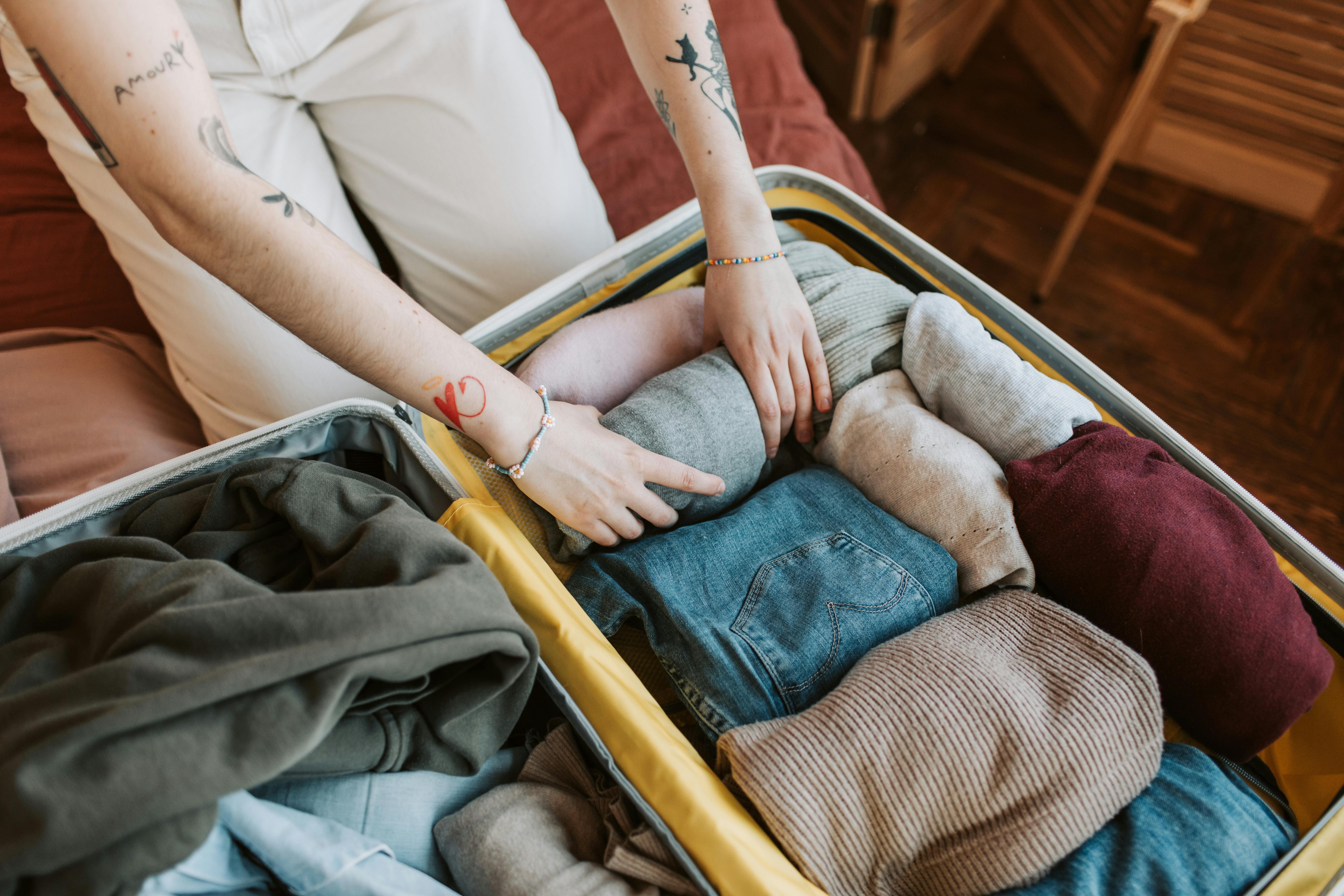
Packing cubes are the gold standard. They aren’t just for compression; they turn your backpack into a tidy chest of drawers. By using different colored cubes for different categories (e.g., blue for tops, red for bottoms, grey for electronics), you can retrieve an item in seconds, discreetly and efficiently.
The rolling method is foundational. Tightly rolling your clothes is superior to folding. It minimizes wrinkles and allows you to see every piece of clothing at a glance within your packing cube, eliminating the need to dig.
System 3: The Fortress of Self-Reliance - Your Security & Problem-Solving Toolkit
The Philosophy: Prepare for the Worst, Enjoy the Best
True freedom on the road doesn't come from hoping problems won't arise. It comes from the quiet confidence that you can handle them when they do. This system is about building a portable fortress of security and a toolkit for self-reliance, so you can explore with an unshakeable peace of mind.
The Three Layers of Your Fortress
Layer 1: Proactive Gear Security
The goal here is to make yourself a less appealing target. Opportunistic thieves look for easy wins.
Carry a decoy wallet with a small amount of local currency and some expired cards. If confronted, you can hand it over without losing your essential documents.
Use a simple carabiner to clip the zippers of your daypack together. It’s not a high-security lock, but it’s an effective deterrent against a pickpocket trying to subtly slide your bag open in a crowd.
Layer 2: Personal & Digital Safety
Your well-being matters most. These items are non-negotiable.
A rubber door stop is one of the most effective, low-cost security tools you can carry. Shoved under your hotel or Airbnb door, it provides a powerful physical barrier against unwanted entry.
Your phone is your lifeline. A dead phone is a safety crisis. Always carry a fully charged power bank (at least 10,000mAh).
Public Wi-Fi is a hunting ground for data thieves. Using a VPN on your phone and laptop is essential to protect your banking information and passwords.
Layer 3: The "MacGyver" Multi-Tools
When you’re alone, small problems can become major headaches. The MacGyver mindset is about packing a few multi-purpose items that can solve countless issues.
Wrap a few feet of duct tape around a water bottle or pen. It can repair a broken sandal, patch a backpack, or serve as a makeshift bandage.
A bandana or sarong is the ultimate multi-tool. It can be a towel, a sun shield, a dust mask, a makeshift bag, or a privacy screen.
Beyond the Gear: Packing for the Solo Experience
Expert packing goes beyond the purely practical. It’s also about packing for your emotional well-being and enhancing the unique moments that solo travel offers.
Pack a sensory comfort item. Loneliness can strike unexpectedly. Something small that connects you to home—a few of your favorite tea bags, a familiar scent, a silk pillowcase—can be an incredible comfort.
Bring a social icebreaker. A simple deck of playing cards placed on a table in a hostel common room is a universal invitation to connect with other travelers, breaking down language and cultural barriers instantly.
Empower your inner photographer. Don't let being solo stop you from getting great photos. A small, flexible mini tripod allows you to use your phone's self-timer for stunning shots that aren't just selfies. The "video screenshot hack" is another pro move: record a short video of yourself moving through a scene, then scrub through it later to pull out perfect, candid-looking still images.

Conclusion: Stop Packing, Start Preparing
You now possess the framework. The difference between an amateur and an expert traveler isn't what they pack, but how they think. It’s the understanding that a capsule wardrobe is about mental clarity, modular organization is about efficiency, and a fortress of self-reliance is about absolute freedom.
This guide was the "why." You have the philosophy.
Now it's time for the "what." To put these systems into practice, you need the right tools. We've compiled everything—every piece of gear, every item of clothing, every essential document—into one definitive resource.
Your next step is clear. Take these principles and build your ultimate kit with our . It’s the tactical playbook that will bring this strategy to life.
Read the full guide: Anxious to Adventurous: The Ultimate Guide to Solo Travel Confidence
Don't Miss Out! Subscribe for Exclusive Content
SubscribeComments 0
No comments yet
Be the first to share your experience!
Dont Miss Out! Subscribe for Exclusive Content
Ultimate USA Holidays Guide: Top Picks
FTC Affiliate Disclosure Essentials: Stay Compliant as a Travel Creator
Essential Affiliate Tools: From Tracking to Full Optimization
Booking.com Affiliate Program Review: Pros, Cons, and Earnings Potential
Decoding Affiliate Commission Rates: Benchmarks for Travel Creators
