
St. Patrick's NOLA: Irish Parade Hacks

TrekGuider @trekguider
You’ve heard the stories. St. Patrick’s Day in New Orleans isn’t just another parade awash in green beer and flimsy shamrocks; it’s a legendary, full-contact cultural spectacle. But the idea of diving into that joyous chaos unprepared feels… daunting. You’re worried you’ll miss the real experience, get swallowed by the crowds, and fail to grasp the wonderfully weird traditions that make this celebration one of the most unique in the country. You have a vision of what a parade should be, but you’re quickly realizing New Orleans wrote its own rulebook.
Now, picture it: you’re standing on the curb, shoulder-to-shoulder with thousands, feeling completely overwhelmed. You’re stuck behind a wall of people, unable to see the floats. Suddenly, a cabbage soars over your head, followed by a potato, and you’re left utterly baffled while seasoned locals expertly snag the flying produce. The day feels more like a bizarre grocery giveaway than the festive celebration you imagined. You’re not just a spectator; you’re an outsider, missing the inside jokes and the best throws, completely disconnected from the vibrant energy pulsing through the vibrant energy pulsing through the Irish Channel.
This is your insider’s playbook for unlocking that magic. We’re not just giving you tips; we’re turning you into a parade pro. Together, we’ll deconstruct every wonderfully weird tradition, from the real story behind the flying cabbages to the strategic sweet spots along the route that locals covet. This is your definitive guide to mastering the best St Patrick's day USA celebration, NOLA-style—a key part of the city's festive calendar, which is just one of the incredible events we detail in our master guide to New Orleans Holidays: Cultural Feasts.

The Emerald Isle Meets the Big Easy: Why NOLA's Parade is an Unforgettable Experience
While cities across America celebrate St. Patrick’s Day, New Orleans infuses the holiday with its own unmistakable Creole and Cajun soul. The tradition here is deep-rooted, with parades marching through the city’s streets since 1809, a historical institution honoring the significant Irish heritage that began with waves of immigrants who arrived in the 1800s to dig the city's vital canals.
What truly sets the New Orleans experience apart is how it blends reverence with the city’s signature laissez les bons temps rouler (let the good times roll) philosophy. It’s less about solemnity and more about a joyous, community-wide block party that sprawls across multiple days.
But the single most defining feature—the one that transforms spectators into active participants—is the throws. While Mardi Gras is famous for beads and doubloons, St. Patrick’s Day parades are legendary for their produce. Float riders don’t just toss trinkets; they hurl the ingredients for a traditional Irish stew. Cabbages, carrots, potatoes, onions, and even lemons fly through the air, turning the parade route into the world’s most chaotic and exciting open-air market. This tradition elevates the event from a simple procession to an interactive, and slightly absurd, cultural ritual you won’t find anywhere else.
A Tale of Two Cities: NOLA Throws vs. Chicago's Green River
To truly appreciate the uniqueness of New Orleans, it helps to compare it to another iconic St Patrick's day USA celebration: Chicago. Chicago is world-famous for dyeing its river a brilliant emerald green, a tradition since 1962 where plumbers unions dump 40-60 pounds of a secret vegetable-based powder into the water. It’s a stunning visual spectacle, a passive and beautiful city-wide display.
New Orleans, by contrast, is all about active participation. There’s no passive viewing here. You are part of the show, tasked with catching your dinner. It’s a grassroots, tangible, and slightly wild experience that reflects the city’s hands-on approach to celebration. One is a beautiful painting; the other is an interactive sport.
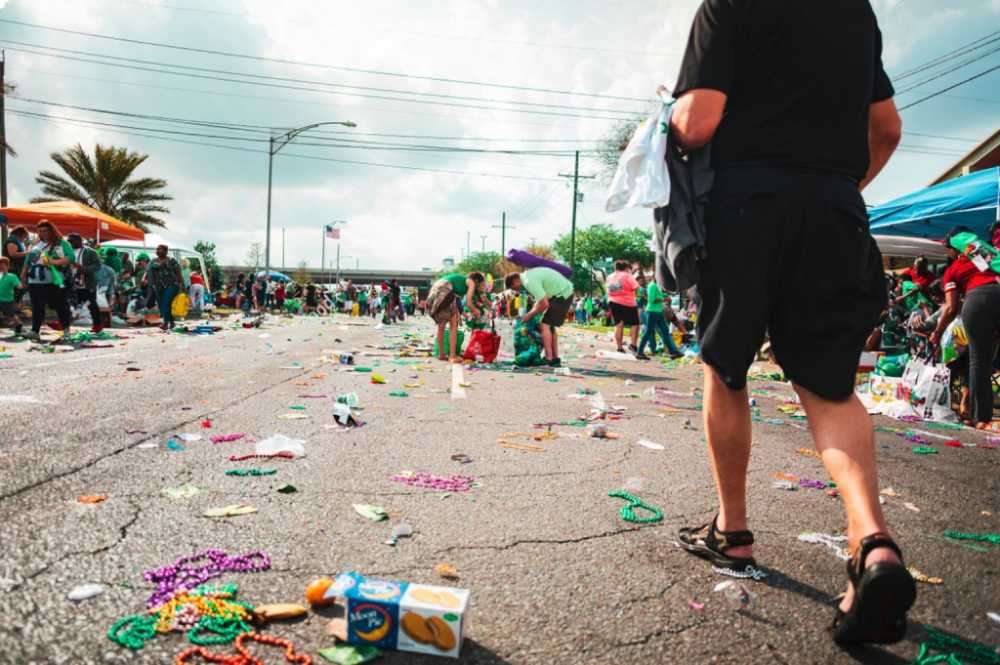
The Main Event: Hacking the Irish Channel St. Patrick's Day Parade
The crown jewel of the city's celebrations is the Irish Channel St. Patrick's Day Parade. This is the big one, a sprawling, vibrant procession that winds through the historic neighborhood settled by Irish immigrants. To conquer it, you need a game plan.
Mark Your Calendar: Date and Time Essentials
First things first: the parade rarely falls on the actual holiday. To maximize attendance and party potential, organizers schedule it for the Saturday before St. Patrick's Day.
2026 Parade Date: Saturday, the Saturday before St. Patrick's Day
Start Time: 1:00 PM
While the parade officially kicks off at 1 PM, the neighborhood festivities begin much earlier. The Irish Channel transforms into a massive block party by mid-morning, with residents setting up elaborate camps, cooking, and celebrating on the streets. Arriving early isn't just a recommendation; it's essential to soaking in the full, authentic atmosphere.
The Route Decoded: Where to Plant Your Feet for Prime Loot
The parade traditionally begins at the corner of Felicity and Magazine Street, weaving its way through the heart of the Irish Channel. Choosing your viewing spot is the most critical decision you'll make. Your choice will dictate your experience, from crowd density to your chances of catching a prized cabbage.
The Starting Blocks (Near Magazine and Jackson):
Pros: The energy here is absolutely electric. The floats are fully stocked, and the riders are fresh and eager to throw. You'll get the first crack at the best loot.
Cons: This is the domain of the hardcore parade-goer and often the most crowded section. You'll need to arrive exceptionally early (think 9:00 AM) to claim a prime spot. It can be intense and less suitable for families with small children.
The Middle Ground (Along Magazine Street, between Washington and Louisiana):
Pros: The crowds tend to thin out slightly as you move down the route. It offers a fantastic balance of high energy and slightly more breathing room. This is the strategic sweet spot for actively trying to catch throws without the extreme competition of the starting line.
Cons: By this point, some of the most unique throws may have already been tossed. You'll still need to be assertive to get the attention of the float riders.
The Final Stretch (Approaching Jackson Avenue on the return):
Pros: This area is typically the most family-friendly and least congested. It's a more relaxed atmosphere, perfect for those who want to enjoy the spectacle without being in the thick of it. Float riders often unload the last of their throws here, leading to a final, glorious frenzy of produce.
Cons: The parade has been going for a while, and the energy might be slightly lower. The selection of throws will be whatever is left over.
The Art of the Catch: Mastering the Vegetable Throws
Catching a cabbage is a New Orleans rite of passage. It requires more than just luck; it demands technique, awareness, and a bit of shameless enthusiasm.
Gear Up: Forget flimsy plastic bags. Bring a sturdy, reusable tote bag or even a small backpack. A flying cabbage has some heft, and you don't want your bag to break mid-parade.
Make Eye Contact: Float riders are scanning the crowd for enthusiastic targets. Don't just stand there passively. Wave your hands, shout, and make direct eye contact with a rider. Point to yourself or your bag. The more engaged you are, the more likely you are to be rewarded.
Create a Target: Hold your bag open and high. Make it an easy and inviting target. Some locals even create small, decorated nets on poles to extend their reach and stand out from the crowd.
Mind Your Surroundings: This is a full-contact sport. Be aware of the people around you. A cabbage flying into a dense crowd can cause a pile-up. Give your neighbors space and be prepared to move. Never, ever dive onto the ground for a rolling potato—it's not worth the risk.
The "Thank You" Rule: If a rider tosses something directly to you, give them a thumbs-up or a wave of thanks. It’s part of the friendly spirit of the day.

Your St. Patrick's Day USA Survival Kit: Pro-Level Parade Hacks
Showing up is one thing; showing up prepared is another. A little planning transforms a potentially stressful day into a seamless and memorable adventure. Treat it like a mission, and pack accordingly.
Arrive Early, Win the Day
We can't stress this enough. For a 1:00 PM parade, you should aim to be in the Irish Channel and finding your spot no later than 10:00 AM. The streets close to traffic early, and the neighborhood fills up fast. Arriving early allows you to claim a good piece of curb, set up your "base camp" with chairs and a cooler, and enjoy the building atmosphere of the block party before the main event even begins.
The Parking Predicament: Getting There and Back
Driving directly to the parade route is a rookie mistake that will lead to nothing but frustration. Parking is virtually non-existent, and street closures create a labyrinth of dead ends.
Rideshare Smartly: Use a rideshare service like Uber or Lyft, but set your drop-off point several blocks away from Magazine Street. This will help you avoid surge pricing and getting stuck in gridlock.
Take the Streetcar: The St. Charles Streetcar is a scenic and practical option. It runs parallel to the parade route, just a few blocks away. Get off around Jackson Avenue or Washington Avenue and walk toward the river.
Park and Walk: If you must drive, park in the Central Business District (CBD) or the Lower Garden District and enjoy a 15-20 minute walk into the Irish Channel. Reserving a spot in a garage ahead of time using a parking app is a wise investment.
Dress the Part (and for Comfort)
Your attire is both festive and functional. While wearing green is practically mandatory, your comfort should be the top priority.
Footwear is Everything: You will be on your feet for hours, standing, walking, and dodging flying vegetables. Wear your most comfortable, broken-in sneakers or boots. This is not the day for new shoes or anything with a heel.
Layer Up: New Orleans weather in March can be unpredictable. It might be cool and breezy in the morning but warm and sunny by the afternoon. Wear layers—a t-shirt, a long-sleeved shirt, and maybe a light jacket—that you can easily shed as the day warms up.
Sun Protection: Even on a cloudy day, the sun can be strong. Bring sunscreen, a hat, and sunglasses to avoid a post-parade sunburn.
Essential Gear for Your Parade Pack
A well-stocked bag is the mark of a parade veteran. Here’s a checklist of must-have items:
Sturdy Reusable Bag: For all the throws you’re going to catch.
Water and Snacks: Stay hydrated and energized. While vendors are around, having your own supply saves time and money.
Sunscreen & Sunglasses: Protect yourself from the elements.
Portable Phone Charger: Your phone battery will drain quickly from taking photos and trying to find friends in spotty service areas.
Hand Sanitizer and Wipes: Essential for quick clean-ups before you eat.
Cash: Many local food and drink vendors may be cash-only.
A Festive Attitude: The most important item. Embrace the chaos and have fun!

Pro-Tip: Establish a clear, non-movable meeting point with your group before you arrive. Cell service can be spotty in large crowds. Pick a specific storefront or street corner a block or two away from the main route, like "the corner of Constance and First Street," as your emergency regroup spot.
Beyond the Parade: Extending the Celebration
The parade is the main course, but the celebration is an all-day feast. Don't just leave when the last float passes. The block party in the Irish Channel rages on for hours afterward, with music, food, and dancing in the streets.
Many of the neighborhood's iconic pubs, like Tracey's or Parasol's, become ground zero for the festivities, serving up green beer and classic New Orleans fare. Be prepared for long lines, but the vibrant atmosphere is worth the wait. Exploring the side streets off Magazine can also lead you to smaller, less-crowded neighborhood bars where you can catch your breath and celebrate with locals.
Planning a family trip for the parade can be a lot to juggle. If you're flying in with little ones, the logistics can feel overwhelming. Our Stress-Free Flying with Kids Guide provides a complete checklist to make your journey as smooth as the parade is fun.
Pro-Tip: The "throws" aren't just for show. Locals actually use the cabbages, potatoes, and onions to cook their St. Patrick's Day meal of corned beef and cabbage. Catching your ingredients is the ultimate NOLA experience!

Safety First: Navigating the Crowds Like a Pro
With any large-scale event, safety matters most. The St. Patrick's Day parade is overwhelmingly safe and friendly, but it's wise to be prepared.
Use the Buddy System: Never wander off alone. Stick with your group and keep track of each other, especially in the densest parts of the crowd.
Stay Hydrated: It's easy to get dehydrated, even on a cooler day. Alternate alcoholic beverages with plenty of water throughout the day.
Respect the Floats: The most important rule of any New Orleans parade is to never run into the street or chase after a float. The floats are massive, and their operators have limited visibility. Let the throws come to you.
Supervise Children: If you have children with you, keep a close eye on them at all times. Using a ladder can provide a safer, elevated viewing spot, but ensure it's placed a safe distance back from the curb.
Mastering a single event is one thing, but truly understanding the soul of American celebrations requires a deeper dive. For comprehensive strategies on navigating everything from Mardi Gras to the Macy's Thanksgiving Day Parade, our master Travel Guide is the ultimate resource for any serious traveler.
Your Green Light to an Unforgettable Day
You are now armed with the knowledge to do more than just attend the St. Patrick's Day parade in New Orleans—you are ready to conquer it. You know that the real prize isn't just a plastic cup or a string of beads, but a cabbage caught mid-air. You understand that arriving early, choosing your spot wisely, and packing smart are the keys to a perfect day. You are no longer a tourist destined to be confused on the sidelines; you are an informed participant, ready to dive headfirst into one of the most unique and exhilarating St Patrick's day USA celebrations.
Now you have the hacks. Go out there, wear your green with pride, make eye contact with a float rider, and prepare to catch your dinner. The Big Easy is waiting to show you how it’s done.
Don't Miss Out! Subscribe for Exclusive Content
Subscribe



Comments 0
No comments yet
Be the first to share your experience!
Dont Miss Out! Subscribe for Exclusive Content

San Francisco Cherry Blossoms: A Local's Guide to the Blooms


Halloween SF: Haunts Without Horrors

SF Festivals: 7 Must-See Lineups

Christmas SF: Lights & Wharf Wonders

SF Pride: 6 Route & Party Hacks

Chinese New Year SF: Parade Essentials
How to Make a Solo Travel Budget (That You'll Actually Keep)
TrekGuider @trekguider
You have the destination pinned on a map, the screenshots saved, the dream of a life-changing solo trip burning bright. But a huge, intimidating question mark looms over the entire fantasy: the money. You have no real idea how much it costs, how to save for it, or how you’ll manage it all on your own. This financial uncertainty is paralyzing, isn't it? It’s the anchor that keeps your dream moored in the harbor of "someday," while you watch others set sail. You worry that you’ll either never save enough or, even worse, that you’ll miscalculate and run out of money halfway through your adventure, turning a dream trip into a stressful nightmare.
This guide is your anchor chain cutter. It is the definitive, step-by-step system to create a realistic, achievable, and stress-free financial plan for your adventure. We’re going to demystify the process of how to budget for solo travel, breaking down every potential cost, from pre-flight essentials to daily gelato. This isn't about restriction; it's about empowerment. It's about giving you the clarity and control to turn "someday" into a firm departure date. For a complete roadmap of your entire journey, start with our foundational pillar article, The Ultimate Guide to Solo Female Travel (15 Essential Tips).
The "Why" Before the "How": A Solo Traveler's Financial Mindset
Before we open a single spreadsheet, let's establish a crucial mindset shift. For a solo traveler, a budget is not a cage—it is the key that unlocks the cage. When you travel with others, costs are often shared or split. When you travel alone, you bear 100% of the financial responsibility for every room, ride, and meal. While this may seem daunting, it grants you an unparalleled superpower: absolute financial agility and control.
You, and you alone, decide where to splurge and where to save. You can choose a hostel in Prague to save for a Michelin-starred meal in Paris. This level of autonomy is a core part of the solo travel experience, a movement dominated by women who make up a staggering 84% of the market. Mastering your budget is the first and most critical step in mastering the art of traveling on your own terms.
From Dream to Departure: Your Step-by-Step Guide on How to Budget for Solo Travel
Creating a comprehensive travel budget isn't guesswork; it's a systematic process that transforms a vague dream into an actionable financial goal. Follow these four steps to build a plan you can trust.
Step 1: Research and Estimate Your "Big Three" Costs
Your first task is to get a realistic, high-level estimate of what your trip will cost. Focus your research on the three largest categories of expense that will form the foundation of your budget.
Pre-Trip Fixed Costs: These are the one-time expenses you'll incur before you even leave home. This category includes things like necessary visas, travel insurance (an absolute non-negotiable), essential gear you need to buy (like a good backpack or walking shoes), and any required vaccinations.
Major Transportation: For most trips, this will be your round-trip flight to and from your destination region. Use tools like Google Flights or Skyscanner and search with flexible dates to get a ballpark figure for this significant cost.
Average Daily On-the-Ground Cost: This is the most variable part of your budget, and it's heavily influenced by your destination and travel style. Research is key here. As we'll see below, the difference between regions is dramatic. A budget-conscious solo traveler could comfortably explore Prague on around €65 per day, while maintaining a similar travel style in Paris would require at least €115 per day, according to cost-of-living data.

Step 2: Build Your Master Budget Spreadsheet
Once you have your "Big Three" estimates, it's time to get granular. Create a detailed spreadsheet or use a budgeting app to break down your total estimated cost into specific, itemized categories. This detailed view is crucial because it shows you exactly where your money is going and helps you identify areas where you can potentially cut back.
Your spreadsheet should include the following categories:
Pre-Trip Costs: (Visa fees, travel insurance, vaccinations, new gear)
International Transport: (Flights, long-distance trains)
Daily Lodging: (Your estimated nightly cost x number of nights)
Daily Food: (Your estimated daily cost x number of days)
Daily Activities: (Museum tickets, tours, special experiences)
Local Transport: (Subway passes, buses, occasional taxis)
Miscellaneous: (Souvenirs, laundry, toiletries)
Your Ultimate Planning Companion
A great budget is the foundation of a great itinerary. To help you organize every aspect of your trip, from flight details and accommodation confirmations to your daily spending plan, we've created the perfect tool to put this plan into action.
Download your free Travel Itinerary Template now! This comprehensive template will help you keep all your essential information in one organized place, making your planning process seamless and stress-free.
Step 3: Set a Savings Goal and Automate Your Success
With a tangible number in your sights, the path to your departure date sharpens from a hazy dream into simple, motivating math. Divide the total cost by the number of months you have until your departure. This number is your required monthly savings target.
The single most effective strategy for hitting this target is automation. Don't rely on willpower. Set up an automatic, recurring transfer from your checking account to a dedicated high-yield savings account for the day after you get paid. By treating your travel savings as a non-negotiable monthly bill, you pay your future self first and ensure you stay on track without having to think about it.
Step 4: The Golden Rule: Build a 15-20% Contingency Fund
This is the most crucial, and most often overlooked, step in building a resilient budget. After you’ve calculated your total estimated trip cost, add a buffer of 15% to 20% on top of that total. This is your contingency fund.
This fund is not just for emergencies like a missed flight or a medical issue. It is also your "opportunity fund." It’s the financial freedom to say "yes" to a spontaneous, can't-miss experience—like a last-minute ticket to the opera or a day trip with new friends from your hostel. This buffer is what prevents financial stress on the road and allows you to travel with confidence and flexibility.
The Cost of Style: Decoding Daily Expenses for Three Travel Tiers
That four-step framework gives you the how, but the biggest variable will always be the where and the what. To give you tangible financial targets, let's break down what those "on-the-ground costs" actually look like across three distinct travel styles, based on global averages for popular destinations. These figures are for a single person in USD and do not include major pre-trip costs like international flights.

The Budget Backpacker: Stays in hostel dorms, primarily eats street food or cooks in the hostel kitchen, and focuses on free activities like walking tours.
The Mid-Range Comfort Seeker: Stays in private hostel rooms or budget hotels, eats a mix of cafe meals and local restaurants, and enjoys a paid activity each day.
The Affordable Luxury Traveler: Stays in boutique hotels, dines out for most meals, uses ride-shares, and books multiple guided tours or unique experiences.
To see these numbers in action, explore the Travel Guide marketplace on TrekGuider. Many of our expert guides, published by seasoned solo travelers, include detailed budget breakdowns from their own trips, giving you invaluable real-world insight.
Hacking the System: 5 Actionable Tips for Slashing Your Biggest Costs
For a solo traveler, flights and accommodation are the two largest line items in the budget. Employing a few savvy strategies can dramatically reduce these costs, freeing up more of your hard-earned money for actual experiences.
Travel in the Shoulder Season: The months just before and after peak tourist season (typically spring and autumn) are the sweet spot. You’ll enjoy pleasant weather, fewer crowds, and flight and accommodation costs that can be 25-50% cheaper than in peak summer.
Embrace Modern Hostels (and Their Private Rooms): The stereotype of dingy dorms is long gone. Many modern hostels are stylish, social hubs that offer private rooms with ensuite bathrooms at a fraction of the cost of a hotel. You get privacy plus access to money-saving amenities like a communal kitchen.
Filter for Single Rooms: When searching on booking sites, specifically look for "single rooms" or studios. Many traditional European guesthouses offer smaller rooms designed for one person at a lower price than a standard double.
Use Flight Scanners with Flexible Date Searches: Instead of searching for a specific date on Google Flights or Skyscanner, use their calendar or "whole month" functions. You’ll often find that shifting your departure by just a day or two can result in massive savings.
Leverage Loyalty Programs: Before your trip, sign up for the free loyalty programs of the airlines and hotel chains you plan to use. More significantly, using a travel-focused credit card to pay for your trip expenses can earn valuable points and miles for free flights and hotel stays in the future.

How to Budget for Solo Travel and Avoid the "Budget Busters"
Even a perfect plan can be derailed by unexpected expenses. Being aware of these common "hidden" costs allows you to account for them in your contingency fund from the start.
The Single Supplement: The most notorious cost for solo travelers. Many tours and cruises base their pricing on double occupancy and charge extra for a single person. Always look for companies that cater to solo travelers or offer to pair you with a roommate to waive this fee.
ATM and Foreign Transaction Fees: This is death by a thousand cuts. Using the wrong card can mean paying a 3% fee on every purchase and $5-$10 for every cash withdrawal.
Baggage Fees: Budget airlines are famous for their exorbitant fees for both checked and carry-on luggage. Always read the fine print on baggage allowances before booking.
Local Tourist Taxes: Many cities charge a small tourist tax per person, per night, that is often not included in your prepaid booking price and must be paid in cash at your hotel.
International Data: Relying on your home carrier's roaming plan can be incredibly expensive. Budget for a local SIM card or an eSIM to ensure affordable connectivity.
Pro-Tip: Your most powerful tool against hidden fees is a strategic financial setup. Travel with two key products: a credit card that has no foreign transaction fees (like the Chase Sapphire Preferred®) and a debit card from a bank that offers worldwide ATM fee reimbursements (like the Charles Schwab Bank High Yield Investor Checking Account). This combination alone can save you hundreds of dollars.
Pro-Tip: Before you leave, create a "financial lifeline." Photocopy the front and back of every credit and debit card you plan to carry. Leave one copy with a trusted emergency contact at home and keep a digital copy in a secure cloud storage service. If your wallet is lost or stolen, having the card numbers and the international toll-free numbers on the back will make the cancellation process infinitely smoother.
Frequently Asked Questions About Solo Travel Budgeting
How far in advance should I start budgeting for a big solo trip?
Ideally, start your high-level research 9-12 months out. This gives you plenty of time to track flight deals, understand seasonal price shifts, and, most importantly, allows you to set a smaller, less intimidating monthly savings goal over a longer period.
Is it better to bring a lot of cash or just use cards?
Never carry large amounts of cash. The best strategy is a multi-pronged approach. Use a no-foreign-transaction-fee credit card for the majority of your purchases (hotels, restaurants, tours) to maximize security and rewards. Use a fee-reimbursing debit card to withdraw small amounts of local currency every few days for things like small market purchases, tips, or cash-only street food.
The 15-20% contingency fund seems like a lot. Is it really necessary?
Absolutely. Think of it as buying peace of mind. On a $3,000 trip, a 15% buffer is $450. That single fund could cover a last-minute flight change, a necessary trip to a doctor, or the spontaneous decision to take a ferry to a Greek island with new friends. Without it, any unexpected event becomes a major crisis. With it, it’s just a manageable part of the adventure.
Your Journey to Financial Freedom Awaits
A budget is not about what you can't do; it's about empowering everything you can do. It transforms a vague, anxiety-inducing dream into a clear, tangible, and achievable goal. By following this systematic approach, you now have the tools to build a financial plan that is not just a spreadsheet of numbers, but a roadmap to the world. You have a framework for how to budget for solo travel that puts you in complete control of your adventure.
This financial competence is the foundation upon which the most incredible solo journeys are built. With your budget sorted, you can focus on the real magic: planning your itinerary, discovering new cultures, and, most importantly, discovering yourself.

SEO Meta Data Suggestions:
SEO Meta Title (59 characters): How to Make a Solo Travel Budget You'll Actually Stick To
URL Slug: /how-to-budget-for-solo-travel
SEO Meta Description (154 characters): A step-by-step guide on how to budget for solo travel. Learn to estimate costs, save effectively, and avoid hidden fees for your next adventure.
Don't Miss Out! Subscribe for Exclusive Content
SubscribeComments 0
No comments yet
Be the first to share your experience!
Dont Miss Out! Subscribe for Exclusive Content

Ultimate USA Holidays Guide: Top Picks

FTC Affiliate Disclosure Essentials: Stay Compliant as a Travel Creator

Essential Affiliate Tools: From Tracking to Full Optimization

Booking.com Affiliate Program Review: Pros, Cons, and Earnings Potential

Decoding Affiliate Commission Rates: Benchmarks for Travel Creators

Top 11 High-Paying Affiliate Programs for Travel Bloggers
11 Essential Solo Travel Safety Tips You Need to Know
TrekGuider @trekguider
Let's be honest: the idea of solo travel is a mix of exhilaration and pure terror. It’s the ultimate promise of freedom, shadowed by the persistent question, "But will I be safe?" The thought of navigating an unfamiliar city alone, fending off unwanted attention, or feeling vulnerable can be enough to keep the most adventurous spirit grounded. This anxiety is real, and it can paralyze your plans or, worse, follow you on your trip, robbing you of the joy you set out to find.
But safety isn’t a matter of luck; it’s a matter of skill. It’s a mindset you can cultivate and a set of practices you can master. This guide is your new playbook. We’ve distilled insights from security experts, psychologists, and veteran solo travelers into 11 essential, gender-neutral solo travel safety tips. This isn't a list of warnings designed to scare you. It’s a practical framework for building unshakeable confidence, mastering situational awareness, and empowering yourself to explore the globe. While these strategies are crucial for any solo traveler, they are one part of a larger safety ecosystem, which we cover in our comprehensive guide to The Ultimate Guide to Travel Safety: A 2026 Playbook.

The Foundation: Building Unshakeable Confidence and Awareness
True safety begins in your mind long before your boots hit the ground. It’s a foundation built on proactive awareness and a confident mindset. By mastering these core principles, you transform yourself from a potential target into a "hard target"—someone who looks like they know exactly what they’re doing, even when they're just soaking it all in.
1. Master the Art of Situational Awareness
Situational awareness is not paranoia; it's a state of relaxed observation. Security experts emphasize that it’s about consciously understanding your environment by first establishing a baseline and then learning to spot anomalies.
Establish a Baseline: Wherever you are—a train station, a market, a park—take a moment to observe the normal rhythm. How are people walking? What’s the general noise level? This is the "normal" for that environment.
Identify Anomalies: Once you know the baseline, things that deviate will immediately stand out: someone moving against the flow of foot traffic, wearing a heavy coat in hot weather, or loitering without purpose near an entrance. These anomalies are your early warning system.
Limit Distractions: "Tunnel vision" is a solo traveler’s enemy. Keep your headphones out and your phone in your pocket when walking through crowded areas. Keep your head up.
Practice Active Scanning: Make a habit of periodically looking around in a full 360-degree arc. This simple act keeps you aware of who is behind and beside you, preventing you from being caught by surprise.
Project Confident Body Language: Your posture speaks volumes. Walk with a purposeful stride, keep your head held high, and make brief, deliberate eye contact with those around you. This non-verbally communicates that you are aware and not an easy target.
2. Trust Your Intuition—It's Your Best Guide
Psychologists and security experts agree: that "gut feeling" is a real and powerful threat-detection tool. It's your subconscious mind recognizing thousands of tiny cues that something is wrong long before your conscious mind can articulate why. If a person, a street, or a situation feels "off," do not ignore it. Treat that feeling as a valid warning. Cross the street, leave the bar, get in a taxi—do whatever you need to do to honor that instinct without apology or hesitation.
3. Build Confidence with "Practice Runs" Before You Go
The confidence to navigate a foreign capital alone isn't born on the plane; it's built at home. Start with small, local "practice runs" to build your self-reliance.
Take yourself on a solo date to a new restaurant or movie in your own city.
Spend an afternoon exploring a neighborhood you don’t know well, navigating by yourself.
Take a solo day trip to a nearby town using only public transportation.
These small wins prove to yourself that you are capable and resourceful, which is the bedrock of the confidence you'll carry with you across the globe.

Navigating Like a Pro: Practical Solo Travel Safety Tips
Once you’ve calibrated your internal compass with a confident mindset, it’s time to translate that awareness into action. How you move, what you wear, and how you interact with your environment are the practical skills that complete your safety toolkit.
4. Walk with Purpose, Navigate with Discretion
Looking lost is like wearing a sign that says "vulnerable." Your goal is to navigate with quiet confidence.
Plan Before You Leave: Study your route before you walk out the door of your hotel or hostel. Having a clear mental map allows you to walk with purpose, which is a powerful deterrent.
Be Discreet with Maps: Avoid standing on a busy corner staring at a large paper map or your phone. If you need to check your directions, step into a shop, cafe, or hotel lobby to reorient yourself away from prying eyes.
Manage Your Tourist Gear: An expensive camera hanging around your neck and a bulky backpack are clear signals that you're a tourist. Keep your camera in a non-descript bag until you’re ready to use it, and consider using a more subtle crossbody bag for daily exploring instead of a large daypack.
5. Dress to Blend, Not to Stand Out
Your clothing is your first and most obvious cultural handshake. Observe what locals are wearing and aim for a similar level of formality.
Avoid Loud Logos: Leave the clothing with your home country's flag, university, or sports team logos at home. Opt for neutral, less conspicuous attire.
Respect Local Norms: In more conservative regions, dressing modestly (covering shoulders and knees) is not just a sign of respect; it’s a key safety strategy that helps you blend in and avoid unwanted attention.
Pro-Tip: Pack a lightweight scarf. It takes up almost no space and is incredibly versatile. You can use it to cover your head when entering a religious site, cover your shoulders for modesty, or add a layer of warmth.
6. Learn a Few Key Local Phrases
You don't need to be fluent, but knowing a few words in the local language is a massive confidence booster and a sign of respect. Focus on the essentials:
Hello
Please
Thank you
Excuse me
Do you speak English?
Being able to handle simple transactions or politely ask for help shows you've made an effort and can make interactions much smoother.

Your Safe Haven: Accommodation and Socializing Strategies
As a solo traveler, where you stay and how you choose to meet people are critical safety decisions. Your accommodation is your sanctuary, and your social life should be a source of joy, not anxiety.
7. Perform a 60-Second Hotel Security Sweep
The moment you first enter your hotel room or rental, take a minute to perform this essential security check.
Prop the Door: Keep the door propped open with your luggage while you do a quick visual sweep to ensure the room is empty (check the closet, behind the shower curtain, under the bed).
Test the Locks: Close the door and test every lock from the inside—the deadbolt, the security chain, and the latch. They should all feel solid.
Find Your Exits & Count: Locate the fire escape map on the back of the door. Identify the two nearest exits and count the number of doors between your room and the closest one. Fire safety experts stress this is crucial for navigating in a dark or smoke-filled hallway.
Check for Privacy: Ensure windows and any connecting doors lock properly. Close the curtains fully.
8. Choose Social Accommodations for Safe Connections
Hostels are the original social network for travelers and remain one of the best and safest ways to meet people. They are designed for interaction, with common areas and organized events like walking tours or group dinners. Even if you book a private room in a hostel, you get the benefit of privacy combined with a built-in, vetted community right outside your door.
9. Join Group Tours and Classes to Meet Like-Minded People
A shared interest is a natural foundation for friendship. Signing up for group activities is a fantastic way to connect with other travelers and locals in a structured, safe environment.
Free Walking Tours: Most major cities have them. They're a great way to get oriented and chat with fellow travelers.
Specialty Day Tours: A food tour or historical excursion brings together people with a common passion.
Local Classes: A cooking workshop or language class provides an authentic cultural experience and an easy way to start conversations.
Pro-Tip: If you connect with people on a tour, suggest meeting up later in a public place. "A few of us are going to grab a bite at that market we saw, want to join?" is a low-pressure way to extend the connection.

Your Digital Safety Net
In the modern era, technology provides some of the most powerful solo travel safety tips. Your smartphone can be your lifeline, your map, and your guardian angel—if you set it up correctly.
10. Arm Yourself with Personal Safety Apps
Before you leave, download a personal safety app and set it up with your trusted contacts back home. These apps can share your location, send distress signals, and even connect you with emergency services.
bSafe: A comprehensive app that features a voice-activated SOS alarm, live location sharing ("Follow Me"), and even automatically records video and audio during an emergency.
Noonlight: Acts as a silent panic button. You press and hold a button on the screen when you feel unsafe. If you release it and don't enter your PIN within 10 seconds, it automatically sends your location to professional dispatchers who coordinate with local police.
Life360: Excellent for creating a private location-sharing map ("Circle") with family or friends. It includes an SOS alert that messages your entire circle and can even detect if you've been in a car crash.
11. Keep Your Trusted Contacts in the Loop
Beyond apps, make a habit of sharing your itinerary with someone back home before you leave. A quick text or email saying, "Just arrived at my hostel in Lisbon, all is good!" provides peace of mind for both you and them.

A Note for Women Traveling Solo
While all the tips in this guide are universal, women often face a unique set of challenges and cultural nuances on the road. For advice tailored specifically to navigating these issues—from understanding cultural dress codes to responding to harassment and leveraging female-focused networks—our specialized guide is an essential resource.
Deep Dive: The Solo Female Traveler's Playbook
Ready for a resource that speaks directly to the female experience? Download our free, in-depth Solo Female Travel Safety Guide for expert advice on cultural etiquette, empowerment, and staying safe and confident on your own terms.
Solo Travel Safety FAQ
A prepared mind is a safe mind. Here are answers to a few common questions that solo travelers ask.
1. What's the best way to handle street harassment?
Security experts advise a tiered response. First, try to ignore it. Often, a harasser's goal is a reaction. Avoid eye contact and keep walking with purpose as if you heard nothing. If they persist, get loud and firm. Use a strong voice and say a simple command like "Stop" or "Leave me alone." Finally, your priority is to get to a safe place. Duck into a busy shop, hotel lobby, or cafe. Don't lead them back to where you're staying.
2. Are hostels really safe for solo travelers?
Yes, reputable hostels are generally very safe. They are designed for travelers and often have excellent security measures like key-card access, 24/7 reception, and lockers for your valuables (bring your own padlock). They are one of the best ways to meet other travelers in a secure environment. Read recent reviews before booking, and consider choosing a female-only dorm if it makes you more comfortable.
3. How can I avoid looking like a tourist?
It's a combination of the tips above. Navigate with discretion (plan your route in advance), dress to blend in (avoid flashy logos and follow local clothing norms), and manage your tourist gear (keep the big camera in a bag). The biggest factor, however, is confident body language. Walk like you belong there, and most people will assume you do.

The World is Waiting
Solo travel is one of the most rewarding experiences a person can have. It will challenge you, change you, and fill your life with stories. The goal of these solo travel safety tips is not to make you fearful, but to make you fearless. By replacing anxiety with awareness and confidence with preparation, you give yourself the freedom to say "yes" to adventure and to fully embrace the incredible journey of discovering the world, and yourself, on your own.
Now that you're equipped with the strategies for a safe and confident solo journey, you can focus on the bigger picture. For a complete master guide to planning every aspect of your next adventure, from budgeting and packing to booking and logistics, our all-encompassing Travel Guide is the only resource you'll ever need.
Don't Miss Out! Subscribe for Exclusive Content
SubscribeComments 0
No comments yet
Be the first to share your experience!
Dont Miss Out! Subscribe for Exclusive Content
Ultimate USA Holidays Guide: Top Picks
FTC Affiliate Disclosure Essentials: Stay Compliant as a Travel Creator
Essential Affiliate Tools: From Tracking to Full Optimization
Booking.com Affiliate Program Review: Pros, Cons, and Earnings Potential
Decoding Affiliate Commission Rates: Benchmarks for Travel Creators
