
7 Hotel Safety & Security Tips for Peace of Mind

TrekGuider @trekguider
You’ve finally made it. After a long day of navigating airports, taxis, and unfamiliar streets, you slide the key card into your hotel room door and a wave of relief washes over you. This is your sanctuary, your home base for the adventures ahead. But as you drop your bags, another feeling can creep in, spoiling the moment. Let’s be honest: that sterile, anonymous hotel room doesn't feel as secure as your own home. It’s a vulnerability that can cast a shadow over an entire trip, a persistent whisper of "what if" that prevents you from ever truly relaxing.

The good news is that safety isn't a matter of luck; it's a repeatable skill. This guide is your new ritual, a systematic playbook for transforming any hotel room into a personal fortress. We’ve synthesized advice from former hotel security personnel and fire safety experts to bring you seven essential hotel safety tips. This isn’t about paranoia; it's about empowerment. By making these simple checks a habit, you can ensure your peace of mind is the most valuable thing you pack. These strategies are a critical part of the accommodation-specific awareness we cover in our comprehensive guide to The Ultimate Guide to Travel Safety: A 2026 Playbook.
The 60-Second Security Sweep: Your First Check-In Ritual
Your first minute inside a new hotel room is the most important. This is your window to verify, secure, and orient yourself before you get distracted by unpacking or collapsing on the bed. By turning the following steps into an unbreakable habit, you proactively eliminate the most common security and safety risks. Think of it as a professional-grade inspection that takes less time than it does to check your email.
Tip 1: Secure the Door and Verify the Room is Empty
Before you do anything else, take control of your entry point. A common mistake is to walk in, close the door, and immediately turn your back to it while dealing with luggage. This makes you vulnerable. Instead, follow this security-conscious procedure.
Prop the Door: As you enter, use your luggage to prop the door open so it can't be closed behind you.
Conduct a Visual Clear: From the doorway, quickly scan the room to ensure it is empty. This includes a glance behind the curtains, in the closet, under the bed, and inside the shower.
Close and Lock: Once you've confirmed the room is unoccupied, remove your luggage from the entryway, close the door, and immediately test every single locking mechanism. This includes the primary deadbolt and any secondary security devices like a security chain or a flip latch. Ensure they are all functional and engage smoothly. Don't assume they work; physically test them.
Tip 2: Check Your Communication and Safety Gear
Now that the room is secure, your next step is to verify your lifelines. You need to know that the room’s built-in safety equipment is present and functional.
Test the Phone: Pick up the in-room phone and confirm there’s a dial tone or call the front desk for a quick "hello." This ensures you have a reliable way to call for help if your cell phone has no service or the battery dies.
Locate Safety Devices: Visually identify the smoke detector and fire alarm sprinkler heads. It’s also wise to check for a carbon monoxide detector, especially in hotels with in-room fireplaces or those attached to large parking garages. If one isn't present and you have concerns, report it to the front desk.
Tip 3: Create a Mental Fire Escape Map
This is one of the most critical hotel safety tips, yet it's the one most often ignored. In the event of a fire, heavy smoke can reduce visibility to absolute zero. The evacuation map on the back of your door is not decoration; it's your key to survival.

According to fire safety experts, you must identify three key things:
Your Primary and Secondary Exits: The map will show the nearest emergency exit stairwell. Crucially, you must also identify an alternative, secondary exit in case your primary route is blocked by fire or smoke. Remember, elevators must never be used in a fire.
The Door Count: This is the most important part. Physically walk out into the hallway and count the number of doors between your room and the nearest emergency exit. Memorize this number. In a dark, smoke-filled hallway, this knowledge will allow you to feel your way along the wall to safety, counting the doors as you go.
Location of Safety Equipment: As you identify your route, note the location of fire alarm pull stations and fire extinguishers in the hallway.
Tip 4: Fortify Your Privacy
Your final step in the initial sweep is to ensure your room is a truly private space.
Check Windows and Connecting Doors: Go to every window and make sure it is locked securely. If your room has a connecting door to an adjacent room, verify that it is locked from your side. A good practice is to slide a chair or your luggage in front of a connecting door as an extra physical and audible barrier.
Close the Curtains: Fully close the curtains to ensure privacy from the outside, especially in ground-floor rooms or those that face other buildings.
Scan for Oddities: While rare, hidden cameras are a modern concern. Conduct a quick visual scan for any electronics or objects that seem out of place. Pay attention to smoke detectors, alarm clocks, and USB wall outlets, looking for unusual pinholes or lenses.
Beyond the Locks: Advanced Hotel Safety Tips
Okay, the room is secure. But a locked door is just the first line of defense. Now it’s time to think like a pro and protect your belongings with the kind of savvy that separates seasoned travelers from the rest.
Tip 5: Outsmart a Thief: How to Hide Your Valuables
The in-room safe should always be your first choice for storing passports, extra cash, and small electronics. However, if a safe is unavailable, broken, or you simply don't trust it, you need a smart hiding strategy. The key is to avoid the first places a thief would look: in drawers, under the mattress, and inside your suitcase.

Security consultants recommend using non-obvious, "high-friction" hiding spots that take time and effort to find.
Taped in an Inconspicuous Location: Use a small amount of duct tape to secure an envelope containing cash or cards to a surface that is out of sight. Think creatively: the underside of a heavy desk, the back panel of a chest of drawers, or high up on a closet shelf.
Inside a Common, Uninteresting Object: Hide valuables in plain sight by placing them inside items a thief would ignore. A popular tactic is to place cash inside a bag of dirty laundry, as it's highly unlikely to be searched. You can also slip flat items like cash or cards inside the hotel room's bible or another book on a shelf.
Within the Room's Fixtures: Some parts of a hotel room offer clever nooks. For a laptop, a surprisingly effective tactic is to hide it inside a pillowcase on the bed, then pile the other pillows on top to disguise its shape.
Pro-Tip: When hiding cash or cards in an envelope, tape it flat against a surface and choose a dark color for the envelope (e.g., black or brown) to prevent it from being seen through any gaps.
Tip 6: Bring Your Own Security: Portable Safety Devices
For the ultimate peace of mind, especially when staying in older hotels, budget accommodations, or short-term rentals, consider investing in a portable security device. These lightweight gadgets are designed to provide an extra layer of defense against unauthorized entry.
Portable Door Locks: These devices brace against the door frame from the inside, making it physically impossible for the door to be opened from the outside, even with a key.
Door Stop Alarms: These are simple, wedge-shaped door stops that you place under your door from the inside. If the door is pushed open, it triggers a piercingly loud alarm, startling the intruder and alerting you and others to the breach.
The Final Layer of Protection: Personal Habits
Your physical security measures are only half the battle. The other half is cultivating smart habits and maintaining a high level of situational awareness throughout your stay.
Tip 7: Practice Smart "Hotel Habits"
Small, consistent habits can significantly reduce your risk profile.
Sanitize High-Touch Surfaces: Upon arrival, use a disinfectant wipe to clean the objects that are most frequently handled but often overlooked by cleaning staff: the TV remote, light switches, doorknobs, and the phone.
Be Discreet with Your Room Number: When checking in, if the front desk clerk announces your room number out loud, politely ask for a different room and for them to write it down for you instead. Never leave your key card sleeve, which often has the room number written on it, lying around in public areas.
Use the "Do Not Disturb" Sign: When you are in your room, hang the "Do Not Disturb" sign on the outside of your door. This is a clear signal that the room is occupied and can deter someone from trying to enter, whether by mistake or with ill intent.
Verify All Visitors: Never blindly open your door. If someone knocks claiming to be hotel staff, call the front desk to verify that they sent someone to your room before opening the door.
Pro-Tip: If you order room service or have hotel staff coming to your room, call the front desk to verify the person's identity before opening the door. It's a simple step that confirms the visitor is legitimate.
A secure hotel stay is at the heart of a well-planned trip. To ensure every other aspect of your journey is just as prepared, from packing lists to financial planning, a comprehensive resource is essential. The right Travel Guide can be the difference between a good trip and a flawless one.
Your Pre-Trip Master Plan
A secure hotel room is just one piece of your travel safety puzzle. To ensure you don't overlook a single essential item—from documents and finances to clothing and gear—a master checklist is your most powerful tool. Our comprehensive, free checklist has you covered for every stage of your trip.

Download Your Free International Travel Checklist Now!
Hotel Safety FAQs
A prepared mind anticipates questions. Here are expert answers to common concerns.
1. Is an in-room safe really the most secure option?
For the vast majority of travelers, yes. Modern electronic safes are quite secure against opportunistic theft. However, hotel management does have a master key or code for emergencies. The greatest risk often comes from user error (choosing an obvious code like 1234) or a dishonest staff member (which is rare in reputable hotels). For irreplaceable items, using a smart hiding spot in addition to the safe, or keeping them on your person, can provide an extra layer of security.
2. Are short-term rentals (like an Airbnb) more or less secure than hotels?
It varies dramatically. A professionally managed rental in a secure building can be safer than a budget motel. However, rentals lack the 24/7 staff, multiple security cameras, and controlled access points of a hotel. When booking a rental, read reviews carefully for any mention of safety concerns, check the lock quality upon arrival, and consider bringing your own portable door lock.
3. What should I do if hotel staff need to enter my room while I'm out?
If you have requested maintenance or housekeeping, you have a reasonable expectation they will enter. Secure all valuables in the safe or hide them before you leave. If you are concerned, you can request that these services only be performed while you are present in the room. Always leave the "Do Not Disturb" sign on your door when you leave if you do not want anyone entering.
Travel with True Peace of Mind
Your hotel room should be a sanctuary—a place where you can recharge after a day of exploration and sleep soundly through the night. It shouldn't be a source of anxiety. By incorporating these seven hotel safety tips into your check-in routine, you are taking active control of your environment. You are replacing uncertainty with a plan and vulnerability with empowerment. This simple, 60-second ritual does more than just secure a room; it secures your peace of mind, freeing you to focus on the real purpose of your journey: the adventure that awaits outside your door.

Meta Data Suggestions:
SEO Meta Title (Under 60 characters):
7 Essential Hotel Safety Tips for Travelers
URL Slug:
hotel-safety-security-tips
SEO Meta Description (Under 155 characters):
Sleep soundly on your next trip. Our expert-backed hotel safety tips cover room security, hiding valuables, fire safety, and more for total peace of mind.
Don't Miss Out! Subscribe for Exclusive Content
Subscribe



Comments 0
No comments yet
Be the first to share your experience!
Dont Miss Out! Subscribe for Exclusive Content

Ultimate USA Holidays Guide: Top Picks


FTC Affiliate Disclosure Essentials: Stay Compliant as a Travel Creator

Essential Affiliate Tools: From Tracking to Full Optimization

Booking.com Affiliate Program Review: Pros, Cons, and Earnings Potential

Decoding Affiliate Commission Rates: Benchmarks for Travel Creators

Amazon Associates for Travel: Strategies to Maximize Commissions
Travel Insurance Guide: Avoid Mistakes & Travel Worry-Free
TrekGuider @trekguider
You’ve spent weeks, maybe even months, planning the perfect getaway. You’ve booked the flights, reserved the hotel, and your itinerary is a masterpiece of exploration and relaxation. But there’s one final task that feels more like a chore than an exciting step: buying travel insurance. The whole process is a minefield of confusing jargon, endless fine print, and the nagging fear that you’re either overpaying for coverage you don’t need or, worse, buying a worthless policy that will abandon you when you need it most. This is where our guide to choosing travel insurance comes in.

This isn't just a minor administrative headache; it's a high-stakes decision. A sudden illness in a foreign country can lead to six-figure medical bills that your domestic health plan won't cover. A last-minute trip cancellation could mean losing thousands of dollars in non-refundable deposits. Relying on the "free" insurance from your credit card often leaves critical gaps in coverage, especially for medical emergencies. The anxiety is real because the horror stories of denied claims are everywhere, leaving travelers financially and emotionally stranded. For any traveler, this financial safety net is non-negotiable, forming a core part of the playbook we lay out in our ultimate .
It’s time to trade that anxiety for absolute confidence. This guide will demystify the entire process. We will translate the arcane language of insurance into simple, actionable advice. We’ll provide you with a powerful, step-by-step framework to help you analyze your needs, compare policies like a pro, and identify the red flags that most people miss. By the end of this article, you won't just buy a travel insurance policy; you will strategically select the perfect coverage that empowers you to travel with true, unshakeable peace of mind.
Why Travel Insurance is Your Trip's Most Important Investment
Let's reframe the conversation. Travel insurance isn't an annoying expense; it is the foundational investment that protects the value of every other dollar you've spent on your trip. This isn't a niche product anymore; American travelers spent a staggering $5.56 billion on travel protection in 2024, a 46% increase from pre-pandemic levels, signaling a major shift in how we prepare for travel.
The cost of a strong policy typically falls between 5% and 10% of your total non-refundable trip costs. So, for a $4,000 vacation, you might pay between $200 and $400 for a policy.
Now, weigh that against the potential for catastrophic financial loss:
Medical Emergencies Abroad: An unexpected hospital stay in many countries can easily exceed $50,000. One uninsured traveler faced a $130,000 bill for a coronary bypass in the U.S.
Medical Evacuation: If you're injured in a remote location and need to be transported to a modern hospital or flown back home, the bill for an air ambulance can soar past $100,000.

Here's a hard truth every American traveler must understand: your domestic health insurance, including Medicare, becomes virtually useless the moment you cross the border. This makes dedicated travel medical insurance an absolute necessity for international journeys. Viewing your premium as the "price of certainty" is the first step. The next is understanding exactly what that certainty buys you.
The 6 Core Types of Coverage You Need to Understand
A comprehensive policy is a bundle of different coverages. Understanding what each piece does is the first step in choosing the right plan. Here’s a breakdown of the essential components.
1. Trip Cancellation
This is your primary defense against losing your prepaid, non-refundable deposits. It reimburses you if you have to cancel your trip before you leave for a covered reason, like a sudden illness, a family emergency, or severe weather making your destination inaccessible.
Recommended Minimum: 100% of all your prepaid, non-refundable trip costs.
Who Needs It Most: Any traveler with significant upfront financial commitments, such as those who have booked organized tours, cruises, or non-refundable flights and accommodations.
2. Trip Interruption
This coverage kicks in after your trip has already started. If you have to cut your trip short and return home early due to a covered reason, it reimburses you for the unused portion of your trip and can cover the often-exorbitant cost of a last-minute flight home.
Recommended Minimum: 125% to 150% of your trip cost. The extra percentage is crucial for covering those expensive last-minute travel arrangements.
Who Needs It Most: Individuals on long, multi-stop, or particularly expensive journeys where ending the trip early would mean a massive financial loss.
3. Emergency Medical Expense
This is the most critical component for international travel. It covers your bills for medical treatment, hospital stays, and doctor’s services for an illness or injury that occurs during your trip.
Recommended Minimum: At least $50,000 for general international travel. Increase this to $100,000 for cruises or travel to remote destinations.
Who Needs It Most: All international travelers. This is non-negotiable.
4. Emergency Medical Evacuation & Repatriation
This covers the immense cost of transporting you to the nearest adequate medical facility or, if deemed medically necessary, all the way back to your home country. This is a separate benefit from your Emergency Medical coverage and is absolutely vital.
Recommended Minimum: At least $250,000. An air ambulance is incredibly expensive, and being underinsured here could be financially devastating.
Who Needs It Most: Travelers visiting remote or undeveloped areas, participating in adventure sports, or going on cruises where they may be far from high-quality medical facilities.
5. Baggage & Personal Effects / Baggage Delay
This provides two distinct benefits. Baggage & Personal Effects coverage reimburses you if your luggage is lost, stolen, or damaged. Baggage Delay coverage gives you a stipend to buy essential items like clothes and toiletries if your checked bags are delayed by the airline for a certain period (e.g., 6-12 hours).
Recommended Minimum: Check the per-item sub-limits. Coverage for expensive electronics or jewelry is often capped at a low amount like $250-$500.
Who Needs It Most: Travelers with multiple flight connections or those carrying essential or expensive equipment.
6. "Cancel For Any Reason" (CFAR) Upgrade
CFAR is the ultimate flexibility upgrade. It’s an optional add-on that lets you cancel your trip for any reason whatsoever—even reasons not covered by a standard policy, like a work conflict or simply changing your mind—and get a significant portion of your non-refundable costs back, typically 50% to 75%.
Who Needs It Most: Travelers with very expensive or complex trips, those with unpredictable personal situations, or anyone who desires the maximum possible protection against losing their travel investment.
Pro-Tip: "Cancel For Any Reason" coverage is extremely time-sensitive. You must purchase this add-on within a short window, usually 7 to 21 days, of making your very first trip payment or deposit. If you miss this window, the option is gone.
Your 5-Step Playbook for Choosing the Perfect Policy

Don't just pick the cheapest plan. Follow this strategic process to ensure the policy you buy is perfectly aligned with your trip and your needs.
Calculate Your Total Financial Risk.
Before you do anything else, open a spreadsheet and tally up every single prepaid, non-refundable expense for your trip. This includes flights, cruise payments, tour deposits, non-refundable hotel stays, and event tickets. The final number is your total trip cost, and it dictates the minimum amount of Trip Cancellation coverage you need.
Assess Your Personal Risk Profile.
Next, look beyond the numbers and evaluate your unique circumstances.
Health: Do you, a traveling companion, or a close family member at home have a pre-existing health condition that could flare up?
Destination: Are you traveling to a remote area with limited medical infrastructure where an evacuation might be necessary?
Activities: Will you be skiing, scuba diving, or mountain climbing? These often require special coverage.
Use Comparison Sites to Shortlist, Not to Buy.
Online aggregator sites like Squaremouth and InsureMyTrip are fantastic tools for the initial research phase. You can enter your trip details and get dozens of quotes from different providers in a side-by-side format. Use these sites to identify a shortlist of two or three well-priced plans from reputable companies that appear to meet your top-level needs (e.g., $100,000 in medical coverage).
Scrutinize the Actual Policy Document.
This is the most important step. For each policy on your shortlist, download the full "Certificate of Insurance" or "Policy Wording." This is the legal contract. Ignore the marketing brochures and summary pages. You are on a mission to find the definitions, limitations, and, most importantly, the exclusions. This is where you’ll discover if that "adventure activity" you've planned is actually covered.
Call the Provider Before You Buy.
The final step is to get on the phone with a licensed agent from the insurance company. Your goal is to get verbal confirmation on your most critical questions.
"My itinerary includes skiing in the Alps. Can you confirm that this policy provides full medical and evacuation coverage for injuries sustained while skiing?"
"Can you explain the 'look-back period' for pre-existing conditions and the exact requirements to get the waiver?"
"If I have a medical emergency, what is the exact procedure? Do I need to call you for pre-authorization before I go to a hospital?"
Red Flags and Fine Print: A Savvy Traveler's Guide to Choosing Travel Insurance

A policy is defined as much by what it excludes as what it covers. Be on the lookout for these common traps that lead to denied claims.
Pre-Existing Medical Conditions
This is a leading cause of claim denials. A pre-existing condition is any ailment you received treatment or medical advice for during a "look-back period" (usually 60-180 days) before buying your policy. To cover these conditions, you need a "pre-existing medical condition exclusion waiver." As mentioned, this is time-sensitive and typically requires you to buy your policy within a week or two of your initial trip deposit.
Adventure Sports & High-Risk Activities
Standard policies often exclude activities they deem "hazardous." This can include everything from bungee jumping to scuba diving. If you plan on doing anything more adventurous than swimming, you must either find a policy that specifically covers it or purchase an adventure sports add-on.
U.S. State Department Advisories
This is a critical, often-overlooked exclusion. Insurance companies monitor official government travel advisories.
WARNING: Most policies will provide ZERO coverage if you travel to a country that is under a "Level 4: Do Not Travel" advisory from the U.S. State Department. Your entire policy could be voided. Always check the official State Department website before booking and before departing.
Mental Health, Pandemics, and "Fear of Travel"
Standard trip cancellation does not cover changing your mind. Canceling a trip due to anxiety, fear of a pandemic, or other mental health concerns is generally not a covered reason. This is a scenario where only a "Cancel For Any Reason" (CFAR) policy would provide reimbursement.
Pro-Tip: When dealing with a claim, especially for a delay, get everything in writing. If a flight is canceled, don't just accept a verbal reason. Go to the airline desk and get a printed statement detailing the official cause of the cancellation. This piece of paper can be the difference between a paid claim and a denial.
Is Your Credit Card's "Free" Travel Insurance Good Enough?
Many premium travel credit cards, like the Chase Sapphire Reserve or The Platinum Card from American Express, advertise travel insurance as a key benefit. But this "free" coverage has significant gaps and should be seen as a supplement, not a substitute for a real policy.
The Pros: Credit card coverage is often decent for things like trip delays, baggage delays, and rental car damage waivers.
The Critical Gaps:
Emergency Medical Coverage: This is the biggest weakness. Most cards offer little to no emergency medical coverage.
Emergency Evacuation: This is almost never included, leaving you exposed to a massive financial risk.
Low Cancellation Limits: The trip cancellation benefit is often capped at a level (e.g., $10,000 per trip) that may be insufficient for more expensive journeys.
Secondary vs. Primary Coverage: Much of the coverage is "secondary," meaning you have to file with any other insurance you have first, creating a complicated and lengthy claims process. A standalone policy provides "primary" coverage that pays first.
The Verdict: For any international trip, or any domestic trip with significant non-refundable costs, a dedicated, comprehensive policy with high primary medical and evacuation limits is the only prudent choice.
Choosing travel insurance is not a gamble; it is a strategic act of preparation that transforms hope into confidence. In today's world, a proactive approach to risk management is the key to true peace of mind. You are now armed with the knowledge to decode policy language, identify critical exclusions, and follow a proven framework for selecting the right coverage. By using this guide to choosing travel insurance, you can move forward with your planning, fully empowered and secure in the knowledge that you have a strong financial safety net in place. Your investment, your health, and your adventure are protected.
Read the full guide: Anxious to Adventurous: The Ultimate Guide to Solo Travel Confidence
Don't Miss Out! Subscribe for Exclusive Content
SubscribeComments 0
No comments yet
Be the first to share your experience!
Dont Miss Out! Subscribe for Exclusive Content
Ultimate USA Holidays Guide: Top Picks
FTC Affiliate Disclosure Essentials: Stay Compliant as a Travel Creator
Essential Affiliate Tools: From Tracking to Full Optimization
Booking.com Affiliate Program Review: Pros, Cons, and Earnings Potential
Decoding Affiliate Commission Rates: Benchmarks for Travel Creators
Amazon Associates for Travel: Strategies to Maximize Commissions
Solo Travel Packing: Pack for Freedom, Not Fear
TrekGuider @trekguider
Forget every checklist you’ve ever downloaded. The internet is littered with lists of what to pack, but they all miss the fundamental point. For a solo traveler, the contents of your bag are secondary. What truly matters is the system behind it. Mainstream packing advice is a trap, designed for travelers who can lean on a partner. But for you, every ounce and every decision is a direct reflection of your independence.
The secret the pros know is this: packing isn’t a chore you endure before a trip. It is the first, most critical act of the adventure itself. It’s a declaration of self-reliance. Getting it wrong leads to the classic traveler mistakes: wrestling an overstuffed bag on a crowded train, becoming an obvious target, or having a minor inconvenience like a dead phone escalate into a genuine crisis in an unfamiliar city.
This is not another packing list. This is a manifesto on the philosophy of smart travel. We’re going to dismantle the conventional wisdom and replace it with a set of battle-tested systems. These are the solo travel packing hacks that go beyond gear, transforming your bag from a burdensome anchor into a strategic asset for a safer, more mobile, and profoundly more liberating journey. Of course, packing is just one piece of the puzzle. For the complete playbook on traveling alone, be sure to consult our master resource on Anxious to Adventurous: Solo Travel Tips for Confidence.

The Mindset Shift: Why Your Bag is Your Most Important Travel Companion
For a solo traveler, your pack is your superpower. It’s your home, your toolkit, and your shield. Embracing this mindset is the key. A masterful packing strategy isn’t about what you leave behind; it’s about what you gain—freedom from the tyranny of heavy luggage, the anxiety of unpreparedness, and the vulnerability that comes with looking like a lost tourist.
This philosophy is built on three core pillars:
Radical Self-Reliance: You are your entire support system. Every item must be a tool that empowers your independence, from a simple roll of duct tape for on-the-fly repairs to a power bank that ensures you are never without your digital lifeline.
Calculated Efficiency: Your time and energy are your most precious resources. An intelligently organized bag means less time spent rummaging for a charging cable and more time savoring a sunset. It means navigating cobblestone streets and endless train station stairs with ease, not exhaustion.
Proactive Security: A smart packer moves with confidence, and confidence is a powerful deterrent. This isn't about paranoia; it's about preparation. It’s choosing and organizing your gear in a way that makes you a "hard target," so you can focus on the joy of discovery.
System 1: The Capsule Wardrobe - A Masterclass in Infinite Style, Minimal Space
The Philosophy: More Options from Fewer Items
The capsule wardrobe isn't just a space-saving technique; it's a strategic weapon against decision fatigue. The goal is to create a small, curated collection of versatile, interchangeable clothing. This ensures you feel confident and appropriate in any situation, from a morning market stroll to an impromptu dinner invitation, without ever having to waste mental energy on what to wear.
The Method in Action
This system works by making smart, upfront choices. For example, a common framework for a one-week trip is the 5-4-3-2-1 guideline: 5 sets of socks/underwear, 4 tops, 3 bottoms, 2 pairs of shoes, and 1 layering piece. But the real magic is in the details.
Invest in high-performance fabrics. Merino wool is the undisputed champion for solo travelers; it’s temperature-regulating, moisture-wicking, and naturally odor-resistant, meaning you can wear it multiple times without washing. One merino wool shirt does the work of three cotton ones.
Build on a neutral palette. Sticking to a base of colors that all work together (black, grey, navy, tan) creates dozens of potential outfits. You can then add personality with a lightweight, colorful scarf or a unique accessory—items that provide maximum visual impact for minimal packing space.
System 2: Modular Organization - The Secret to Effortless Efficiency & Discretion
The Philosophy: A Place for Everything, and Everything in Its Place
How you organize your bag is a strategic choice. A chaotic bag bleeds time and energy. Worse, it forces you to expose your entire inventory just to find one item, a critical vulnerability in a shared hostel dorm. The goal is to create a modular system that allows you to access exactly what you need, when you need it, without disrupting anything else.
The Method in Action
The key element of modular organization is compartmentalization.
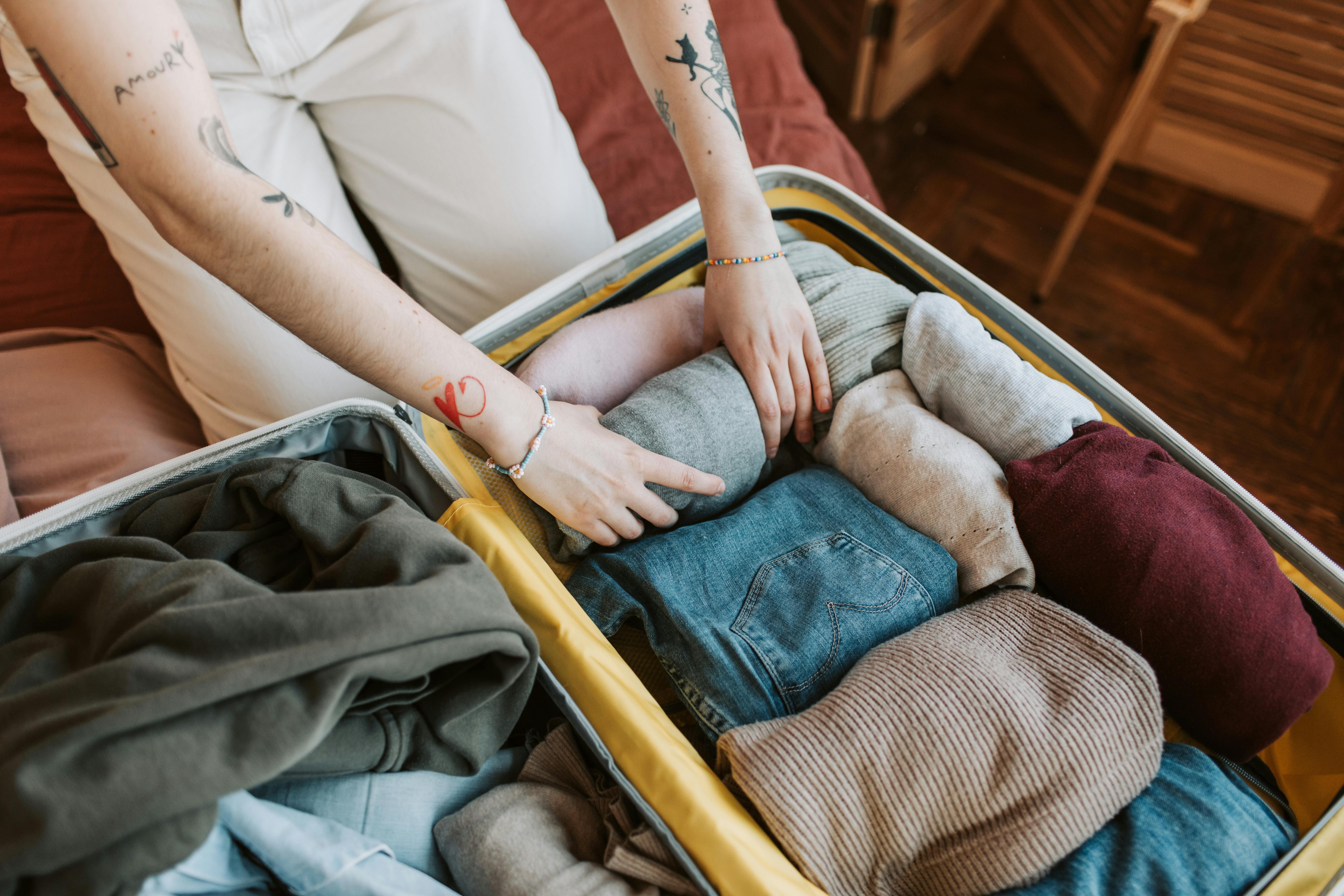
Packing cubes are the gold standard. They aren’t just for compression; they turn your backpack into a tidy chest of drawers. By using different colored cubes for different categories (e.g., blue for tops, red for bottoms, grey for electronics), you can retrieve an item in seconds, discreetly and efficiently.
The rolling method is foundational. Tightly rolling your clothes is superior to folding. It minimizes wrinkles and allows you to see every piece of clothing at a glance within your packing cube, eliminating the need to dig.
System 3: The Fortress of Self-Reliance - Your Security & Problem-Solving Toolkit
The Philosophy: Prepare for the Worst, Enjoy the Best
True freedom on the road doesn't come from hoping problems won't arise. It comes from the quiet confidence that you can handle them when they do. This system is about building a portable fortress of security and a toolkit for self-reliance, so you can explore with an unshakeable peace of mind.
The Three Layers of Your Fortress
Layer 1: Proactive Gear Security
The goal here is to make yourself a less appealing target. Opportunistic thieves look for easy wins.
Carry a decoy wallet with a small amount of local currency and some expired cards. If confronted, you can hand it over without losing your essential documents.
Use a simple carabiner to clip the zippers of your daypack together. It’s not a high-security lock, but it’s an effective deterrent against a pickpocket trying to subtly slide your bag open in a crowd.
Layer 2: Personal & Digital Safety
Your well-being matters most. These items are non-negotiable.
A rubber door stop is one of the most effective, low-cost security tools you can carry. Shoved under your hotel or Airbnb door, it provides a powerful physical barrier against unwanted entry.
Your phone is your lifeline. A dead phone is a safety crisis. Always carry a fully charged power bank (at least 10,000mAh).
Public Wi-Fi is a hunting ground for data thieves. Using a VPN on your phone and laptop is essential to protect your banking information and passwords.
Layer 3: The "MacGyver" Multi-Tools
When you’re alone, small problems can become major headaches. The MacGyver mindset is about packing a few multi-purpose items that can solve countless issues.
Wrap a few feet of duct tape around a water bottle or pen. It can repair a broken sandal, patch a backpack, or serve as a makeshift bandage.
A bandana or sarong is the ultimate multi-tool. It can be a towel, a sun shield, a dust mask, a makeshift bag, or a privacy screen.
Beyond the Gear: Packing for the Solo Experience
Expert packing goes beyond the purely practical. It’s also about packing for your emotional well-being and enhancing the unique moments that solo travel offers.
Pack a sensory comfort item. Loneliness can strike unexpectedly. Something small that connects you to home—a few of your favorite tea bags, a familiar scent, a silk pillowcase—can be an incredible comfort.
Bring a social icebreaker. A simple deck of playing cards placed on a table in a hostel common room is a universal invitation to connect with other travelers, breaking down language and cultural barriers instantly.
Empower your inner photographer. Don't let being solo stop you from getting great photos. A small, flexible mini tripod allows you to use your phone's self-timer for stunning shots that aren't just selfies. The "video screenshot hack" is another pro move: record a short video of yourself moving through a scene, then scrub through it later to pull out perfect, candid-looking still images.
Conclusion: Stop Packing, Start Preparing
You now possess the framework. The difference between an amateur and an expert traveler isn't what they pack, but how they think. It’s the understanding that a capsule wardrobe is about mental clarity, modular organization is about efficiency, and a fortress of self-reliance is about absolute freedom.
This guide was the "why." You have the philosophy.
Now it's time for the "what." To put these systems into practice, you need the right tools. We've compiled everything—every piece of gear, every item of clothing, every essential document—into one definitive resource.
Your next step is clear. Take these principles and build your ultimate kit with our . It’s the tactical playbook that will bring this strategy to life.
Read the full guide: Anxious to Adventurous: The Ultimate Guide to Solo Travel Confidence
Don't Miss Out! Subscribe for Exclusive Content
SubscribeComments 0
No comments yet
Be the first to share your experience!
Dont Miss Out! Subscribe for Exclusive Content
Ultimate USA Holidays Guide: Top Picks
FTC Affiliate Disclosure Essentials: Stay Compliant as a Travel Creator
Essential Affiliate Tools: From Tracking to Full Optimization
Booking.com Affiliate Program Review: Pros, Cons, and Earnings Potential
Decoding Affiliate Commission Rates: Benchmarks for Travel Creators