
How to Make Money Blogging (From $0 to $10k/mo)

TrekGuider @trekguider
You’ve poured your heart into creating a travel blog. You’ve published articles, shared your photos, and built something you’re proud of. But there’s a nagging problem: it isn’t making any money. The dream of funding your travels or even earning a full-time living from your passion feels impossibly distant, a goal reserved for a select few.
You see other creators hitting five-figure months and wonder what secret they know that you don’t. The path forward is a confusing fog of conflicting advice. Should you focus on ads? Affiliate marketing? Digital products? It's overwhelming, and the immense effort you're putting in isn't translating into income, leaving you stuck and frustrated.
Forget the confusion. This is your chronological playbook. We are going to demystify the entire process of how to make money blogging by breaking it down into a proven, four-phase financial roadmap. This isn't a list of vague tips; it's a step-by-step guide that outlines the exact strategies, milestones, and mindset shifts required to take your blog from $0 to a sustainable $10,000 per month and beyond. Think of this as one chapter in your new business plan; for the complete blueprint on building a modern creator business, be sure to read our ultimate guide to [How to Make Money Online: A Creator's Guide for 2026]. Welcome to your journey from blogger to business owner.

The First $100 (Months 1-6): Proving the Concept
In the first six months, your primary goal is not significant income; it's validation. This is the foundational phase where you lay the groundwork for your entire business. The financial target is simply to prove that earning money from your blog is possible. Forget about optimizing for revenue and focus relentlessly on creating a high-quality home base.
Your mission is to build a library of 20-30 exceptional, in-depth articles. This foundational content is what will eventually attract search engine traffic and establish your authority. During this time, your second priority is to learn the absolute basics of Search Engine Optimization (SEO). You don’t need to be an expert, but you must understand how to research keywords and optimize your posts to give them a fighting chance of being discovered by Google.
The first income you earn will likely be small and sporadic. This might be a single affiliate sale from a piece of travel gear you recommended, earning you a commission that’s as real as it is small—maybe just $7.30. Or, you might leverage a professional skill to complete a single freelance writing gig for another brand.
This first $100 is psychologically monumental. It’s the tangible proof that your words have value and that the creator economy—projected to nearly double from $250 billion to almost $500 billion by 2027—is a real and accessible arena. This small win provides the critical motivation to push through to the next, more significant phase of growth.

The Path to $1,000/Month (Months 6-18): Mastering Traffic
With the concept proven, your focus now shifts entirely to the first pillar of a successful blog: traffic. This phase is characterized by a relentless dedication to audience growth, primarily through SEO. Your goal is to achieve the traffic thresholds required by premium ad networks, which represents the first major income leap for most bloggers.
The SEO Engine: Your Key to Passive Traffic
Sustainable blog income is built on the back of consistent, organic traffic from search engines. This is where your foundational knowledge of SEO evolves into a core business activity. Your strategy should be built around two key components:
Long-Tail Keywords: Instead of trying to rank for hyper-competitive terms like "travel blog," you’ll target longer, more specific phrases like "best family-friendly resorts in southern Spain." These keywords have less competition and attract a highly motivated audience that is closer to making a decision.
On-Page SEO: This involves optimizing every article you publish. It means placing your target keyword in your title, in the first paragraph, and in a few subheadings. It also means writing compelling meta descriptions to encourage clicks from search results and optimizing your images to ensure your site loads quickly.

Unlocking Your First Major Paycheck: Premium Ad Networks
The single most significant milestone in this phase is qualifying for a premium ad network. This is a transformative event that can take a blog’s income from less than $100 to over $1,000 per month, almost overnight. These networks fill your site with high-quality display ads, paying you for every person who sees them.
The two main players in the travel blogging space are:
Mediavine: Requires a minimum of 50,000 sessions (visits) in the previous 30 days.
Raptive (formerly Adthrive): Requires a minimum of 100,000 pageviews in the previous 30 days.
Hitting these traffic numbers becomes your primary objective. Once you are accepted, you unlock your first truly passive and reliable income stream. This ad revenue provides the financial cushion and confidence to move on to the next level of monetization.
Pro-Tip: Don't apply to Google AdSense at the beginning. The payout is extremely low for new sites and can slow your site down. It's far more strategic to wait until you can qualify for a premium network like Mediavine, as the revenue difference is monumental.
Scaling to $5,000/Month (Months 18-36): Diversification is How to Make Money Blogging Long-Term
At this stage, your blog has consistent traffic and a stable income from advertising and affiliate marketing. However, relying solely on these two streams will eventually lead to an income plateau. Significant growth from here requires diversification and, most importantly, taking ownership of your revenue by creating and selling your own products. This is where you transition from a blogger to a true entrepreneur.
The Power of Ownership: Launching Your First Digital Product
Launching your first digital product is the key milestone of this phase. While it requires a significant upfront investment of time, it is the shortest path to higher income levels. Consider this powerful data point: to make $10,000 in a month, you would need millions of pageviews to generate that from ads alone. However, you would only need to sell 100 copies of a $100 digital product to reach the same goal. For a blog with an established, trusting audience, the latter is far more attainable.
Your first product should solve a specific, painful problem for your audience. For travel bloggers, this could be:
An in-depth eBook guide to a specific destination.
A set of customizable trip planning templates.
A bundle of Lightroom presets for editing photos.

Free Resource: The Ultimate Travel Itinerary Template
Feeling overwhelmed by trip planning? We’ve created a comprehensive, plug-and-play itinerary template that takes the stress out of organizing your next adventure. This isn't just a checklist; it's a complete system for managing your budget, tracking bookings, and planning your daily activities.
[Download Your Free Travel Itinerary Template Now]
This lead magnet is a perfect example of a small digital product that provides immense value. Once you've validated an idea with a freebie, you can develop a more comprehensive paid product, like a complete [Travel Guide]. You can then sell directly to your audience or on a specialized marketplace. A platform like TrekGuider becomes an invaluable partner here, giving every creator a professional, customizable storefront to connect with travelers who are actively searching for expert resources.
Building Your Most Valuable Asset: The Email List
You cannot have a successful product launch without an email list. An email list is the only audience you truly own, independent of Google's algorithms or social media platform changes. Throughout this phase, building your list becomes a top priority. By offering a valuable free resource (a "lead magnet") like the itinerary template above, you can convert casual readers into loyal subscribers who know, like, and trust you—and who will be ready to buy when you launch your first product.
Reaching $10,000/Month and Beyond (Year 3+): The Creator as CEO
Achieving and sustaining a five-figure monthly income signifies the final transition from a blog to a mature digital business. This level of success is almost never achieved through a single income stream. Instead, it’s the result of operating as a "Creator CEO," strategically managing a diversified portfolio of revenue sources and focusing on high-level growth.

Building a Diversified Monetization Portfolio
Your business now operates as a well-oiled machine with multiple, combined income streams working together. This diversified portfolio will likely include:
Stable Ad Revenue: Your traffic is now high enough that display ads provide a significant and reliable monthly income floor.
A Strong Affiliate Strategy: You have moved beyond simple links to build strategic partnerships with multiple affiliate programs that align perfectly with your audience.
A Suite of Digital Products: You no longer have just one product. You have an ecosystem of offerings, perhaps a beginner-friendly eBook and a more advanced video course, that cater to different segments of your audience.
High-Value Brand Sponsorships: With a large and engaged audience, brands will now pay premium rates to partner with you on sponsored content.
This isn’t just theory; it’s the proven playbook of the industry’s top earners. One blogger’s public income reports, for instance, tell the story perfectly: their income grew from $0 in year one to over $11,000 in year two, $27,000 in year three, and an incredible $53,000 in year four, primarily driven by a smart mix of affiliate marketing and their own eBooks.
Pro-Tip: At this level, data is everything. Use analytics to understand which content drives the most affiliate revenue and which email sequences lead to the most product sales. Double down on what's working and eliminate what isn't.
Scaling Your Operations, Not Just Your Income
You can’t do everything yourself anymore. To continue growing, you must start thinking like a CEO and focus your time on the highest-leverage activities. This means outsourcing and building systems. You might hire a virtual assistant to manage your social media, a writer to help update old content, or an editor to polish your posts. By delegating lower-value tasks, you free up your time to focus on creating new products, building strategic partnerships, and steering the overall direction of your business.
Frequently Asked Questions About How to Make Money Blogging
1. How long does it really take to make significant money from a blog?
While a small first income can happen within six months, reaching a significant, life-changing income (e.g., $1,000+/month) typically takes 12-18 months of consistent, strategic effort. The key drivers are building a content library and gaining traction with SEO, which is a long-term game.
2. Do I need a lot of money to start a travel blog?
No. One of the biggest advantages of blogging is its low startup cost. Your primary expenses are a domain name (around $15/year, often free for the first year) and web hosting (which can be as low as $3-$5/month). You can start a professional blog for under $100 for the entire first year.
3. Is it too late to start a travel blog in 2026?
Absolutely not. While the space is more competitive, the opportunity is also larger than ever. The key to success today is niching down. Instead of a general travel blog, start a blog focused on a specific niche like "accessible travel in Europe" or "culinary travel in Southeast Asia." A specific focus allows you to build authority and an audience much faster.

Your Roadmap to a Profitable Future
The journey from a hobby blog to a six-figure business is a marathon, not a sprint. It is a deliberate, phased process that requires patience, strategy, and a relentless focus on providing value to your audience. You now have the complete roadmap: start by proving the concept and earning your first dollar, then master SEO to build traffic for ad revenue, diversify with your own products, and finally, scale your operations as a true CEO. This playbook provides the definitive answer to the question of how to make money blogging. The path is clear. Your journey starts now.
Meta Data Suggestions:
SEO Meta Title (58 characters): How to Make Money Blogging: A 4-Step Plan to $10k/Month
URL Slug: how-to-make-money-blogging
SEO Meta Description (154 characters): A proven, step-by-step playbook for making money blogging. Learn the 4-phase journey to take your blog from $0 to a sustainable $10,000/month business.
Don't Miss Out! Subscribe for Exclusive Content
Subscribe


Comments 0
No comments yet
Be the first to share your experience!
Dont Miss Out! Subscribe for Exclusive Content

FTC Affiliate Disclosure Essentials: Stay Compliant as a Travel Creator


Essential Affiliate Tools: From Tracking to Full Optimization

Avoid These 5 Affiliate Landing Page Mistakes for Better Conversions

Affiliate Keyword Research Mastery for Travel Blogs

Booking.com Affiliate Program Review: Pros, Cons, and Earnings Potential

Decoding Affiliate Commission Rates: Benchmarks for Travel Creators
The Complete Guide to Solo Road Trips: Planning, Safety & Vehicle Prep
TrekGuider @trekguider
You see the pictures, you hear the stories—the ultimate solo road trip, a journey of pure freedom on the open road. But when you actually start to think about it, a wave of very real questions hits hard: What if I get a flat tire in the middle of nowhere? How do I stay safe alone at a motel? Can I really handle all the planning, driving, and navigating by myself?
That initial thrill can quickly turn to anxiety, paralyzing you before you even check your tire pressure. Without a rock-solid plan, a dream trip can easily become a stressful, expensive, or even dangerous ordeal. The difference between a life-changing experience and a cautionary tale lies in preparation. While the logistics of solo travel are unique, the core principles of smart preparation are universal—a foundation just as crucial when mapping out [Family Travel Ideas: The 2026 Guide to Unforgettable Trips] as it is for hitting the road alone.
This guide is your solution. It is the definitive roadmap designed to systematically dismantle every fear and answer every question. We will replace uncertainty with a comprehensive, step-by-step framework covering everything from strategic planning and budgeting to critical safety protocols and vehicle preparation. After reading this, you will not only feel capable but completely empowered to pack your bags, turn the key, and confidently hit the road for one of the great solo road trips you've always imagined.

Why a Solo Trip is a Powerful Investment in Yourself
Before we dive into logistics, let's anchor ourselves in the why. A solo road trip is more than a change of scenery; it’s an active opportunity to disconnect from the demands of daily life and reconnect with the one person you can sometimes lose track of: yourself.
Absolute Freedom: You decide when to start, where to stop, and how long to linger. There are no compromises on the itinerary, the music, or the choice between a greasy-spoon diner and a scenic picnic. Every decision is yours alone.
Radical Self-Reliance: Successfully navigating hundreds of miles on your own is a profound confidence builder. You’ll learn to solve problems on the fly, trust your judgment, and discover a deep well of resilience you never knew you had.
The Luxury of Headspace: The long stretches of highway provide the mental space for deep thought and reflection. It’s a chance to process, dream, and learn what truly energizes you without the noise of external influence.
The Blueprint: Strategic Planning for the Open Road
While the soul of a road trip lives in its moments of spontaneity, its backbone is forged in smart preparation. This isn't about creating a rigid, fun-killing schedule; it's about building the strong framework that enables true freedom and removes decision fatigue when it matters most.

Define Your Mission: Destination & Purpose
First things first: What kind of journey are you craving? Your answer will be the compass for your entire plan. Are you seeking:
Rejuvenation? Picture a scenic drive along Oregon's coast, with stops in quiet towns and fog-laced forests.
High Adventure? A route looping through Utah's "Mighty 5" national parks, filled with challenging hikes and epic vistas. Planning a park-centric journey is a classic for a reason, and our National Park Road Trip Checklist can be an invaluable tool.
Cultural Discovery? A trip winding through the historic backroads of New England or the music-rich towns of the Mississippi Delta.
Your "why" dictates your route. The iconic Pacific Coast Highway delivers on coastal drama, while a journey along Route 66 is a nostalgic dive into Americana. Use tools like Google Maps, Roadtrippers, and travel blogs to map a general path, but also search for terms like "scenic byways in California" (or whichever state you're exploring) to uncover less-traveled gems.
The Art of the Flexible Itinerary
A rigid, minute-by-minute schedule is the enemy of a great road trip. The goal is to create a structured yet pliable plan.
Respect Your Driving Limits: This is the golden rule. Aim for no more than 4-6 hours of actual driving per day. This prevents burnout, gives you ample time to explore your stops, and, crucially, ensures you can arrive at your lodging before dark.
Anchor Your Journey: Always pre-book your accommodation for the first night and the last night of your trip. This brackets your journey, removing the stress of finding a place to stay when you’re either buzzing with first-day energy or exhausted from the final leg.
Identify Key "Pillars": Pinpoint the 2-3 must-see sights, cities, or parks on your route. These are your pillars. Plan your overnight stays around them, giving yourself enough time to explore them properly.
Embrace the In-Between: For the days between your pillars, keep your plans loose. This is where the magic happens. It allows you to follow a sign for a quirky roadside museum, spend an extra two hours at a breathtaking viewpoint, or explore a town that just feels right.
Budgeting: Your Financial Freedom Fund
A clear budget isn't a leash; it’s the tool that frees you from financial stress on the road.
Fuel: Use an app like GasBuddy to estimate total fuel costs based on your car's MPG and planned mileage. Be conservative and round up.
Lodging: Research average costs for hotels, motels, or campgrounds in your target areas. Prices can fluctuate wildly by season and local events.
Food & Drink: Set a daily food budget. Packing a cooler with drinks, snacks, and breakfast items is a pro move that drastically cuts costs.
Activities: Account for national park passes (an "America the Beautiful" annual pass is often a great value), museum tickets, and tours.
The "Uh-Oh" Fund: This is non-negotiable. Set aside 15-20% of your total budget as a contingency. This fund is for the flat tire, the surprise concert ticket, or the necessary hotel upgrade after a rough day.
Pro-Tip: Before you go, call your bank and credit card companies to notify them of your travel plans. This prevents them from freezing your account due to "unusual activity" when you're buying gas 500 miles from home.
Mastering Solo Road Trips with Confidence
Your personal safety matters most. A proactive, systematic approach doesn't create fear; it builds the confidence you need to explore freely.

Personal Safety
Think of your awareness as your most critical travel companion—the one piece of gear that should never be packed away. It's your built-in radar for navigating the world with confidence.
Share Your Battle Plan: Leave a detailed copy of your itinerary with at least two trusted friends or family members. Include hotel names, addresses, and phone numbers.
The Daily Check-In: Establish a simple system. A quick "Made it to Flagstaff! All good." text each evening provides peace of mind for everyone.
Daylight is Your Ally: Plan your driving to end well before sunset. Navigating unfamiliar roads and finding your hotel is infinitely easier and safer in the light.
Trust Your Gut Instinct: Your intuition is a highly evolved threat-detection system. If a gas station, rest stop, or situation feels wrong, it is wrong for you. Leave immediately. Don't second-guess it.
Walk with Purpose: Project confidence. Be aware of your surroundings. Avoid looking lost or glued to your phone. If you need to check a map, step inside a coffee shop or store.
Social Media Lag Time: Share your amazing photos after you've left a location. Posting your real-time whereabouts can broadcast your solo status to the wrong people.
A DEEPER DIVE ON SAFETY
For many independent travelers, safety is the number one concern. We've compiled a comprehensive resource filled with actionable strategies and expert advice specifically for navigating the world on your own.
Download our free [Solo Female Travel Safety Guide] to build unshakeable confidence for your next adventure.
The Solo Mindset: From Loneliness to Solitude
Let’s address the elephant in the room: loneliness. It's a valid concern, but it's crucial to differentiate it from solitude. Loneliness is a lack; solitude is a presence—the presence of yourself.
Embrace Dinners for One: Bring a book or a journal. Use the time to people-watch and savor your meal without distraction.
Strike Up Casual Conversations: Chat with the barista, the park ranger, or the shopkeeper. These small interactions can provide a welcome dose of human connection without any obligation.
Schedule Calls Home: Plan a few calls with friends or family during your trip. Hearing a familiar voice can be a great reset if you're feeling isolated.
Your Co-Pilot Check
On a solo trip, your car isn't just transportation; it's your partner. Ensuring it's in peak condition is the single most important thing you can do before you leave.

The Pre-Flight Mechanical Inspection
At least one week before you depart, have your vehicle inspected by a trusted mechanic, or do it yourself if you're knowledgeable.
Tires (The Four You See and The One You Don't): Check the pressure on all four tires plus the spare. Inspect the tread depth using the "penny test." If the tread doesn't cover Lincoln's head, you need new tires.
Fluids: Check your oil, coolant, brake fluid, and windshield washer fluid. Get an oil change if you're within 1,000 miles of your next service interval.
Brakes: Listen for squealing. Feel for any vibration when braking. Don't compromise here; get them checked if there's any doubt.
Battery: Look for corrosion (a white, powdery substance) on the terminals. If your battery is over three years old, have it load-tested at an auto parts store (it's often free).
Lights & Wipers: Test all lights. Replace wiper blades if they're cracked or leave streaks. A sudden downpour is a terrible time to discover they're useless.
Building the Ultimate Roadside Emergency Kit
A well-stocked kit can turn a trip-ending crisis into a manageable inconvenience. Having a comprehensive checklist is key. A great starting point for any major is our [International Travel Checklist], which you can adapt for a domestic journey.
Jumper cables and a portable jump starter
Tire pressure gauge and a portable 12V air compressor
A complete first-aid kit
A powerful LED flashlight or headlamp (with extra batteries)
Basic toolkit (multi-tool, adjustable wrench, screwdrivers, gloves)
Duct tape and zip ties
Reflective warning triangles
A warm blanket, emergency rain poncho
High-energy, non-perishable snacks (protein bars, nuts)
At least one gallon of water
Pro-Tip: A portable jump starter (a small lithium-ion battery pack) is the best safety device a solo traveler can buy. It allows you to jump-start your own car without the need for another vehicle or the risk of asking a stranger for help.
Frequently Asked Questions
How much should I budget for a solo road trip?
Your main costs will be fuel, lodging, and food. A good starting point for a domestic US trip is to budget $150-$250 per day. This can be much lower if you're camping and cooking your own meals, or higher if you prefer nicer hotels and restaurants. Always add a 15-20% contingency fund for unexpected costs.
What's the best way to stay safe at rest stops or gas stations?
Choose busy, well-lit locations whenever possible. Before you get out of the car, take a moment to observe your surroundings. Stay off your phone, be aware of who is around you, and trust your gut instinct. If a place feels unsafe, leave and find the next one.
Is it better to book all my accommodations in advance for a solo trip?
We recommend a hybrid approach. Book your first and last nights in advance to reduce stress. For the nights in between, having flexibility is great, but it's wise to book your next night's stay at least 24 hours in advance, especially in popular areas, so you're not left scrambling at dusk.
Turn the Key: Your Adventure Begins Now
The journey of a thousand miles begins not with a single step, but with a decision—the decision to prepare. By now, the idea of a solo adventure should feel less like a daunting challenge and more like an exciting, achievable reality. You have the framework for careful planning, the knowledge to build a strong safety net, and the checklist to ensure your vehicle is a reliable partner.
You are equipped to handle the road with confidence and embrace the unparalleled freedom that only solo road trips can offer. The open road is not just a path to a new destination; it’s a path to a more capable and self-aware version of yourself. The planning is part of the adventure. The preparation is part of the empowerment. Now, it's time to put it all into action. Go create a story that is entirely your own.

Don't Miss Out! Subscribe for Exclusive Content
SubscribeComments 0
No comments yet
Be the first to share your experience!
Dont Miss Out! Subscribe for Exclusive Content

San Francisco Cherry Blossoms: A Local's Guide to the Blooms

Halloween SF: Haunts Without Horrors

SF Festivals: 7 Must-See Lineups

Christmas SF: Lights & Wharf Wonders

SF Pride: 6 Route & Party Hacks

Chinese New Year SF: Parade Essentials
Christmas SF: Lights & Wharf Wonders
TrekGuider @trekguider
Are you dreaming of a Christmas getaway filled with postcard-perfect lights and unique holiday cheer, but feel paralyzed by the options in a city as dynamic as San Francisco? You want to soak in the magic, but you’re haunted by the fear of missing the best spots, getting stuck in tourist traps, or wasting your precious vacation time navigating crowds instead of making memories. The anxiety of a poorly planned trip can extinguish the holiday spirit before it even has a chance to ignite.
Imagine the frustration: you’ve spent hours researching, only to end up with a mediocre view of a famous light display, shoulder-to-shoulder with a thousand other people. You risk missing out on the distinctly San Franciscan holiday traditions—the ones that fuse historic charm with stunning coastal beauty—and settling for a generic experience you could have had anywhere. Without a clear strategy, your festive adventure can devolve into a logistical nightmare.
This is your definitive guide to avoiding that fate. We’ve forged the ultimate itinerary, focusing laser-like on the city’s most dazzling illuminations and waterfront spectacles. This deep dive will ensure your Christmas in San Francisco is not just a trip, but a masterfully curated collection of magical moments. Think of this as your specialist mission. After getting the high-level overview of the city's entire festive calendar in our guide to [San Francisco Holidays: Bay Area Buzz], you're now ready for the deep dive into the twinkling heart of a Bay Area Christmas.

Union Square: The Epicenter of Christmas in San Francisco
Forget what you think you know about a California Christmas. In San Francisco, the holiday season doesn't just arrive; it makes a grand entrance, and Union Square is its glittering, floodlit stage. The air here crackles with a unique energy, where the city’s high-fashion pulse is supercharged by a symphony of lights, music, and palpable joy. This is the undeniable starting point for any holiday tour, where the city’s most iconic traditions come to life.
The Macy's Great Tree: A Towering Beacon of Holiday Joy
Dominating the square like a festive titan, the Macy's Great Tree is the city's official holiday centerpiece. This colossal tree, soaring over 80 feet, is a spectacle of sustainability and sparkle, adorned with tens of thousands of energy-efficient LED lights and hundreds of shimmering ornaments. Its annual lighting ceremony in late November is a beloved ritual that officially flips the switch on the holiday season in San Francisco, drawing enormous crowds for an evening of live music and celebration.
Pro-Tip: For a truly breathtaking, crowd-free view, head inside the adjacent Macy's. The upper floors offer a panoramic perspective of the entire square. The best-kept secret is the view from the Cheesecake Factory on the 8th floor, where you can gaze down upon the tree and ice rink like a VIP.

Ice Skating Under the Lights: A Classic Winter Tradition
There's a certain magic in gliding across the ice under the watchful gaze of a giant Christmas tree, with the city's skyscrapers twinkling all around you. The Safeway Holiday Ice Rink in Union Square delivers this quintessential winter experience with a distinctly urban flair. Open from early November through mid-January, the rink offers 60-minute sessions that are pure, unadulterated holiday fun.
The atmosphere is electric, fueled by a soundtrack of holiday classics and the collective laughter of skaters. Whether you're executing perfect figure eights or clinging to the wall for dear life, lacing up your skates here is a non-negotiable part of the San Francisco Christmas experience. The evening sessions are especially enchanting, as the city lights create a dazzling, reflective canopy over the ice. Book your tickets online well in advance to secure your spot.
Window Shopping & Festive Displays: A Stroll Through Holiday Artistry
Union Square is San Francisco's luxury shopping heartland, and during Christmas, the storefronts become captivating galleries of festive art. Retailers like Saks Fifth Avenue, Neiman Marcus, and Tiffany & Co. engage in a friendly competition to create the most jaw-dropping holiday window displays. A simple stroll around the square becomes a visual feast of complex designs, whimsical animatronics, and brilliant lights.
The most heartwarming tradition, however, belongs to Macy's. For decades, their partnership with the SF SPCA has filled their windows with adorable, adoptable puppies and kittens playing in festive settings. It’s a guaranteed dose of holiday cheer that also helps countless animals find their forever homes.
Fisherman's Wharf & The Piers: Coastal Christmas Charm
If Union Square is the city's elegant holiday ballroom, Fisherman's Wharf is the lively waterfront party. Here, the festive spirit is infused with the salty air of the bay, offering a uniquely San Franciscan take on Christmas where twinkling lights meet maritime history.
PIER 39's Dazzling Christmas Tree & Sea Lion Spectacle
Giving the downtown tree a run for its money, PIER 39 erects its own majestic, 60-foot Christmas tree right at the entrance. This tree is the star of a nightly, synchronized light-and-music show that runs every half hour, bathing the pier in a dynamic kaleidoscope of color. It’s a fun, high-energy spectacle perfect for families.
What makes this experience uniquely San Franciscan is the audience: the famous sea lion colony barking from K-Dock, providing a chaotic, natural soundtrack. This quirky juxtaposition of organized holiday cheer and wild nature is pure San Francisco.
Ghirardelli Square: Chocolate, Lights, and Historic Splendor
A short, scenic walk from the main wharf leads you to the historic Ghirardelli Square, which offers a more refined and cozy holiday atmosphere. The beautiful brick architecture of the former chocolate factory is elegantly draped in lights, with a grand Christmas tree anchoring the main plaza. The iconic, glowing Ghirardelli sign serves as a beacon over the bay.
A visit here is an assault on the senses in the best possible way. The aroma of warm chocolate hangs in the air, drawing you into the Ghirardelli Chocolate Marketplace for a world-famous hot fudge sundae or a rich, soul-warming hot cocoa. It’s the perfect place to refuel and pick up beautifully packaged holiday gifts.

The Illuminated Boat Parade: A Floating Festival of Lights
For a truly unforgettable waterfront event, align your visit with the Fisherman's Wharf Lighted Boat Parade. As one of the oldest and largest in the country, this annual tradition is a spectacular display of maritime merriment. A fleet of fishing boats, sailboats, and private yachts, all decked out in elaborate holiday lights, parade along the waterfront from PIER 39 past the Marina Green. The sight of these floating light sculptures against the dark waters of the bay, with the Golden Gate Bridge in the distance, is pure magic. Prime viewing spots can be found at Aquatic Park, PIER 39, and anywhere along the Marina Green.
Beyond the Hubs: More Dazzling Christmas in San Francisco Lights
While the main hubs are essential, some of the city's most enchanting displays are found elsewhere. San Francisco is a city of neighborhoods, and venturing out reveals a more local and often more creative side of the holiday season.

Golden Gate Park's "Entwined": A Forest of Light
For a holiday experience that speaks to San Francisco's identity as a hub of art and technology, you must visit "Entwined" in Golden Gate Park. Each year, Peacock Meadow is transformed into an otherworldly forest of light by artist Charles Gadeken. This immersive, large-scale installation features towering, tree-like sculptures and geometric shapes illuminated by thousands of color-changing LEDs. Wandering through this dreamlike landscape as the lights shift through mesmerizing patterns is a captivating experience that feels a world away from the urban bustle.
The Fairmont Hotel's Giant Gingerbread House: A Sweet Spectacle
Ascend to the top of Nob Hill to witness one of the city's most beloved—and delicious—holiday traditions. The historic Fairmont San Francisco constructs a two-story, life-sized gingerbread house in its grand lobby. Made from thousands of real gingerbread bricks, gallons of royal icing, and a dizzying amount of candy, this edible marvel is a feast for the senses. You can even walk through it, breathing in the sweet, spicy aroma of gingerbread. The hotel's opulent lobby, with its own massive Christmas tree, completes the fairy-tale setting.
Neighborhood Lights: Discovering Local Gems
To truly capture the spirit of Christmas in San Francisco, take a tour of the residential neighborhoods where locals pour their hearts into decorating.
Tom and Jerry's House (3650 21st St.): A legendary, over-the-top display in the Castro featuring a giant tree, massive stockings, and a working ski lift for dolls.
45 Upper Terrace: Another famous private home known for its dazzling, multi-story cascade of lights and festive figures.
Sea Cliff: For a more elegant and professionally curated experience, a drive through this affluent neighborhood offers stunning views of stately homes adorned in sophisticated holiday decor.

Planning Your Perfect San Francisco Christmas Adventure
A little strategic planning will ensure your holiday trip is seamless and stress-free, allowing you to focus on the magic.
Getting Around: Mastering the City's Grid
San Francisco is famously compact, but its hills are no joke. Public transportation is your greatest asset.
Muni System: The city's network of buses and historic streetcars can get you almost anywhere. The F-line streetcar offers a wonderfully scenic route along the waterfront.
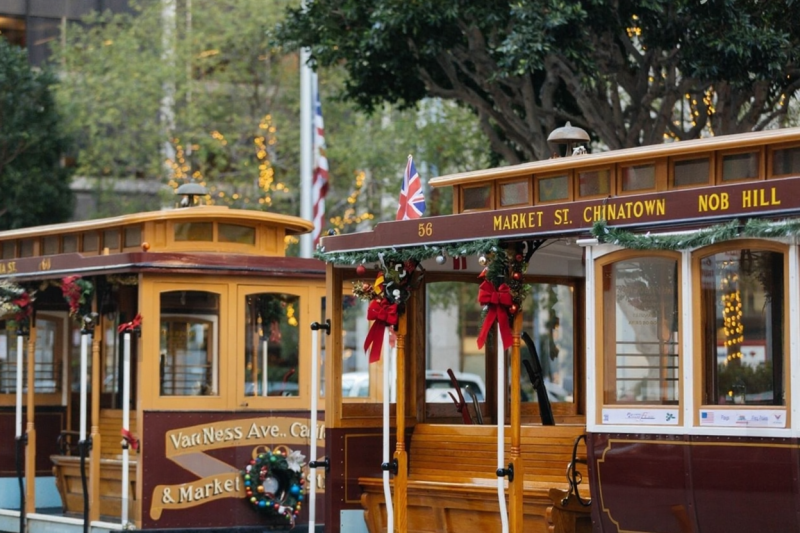
Cable Cars: While more of a moving landmark than practical transport, a ride on a festively decorated cable car is an iconic experience. Just be prepared for long lines.
Walking: The best way to soak in the details of Union Square and the Wharf. Wear your most comfortable shoes—you'll thank yourself later.
What to Pack: The Art of Layering
San Francisco's winter weather is a master of disguise. Mild sunshine can give way to bone-chilling wind and fog in an instant. The golden rule is to dress in layers. A base layer, a sweater or fleece, and a windproof/waterproof jacket will serve you well. A hat and gloves are essential for evenings by the bay.
Traveling with family adds another layer of complexity to packing and planning. The journey itself can be the most daunting part of a family vacation. To ensure your trip to the Bay Area starts smoothly, we’ve created the ultimate resource for parents. Make your travel day as joyful as your destination with our [Stress-Free Flying with Kids Guide].
Your Unforgettable San Francisco Christmas Awaits
From the colossal, glittering tree in Union Square to the salty, sea-lion-serenaded festivities at Fisherman's Wharf, a Christmas in San Francisco is an experience that engages all the senses. You are now armed with the insider’s map to the city’s most brilliant lights, cherished traditions, and unique coastal wonders. You are empowered to craft a holiday itinerary filled with genuine magic and unforgettable memories, far from the generic tourist trail.
This deep dive into San Francisco's festive glow is just one chapter in the great American holiday story. The entire country is a mix of incredible celebrations, each with its own unique flavor. To continue your journey and plan your next great adventure, explore our comprehensive [Travel Guide].
Don't Miss Out! Subscribe for Exclusive Content
SubscribeComments 0
No comments yet
Be the first to share your experience!
Dont Miss Out! Subscribe for Exclusive Content
San Francisco Cherry Blossoms: A Local's Guide to the Blooms
Halloween SF: Haunts Without Horrors
SF Festivals: 7 Must-See Lineups
SF Pride: 6 Route & Party Hacks
Chinese New Year SF: Parade Essentials
