

TrekGuider @trekguider
Christmas SF: Lights & Wharf Wonders

Are you dreaming of a Christmas getaway filled with postcard-perfect lights and unique holiday cheer, but feel paralyzed by the options in a city as dynamic as San Francisco? You want to soak in the magic, but you’re haunted by the fear of missing the best spots, getting stuck in tourist traps, or wasting your precious vacation time navigating crowds instead of making memories. The anxiety of a poorly planned trip can extinguish the holiday spirit before it even has a chance to ignite.
Imagine the frustration: you’ve spent hours researching, only to end up with a mediocre view of a famous light display, shoulder-to-shoulder with a thousand other people. You risk missing out on the distinctly San Franciscan holiday traditions—the ones that fuse historic charm with stunning coastal beauty—and settling for a generic experience you could have had anywhere. Without a clear strategy, your festive adventure can devolve into a logistical nightmare.
This is your definitive guide to avoiding that fate. We’ve forged the ultimate itinerary, focusing laser-like on the city’s most dazzling illuminations and waterfront spectacles. This deep dive will ensure your Christmas in San Francisco is not just a trip, but a masterfully curated collection of magical moments. Think of this as your specialist mission. After getting the high-level overview of the city's entire festive calendar in our guide to San Francisco Holidays: Bay Area Buzz, you're now ready for the deep dive into the twinkling heart of a Bay Area Christmas.
Union Square: The Epicenter of Christmas in San Francisco
Forget what you think you know about a California Christmas. In San Francisco, the holiday season doesn't just arrive; it makes a grand entrance, and Union Square is its glittering, floodlit stage. The air here crackles with a unique energy, where the city’s high-fashion pulse is supercharged by a symphony of lights, music, and palpable joy. This is the undeniable starting point for any holiday tour, where the city’s most iconic traditions come to life.
The Macy's Great Tree: A Towering Beacon of Holiday Joy
Dominating the square like a festive titan, the Macy's Great Tree is the city's official holiday centerpiece. This colossal tree, soaring over 80 feet, is a spectacle of sustainability and sparkle, adorned with tens of thousands of energy-efficient LED lights and hundreds of shimmering ornaments. Its annual lighting ceremony in late November is a beloved ritual that officially flips the switch on the holiday season in San Francisco, drawing enormous crowds for an evening of live music and celebration.
Pro-Tip: For a truly breathtaking, crowd-free view, head inside the adjacent Macy's. The upper floors offer a panoramic perspective of the entire square. The best-kept secret is the view from the Cheesecake Factory on the 8th floor, where you can gaze down upon the tree and ice rink like a VIP.

Ice Skating Under the Lights: A Classic Winter Tradition
There's a certain magic in gliding across the ice under the watchful gaze of a giant Christmas tree, with the city's skyscrapers twinkling all around you. The Safeway Holiday Ice Rink in Union Square delivers this quintessential winter experience with a distinctly urban flair. Open from early November through mid-January, the rink offers 60-minute sessions that are pure, unadulterated holiday fun.
The atmosphere is electric, fueled by a soundtrack of holiday classics and the collective laughter of skaters. Whether you're executing perfect figure eights or clinging to the wall for dear life, lacing up your skates here is a non-negotiable part of the San Francisco Christmas experience. The evening sessions are especially enchanting, as the city lights create a dazzling, reflective canopy over the ice. Book your tickets online well in advance to secure your spot.
Window Shopping & Festive Displays: A Stroll Through Holiday Artistry
Union Square is San Francisco's luxury shopping heartland, and during Christmas, the storefronts become captivating galleries of festive art. Retailers like Saks Fifth Avenue, Neiman Marcus, and Tiffany & Co. engage in a friendly competition to create the most jaw-dropping holiday window displays. A simple stroll around the square becomes a visual feast of complex designs, whimsical animatronics, and brilliant lights.
The most heartwarming tradition, however, belongs to Macy's. For decades, their partnership with the SF SPCA has filled their windows with adorable, adoptable puppies and kittens playing in festive settings. It’s a guaranteed dose of holiday cheer that also helps countless animals find their forever homes.
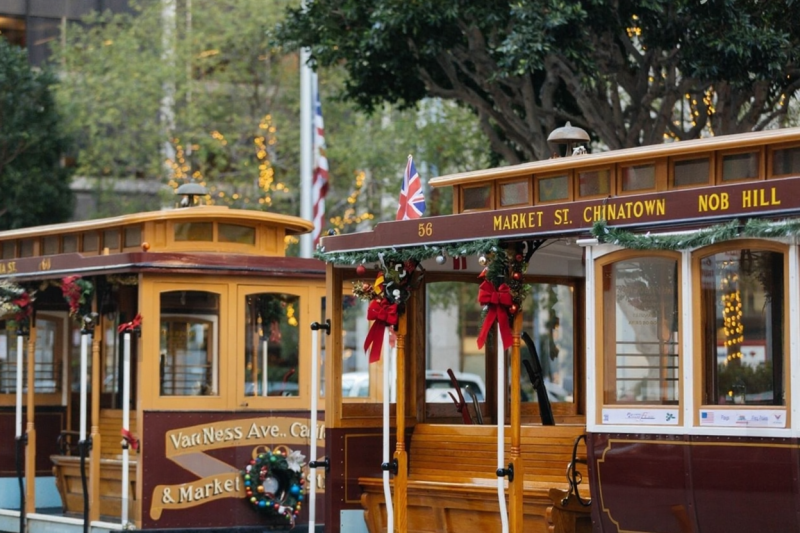
Fisherman's Wharf & The Piers: Coastal Christmas Charm
If Union Square is the city's elegant holiday ballroom, Fisherman's Wharf is the lively waterfront party. Here, the festive spirit is infused with the salty air of the bay, offering a uniquely San Franciscan take on Christmas where twinkling lights meet maritime history.
PIER 39's Dazzling Christmas Tree & Sea Lion Spectacle
Giving the downtown tree a run for its money, PIER 39 erects its own majestic, 60-foot Christmas tree right at the entrance. This tree is the star of a nightly, synchronized light-and-music show that runs every half hour, bathing the pier in a dynamic kaleidoscope of color. It’s a fun, high-energy spectacle perfect for families.
What makes this experience uniquely San Franciscan is the audience: the famous sea lion colony barking from K-Dock, providing a chaotic, natural soundtrack. This quirky juxtaposition of organized holiday cheer and wild nature is pure San Francisco.
Ghirardelli Square: Chocolate, Lights, and Historic Splendor
A short, scenic walk from the main wharf leads you to the historic Ghirardelli Square, which offers a more refined and cozy holiday atmosphere. The beautiful brick architecture of the former chocolate factory is elegantly draped in lights, with a grand Christmas tree anchoring the main plaza. The iconic, glowing Ghirardelli sign serves as a beacon over the bay.
A visit here is an assault on the senses in the best possible way. The aroma of warm chocolate hangs in the air, drawing you into the Ghirardelli Chocolate Marketplace for a world-famous hot fudge sundae or a rich, soul-warming hot cocoa. It’s the perfect place to refuel and pick up beautifully packaged holiday gifts.

The Illuminated Boat Parade: A Floating Festival of Lights
For a truly unforgettable waterfront event, align your visit with the Fisherman's Wharf Lighted Boat Parade. As one of the oldest and largest in the country, this annual tradition is a spectacular display of maritime merriment. A fleet of fishing boats, sailboats, and private yachts, all decked out in elaborate holiday lights, parade along the waterfront from PIER 39 past the Marina Green. The sight of these floating light sculptures against the dark waters of the bay, with the Golden Gate Bridge in the distance, is pure magic. Prime viewing spots can be found at Aquatic Park, PIER 39, and anywhere along the Marina Green.
Beyond the Hubs: More Dazzling Christmas in San Francisco Lights
While the main hubs are essential, some of the city's most enchanting displays are found elsewhere. San Francisco is a city of neighborhoods, and venturing out reveals a more local and often more creative side of the holiday season.

Golden Gate Park's "Entwined": A Forest of Light
For a holiday experience that speaks to San Francisco's identity as a hub of art and technology, you must visit "Entwined" in Golden Gate Park. Each year, Peacock Meadow is transformed into an otherworldly forest of light by artist Charles Gadeken. This immersive, large-scale installation features towering, tree-like sculptures and geometric shapes illuminated by thousands of color-changing LEDs. Wandering through this dreamlike landscape as the lights shift through mesmerizing patterns is a captivating experience that feels a world away from the urban bustle.
The Fairmont Hotel's Giant Gingerbread House: A Sweet Spectacle
Ascend to the top of Nob Hill to witness one of the city's most beloved—and delicious—holiday traditions. The historic Fairmont San Francisco constructs a two-story, life-sized gingerbread house in its grand lobby. Made from thousands of real gingerbread bricks, gallons of royal icing, and a dizzying amount of candy, this edible marvel is a feast for the senses. You can even walk through it, breathing in the sweet, spicy aroma of gingerbread. The hotel's opulent lobby, with its own massive Christmas tree, completes the fairy-tale setting.
Neighborhood Lights: Discovering Local Gems
To truly capture the spirit of Christmas in San Francisco, take a tour of the residential neighborhoods where locals pour their hearts into decorating.
Tom and Jerry's House (3650 21st St.): A legendary, over-the-top display in the Castro featuring a giant tree, massive stockings, and a working ski lift for dolls.
45 Upper Terrace: Another famous private home known for its dazzling, multi-story cascade of lights and festive figures.
Sea Cliff: For a more elegant and professionally curated experience, a drive through this affluent neighborhood offers stunning views of stately homes adorned in sophisticated holiday decor.

Planning Your Perfect San Francisco Christmas Adventure
A little strategic planning will ensure your holiday trip is seamless and stress-free, allowing you to focus on the magic.
Getting Around: Mastering the City's Grid
San Francisco is famously compact, but its hills are no joke. Public transportation is your greatest asset.
Muni System: The city's network of buses and historic streetcars can get you almost anywhere. The F-line streetcar offers a wonderfully scenic route along the waterfront.
Cable Cars: While more of a moving landmark than practical transport, a ride on a festively decorated cable car is an iconic experience. Just be prepared for long lines.
Walking: The best way to soak in the details of Union Square and the Wharf. Wear your most comfortable shoes—you'll thank yourself later.
What to Pack: The Art of Layering
San Francisco's winter weather is a master of disguise. Mild sunshine can give way to bone-chilling wind and fog in an instant. The golden rule is to dress in layers. A base layer, a sweater or fleece, and a windproof/waterproof jacket will serve you well. A hat and gloves are essential for evenings by the bay.
Traveling with family adds another layer of complexity to packing and planning. The journey itself can be the most daunting part of a family vacation. To ensure your trip to the Bay Area starts smoothly, we’ve created the ultimate resource for parents. Make your travel day as joyful as your destination with our Stress-Free Flying with Kids Guide.
Your Unforgettable San Francisco Christmas Awaits
From the colossal, glittering tree in Union Square to the salty, sea-lion-serenaded festivities at Fisherman's Wharf, a Christmas in San Francisco is an experience that engages all the senses. You are now armed with the insider’s map to the city’s most brilliant lights, cherished traditions, and unique coastal wonders. You are empowered to craft a holiday itinerary filled with genuine magic and unforgettable memories, far from the generic tourist trail.
This deep dive into San Francisco's festive glow is just one chapter in the great American holiday story. The entire country is a mix of incredible celebrations, each with its own unique flavor. To continue your journey and plan your next great adventure, explore our comprehensive Travel Guide.
Comments 0
No comments yet
Be the first to share your experience!
You May Also Like

San Francisco Cherry Blossoms: A Local's Guide to the Blooms


Halloween SF: Haunts Without Horrors

SF Festivals: 7 Must-See Lineups

SF Pride: 6 Route & Party Hacks

Chinese New Year SF: Parade Essentials

San Francisco Holidays: Bay Area Buzz
TrekGuider @trekguider
Top 11 High-Paying Affiliate Programs for Travel Bloggers

You pour your soul into creating breathtaking travel content. You’ve built an audience that trusts you, carefully crafting guides and reviews that genuinely help people. Yet, when you check your affiliate income reports, there’s a chasm between your effort and your earnings. You’re stuck promoting programs with paper-thin commissions and cookie windows so short they expire before your reader can even find their wallet.
This isn't just a frustration; it's a fundamental flaw in the business model. You see other creators funding their global adventures through their content, and you know the potential is there. After all, the affiliate marketing industry is a $93 billion juggernaut, with the travel vertical alone accounting for about 16% of all revenue. The secret isn't just getting more traffic; it's a strategic pivot—partnering with programs that value your influence and reward you accordingly.
This guide is that pivot. We’re cutting through the noise of mediocre partnerships to deliver a data-driven list of the top 11 high-paying affiliate programs for travel creators. We’re focusing on what actually moves the needle: elite commission rates, generous cookie durations, recurring revenue, and high-ticket products that generate real income from a single click. This is your playbook for a smarter, more profitable affiliate strategy. For a complete command of the entire landscape, our definitive pillar page, Travel Affiliate Programs: The 2026 Ultimate Guide, is your essential next read.
What Defines a Truly High-Paying Affiliate Program?
Let's get one thing straight: "high-paying" is about more than a big commission percentage. A truly lucrative program is a strategic asset, and it excels in one of four key areas:
High Commission Percentage: The obvious starting point. We're looking for programs offering 8%, 10%, or more on every sale.
Generous Cookie Duration: Travel is a high-consideration purchase. A 30, 60, or 90-day cookie window gives your audience time to research and book while ensuring you get paid for your influence.
High-Ticket Products: A 6% commission on a $3,000 adventure tour is $180. A 10% commission on a $50 travel gadget is $5. The math is simple.
Recurring Revenue: The holy grail. Programs that pay you every time a customer renews create a stable, compounding source of passive income.
Our list is curated to feature programs that are champions in these categories, allowing you to build a powerful portfolio of high-paying affiliate programs.

1. SafetyWing: The Recurring Revenue Powerhouse
For any creator with an audience of digital nomads, long-term travelers, or remote workers, SafetyWing is non-negotiable. It’s travel medical insurance built by nomads, for nomads, and its affiliate program is one of the most innovative and lucrative in the industry.
Commission Rate: 10% (recurring)
Cookie Duration: 364 days
Best For: Digital nomad, long-term travel, and remote work niches.
What makes SafetyWing an elite partner is its recurring commission model. You don't just get paid once; you earn 10% every month the policy is renewed, for up to a year. This transforms a single conversion into a reliable income stream that builds on itself. The 364-day cookie is simply best-in-class, ensuring you capture value from readers who take their time to decide.
2. G Adventures: High-Ticket Tours & Epic Commissions
G Adventures specializes in small-group adventure tours—a high-ticket item that translates directly into substantial commissions. Their focus on authentic, sustainable travel resonates deeply with modern audiences, making their trips an easy and ethical recommendation.
Commission Rate: 6%
Cookie Duration: 90 days
Best For: Adventure travel, solo travel, and sustainable tourism niches.
While 6% might not seem like the highest rate on this list, its power is in the average order value. These tours often cost thousands of dollars, meaning a single booking can net you a commission of $150−300 or more. The generous 90-day cookie duration is perfectly suited for this type of considered purchase, giving your audience three full months to plan, commit, and book.
3. Viator: The King of Tours and Activities
Owned by Tripadvisor, Viator is the market leader in tours, activities, and experiences, boasting over 300,000 bookable options worldwide. For creators who build detailed itineraries or "what to do" guides, Viator is an essential monetization engine.
Commission Rate: 8%
Cookie Duration: 30 days
Best For: City guides, family travel, and itinerary-focused content.
Viator's 8% commission is at the top end for the tours and activities sector. Its massive inventory means you can find a relevant, bookable experience for virtually any destination you cover. The 30-day cookie provides a solid window for conversion, and the platform's high brand trust helps turn your clicks into cash.
4. World Nomads: The Adventure Insurance Standard
World Nomads has long been a trusted name in travel insurance, especially for independent and adventure travelers. Their brand is synonymous with comprehensive coverage for the kinds of activities many other insurers won't touch.
Commission Rate: 10%
Cookie Duration: 60 days
Best For: Backpacking, adventure travel, and youth travel niches.
A flat 10% commission on a high-value product like travel insurance is a powerful earner. Combined with a 60-day cookie duration, World Nomads provides a fantastic opportunity to earn significant income while promoting a product that is a responsible and essential recommendation.
Pro-Tip: The most successful travel creators build a diversified affiliate portfolio. Don't rely on a single program. A strategic mix covering accommodations, tours, insurance, and gear creates a more resilient and stable income stream that can weather any market shift.
5. REI: The Gold Standard for Outdoor Gear
For any creator in the hiking, camping, or outdoor adventure space, REI is a premier partner. They are a trusted retailer known for high-quality gear and have an intensely loyal customer base that is primed to convert.
Commission Rate: 5-8%
Cookie Duration: 15 days
Best For: Outdoor, hiking, camping, and adventure travel niches.
While Amazon is often the default for gear, REI's higher commission rate and focus on premium products make it a more lucrative choice for specialized content. Promoting a $700 tent or a $400 backpack from REI will yield a much higher commission than the 3-4% offered by Amazon. Their loyal membership and trusted brand name lead to excellent conversion rates.
6. Expedia Group: The Strategic Choice for Accommodations
Many new creators flock to Booking.com due to brand recognition, but savvy affiliates often choose the Expedia Group program instead. It covers major brands like Hotels.com and Vrbo and offers one crucial advantage: a vastly superior cookie policy.
Commission Rate: Up to 6%
Cookie Duration: 7 days
Best For: Hotel reviews, luxury travel, and accommodation-heavy content.
Booking.com’s infamous session-based cookie means you only get paid if the user books in the same session they click—a crippling disadvantage for a product that requires days of research. Expedia’s 7-day cookie is structurally safer and far more profitable. A 6% commission on a multi-night hotel stay adds up quickly, making this a key element program.
7. Tripadvisor: Earn from Clicks, Not Just Bookings
Tripadvisor offers a unique and powerful affiliate model that sets it apart. While they offer an 8% commission on Viator tours, their primary hotel program allows you to earn money even if your reader doesn't book.
Commission Rate: Up to 50% of Tripadvisor's commission from hotel partners (per click); 8% on tours.
Cookie Duration: 14 days
Best For: High-traffic blogs, destination guides, and hotel comparison content.
Tripadvisor’s model is a form of pay-per-click. When a user clicks your affiliate link and is sent to one of Tripadvisor's hotel partners, you earn a commission—regardless of whether they book. For websites with significant traffic, this can generate a substantial income stream that isn't solely dependent on final sales.
8. Skyscanner: Monetize the Search for Flights
Monetizing flights is notoriously difficult, but Skyscanner provides one of the best solutions available. As a leading flight comparison engine, they offer customizable search widgets you can embed directly into your content.
Commission Rate: Revenue share (up to 50% of their commission)
Cookie Duration: 30 days
Best For: Budget travel, flight deal, and transport-focused content.
The revenue share model means you get a piece of the commission Skyscanner earns from the airline or travel agent when a user books. This can be highly effective when integrated into content about finding cheap flights or planning travel routes. The 30-day cookie and trusted brand make it a top choice for the flight vertical.
9. Discover Cars: Tap Into the Lucrative Rental Market
Car rentals are a frequently overlooked but highly profitable affiliate vertical. Discover Cars is a leading car rental comparison site with a strong affiliate program that can be a great complement to your other travel recommendations.
Commission Rate: Varies (revenue share model)
Cookie Duration: Varies
Best For: Road trip itineraries, family travel, and guides for destinations where a car is essential.
By embedding their search box or using contextual links, you can earn a share of the revenue from every completed booking. For content focused on road trips or exploring destinations outside of major city centers, this can become a significant and consistent source of income.
Pro-Tip: Look beyond the commission percentage and monitor your EPC (Earnings Per Click) in your affiliate dashboard. A program with a lower commission but a much higher EPC might actually be more profitable because it converts your specific audience more effectively.

10. The TrekGuider Referral Program: A Paradigm Shift
The highest-paying opportunities often come from a big change. While traditional programs pay you for selling someone else's product, a referral program pays you for building a network. The TrekGuider Seller Platform is built on this powerful model, offering a unique way to generate long-term, passive income.
Commission Rate: Ongoing revenue share (25% for 30 days, 12.5% for 11 months) from the marketplace's share of revenue from sales made by attracted sellers.
Cookie Duration: N/A (Lifetime attribution for referred sellers)
Best For: Creators ready to build a diversified, passive income stream and empower their community.
Instead of a one-time commission, you earn a percentage of TrekGuider's platform fees from every new seller you bring to the platform—for a full year. This creates a compounding, passive revenue stream. By helping your fellow creators launch their own digital products on TrekGuider, you build a business asset that pays you month after month. It's a powerful addition to your portfolio of traditional high-paying affiliate programs.
11. Amazon Associates: The High-Volume Essential
It’s the elephant in the room: a program with a 3-4% commission on a list of heavy hitters. But leaving Amazon Associates off this list would be malpractice. Its power isn’t in the commission rate; it’s in its unmatched conversion gravity and the sheer volume of commerce it commands.
Commission Rate: 3-4% for most travel categories
Cookie Duration: 24 hours
Best For: Gear reviews, packing lists, and any content recommending physical products.
The 24-hour cookie has a secret weapon: you earn a commission on everything the customer adds to their cart in that window, not just the product you linked to. A reader who clicks your link for a travel adapter might also buy a new camera and a suitcase, and you'll get a commission on it all. For this reason, Amazon remains a top earner for nearly every travel creator.
Beyond Affiliate Links: Create Your Own High-Paying Product
The world's top-earning creators understand a vital secret: the most profitable product you can ever promote is your own. Affiliate marketing is a phenomenal way to generate income, but creating and selling your own digital products—like travel guides, itineraries, or photo presets—offers unparalleled profit margins and brand authority.
You already have the expertise. Why not package that knowledge into a premium digital product? This is the ultimate strategy for diversifying your income and taking full control of your earnings.

Ready to build your own product but not sure where to start?
Download our free Digital Product Ideas Guide today! It’s packed with dozens of proven ideas specifically for travel creators, helping you identify the perfect product for your audience and start building your content empire.
Frequently Asked Questions (FAQ)
1. How many affiliate programs should I join? Start with 3-5 core programs that are a perfect fit for your niche. It's better to deeply integrate a few high-performing programs than to sprinkle links from dozens of them. As you grow, you can expand, but start with a focused, strategic selection.
2. Can I really make a full-time income from this? Absolutely. The reported average monthly income for travel affiliates is over $13,000. However, it requires treating it like a real business: creating high-value content, understanding SEO, and strategically selecting partners like the ones on this list.
3. Should I use a link management plugin? Yes. Tools like Pretty Links or ThirstyAffiliates are essential. They cloak long, ugly affiliate links into clean, branded URLs and allow you to manage all your links from a central dashboard, which is a massive time-saver.
Your Blueprint for a More Profitable Future
Choosing the right affiliate partners is one of the most critical decisions you will make as a travel creator. By moving away from low-value programs and focusing on this curated list of high-paying affiliate programs, you can dramatically increase your earnings without needing to triple your traffic.
The key is to build a diversified portfolio that aligns with your audience's needs. Combine recurring revenue from SafetyWing, high-ticket commissions from G Adventures, and high-volume sales from Amazon. This is how you build a resilient, profitable, and sustainable business that not only funds your travels but transforms your passion into your career.
Read the full guide: The Travel Blogger's Playbook to Affiliate Marketing Mastery
Comments 0
No comments yet
Be the first to share your experience!
You May Also Like

FTC Affiliate Disclosure: Stay Compliant as a Travel Creator

Essential Affiliate Tools: From Tracking to Full Optimization

Avoid These 5 Affiliate Landing Page Mistakes for Better Conversions

Booking.com Affiliate Review: Pros, Cons & Earnings

Decoding Affiliate Commission Rates: Benchmarks for Travel Creators

7 Proven Affiliate Marketing Tips to Skyrocket Travel Income
TrekGuider @trekguider
Christmas in NYC: 7 Magical Markets
Planning a trip for Christmas in New York can feel like trying to direct a Broadway show—exciting, but utterly overwhelming. You’ve seen the twinkling lights and festive cheer in countless movies, and you want that magical, snow-globe experience for yourself. You dream of sipping hot cocoa while browsing charming wooden stalls, finding unique gifts, and soaking in an atmosphere so festive it feels like a warm hug.
But the reality can be a chaotic whirlwind of massive crowds, tourist traps, and paralyzing indecision. You risk spending your precious holiday time stuck in the wrong places, missing out on the authentic, cozy markets that truly define the city's holiday spirit. Instead of feeling the magic, you end up feeling stressed, cold, and disappointed, wondering if you’ve missed the real heart of a New York Christmas.
This guide is your definitive map to festive perfection. We’re cutting through the noise to take you on an insider’s tour of the 7 most magical Christmas markets in NYC. We’ll share pro-tips on what to buy, the best times to visit to avoid the crowds, and how to pair each market with the city’s most stunning light displays for the ultimate holiday adventure. These markets are a key part of the city's festive transformation, a spectacle we explore in full in our complete guide to New York Holidays: 10 Must-Do Events. Get ready to experience the holiday season in NYC the way it was meant to be.
Essential Know-Before-You-Go Tips for a Perfect Market Day
A little strategy goes a long way in a city that never sleeps, especially during the holidays. To make your market-hopping experience more magical and less maddening, keep these core principles in mind. They are the key to unlocking a smoother, more enjoyable Christmas in New York.
Embrace the Weekday Morning: The single best piece of advice for any major NYC attraction is to go early on a weekday. The holiday markets are most pleasant right when they open, typically around 11 AM. You’ll have more space to browse, chat with vendors, and truly appreciate the craftsmanship without being jostled by the shoulder-to-shoulder afternoon crowds.
Master Public Transportation: Driving and parking in Manhattan during the holidays is a recipe for extreme frustration and expense. The subway and buses are your best friends. Plan your market route using a transit app, buy a MetroCard for the duration of your stay, and enjoy the freedom of zipping beneath the traffic-clogged streets.
Dress in Smart Layers: New York’s winter weather is notoriously fickle. You might be freezing while walking between markets but quickly overheat once inside a packed indoor venue like Grand Central. Dress in layers—a thermal base, a sweater or fleece, and a warm, waterproof coat—that you can easily add or remove. A comfortable pair of waterproof boots is non-negotiable.
Carry a Mix of Cash and Cards: While the vast majority of vendors now accept credit cards, some smaller artisans or food stalls may be cash-only or have credit card minimums. Having a mix of both ensures you’ll never miss out on that perfect, one-of-a-kind find or a warm pretzel when you need it most.
1. Bank of America Winter Village at Bryant Park: The Iconic Centerpiece
If you could only visit one holiday market in NYC, this would be it. The Winter Village at Bryant Park is the quintessential New York Christmas experience, a dazzling wonderland set against the iconic backdrop of the New York Public Library and soaring midtown skyscrapers. This isn't just a market; it's a full-blown festive destination.
The entire experience is built around the 17,000-square-foot ice rink, which famously offers free admission (you just pay for skate rentals). Surrounding it are over 180 European-inspired, custom-designed "jewel box" kiosks that glow from within, creating a warm and inviting atmosphere as you wander the park's allées.
Here, you’ll find a truly global selection of goods, from complex ornaments and handmade leather goods to unique jewelry and cozy winter apparel from independent designers. The food options are a major draw. You can find everything from savory Belgian waffles and pierogies to rich hot chocolate and artisanal cheese. The Lodge provides an aprés-skate-themed food hall, offering a cozy spot to refuel and watch the skaters.
Pro-Tip: To truly enjoy the ambiance, visit on a weekday morning right when it opens. You can have a leisurely skate on the near-empty rink and browse the shops in peace. By lunchtime, the crowds swell, and the experience becomes far more hectic.

2. Union Square Holiday Market: The Eclectic European-Style Village
If your gift list demands something with more soul than a department store can offer, make a beeline for the Union Square Holiday Market. It’s less a market and more a sprawling, festive village that erupts in the heart of downtown, its iconic red-and-white striped stalls forming a labyrinth of pure creative energy.
The sheer variety and quality of the vendors are what set this market apart. It’s a juried market, meaning every vendor is carefully selected, ensuring a high standard of craftsmanship and originality. The winding aisles encourage exploration, making you feel like you’re discovering a hidden gem around every corner. This is the place to find gifts you simply won't see anywhere else: hand-blown glass ornaments, screen-printed posters from local artists, gourmet pantry items, and organic bath products. Several booths even offer on-the-spot personalization, whether it’s stamping a leather keychain or engraving a piece of jewelry.
The market can feel overwhelming. Our advice? Grab a map at the entrance and do a quick loop of the perimeter first to get your bearings. Then, dive into the inner aisles to hunt for treasures.
3. Columbus Circle Holiday Market: An Upscale Festive Escape
Perfectly situated at the southwest entrance to Central Park, the Columbus Circle Holiday Market offers a slightly more relaxed and upscale shopping experience. It’s the ideal place to find sophisticated gifts for the most discerning people on your list, with the added bonus of a magical Central Park stroll right next door.
The location is simply unbeatable. The glittering lights of the market stalls, with the stone arches of the park entrance and the Time Warner Center as a backdrop, create a picture-perfect holiday scene. It’s smaller and more manageable than Union Square, allowing for a more leisurely browsing experience focused on quality craftsmanship and gourmet treats. Expect to find elegant jewelry, designer winter wear, complex wooden puzzles, and fine art photography. The food vendors are a delight, selling artisanal chocolates, infused olive oils, and spiced gingerbread.
After shopping, complete your classic NYC holiday afternoon by taking a horse-drawn carriage ride through Central Park or going for a skate at the famous Wollman Rink.
4. Grand Central Holiday Fair: The Warmest Indoor Market
When the winter wind is biting, the Grand Central Holiday Fair offers a warm and dazzling respite. Housed in the magnificent, beaux-arts Vanderbilt Hall, this indoor market is a haven of calm and quality, away from the outdoor chill. Shopping under the grand chandeliers is an experience in itself.
The market is hand-picked, focusing exclusively on American-made and handcrafted products from artisans and small businesses across the USA. You’ll find everything from handmade stationery and children’s clothing to beautiful pottery and eco-friendly accessories. The atmosphere is refined and peaceful, a stark contrast to the joyful chaos of the outdoor markets. Its location within Grand Central Terminal makes it an incredibly convenient stop for commuters and travelers. Because it’s indoors, this is the perfect market to save for a particularly cold or snowy day.
5. The Holiday Market at the Oculus: A Modern Marvel
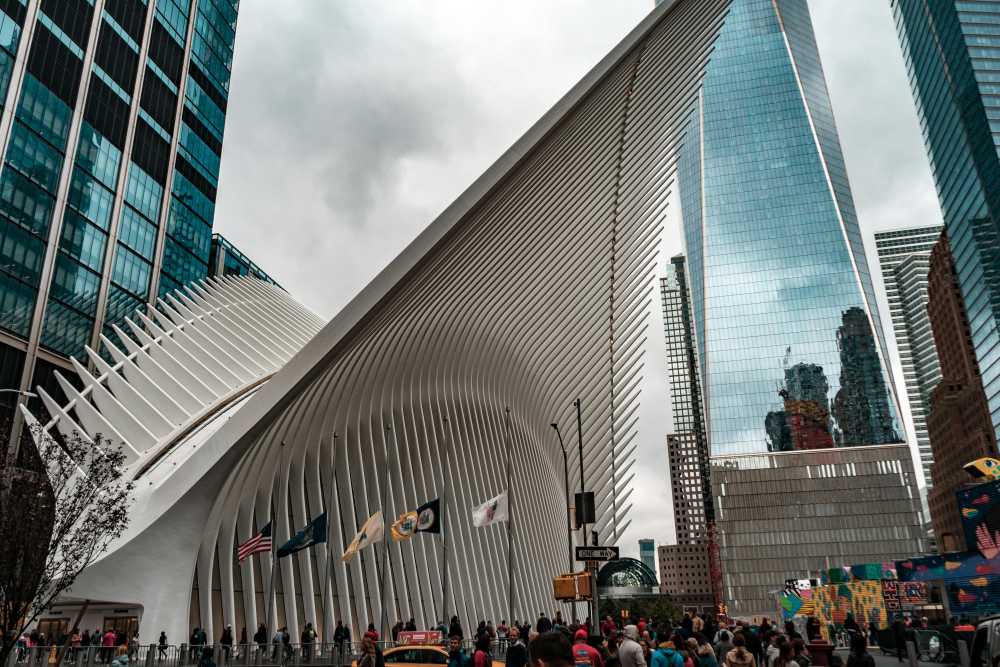
For a Christmas in New York experience that is sleek, modern, and architecturally stunning, head downtown to the Holiday Market at the Oculus. Set inside Santiago Calatrava’s breathtaking transit hub, this market blends high-end shopping with festive pop-ups in a truly unforgettable setting.
The venue is the star. The soaring white ribs of the Oculus create a cathedral-like space that feels both grand and futuristic. During the holidays, the space is filled with elaborate decorations and a cheerful, bustling energy, offering a completely different vibe from the traditional wooden-stall markets. The market is a mix of familiar luxury brands and curated pop-up shops offering everything from gourmet sweets to tech gadgets. It often features live musical performances, adding to the lively atmosphere.
Pair It With: The Oculus is part of the World Trade Center complex, making it easy to combine your shopping with a poignant visit to the 9/11 Memorial & Museum or a trip to the top of One World Observatory for staggering city views.
6. Brooklyn Flea + Smorgasburg Winter Market: The Hipster's Holiday Haul
Escape the Manhattan crowds and discover a treasure trove of unique finds at the Brooklyn Flea + Smorgasburg Winter Market. This is where you’ll find the city’s coolest vintage goods, handmade crafts, and artisanal foods all under one roof, making it the ultimate destination for a one-of-a-kind gift.
The vibe is pure Brooklyn: creative, eclectic, and effortlessly cool. It’s a massive market that combines the best of the Brooklyn Flea (vintage clothing, antique furniture, retro vinyl) with the best of Smorgasburg (dozens of gourmet food vendors). You are guaranteed to find something here that you won’t see anywhere else, shopping directly from Brooklyn-based artists and designers. The Smorgasburg section is a culinary adventure in itself, serving up inventive dishes from around the world.
Pro-Tip: This is the perfect market for finding a truly unique gift that tells a story. To make your trip even smoother, especially if you're visiting from abroad and planning to bring treasures home, download our International Travel Checklist to ensure you have everything you need for a seamless journey.
7. Grand Holiday Bazaar: The Year-Round Market with a Festive Flair
For a shopping experience that feels good and does good, visit the Grand Holiday Bazaar on the Upper West Side. This is the city’s largest curated weekly market, but it pulls out all the stops for the holiday season with special festive themes and vendors.
What makes this market truly magical is its powerful social mission: all profits are donated to four local public schools, benefiting over 2,000 children. Shopping here means you’re directly supporting the local community, making every purchase feel meaningful. The atmosphere is friendly and neighborhood-focused, with a rotating lineup of over 150 independent local artisans, designers, and vintage dealers each week. Be sure to check their website before you go to see the theme for the week.

Beyond the Markets: A Tour of NYC's Legendary Holiday Lights
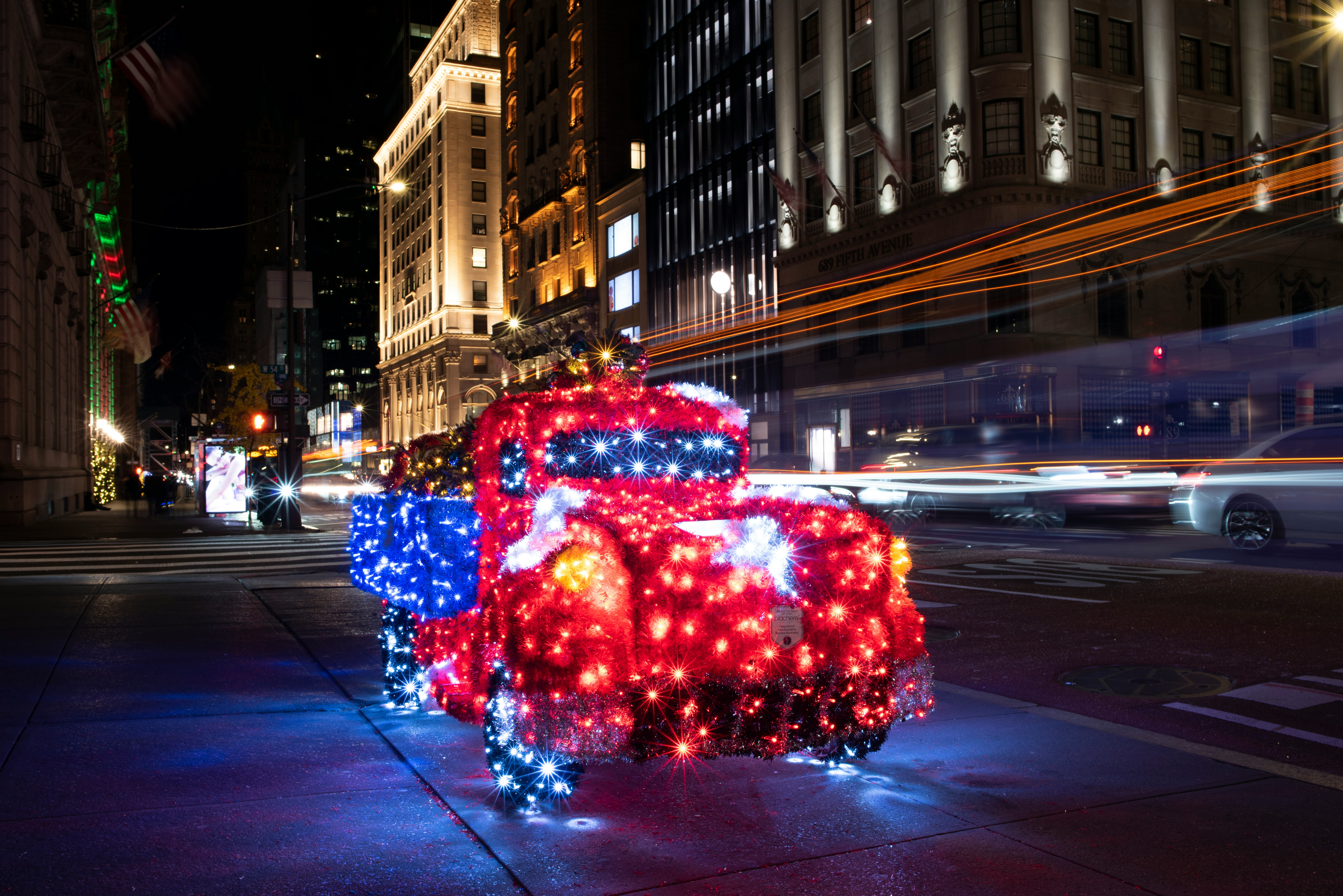
No trip for Christmas in New York is complete without indulging in the city’s legendary light displays. Many of these are conveniently located near the markets, allowing you to create a perfect festive itinerary.
The Rockefeller Center Christmas Tree: This is the undisputed king of all holiday displays. The single best piece of advice, straight from seasoned locals, is to visit at dawn. The early hour rewards you with a serene, crowd-free view that feels like a private showing.
Saks Fifth Avenue Light Show: Directly across from Rockefeller Center, the entire facade of the Saks Fifth Avenue flagship store is transformed into a dazzling musical light show that runs every ten minutes after dusk. It’s a spectacular and unmissable piece of holiday theater.
Dyker Heights, Brooklyn: For a truly over-the-top display, you must take a trip to this Brooklyn neighborhood. The residents engage in a friendly competition to create the most spectacular, professionally-done Christmas light displays imaginable. It’s an unforgettable experience that feels like stepping onto a movie set.
Your Magical New York Christmas Awaits
You now have the insider’s playbook to the very best of festive New York. Armed with this guide, you can navigate the city not as a stressed tourist, but as a savvy traveler ready to soak in the genuine magic of the season. From the iconic grandeur of Bryant Park to the creative buzz of Brooklyn, you have the keys to unlock a holiday trip filled with unique gifts, delicious food, and unforgettable memories. Your perfect Christmas in New York is no longer just a dream—it’s a plan.
Ready to plan your entire U.S. holiday adventure? Our comprehensive Travel Guide is packed with expert advice, detailed itineraries, and local secrets to unlock unforgettable experiences across the country.
Comments 0
No comments yet
Be the first to share your experience!
You May Also Like
San Francisco Cherry Blossoms: A Local's Guide to the Blooms
Halloween SF: Haunts Without Horrors
SF Festivals: 7 Must-See Lineups
SF Pride: 6 Route & Party Hacks
Chinese New Year SF: Parade Essentials
San Francisco Holidays: Bay Area Buzz
TrekGuider @trekguider
Affiliate Keyword Research Mastery for Travel Blogs

You’re doing everything right. Your destination guides are insightful, your photos are stunning, and your packing lists are careful. You’ve joined the affiliate programs, placed the links, and then... crickets. It’s the silent frustration that burns out thousands of talented travel creators.
You see the industry reports, like the one stating the average monthly income for travel affiliates is a staggering $13,847, and it feels like it’s happening in another universe. The chasm between the effort you pour into your work and the revenue trickling into your bank account isn't a reflection of your talent—it's a reflection of your strategy.
The solution is to stop writing into the void and start targeting your content with the precision of a sniper. The secret, the absolute bedrock of every successful affiliate business, is mastering affiliate keyword research. This isn't about SEO wizardry or gaming the system; it's about deeply understanding the language of your audience at the exact moment they are ready to buy. This guide is your definitive, step-by-step masterclass in finding the profitable keywords that will transform your travel blog from a passion project into a revenue-generating powerhouse. For a complete command of the entire affiliate landscape, our definitive pillar page, Travel Affiliate Programs: The 2026 Ultimate Guide, is your essential command center.
The Mindset Shift: From "What to Write" to "What to Target"
The most common mistake in content creation is brainstorming ideas in a vacuum. A creator thinks, "I'll write a post about my amazing trip to Rome." They produce a beautiful, engaging travelogue, sprinkle in a few links to hotels and tours, and then wonder why it doesn't make a dime.
But the highest-earning creators? They flip this model on its head. Their entire content strategy starts not with an idea, but with a question: "What are people who are ready to spend money on a trip to Rome searching for on Google?"
This is the critical difference between informational intent and commercial investigation intent.
Informational Intent: The user is in learning mode. They're searching for things like "what to do in Rome," "history of the Colosseum," or "how to pack a carry-on." This content is fantastic for building an audience, but it rarely leads directly to a sale.
Commercial Investigation Intent: The user has their wallet out. They are actively researching a purchase, comparing options, and looking for an expert to validate their final decision. This is where the money is.
Mastering affiliate keyword research is the disciplined process of finding these "commercial investigation" keywords and building your content around them. When you do this, you stop hoping for random sales and start attracting a steady stream of visitors who arrive on your blog primed to convert.

The Anatomy of a Money-Making Keyword
To find these golden-nugget keywords, you first need to know what they look like. Commercial investigation keywords typically fall into three high-value categories. If you build your content calendar around these formats, you are building a business designed for profit.
1. "Best Of" Keywords
Recommended: The Solo Female Travel Safety Guide
Recommended: International Travel Checklist (Printable PDF)
This is the quintessential affiliate keyword. The user is overwhelmed with options and is looking for a trusted expert (you) to curate a list of the top choices.
Travel Examples:
"best carry-on luggage for international travel"
"best travel insurance for digital nomads"
"best hiking boots for rocky trails"
"best all-inclusive resorts in Mexico for families"
2. Comparison & "Vs" Keywords
These keywords are pure gold. The user has already done their initial research and has narrowed their options down to two or three contenders. They are at the final stage of their decision-making process.
Travel Examples:
"Viator vs GetYourGuide"
"SafetyWing vs World Nomads"
"Osprey Farpoint vs Porter"
"Booking.com vs Expedia"
3. Review Keywords
Here, the user is looking for a detailed, real-world verdict on a single product, tour, or service. They are one step away from clicking "buy" and are seeking that final piece of social proof and expert validation.
Travel Examples:
"G Adventures Peru tour review"
"Away Bigger Carry-On review"
"Nomatic travel pack review"
"SafetyWing insurance review"

The Affiliate Keyword Research Workflow: A Step-by-Step Tutorial
Theory is great, but execution is everything. Here is a simple, repeatable process for finding high-value affiliate keywords using a standard SEO tool like Ahrefs or Semrush.
Step 1: Brainstorm Your "Seed" Keywords
Begin by listing the broad topics, products, and services that are central to your niche. Don't filter yourself. If your niche is "luxury eco-tourism in Costa Rica," your seed keywords might include:
eco-lodge
Costa Rica tours
sustainable travel
adventure travel
bird watching gear
waterproof backpack
These terms are too broad to target on their own, but they are the seeds from which your entire profitable content strategy will grow.
Step 2: Use Commercial Modifiers to Find Gold
Now, take your seed keywords and plug them into your SEO tool's "Keywords Explorer." This is where you transform broad topics into specific, monetizable content ideas. Use the tool's filters to find phrases that contain your seed keyword plus a commercial modifier.
Commercial modifiers are the words that signal buying intent. Your core list should include:
best
review
vs
alternative
top
cheap
affordable
comparison
For example, using the seed keyword "eco-lodge," your research might uncover:
"best eco-lodges in Costa Rica"
"Pacuare Lodge Costa Rica review"
"Lapa Rios Lodge vs Pacuare Lodge"
"alternatives to luxury resorts in Costa Rica"
This single step will generate a treasure map of content ideas, each one pointing directly to a user with commercial intent.
Step 3: Analyze the SERP (Search Engine Results Page)
A keyword can look perfect in your SEO tool, but the real test is analyzing the live competition on Google. Before you commit to writing a single word, search for your target keyword and scrutinize the top 10 results.
Confirm the Intent: Are the top-ranking pages other blog posts, reviews, and listicles? That's a green light. If the page is dominated by the homepages of major brands or e-commerce category pages, it's a signal that Google doesn't think a blog post is the right answer, and it will be much harder to rank.
Scope Out the Competition: Are the top spots held by media behemoths like Forbes or Condé Nast Traveler? Or do you see other independent travel blogs like yours? If other creators are ranking, it's definitive proof that you can, too.
Find the "10x Content" Opportunity: Look for weaknesses in the current top-ranking articles. Are they outdated? Thin on detail? Lacking personal experience or high-quality photos? Your mission is to create a piece of content that is so much more thorough, helpful, and engaging that it's undeniably the best result for that search.
Step 4: Balance Keyword Difficulty (KD) and Search Volume
Your SEO tool will give you two final, crucial metrics:
Search Volume: An estimate of how many times a month people search for this term.
Keyword Difficulty (KD): A score (usually from 0-100) that estimates how hard it will be to rank on the first page of Google.
For a newer blog, the sweet spot is a keyword with a KD score under 30. Don't be put off by lower search volumes (e.g., 50-250 searches/month). These keywords are often far less competitive, and the traffic they bring is hyper-targeted and converts at a much higher rate.
Pro-Tip: Don't ignore long-tail keywords. These are longer, highly specific phrases like "best waterproof travel backpack for Southeast Asia monsoon season." They have low search volume, but the user searching for this knows exactly what they need. Ranking for these terms can be incredibly profitable.
Beyond Products: Keyword Research for Next-Level Opportunities
A truly sophisticated affiliate strategy evolves. Once you've mastered promoting products, you can apply the same affiliate keyword research principles to higher-margin opportunities like referral programs. This means shifting your focus from targeting consumers to targeting your peers: other creators.
The goal is to find what other creators are searching for when they're trying to grow their own businesses.
For example, the TrekGuider Seller Platform is built for travel creators to sell their own digital products—itineraries, guides, presets, and more. To attract other creators to the platform using your unique referral link, you would target keywords they are searching for:
"how to sell travel itineraries online"
"best platform for travel creators"
"make money as a travel blogger 2026"
"digital product ideas for travel creators"
"alternatives to Gumroad for travel guides"
By creating genuinely helpful content that solves these business-level problems, you can introduce your peers to a valuable tool and, through a referral program, earn a recurring revenue share from their success. This adds a powerful, diversified income stream that isn't dependent on one-off product sales.
Pro-Tip: The rise of video means your keyword research shouldn't be confined to your blog. According to industry projections, video will account for 55% of all affiliate traffic by 2026. The same keywords you find for your blog posts—"Away Bigger Carry-On review," "Best Hostels in Bangkok"—are the exact titles you should be using for your YouTube videos and TikToks to capture high-intent search traffic on those platforms as well.
The Travel Creator's Toolkit
Feeling ready to build your keyword strategy? Mastering affiliate keyword research is the first step. To help you organize your findings and build a complete, professional affiliate marketing system, we've created the ultimate resource bundle. It includes checklists, content templates, and keyword tracking sheets designed to accelerate your journey from beginner to pro.
Download Your Free Bundle: The Travel Creator's Toolkit

Frequently Asked Questions (FAQ)
1. What if two of my articles start ranking for the same keyword? Is that bad? This is called "keyword cannibalization," and yes, it can be a problem. It confuses Google about which page is the most important, potentially hurting the rankings of both. The best way to avoid this is to assign one primary target keyword to each article and ensure your content is distinct.
2. Should I ignore keywords with very low search volume (e.g., under 50 searches/month)? Absolutely not! These low-volume, long-tail keywords are often a goldmine. The competition is usually non-existent, and the user searching for such a specific phrase is often highly motivated and ready to buy. A page that gets only 20 visits a month but converts at 25% is a huge asset.
3. How long does it take to rank for a new keyword? For a newer blog, it can take 6-12 months for Google to fully trust your site and grant you authoritative rankings for competitive keywords. This is why consistency is key. The work you do on affiliate keyword research today is building a business asset that will pay you dividends for years to come.
Your Blueprint for a Profitable Content Strategy
You now possess the single most valuable skill for building a profitable travel blog. Affiliate keyword research is the foundation upon which every successful affiliate business is built. It elevates your content strategy from a game of chance into a predictable system for generating revenue.
By shifting your focus from simply "creating content" to "targeting commercial intent," you align your hard work directly with an audience that is actively looking for your expert guidance. You are no longer just a travel writer; you are a strategic business owner. You have the knowledge and the step-by-step process to find the keywords that will attract high-value traffic and drive consistent affiliate sales.
The path is clear. Stop writing into the void. Start targeting with precision. Your journey to becoming a top-earning travel creator begins with the very next keyword you choose.
Meta Data Suggestions:
SEO Meta Title (59 characters): Affiliate Keyword Research: A Masterclass for Travel Blogs
URL Slug: /affiliate-keyword-research-travel-blogs
SEO Meta Description (154 characters): Learn how to find profitable keywords with our step-by-step affiliate keyword research tutorial. Drive more sales and grow your travel blog's income today.
Read the full guide: The Travel Blogger's Playbook to Affiliate Marketing Mastery
Comments 0
No comments yet
Be the first to share your experience!
You May Also Like
FTC Affiliate Disclosure: Stay Compliant as a Travel Creator
Essential Affiliate Tools: From Tracking to Full Optimization
Avoid These 5 Affiliate Landing Page Mistakes for Better Conversions
Booking.com Affiliate Review: Pros, Cons & Earnings
Decoding Affiliate Commission Rates: Benchmarks for Travel Creators