
Booking.com Affiliate Program Review: Pros, Cons, and Earnings Potential

TrekGuider @trekguider
As a travel creator, you know accommodations are the bedrock of every trip. Your audience trusts you to recommend the perfect hotel, hostel, or vacation rental. Monetizing that trust is the logical next step, and one name looms larger than any other: Booking.com. With its colossal brand recognition and an inventory of over 28 million listings, joining its affiliate program feels like an obvious, can’t-miss opportunity. After all, with the average monthly income for travel affiliates hitting a reported $13,847, choosing the right partners is a high-stakes game.
But you’ve heard the whispers. In creator communities and private forums, there’s a nagging feeling that behind the slick marketing, something is fundamentally broken. You hear stories of a confusing commission structure, a cookie policy that seems designed to fail, and account issues that leave creators in the lurch. Is the biggest player in the game truly the best partner for your business, or is the booking affiliate program a trap for unwary creators lured in by a big name?
This is the definitive, unbiased review you’ve been searching for. We are cutting through the hype to deliver a clear-eyed analysis of the Booking.com affiliate program. We’ll dissect the legitimate pros, expose the critical, deal-breaking cons, and analyze the true earnings potential so you can make a strategic decision for your business. This deep dive is a crucial part of mastering the affiliate landscape, a topic we cover comprehensively in our pillar guide and essential command center: Travel Affiliate Programs: The 2026 Ultimate Guide.

The Allure: Why the Booking.com Program Is So Tempting
Let's be clear: the pull of the Booking.com affiliate program is undeniable. It’s a household name with the gravitational force of a market giant, and for creators, that brand recognition feels like a shortcut to credibility and conversions. These are the legitimate advantages that make it a top consideration.
Unmatched Brand Recognition and Trust
When you link to Booking.com, you are sending your audience to a platform they already know and trust. This pre-existing brand equity is a powerful conversion tool. You don't have to waste a single word "selling" your audience on the legitimacy of the booking platform itself; you can focus entirely on why that specific hotel is the right choice. This can lead to stronger initial click-through and conversion rates compared to lesser-known platforms.
A Colossal, Unrivaled Inventory
With over 28 million listings that span hotels, apartments, resorts, and even treehouses, Booking.com’s inventory is virtually limitless. No matter how niche your destination—from a major metropolis like Tokyo to a remote village in the Andes—you are almost certain to find a relevant, bookable property for your audience. This vast selection makes it a one-stop shop, simplifying the process of finding accommodation links for your content.

The Potential for High-Volume Conversions
For creators with significant traffic, especially those who attract visitors in the final, decisive stages of trip planning, the sheer volume of bookings processed by the platform can translate into substantial income. The platform's user-friendly interface and powerful search filters make it easy for users to find and book properties quickly, which can be a major asset for high-traffic websites.
The Critical Flaws: The Cons You Absolutely Cannot Ignore
While the pros are appealing, the operational realities of the booking affiliate program contain several severe, structural flaws that can cripple your earnings potential. These are not minor inconveniences; for many creators, they are deal-breakers.
The Achilles' Heel: Why the Session-Based Cookie Is a Deal-Breaker
This is, without question, the single most critical flaw in the Booking.com affiliate program. The program operates on a session-based cookie.
What does this mean? It means you only earn a commission if a user clicks your affiliate link and completes a booking within the exact same browser session. If they click your link, browse a few hotels, close the tab to think about it, and then return to Booking.com an hour later—or the next day—to make their booking, you earn nothing. Your tracking cookie has vanished.
Travel is a high-consideration purchase. People rarely book a multi-hundred or multi-thousand dollar trip on impulse. The typical customer journey looks like this:
They read your inspiring blog post.
They click your link to explore the hotels you recommend.
They compare prices and read a few more reviews.
They discuss options with a spouse or travel partner.
They return the next day, ready and excited to book.
With a session-based cookie, you are only compensated for the rare, impulsive booker. You lose the commission for every single thoughtful, deliberate customer you inspired. This policy is fundamentally misaligned with how real people plan travel, making it a structurally unsafe and potentially unprofitable model for content creators.

Pro-Tip: When evaluating any affiliate program, the cookie duration is often more important than the commission rate. A partner like Expedia Group offers a 7-day cookie, which is vastly superior as it respects the user's decision-making process and ensures you get paid for the value you create.
The "Black Box" Commission: Why 40% Isn't What It Seems
Booking.com often advertises a commission rate of 25-40%, which sounds incredibly high. However, this is deeply misleading. You do not earn a percentage of the total booking value. You earn a percentage of Booking.com's commission.
Here’s how that math actually breaks down:
A customer books a $500 hotel stay through your link.
The hotel pays Booking.com a commission (let's say 15%, which is $75).
You then earn your commission based on that $75, not the original $500.
If your rate is 25%, you earn 25% of $75, which is $18.75. Your effective commission rate on the total booking value is a mere 3.75%. This opaque structure makes it incredibly difficult to forecast your earnings and often results in a much lower payout than creators expect from the flashy headline numbers.
A History of Account Instability and Support Issues
Numerous affiliates have reported frustrating experiences with the program's administration. These complaints often center on sudden account closures without clear explanation, forced migrations to network platforms like Awin or CJ Affiliate, and a history of losing pending commissions during these transitions. While any large program will have some user issues, the volume of these reports suggests a level of instability that should be a major concern for any creator looking to build a reliable, long-term income stream.
The Verdict: Analyzing the True Earnings Potential
So, can you actually make money with the booking affiliate program? The answer is a qualified "yes," but only for a very specific type of publisher.
Who It Might Be Good For:
High-Traffic Deal & Discount Sites: Websites that focus on last-minute deals and attract users who are ready to book immediately can succeed with the session-based model. Their audience is impulsive by nature.
Metasearch Engines: Large-scale travel search engines that operate on a massive volume of clicks may find the program profitable due to sheer scale.
Who Should Avoid It:
Content Creators & Bloggers: If your content strategy is based on inspiration and long-term trip planning—creating itineraries, destination guides, and detailed reviews—this program is fundamentally at odds with your business model. You are inspiring a journey, not a single-session transaction.
Anyone Building a Sustainable, Predictable Income: The combination of a session-based cookie, an opaque commission structure, and reported account instability makes this a high-risk partner for anyone looking to build a reliable business.
Pro-Tip: The most resilient affiliate strategy is built on diversification. Never rely on a single program for your income. A healthy portfolio for a travel creator should include partners for accommodations, tours, insurance, and gear to create multiple, stable revenue streams.
Strategic Alternatives: Safer Bets for Higher Returns
The flaws in the Booking.com program do not mean you should abandon monetizing accommodations. It simply means you should partner with programs structured to favor creator success.
The most direct and superior alternative is the Expedia Group Affiliate Program. It covers major brands like Hotels.com and Vrbo and, most importantly, offers a 7-day cookie duration. This gives your audience a full week to make their decision after clicking your link, ensuring you are properly compensated for your influence.
Ultimately, the most secure path to a stable income is to reduce your reliance on any single affiliate program and start building assets you own. Instead of sending all your traffic to other brands, you can create and sell your own high-value digital products—like detailed itineraries, travel guides, or planning checklists. Platforms like the TrekGuider Seller Platform are designed specifically for this, allowing you to build your own digital storefront and keep a much larger share of the revenue. It's the ultimate strategy for taking control of your financial future.

Build Your Perfect Itinerary (and Monetize It)
Creating high-value, bookable itineraries is one of the best ways to serve your audience and drive affiliate sales. But starting from scratch can be daunting. Our free Travel Itinerary Template gives you the perfect framework to build beautiful, useful guides your readers will love—and a powerful asset you control.
Frequently Asked Questions
1. Is the Booking.com affiliate program free to join? Yes, the program is free to join either directly or through an affiliate network like Awin or CJ Affiliate.
2. What are the payment methods for the Booking.com affiliate program? Payments are typically made via PayPal or bank transfer, but this can depend on the network you join through. There is usually a minimum payout threshold (e.g., €100) that you must reach before you can receive your earnings.
3. Can I use my own affiliate links to make personal bookings? No. Like almost all affiliate programs, using your own links for personal purchases or bookings is a violation of the terms of service and can lead to your account being terminated and commissions being voided.
A Powerful Brand with a Flawed Partnership
The Booking.com affiliate program exists in a paradox. It leverages one of the most powerful and trusted brands in travel, offering a massive inventory that seems perfect for creators. However, its core mechanics—specifically the session-based cookie and the opaque commission structure—are fundamentally anti-creator. They are relics of an older affiliate model that fails to properly value the influence of content creators who build trust and inspire a customer's journey over days or weeks.
While it might work for a small subset of high-traffic, transactional websites, for the vast majority of travel bloggers and content creators, the booking affiliate program represents a significant and unnecessary risk. Your time, effort, and influence are better invested in partners with more favorable, transparent, and creator-friendly terms. By choosing strategic alternatives and diversifying your income streams, you can build a more profitable and resilient business for the long term.
Read the full guide: The Travel Blogger's Playbook to Affiliate Marketing Mastery
Don't Miss Out! Subscribe for Exclusive Content
Subscribe



Comments 0
No comments yet
Be the first to share your experience!
Dont Miss Out! Subscribe for Exclusive Content

Ultimate USA Holidays Guide: Top Picks


FTC Affiliate Disclosure Essentials: Stay Compliant as a Travel Creator

Essential Affiliate Tools: From Tracking to Full Optimization

Avoid These 5 Affiliate Landing Page Mistakes for Better Conversions

Affiliate Keyword Research Mastery for Travel Blogs

Decoding Affiliate Commission Rates: Benchmarks for Travel Creators
Christmas Chicago: 5 Market Musts
TrekGuider @trekguider
The dream of a perfect holiday trip to Chicago is a potent one. You picture yourself wandering through a wonderland of twinkling lights, the crisp winter air filled with the scent of roasted chestnuts and spiced wine. You’re on a mission to find that quintessential Christmas market experience, a place brimming with authentic cheer and unique, heartfelt gifts. But as you start to plan, a blizzard of options descends, leaving you overwhelmed and wondering where to even begin.
The anxiety creeps in. You worry about wasting precious vacation time on tourist traps, missing the truly magical local gems, or ending up too cold and frustrated to enjoy anything. The fear is that your festive getaway will devolve into a series of long lines and underwhelming souvenirs, failing to capture the genuine heart of Christmas in Chicago. You risk returning home with a feeling that you saw the lights but missed the magic.
This guide is your expert-led solution, your map through the holiday storm. Forget the guesswork. We’ve hand-picked the 5 must-visit Christmas markets that define the season in Chicago. From the world-famous German village that transforms Daley Plaza to the vibrant artisan fairs pulsing with local creativity, this is your insider’s tour. We’ll arm you with the pro tips needed to navigate each market like a seasoned Chicagoan, ensuring your trip is packed with unforgettable moments, delicious treats, and the pure, unadulterated festive spirit you came for.

Why Chicago is a Premier Christmas Market Destination
When the first snowflakes dust the city’s iconic architecture, Chicago undergoes a breathtaking metamorphosis. A palpable festive energy buzzes through the air as millions of lights illuminate the Magnificent Mile, turning the cityscape into a glittering spectacle. While the markets are the beating heart of the season, they are just one chapter in the city's epic holiday story—a story we explore fully in our definitive guide to Chicago Holidays: Windy City Thrills.
What sets Chicago apart is the sheer diversity of its market scene. You can be transported to a traditional German village one moment and, the next, find yourself in a bustling hall filled with cutting-edge handcrafted goods. This incredible variety ensures that every visitor—from the family seeking classic holiday fun to the discerning shopper on the hunt for a one-of-a-kind masterpiece—will find their perfect festive experience. It’s this rich mix that makes a trip here one of the best ways to experience Christmas in the USA.
1. Christkindlmarket Daley Plaza: The Iconic German Village
What Makes It a Must-Visit?
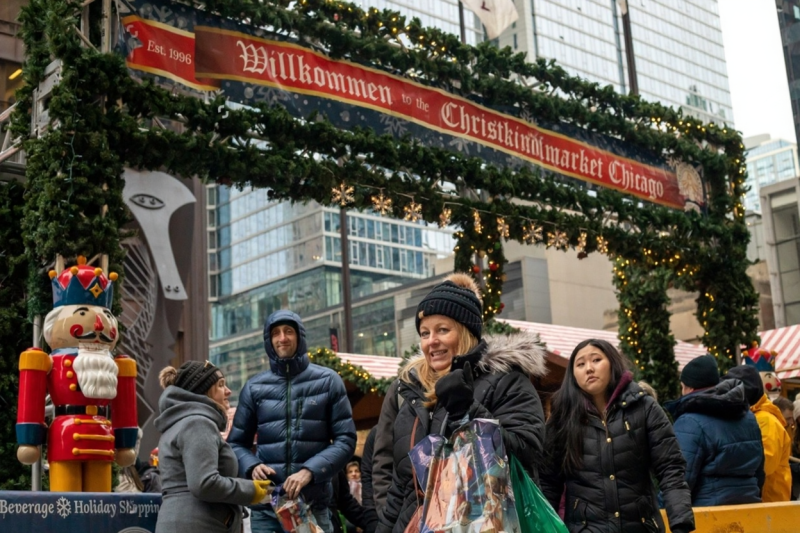
For generations of Chicagoans and visitors alike, the Christkindlmarket at Daley Plaza is the epicenter of the holiday season. Inspired by the 16th-century Christkindlesmarkt in Nuremberg, Germany, this outdoor market doesn't just imitate a charming European village—it becomes one right in the shadow of the Picasso sculpture. The moment you arrive, you’re enveloped by the sights of traditional timber-and-red-striped stalls, the sounds of cheerful carols, and the irresistible aroma of roasting nuts, sizzling bratwurst, and sweet, spiced wine.
The market is legendary for its authentic atmosphere and high-quality, family-friendly vendors. It’s a place where you can watch artisans demonstrate their craft, from glassblowing to woodworking, and browse for traditional German goods that feel both timeless and special.
Navigating the Market: A Pro's Guide
To conquer the Christkindlmarket, a little strategy is essential. This is a full sensory experience, so give yourself at least a couple of hours to explore without rushing.
Must-Try Food & Drink:
Glühwein: This hot spiced red wine is the market's signature drink. It’s served in a unique, boot-shaped souvenir mug whose design changes annually, making it a beloved collector's item. A non-alcoholic version (Kinderglühwein) is also available.
Bratwurst and German Pretzels: You can’t go wrong with a classic German sausage served on a hearty roll or a giant, doughy pretzel as big as your head.
Roasted Nuts: Follow the intoxicatingly sweet smell to vendors selling cinnamon-glazed almonds, pecans, and cashews, served hot in a paper cone.
Potato Pancakes (Kartoffelpuffer): Find the stall selling these crispy, golden-fried pancakes. Served with a side of applesauce or sour cream, they are the ultimate winter comfort food.
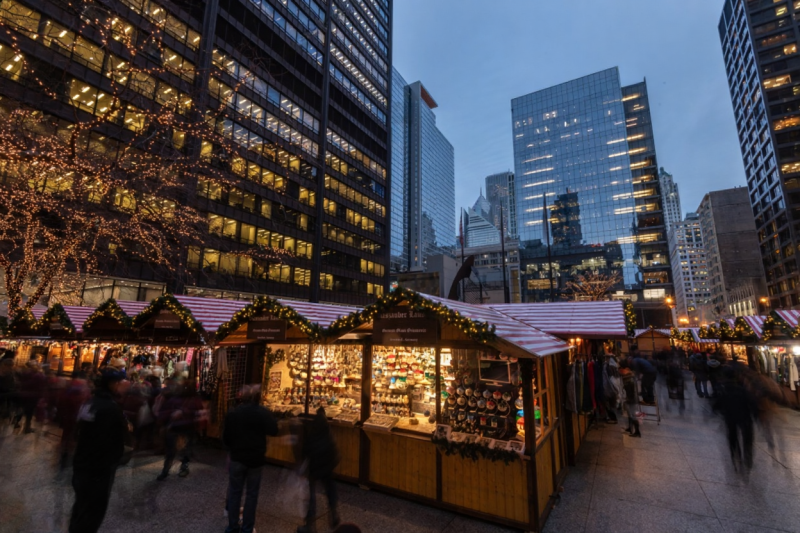
Shopping for Timeless Treasures:
Ornaments: Dozens of stalls are dedicated to exquisite, handcrafted ornaments. Discover delicate, hand-blown glass baubles from Germany, complex wooden figurines from the Erzgebirge region, and traditional straw stars.
Traditional Crafts: This is the place to find authentic German beer steins, complex cuckoo clocks, classic nutcrackers, and hand-carved wooden toys.
Pro-Tip: The market's peak times are evenings and weekends. To avoid the densest crowds, visit on a weekday afternoon. The lines for Glühwein and popular food stalls will be significantly shorter, giving you more space to browse the vendor stalls at a leisurely pace.
Essential Visitor Information
Location: Daley Plaza, 50 W Washington St, Chicago, IL 60602.
Best Time to Go: For the full magical effect, arrive just before dusk. You’ll get to see the market in the daylight before the holiday lights begin to twinkle against the darkening city skyline.
What to Wear: This is a completely outdoor market in the heart of a Chicago winter. Dress in warm layers: a thermal base, a fleece mid-layer, and a windproof winter coat. A hat, gloves, and a scarf are non-negotiable. Wear comfortable, waterproof boots to keep your feet warm and dry.
2. Christkindlmarket Wrigleyville: A Festive Home Run
A Unique Holiday Experience at Gallagher Way
Just outside the historic ivy-clad walls of Wrigley Field, the Christkindlmarket Wrigleyville offers a more spacious and modern take on its downtown sibling. Set in the lively Gallagher Way plaza, this market brilliantly fuses beloved German traditions with a distinctly fun, neighborhood vibe. The iconic ballpark marquee provides a stunning, uniquely Chicagoan backdrop for your holiday photos.
This location expands the experience beyond just shopping. With an ice-skating rink and a calendar full of special family-friendly programming, it’s an all-in-one festive destination. The atmosphere is generally more relaxed than the bustling Daley Plaza location, offering more room to stroll, sip, and soak in the holiday cheer.

What to Expect: Food, Fun, and Festivities
While you’ll find many of the same cherished vendors selling Glühwein, sausages, and ornaments, the Wrigleyville market has its own distinct character.
Ice Skating: The Gallagher Way ice rink is a major draw. Rent a pair of skates and glide around under the festive lights with the historic "Friendly Confines" watching over you.
Family Activities: Check the schedule for special events like visits from Santa, craft workshops for kids, and live musical performances on the Gallagher Way stage.
Local Flavor: In addition to the traditional German vendors, you’ll often find booths from local Wrigleyville businesses, adding a welcome neighborhood touch to your shopping.
Planning Your Visit
Location: Gallagher Way, 3635 N Clark St, Chicago, IL 60613.
Getting There: Public transportation is your best friend. The CTA Red Line ‘L’ train stops at the Addison station, just steps from the market. Parking in Wrigleyville is notoriously difficult and expensive, especially during events.
3. Renegade Craft Fair: The Indie Maker Showcase
The Anti-Traditional Christmas Market
Forget what you know about traditional Christmas markets. Renegade is a different beast entirely—a vibrant, curated explosion of independent craft and design, where you come to find gifts with a story, a soul, and a serious dose of originality. This is not the place for nutcrackers and cuckoo clocks; it’s a dynamic marketplace showcasing the absolute best in modern, independent making.
The atmosphere is creative, inspiring, and buzzing with the energy of hundreds of passionate artists. It’s a celebration of contemporary craftsmanship, perfect for those who value originality and want to give a gift that can’t be found anywhere else.

What You'll Find: A Treasure Trove of Creativity
Prepare to be blown away by the talent on display. Renegade brings together hundreds of makers from Chicago and across the country for its holiday fair.
Artisanal Goods You Can Discover:
Handmade Jewelry: From delicate, minimalist metalwork to bold, polymer clay statement pieces.
Original Artwork: Affordable screen prints, quirky illustrations, and stunning paintings from emerging artists.
Small-Batch Apothecary: Hand-poured soy candles with unique scent profiles, all-natural soaps, and luxurious body oils.
Ceramics and Home Decor: Beautifully crafted mugs, planters, and hand-printed textiles to elevate any living space.
Gourmet Foods: Small-batch chocolates, artisanal hot sauces, and locally roasted coffee beans.
Pro-Tip: While many vendors accept credit cards, some smaller makers may be cash-only. Bring a mix of payment options to ensure you don't miss out on the perfect find. It’s also wise to bring your own reusable tote bag to comfortably carry all your unique treasures.
Insider Tips for Shopping Renegade
Check the Dates: Renegade’s holiday fairs are typically held over a single weekend. Check their official website for the exact dates, times, and location, as it can change from year to year.
Browse the Vendor List: You can look through the list of makers online beforehand to map out your must-visit booths, or you can simply wander the aisles and let serendipity guide you. Either way, you’re bound to discover your new favorite artist.
4. One of a Kind Holiday Show: An Indoor Artisan Universe
The Ultimate Indoor Shopping Experience
When the Chicago wind is howling, escape into the warm, sprawling, and utterly captivating world of the One of a Kind Holiday Show. Held annually at the massive theMART, this indoor event is a paradise for the serious holiday shopper. It brings together more than 500 talented artists, artisans, and makers from across North America, offering an unparalleled selection of handcrafted goods all under one roof.
The sheer scale can feel daunting, but the true magic is in the direct connection with the creators. You can chat with a painter about their inspiration, ask a jeweler about their process, and find a truly meaningful gift that comes with a personal story.
Planning a major shopping trip, especially if you're traveling from overseas, requires serious organization. Our International Travel Checklist is the perfect free resource to ensure you have everything from your passport to your packing list sorted, so you can focus on the fun of the hunt.

Discovering Your Perfect Gift
With hundreds of vendors, there is truly something for every single person on your list. The show is thoughtfully organized into categories to make navigation a breeze.
Categories Include:
Fine Art and Sculpture
Fashion, Fiber, and Accessories
Jewelry
Home Goods and Furniture
Gourmet Foods
Pet Products
Children's Products
Making the Most of the Show
Wear Comfortable Shoes: You will be doing a lot of walking. Comfort is absolutely essential to enjoying a full day at the show.
Check the Floor Plan: Grab a map at the entrance or view it online beforehand. If you have specific artists you want to see, mark their booths to create a rough itinerary.
Take a Break: The show features cafes and seating areas. Take time to rest, recharge with a coffee, and review your shopping list.
5. Randolph Street Market: A Vintage Holiday Treasure Hunt
A Festive Market for Vintage Lovers
For those who believe the best gifts come with a past, the Randolph Street Market’s holiday edition is a treasure hunter's paradise. This nationally acclaimed market, famous for its incredible collection of antiques, vintage clothing, and unique collectibles, gets a festive makeover for its indoor winter events. It’s the ultimate destination for shoppers seeking items with soul, character, and a story to tell.
The market brings together dozens of the best dealers in the Midwest, specializing in everything from mid-century modern decor to Victorian-era jewelry. The atmosphere is eclectic and thrilling, with the promise of an amazing find around every corner.
What Treasures Await?
You truly never know what you might uncover at Randolph Street Market. It’s a place where you can find a gift that is utterly unique and steeped in history.
Potential Finds:
Vintage Ornaments: Discover beautiful, delicate glass ornaments from the 1950s and 60s.
Retro Holiday Decor: Find classic ceramic Christmas trees, quirky knee-hugger elves, and other nostalgic decorations.
Antique Jewelry: Unearth timeless lockets, brooches, and rings that tell a story.
Vintage Clothing and Furs: Shop for a glamorous party dress or a cozy winter coat from another era.
Collectible Barware: Find the perfect gift for the cocktail enthusiast, from Mad Men-era shakers to unique, colorful glassware.
How to Shop the Market Like a Pro
Arrive Early for First Dibs: The most sought-after items are often snatched up within the first hour. Arriving when the doors open gives you the best selection.
Don't Be Afraid to Dig: Some of the best treasures are hidden in plain sight. Take your time to look through boxes, browse the backs of booths, and look under tables.
Bring Cash and Be Ready to Bargain: While many vendors now accept cards, cash is still king at flea markets. Polite bargaining is often part of the fun, but always be respectful of the dealer's expertise.
A Traveler's Guide to Enjoying Chicago's Christmas Markets
Dressing for a Chicago Winter
Chicago’s winter weather is no joke. To stay comfortable while exploring, especially at the outdoor markets, layering is your best strategy.
Base Layer: A long-sleeved thermal shirt and leggings.
Mid Layer: A fleece or wool sweater.
Outer Layer: A warm, windproof, and preferably waterproof winter coat.
Accessories: A warm hat that covers your ears, a scarf to wrap around your face, and insulated gloves are absolutely essential.
Footwear: Insulated, waterproof boots with good traction will be your most important piece of gear.
Getting Around the City
Chicago’s public transit system, the CTA, is the most efficient and affordable way to navigate between markets. The ‘L’ trains and buses can get you within a short walk of every destination on this list. Purchase a Ventra card at any train station for easy tap-on access. While rideshares are plentiful, they can be slow and expensive during peak holiday times due to heavy traffic.
Beyond the Markets: Other Festive Must-Dos
While the markets are a highlight, they are just one part of the city's holiday magic. Be sure to experience other classic Chicago traditions like ice skating at Millennium Park with "The Bean" reflecting the skyline, seeing the spectacular ZooLights at the Lincoln Park Zoo, or taking an evening stroll down the Magnificent Mile to admire the brilliant window displays and the million-plus lights adorning the trees.
To build a complete holiday itinerary that covers everything from markets to museums, our comprehensive Travel Guide provides expert-curated plans and insider tips for making the most of your trip to Chicago and other top U.S. destinations.

Your Unforgettable Chicago Christmas Awaits
Chicago in winter is more than just a city; it’s a living, breathing snow globe waiting to be explored. Armed with this guide to the city’s five essential Christmas markets, you are now fully equipped to dive into the holiday season like a pro. From the old-world German charm of the Christkindlmarket to the creative buzz of Renegade Craft, you have the insider knowledge to plan a perfect, stress-free shopping adventure filled with magic, warmth, and one-of-a-kind finds. This is how you experience the very best of Christmas in the USA—right in the heart of the Windy City.
Which market are you most excited to visit? Let us know in the comments below!
SEO Meta Data Suggestions:
SEO Meta Title: Christmas in Chicago: Top 5 Holiday Markets Guide (2026)
URL Slug: /christmas-chicago-markets
SEO Meta Description: Discover the 5 best Christmas markets in Chicago. Our guide covers the iconic Christkindlmarket, artisan fairs, and vintage markets for a magical holiday.
Don't Miss Out! Subscribe for Exclusive Content
SubscribeComments 0
No comments yet
Be the first to share your experience!
Dont Miss Out! Subscribe for Exclusive Content

San Francisco Cherry Blossoms: A Local's Guide to the Blooms

Halloween SF: Haunts Without Horrors

SF Festivals: 7 Must-See Lineups

Christmas SF: Lights & Wharf Wonders

SF Pride: 6 Route & Party Hacks

Chinese New Year SF: Parade Essentials
Top 10 Travel Affiliate Programs for 2026
TrekGuider @trekguider
You’ve launched your travel blog, pouring hours into crafting beautiful, helpful content. The passion is there, but a critical piece of the puzzle is missing: a reliable income stream. You know that affiliate marketing is at the heart of a profitable blog, but stepping into that world feels like navigating a dense, fog-covered jungle. Which programs are legitimate? Which ones actually pay well? And how do you choose partners that your audience will genuinely thank you for recommending?
The wrong choice can be costly. You risk wasting months promoting programs with rock-bottom commission rates, impossibly short cookie durations, or, worst of all, recommending subpar products that shatter the trust you’ve worked so hard to build. This indecision is a major roadblock, keeping your blog a passion project when it has the potential to be a profitable business.
This guide is your machete to clear a path through that jungle. We are cutting through the noise to bring you a curated, vetted, and strategic list of the top 10 travel affiliate programs for 2026. This isn't just a list; it's a strategic analysis designed to equip you with the knowledge to build a powerful and profitable travel affiliate marketing foundation. Think of this as a tactical deep-dive—one essential component of the much larger business strategy we cover in our ultimate guide to How to Make Money Online: A Creator's Guide for 2026.

The Anatomy of a Winning Affiliate Program
Before we dive into the list, it’s crucial to understand the criteria that separate the best programs from the rest. A successful travel affiliate marketing strategy isn’t just about chasing the highest commission rate; it's about building a portfolio of reliable partners that align with your brand and serve your audience.
Commission Rate & Type: This is the percentage or flat fee you earn per sale. Look for rates that fairly compensate you for the value you provide. For high-ticket items like multi-day tours, a 6% commission can be far more lucrative than a 10% commission on a low-cost item.
Cookie Duration: When a reader clicks your affiliate link, a small tracking file (a "cookie") is placed on their browser. The cookie duration is the period during which you will be credited for the sale if they make a purchase. A 30, 60, or even 90-day cookie is vastly superior to a "session-based" cookie that expires as soon as the user closes their browser.
Brand Recognition & Trust: Promoting well-known, trusted brands like Booking.com or REI leads to higher conversion rates. Your audience is already familiar with them and is more likely to make a purchase.
Average Order Value (AOV): This is the average amount a customer spends in a single transaction. A program with a high AOV, like a tour company, can result in substantial commissions even with a modest commission rate. A $2,600 tour booking with a 6% commission earns you $156 from a single click.
The Top 10 Travel Affiliate Programs for Bloggers in 2026
Here is our definitive list, broken down by category to help you build a diversified affiliate portfolio that covers every stage of the travel planning process.
Accommodation Affiliate Programs
For most travelers, booking accommodation is the first and most expensive part of their trip, making this category a foundational pillar of your affiliate income.
1. Booking.com
Let's start with the undisputed heavyweight. Booking.com is a global powerhouse, a name so synonymous with travel that it’s practically a verb. That massive inventory and ironclad reputation translate directly into higher conversions for you.
Commission Rate: 25-40% of Booking.com's commission (which nets out to roughly 4% of the total booking value for you).
Cookie Duration: Session-based.
Strategic Insight: The session-based cookie is a major drawback—your reader must book immediately. However, the conversion rate is so high that it remains an essential program. The key is to link to specific properties at the exact moment a reader is making a decision (e.g., within a hotel review or a "Where to Stay" guide).
2. Expedia Group
The Expedia Group affiliate program is your versatile all-in-one tool, giving you access to a huge portfolio of brands including Expedia, Hotels.com, and the vacation rental giant Vrbo under a single umbrella.
Commission Rate: 2-6% on hotels and vacation rentals.
Cookie Duration: 7 days.
Strategic Insight: Access to Vrbo is the main prize here, allowing you to monetize the lucrative vacation rental market. The 7-day cookie, while not long, is a significant improvement over Booking.com's model, giving your readers a bit more time to decide.
Tours & Activities Affiliate Programs
This is where you can earn some of the highest commissions per sale. Tours and activities have a high AOV and are a natural fit for itinerary-based blog posts and destination guides.

3. GetYourGuide
With a modern, user-friendly platform and an excellent selection of tours worldwide, GetYourGuide has become a favorite among travel creators for a reason.
Commission Rate: 8-10%.
Cookie Duration: 30 days.
Strategic Insight: GetYourGuide excels in its creator tools, including easy-to-embed widgets that showcase tours visually within your posts. A solid commission rate and a generous 30-day cookie make this a top-tier, reliable choice.
4. Viator
Owned by TripAdvisor, Viator is one of the largest tour marketplaces online, boasting a massive inventory that covers virtually every corner of the globe.
Commission Rate: 8%.
Cookie Duration: 30 days.
Strategic Insight: The sheer breadth of Viator's offerings is its superpower. No matter how niche your destination, you will almost certainly find a relevant tour to promote. This makes it an invaluable tool for creators who cover a wide range of locations.
5. G Adventures
Specializing in small-group adventure travel, G Adventures offers high-ticket, multi-day tours that can result in massive commissions.
Commission Rate: 6% of booking value.
Cookie Duration: 60 days.
Strategic Insight: This program is all about the Average Order Value. With an average booking of approximately $2,600, a 6% commission translates to over $150 from a single sale. The long 60-day cookie is essential for these high-consideration purchases.
6. Take Walks
This program focuses on high-quality, small-group walking tours in major cities across the globe, led by expert local guides.
Commission Rate: 15%.
Cookie Duration: 45 days.
Strategic Insight: A massive 15% commission rate is almost unheard of in this space. For bloggers who focus on major European and North American cities, this program can be an absolute goldmine. Promoting their unique "skip-the-line" tours is an easy sell.
Ready to Build Your Own Products?
Seeing the high commissions on tours and experiences should get you thinking. Once you've mastered earning from other people's products, the next step is to create your own. Selling your own digital products offers unparalleled profit margins and gives you full control. But what should you create?
Our free Digital Product Ideas Guide is the perfect brainstorming tool. It’s packed with proven concepts for travel creators, from eBooks and templates to interactive maps and presets that your audience will love.
Download Your Free Digital Product Ideas Guide Here
Flights & Deals Affiliate Programs
While direct flight commissions are notoriously low, these programs offer creative ways to monetize this essential part of travel planning.
7. Skyscanner
As one of the world's most trusted flight search engines, Skyscanner is a brand your audience already knows and uses.
Commission Rate: 20% of Skyscanner's revenue per click-out.
Cookie Duration: 30 days.
Strategic Insight: You don't get paid for a flight booking, but for the traffic you send. While per-click earnings are small, this allows you to monetize readers in the early, research phase of planning. It’s a volume game, best for blogs with significant traffic.
8. Dollar Flight Club
This is a subscription-based service that sends cheap flight alerts directly to its members. Its affiliate program is incredibly lucrative.
Commission Rate: 50% recurring commission.
Cookie Duration: 90 days.
Strategic Insight: A 50% recurring commission is a game-changer. You get half of the subscription fee not just once, but for as long as the member you referred remains active. This is how you build a predictable, passive affiliate income stream.
Gear & Insurance Affiliate Programs
Recommending the gear you personally use and the insurance that protects you is an authentic way to serve your audience while earning a commission.
9. World Nomads
World Nomads is one of the most popular and trusted travel insurance providers, especially within the backpacking and adventure travel communities.
Commission Rate: ~10%.
Cookie Duration: 60 days.
Strategic Insight: Travel insurance is a necessary purchase you should be recommending for your audience's safety. Promoting a trusted brand is a valuable service, and the program rewards you with a solid commission and a generous 60-day cookie.
10. REI
For outdoor and adventure travel, REI is the gold standard for high-quality gear. The brand is synonymous with trust and quality, making it a high-converting partner.
Commission Rate: ~5%.
Cookie Duration: 15 days.
Strategic Insight: While the 5% commission seems modest, the AOV at REI is often high as customers purchase big-ticket items. Recommending a specific backpack or tent you’ve tested for months is one of the most authentic promotions you can make.
The Golden Rule: Diversify Your Portfolio
Pro-Tip: The most successful affiliate marketers build a diversified portfolio. Don't rely on a single program. This strategy of diversification is your only defense against platform risk. As we saw when Amazon dramatically slashed its commission rates with little warning, building your entire income on a single partner is a recipe for disaster. By joining programs across accommodations, tours, and gear, you create a more resilient business.
Getting Accepted and Maximizing Your Earnings
Getting accepted into these programs is just the entry ticket. The real work—and the real money—lies in your strategy. And at the heart of that strategy is one non-negotiable word: trust.
Always prioritize authenticity. Only recommend products and services you have personally used or thoroughly vetted. Your audience values your honest, first-hand experience above all else. When you integrate affiliate links, do so contextually within helpful content. A link to a Viator tour is most powerful inside a 3-day itinerary for that city. You can even package these recommendations into a premium Travel Guide, selling your expertise directly to your audience. A specialized marketplace like TrekGuider becomes an invaluable partner here, giving every creator a professional, customizable storefront to connect with travelers who are actively searching for expert resources.

Frequently Asked Questions (FAQ)
1. How many affiliate programs should I join as a beginner?
Start with 2-3 programs that are the absolute best fit for your niche. It's better to deeply integrate a few relevant programs into your content than to shallowly sprinkle links from a dozen different sources. Master these first before expanding.
2. Can I get rejected from affiliate programs? What should I do?
Yes, and it's common for new bloggers with low traffic. Don't be discouraged. Most rejections are automated. Focus on building your content library (aim for 15-20 high-quality posts) and growing your traffic. Re-apply in 3-6 months when your site's metrics have improved.
3. Is travel affiliate marketing still profitable in 2026?
Absolutely. The creator economy is projected to nearly double from $250 billion to almost $500 billion by 2027. While competition is higher, the audience of online buyers is also larger than ever. The key to success is building trust with a specific niche audience and promoting products that genuinely solve their problems.
Your Path to a Profitable Blog Starts Now
Choosing the right partners is one of the most critical decisions in your blogging journey. This curated list removes the guesswork, providing you with a powerful roster of the industry's best programs. By aligning with these trusted brands, you can confidently serve your audience with valuable recommendations while building a sustainable and profitable business.
You now have the blueprint. The next step is to take action. Review this list, identify the programs that best fit your niche, and start the application process. This is the foundational step in building a strong travel affiliate marketing strategy that will power your blog for years to come.
Meta Data
SEO Meta Title (Under 60 characters):
Top 10 Travel Affiliate Programs for Bloggers (2026)
URL Slug:
top-travel-affiliate-programs
SEO Meta Description (Under 155 characters):
Ready to monetize your blog? Discover the 10 best travel affiliate programs for 2026. We break down commissions, pros, and cons to boost your income.
Read the full guide: The Travel Blog Business Plan: How to Make Real Money in 2026
Don't Miss Out! Subscribe for Exclusive Content
SubscribeComments 0
No comments yet
Be the first to share your experience!
Dont Miss Out! Subscribe for Exclusive Content
FTC Affiliate Disclosure Essentials: Stay Compliant as a Travel Creator
Essential Affiliate Tools: From Tracking to Full Optimization
Avoid These 5 Affiliate Landing Page Mistakes for Better Conversions
Affiliate Keyword Research Mastery for Travel Blogs

Booking.com Affiliate Program Review: Pros, Cons, and Earnings Potential
Decoding Affiliate Commission Rates: Benchmarks for Travel Creators
11 Essential Solo Travel Safety Tips You Need to Know
TrekGuider @trekguider
Let's be honest: the idea of solo travel is a mix of exhilaration and pure terror. It’s the ultimate promise of freedom, shadowed by the persistent question, "But will I be safe?" The thought of navigating an unfamiliar city alone, fending off unwanted attention, or feeling vulnerable can be enough to keep the most adventurous spirit grounded. This anxiety is real, and it can paralyze your plans or, worse, follow you on your trip, robbing you of the joy you set out to find.
But safety isn’t a matter of luck; it’s a matter of skill. It’s a mindset you can cultivate and a set of practices you can master. This guide is your new playbook. We’ve distilled insights from security experts, psychologists, and veteran solo travelers into 11 essential, gender-neutral solo travel safety tips. This isn't a list of warnings designed to scare you. It’s a practical framework for building unshakeable confidence, mastering situational awareness, and empowering yourself to explore the globe. While these strategies are crucial for any solo traveler, they are one part of a larger safety ecosystem, which we cover in our comprehensive guide to The Ultimate Guide to Travel Safety: A 2026 Playbook.

The Foundation: Building Unshakeable Confidence and Awareness
True safety begins in your mind long before your boots hit the ground. It’s a foundation built on proactive awareness and a confident mindset. By mastering these core principles, you transform yourself from a potential target into a "hard target"—someone who looks like they know exactly what they’re doing, even when they're just soaking it all in.
1. Master the Art of Situational Awareness
Situational awareness is not paranoia; it's a state of relaxed observation. Security experts emphasize that it’s about consciously understanding your environment by first establishing a baseline and then learning to spot anomalies.
Establish a Baseline: Wherever you are—a train station, a market, a park—take a moment to observe the normal rhythm. How are people walking? What’s the general noise level? This is the "normal" for that environment.
Identify Anomalies: Once you know the baseline, things that deviate will immediately stand out: someone moving against the flow of foot traffic, wearing a heavy coat in hot weather, or loitering without purpose near an entrance. These anomalies are your early warning system.
Limit Distractions: "Tunnel vision" is a solo traveler’s enemy. Keep your headphones out and your phone in your pocket when walking through crowded areas. Keep your head up.
Practice Active Scanning: Make a habit of periodically looking around in a full 360-degree arc. This simple act keeps you aware of who is behind and beside you, preventing you from being caught by surprise.
Project Confident Body Language: Your posture speaks volumes. Walk with a purposeful stride, keep your head held high, and make brief, deliberate eye contact with those around you. This non-verbally communicates that you are aware and not an easy target.
2. Trust Your Intuition—It's Your Best Guide
Psychologists and security experts agree: that "gut feeling" is a real and powerful threat-detection tool. It's your subconscious mind recognizing thousands of tiny cues that something is wrong long before your conscious mind can articulate why. If a person, a street, or a situation feels "off," do not ignore it. Treat that feeling as a valid warning. Cross the street, leave the bar, get in a taxi—do whatever you need to do to honor that instinct without apology or hesitation.
3. Build Confidence with "Practice Runs" Before You Go
The confidence to navigate a foreign capital alone isn't born on the plane; it's built at home. Start with small, local "practice runs" to build your self-reliance.
Take yourself on a solo date to a new restaurant or movie in your own city.
Spend an afternoon exploring a neighborhood you don’t know well, navigating by yourself.
Take a solo day trip to a nearby town using only public transportation.
These small wins prove to yourself that you are capable and resourceful, which is the bedrock of the confidence you'll carry with you across the globe.

Navigating Like a Pro: Practical Solo Travel Safety Tips
Once you’ve calibrated your internal compass with a confident mindset, it’s time to translate that awareness into action. How you move, what you wear, and how you interact with your environment are the practical skills that complete your safety toolkit.
4. Walk with Purpose, Navigate with Discretion
Looking lost is like wearing a sign that says "vulnerable." Your goal is to navigate with quiet confidence.
Plan Before You Leave: Study your route before you walk out the door of your hotel or hostel. Having a clear mental map allows you to walk with purpose, which is a powerful deterrent.
Be Discreet with Maps: Avoid standing on a busy corner staring at a large paper map or your phone. If you need to check your directions, step into a shop, cafe, or hotel lobby to reorient yourself away from prying eyes.
Manage Your Tourist Gear: An expensive camera hanging around your neck and a bulky backpack are clear signals that you're a tourist. Keep your camera in a non-descript bag until you’re ready to use it, and consider using a more subtle crossbody bag for daily exploring instead of a large daypack.
5. Dress to Blend, Not to Stand Out
Your clothing is your first and most obvious cultural handshake. Observe what locals are wearing and aim for a similar level of formality.
Avoid Loud Logos: Leave the clothing with your home country's flag, university, or sports team logos at home. Opt for neutral, less conspicuous attire.
Respect Local Norms: In more conservative regions, dressing modestly (covering shoulders and knees) is not just a sign of respect; it’s a key safety strategy that helps you blend in and avoid unwanted attention.
Pro-Tip: Pack a lightweight scarf. It takes up almost no space and is incredibly versatile. You can use it to cover your head when entering a religious site, cover your shoulders for modesty, or add a layer of warmth.
6. Learn a Few Key Local Phrases
You don't need to be fluent, but knowing a few words in the local language is a massive confidence booster and a sign of respect. Focus on the essentials:
Hello
Please
Thank you
Excuse me
Do you speak English?
Being able to handle simple transactions or politely ask for help shows you've made an effort and can make interactions much smoother.

Your Safe Haven: Accommodation and Socializing Strategies
As a solo traveler, where you stay and how you choose to meet people are critical safety decisions. Your accommodation is your sanctuary, and your social life should be a source of joy, not anxiety.
7. Perform a 60-Second Hotel Security Sweep
The moment you first enter your hotel room or rental, take a minute to perform this essential security check.
Prop the Door: Keep the door propped open with your luggage while you do a quick visual sweep to ensure the room is empty (check the closet, behind the shower curtain, under the bed).
Test the Locks: Close the door and test every lock from the inside—the deadbolt, the security chain, and the latch. They should all feel solid.
Find Your Exits & Count: Locate the fire escape map on the back of the door. Identify the two nearest exits and count the number of doors between your room and the closest one. Fire safety experts stress this is crucial for navigating in a dark or smoke-filled hallway.
Check for Privacy: Ensure windows and any connecting doors lock properly. Close the curtains fully.
8. Choose Social Accommodations for Safe Connections
Hostels are the original social network for travelers and remain one of the best and safest ways to meet people. They are designed for interaction, with common areas and organized events like walking tours or group dinners. Even if you book a private room in a hostel, you get the benefit of privacy combined with a built-in, vetted community right outside your door.
9. Join Group Tours and Classes to Meet Like-Minded People
A shared interest is a natural foundation for friendship. Signing up for group activities is a fantastic way to connect with other travelers and locals in a structured, safe environment.
Free Walking Tours: Most major cities have them. They're a great way to get oriented and chat with fellow travelers.
Specialty Day Tours: A food tour or historical excursion brings together people with a common passion.
Local Classes: A cooking workshop or language class provides an authentic cultural experience and an easy way to start conversations.
Pro-Tip: If you connect with people on a tour, suggest meeting up later in a public place. "A few of us are going to grab a bite at that market we saw, want to join?" is a low-pressure way to extend the connection.

Your Digital Safety Net
In the modern era, technology provides some of the most powerful solo travel safety tips. Your smartphone can be your lifeline, your map, and your guardian angel—if you set it up correctly.
10. Arm Yourself with Personal Safety Apps
Before you leave, download a personal safety app and set it up with your trusted contacts back home. These apps can share your location, send distress signals, and even connect you with emergency services.
bSafe: A comprehensive app that features a voice-activated SOS alarm, live location sharing ("Follow Me"), and even automatically records video and audio during an emergency.
Noonlight: Acts as a silent panic button. You press and hold a button on the screen when you feel unsafe. If you release it and don't enter your PIN within 10 seconds, it automatically sends your location to professional dispatchers who coordinate with local police.
Life360: Excellent for creating a private location-sharing map ("Circle") with family or friends. It includes an SOS alert that messages your entire circle and can even detect if you've been in a car crash.
11. Keep Your Trusted Contacts in the Loop
Beyond apps, make a habit of sharing your itinerary with someone back home before you leave. A quick text or email saying, "Just arrived at my hostel in Lisbon, all is good!" provides peace of mind for both you and them.

A Note for Women Traveling Solo
While all the tips in this guide are universal, women often face a unique set of challenges and cultural nuances on the road. For advice tailored specifically to navigating these issues—from understanding cultural dress codes to responding to harassment and leveraging female-focused networks—our specialized guide is an essential resource.
Deep Dive: The Solo Female Traveler's Playbook
Ready for a resource that speaks directly to the female experience? Download our free, in-depth Solo Female Travel Safety Guide for expert advice on cultural etiquette, empowerment, and staying safe and confident on your own terms.
Solo Travel Safety FAQ
A prepared mind is a safe mind. Here are answers to a few common questions that solo travelers ask.
1. What's the best way to handle street harassment?
Security experts advise a tiered response. First, try to ignore it. Often, a harasser's goal is a reaction. Avoid eye contact and keep walking with purpose as if you heard nothing. If they persist, get loud and firm. Use a strong voice and say a simple command like "Stop" or "Leave me alone." Finally, your priority is to get to a safe place. Duck into a busy shop, hotel lobby, or cafe. Don't lead them back to where you're staying.
2. Are hostels really safe for solo travelers?
Yes, reputable hostels are generally very safe. They are designed for travelers and often have excellent security measures like key-card access, 24/7 reception, and lockers for your valuables (bring your own padlock). They are one of the best ways to meet other travelers in a secure environment. Read recent reviews before booking, and consider choosing a female-only dorm if it makes you more comfortable.
3. How can I avoid looking like a tourist?
It's a combination of the tips above. Navigate with discretion (plan your route in advance), dress to blend in (avoid flashy logos and follow local clothing norms), and manage your tourist gear (keep the big camera in a bag). The biggest factor, however, is confident body language. Walk like you belong there, and most people will assume you do.

The World is Waiting
Solo travel is one of the most rewarding experiences a person can have. It will challenge you, change you, and fill your life with stories. The goal of these solo travel safety tips is not to make you fearful, but to make you fearless. By replacing anxiety with awareness and confidence with preparation, you give yourself the freedom to say "yes" to adventure and to fully embrace the incredible journey of discovering the world, and yourself, on your own.
Now that you're equipped with the strategies for a safe and confident solo journey, you can focus on the bigger picture. For a complete master guide to planning every aspect of your next adventure, from budgeting and packing to booking and logistics, our all-encompassing Travel Guide is the only resource you'll ever need.
Don't Miss Out! Subscribe for Exclusive Content
SubscribeComments 0
No comments yet
Be the first to share your experience!
Dont Miss Out! Subscribe for Exclusive Content
Ultimate USA Holidays Guide: Top Picks
FTC Affiliate Disclosure Essentials: Stay Compliant as a Travel Creator
Essential Affiliate Tools: From Tracking to Full Optimization
Booking.com Affiliate Program Review: Pros, Cons, and Earnings Potential
Decoding Affiliate Commission Rates: Benchmarks for Travel Creators
