
10 Must-Read Solo Travel Blogs for 2026

TrekGuider @trekguider
You're dreaming of a solo trip. You can practically feel the freedom of setting your own itinerary, the electric thrill of navigating a new city, and the profound experience of discovering the world—and yourself—on your own terms. But then, the static of doubt creeps in. Is it safe? Can I afford it? Where do I even begin? The internet is a firehose of generic advice, leaving you feeling more overwhelmed than empowered. You see the perfectly curated Instagram feeds, but what you crave are the real stories, the hard-won lessons, and the practical safety tips from people who have actually walked the path you’re about to take. You don’t just need inspiration; you need a roadmap and reassurance from trusted voices who truly get it.
This is where the right solo travel blogs become the most valuable tool in your travel planning arsenal. Forget endless, aimless scrolling. We’ve done the heavy lifting, applying a rigorous, data-driven vetting process to identify the absolute best, most authoritative solo travel experts to guide you. This isn’t just another list; it’s a curated collection of mentors designed to help you conquer your doubts and plan the adventure of a lifetime. As we cover in our comprehensive guide to The Best Travel Blogs to Follow in 2026, finding a niche expert is the key to unlocking truly valuable advice. This handpicked list is your first step toward transforming your solo travel dream into a well-planned, confident reality.
How We Vetted the Best: Our Data-Driven Approach
To build this definitive list, we moved beyond superficial vanity metrics. A huge follower count can be misleading; true authority is built on a foundation of expertise, trust, and genuine community. We applied a dual-factor framework, combining hard data with the human element of excellence.
Quantitative Authority Signals: We started with the data layer. We analyzed each blog’s Domain Rating (DR) using tools like Ahrefs, which measures a site's backlink profile to estimate its authority in the eyes of search engines. But we didn't stop there. We also dove into their social media, prioritizing engagement rate over raw follower counts. After all, a smaller, highly engaged community is far more valuable than a large, passive one. We used a standard industry formula to see who was truly connecting with their audience:
Engagement Rate=Follower Count(Likes+Comments+Shares+Saves)×100
This metric served as a powerful proxy for brand loyalty and content that genuinely resonates.
Qualitative Excellence: Data only tells part of the story. The blogs that made this final cut excel in the areas that matter most: exceptional writing and originality, deep niche expertise, a professional and user-friendly site design, and a real, tangible connection with their community. They are transparent, authentic, and have earned the trust of their readers through years of high-quality, reliable content.
This rigorous process ensures that every blog recommended below is a trusted resource you can count on not just for inspiration, but for actionable advice.
The Best Solo Female Travel Blogs (For Safety & Empowerment)
For many women, the biggest barrier to solo travel isn't cost or logistics—it's safety. These bloggers tackle that concern head-on, providing the practical advice and empowering stories you need to explore the world with confidence.

1. Adventurous Kate
Website: adventurouskate.com
A true pioneer in the industry, Kate McCulley has been traveling the world solo since 2010. Kate’s blog isn’t just a resource; it’s the gold standard for solo female travel safety. She methodically covers everything from granular, destination-specific safety guides to the often-overlooked internal challenges, like managing anxiety on the road. It’s this kind of on-the-ground intelligence that pairs perfectly with a comprehensive resource like our own Spain Travel Guide—one of the many expert-written guides you can find on the TrekGuider marketplace.
2. Be My Travel Muse
Website: bemytravelmuse.com
If your vision of solo travel involves more than just big cities and popular landmarks, Kristin Addis is your guide. She specializes in off-the-beaten-path, adventurous solo travel for women. Her content is for the woman who wants to hike in Patagonia, dive in the Philippines, or road trip through Namibia alone. She provides the logistical details and courage needed to tackle less conventional destinations with confidence.
3. GRRRLTRAVELER
Website: grrrltraveler.com
Christine Kaaloa offers a unique and highly valuable perspective, blending solo travel advice with her expertise as a video creator. What sets GRRRLTRAVELER apart is its laser focus on "street smart" safety. Christine provides incredibly practical, subtle tips that go beyond the basics, like her guide to the " She empowers her readers by teaching them how to be resilient, resourceful, and aware, no matter where they are.
Your Ultimate Safety Toolkit
Feeling inspired? The expert advice from these bloggers is invaluable. But reading tips is one thing; internalizing them is another. To help you consolidate these life-saving strategies into one place, we’ve created an actionable checklist that you can use for every trip you plan.
Download our free Solo Female Travel Safety Guide now! This comprehensive guide distills wisdom from top experts and government sources into a step-by-step checklist to help you prepare for a safe and incredible solo adventure.
The Best Budget Solo Travel Blogs (For Making Your Dream a Reality)
After safety, the next big question for many aspiring solo travelers is: "How can I possibly afford this?" These blogs demystify the finances of travel, proving that you don't need a massive trust fund to see the world—you just need a smart strategy.

4. Nomadic Matt
Website: nomadicmatt.com
Matt Kepnes is a titan of the budget travel world, and his blog is an essential starting point for anyone looking to travel more for less. While his advice applies to all travelers, his extensive library of content is particularly valuable for solo travelers who bear the full financial burden of a trip. His post, "," is a masterclass in shifting your mindset from "I can't afford it" to "How can I afford it?"
5. The Broke Backpacker
Website: thebrokebackpacker.com
Will Hatton is all about shoestring travel and long-term adventures. His blog is for the aspiring nomad who wants to truly immerse themselves in the backpacker lifestyle. He offers raw, unfiltered advice on everything from finding work on the road to surviving in hostels. His philosophical and practical posts, like " ," provide both the inspiration and the practical plan for making long-term solo travel a reality.
6. Never Ending Footsteps
Website: neverendingfootsteps.com
Lauren Juliff’s blog is a powerful resource that combines practical budget travel advice with an honest and open discussion of overcoming travel anxiety. For many first-time solo travelers, fear and anxiety are major hurdles. Lauren’s journey of traveling for over a decade despite her anxiety is incredibly reassuring. She provides detailed budget breakdowns from her travels, proving that a life of adventure is attainable and manageable.
But what if your travel dreams are less about stretching a dollar and more about stretching your comfort zone? For those who equate travel with adrenaline, the next set of blogs are your essential reading.
The Best Adventure Solo Travel Blogs (For the Thrill-Seekers)
If your idea of travel involves breathtaking landscapes, physical challenges, and a healthy dose of adrenaline, these are the solo travel blogs you need to follow. They cater to the outdoor enthusiast and prove that the world’s greatest adventures are accessible to the solo explorer.
7. Expert Vagabond
Website: expertvagabond.com
Matthew Karsten is an adventure travel photographer and writer who has been exploring the world for over a decade. His blog is a treasure trove of stunning photography and gripping stories from some of the world's most remote corners. For the solo traveler with an appetite for true adventure, his detailed guides on experiences like "" offer both the inspiration to dream big and the practical information needed to follow in his footsteps.
8. The Planet D
Website: theplanetd.com
While Dave and Deb are a travel couple, their motto, "Adventure is for Everyone," makes their blog an essential resource for solo travelers. They have tackled some of the most epic adventures imaginable, from kayaking in Antarctica to cycling the continent of Africa. Their blog is brilliantly organized by destination and activity, making it an incredible resource for a solo traveler planning an ambitious, adventure-focused itinerary.
9. Nomadasaurus
Website: nomadasaurus.com
Alesha and Jarryd are masters of overland and trekking adventures. Their blog has evolved over the years, but its core has always been a passion for sustainable adventure travel. For the solo traveler looking to plan a multi-day hike or an extensive overland journey, their incredibly detailed guides, like "," are second to none. They provide the nitty-gritty logistical details that are crucial for a successful and safe solo adventure.
The Must-Follow New Voice in Solo Travel
10. Travel Off Script
Website: traveloffscript.com
Quincy Morris represents the new generation of solo travelers. Her blog, Travel Off Script, focuses on empowering women to travel solo through curated guides and practical tips. She blends luxury, adventure, and culture, offering a fresh perspective on what solo travel can be. Her content, such as "" is perfect for the modern woman looking for sophisticated and empowering travel experiences.
Frequently Asked Questions About Solo Travel
You've got the inspiration, now let's tackle some of the lingering questions. We've compiled answers to the most common queries from aspiring solo travelers.

1. Is it safe to travel solo as a woman?
Yes, with the right preparation and awareness. Safety is a primary concern, but it's manageable. The key is proactive planning. Before you go, thoroughly research your destination's cultural norms, especially regarding dress codes. Consult U.S. State Department advisories for reliable safety information. While traveling, maintain situational awareness, trust your intuition, avoid disclosing that you're alone, and use digital tools like location-sharing apps with a trusted contact back home.
Pro-Tip: A widely recommended tactic from veteran solo travelers is to avoid disclosing to strangers that you are traveling alone. According to safety experts, if questioned, it’s often safer to mention you’re meeting a friend, partner, or group later.
2. How do I choose my first solo travel destination?
For a first trip, choose a destination known for its safety, good tourism infrastructure, and ease of navigation. Countries in Western Europe (like Portugal or Ireland), Southeast Asia (like Thailand or Vietnam), and destinations like New Zealand or Costa Rica are popular choices for a reason. Pick a place where you feel a genuine pull of interest, as your enthusiasm will help you overcome any first-timer nerves.
3. What's the biggest mistake first-time solo travelers make?
Over-scheduling. The beauty of solo travel is the freedom to be spontaneous. Many first-timers pack their itinerary so tightly they leave no room for serendipity—the unexpected detours, the long coffee shop conversations, or the decision to spend an entire afternoon in a park. Plan your key activities, but leave plenty of unstructured time to simply wander and explore.
4. How do I deal with loneliness or meet people on the road?
Loneliness can happen, but it's often fleeting. Staying in social accommodations like hostels is the easiest way to meet fellow travelers. Joining a small group day tour, taking a local cooking class, or even just sitting at a communal table or bar can spark conversations. Remember, many other people are in the same boat. A simple "hello" can go a long way.
Your Journey Starts Now
The path to a life-changing solo trip begins with a single step: gathering the right information from people you trust. The journey from dream to destination can feel daunting, but you are now armed with a list of expert mentors who have paved the way. These incredible solo travel blogs provide the proof that traveling alone is not only possible but is one of the most empowering and rewarding experiences you can have. Dive into their stories, absorb their advice, and start planning your own chapter. The world is waiting for you.
Meta Data Suggestions:
SEO Meta Title (57 characters): 10 Must-Read Solo Travel Blogs for 2026 | TrekGuider
URL Slug: solo-travel-blogs
SEO Meta Description (154 characters): Planning a solo trip? Discover the 10 best solo travel blogs of 2026. Get expert safety tips, budget advice, and answers to your top solo travel questions.
Don't Miss Out! Subscribe for Exclusive Content
Subscribe


Comments 0
No comments yet
Be the first to share your experience!
Dont Miss Out! Subscribe for Exclusive Content

FTC Affiliate Disclosure Essentials: Stay Compliant as a Travel Creator


Essential Affiliate Tools: From Tracking to Full Optimization

Avoid These 5 Affiliate Landing Page Mistakes for Better Conversions

Affiliate Keyword Research Mastery for Travel Blogs

Booking.com Affiliate Program Review: Pros, Cons, and Earnings Potential

Decoding Affiliate Commission Rates: Benchmarks for Travel Creators
San Francisco Cherry Blossoms: A Local's Guide to the Blooms
TrekGuider @trekguider
The cherry blossom experience in San Francisco is not a grand, sweeping spectacle. It’s something more intimate, more soulful. It’s about turning a corner in a vibrant, historic neighborhood and finding yourself under a delicate canopy of blossoms, the scent of ramen broth mixing with the faint fragrance of spring. It’s a celebration rooted not in diplomacy, but in the fierce resilience of a community.
This is a concentrated jewel box of culture. But that intimacy comes with its own challenges. The Northern California Cherry Blossom Festival, the largest on the West Coast, packs over 220,000 people into the tight-knit blocks of Japantown. A poorly planned visit can quickly devolve into a frustrating battle with crowds, leaving you with more stress than serenity.
This isn’t just another guide. This is your strategic playbook for experiencing San Francisco’s cherry blossoms like a local. We’ll deconstruct the bloom’s tricky timing, reveal the best viewing spots both in and out of the festival’s epicenter, and provide the transportation hacks you need to navigate the city like a pro. By the end of this, you’ll have a plan to witness one of America’s most meaningful cultural celebrations in all its glory.

A Story of Resilience: The Soul of the Festival
To truly appreciate the blossoms here, you have to understand their story. San Francisco’s are proof of a community’s will to survive. Japantown, or Nihonmachi, is one of only three remaining in the United States, a neighborhood that has weathered unimaginable challenges.
After the forced internment of Japanese Americans during WWII, the community returned to find their homes and businesses lost. In the 1960s, city redevelopment projects displaced thousands more. The Northern California Cherry Blossom Festival was born from this turmoil. First held in 1968, it was a defiant celebration of culture and a powerful statement that the community was here to stay.
So when you stand in the Peace Plaza, you’re standing on historic ground. That iconic, five-tiered structure is the Peace Pagoda, a gift from San Francisco’s sister city of Osaka, designed by the renowned Japanese architect Yoshiro Taniguchi. It’s not just a landmark; it’s the spiritual anchor of the entire festival. Every blossom that blooms here feels more meaningful because of the history it represents.
Decoding the Bloom: Festival Dates vs. Nature’s Whim
The first mistake visitors make is confusing the festival schedule with the flowers’ schedule. They are two separate things.
For your planning purposes, here are the official festival dates, which traditionally span two weekends in April:
2026 Northern California Cherry Blossom Festival: April 12-13 & April 19-20, 2026
But here’s the critical distinction every visitor must understand: the festival dates are not the bloom dates. The festival is a fixed celebration of culture, while the blossoms themselves are a fleeting, unpredictable miracle of nature. Your goal is to find the magic window where the two overlap.

The Nuance of "Peak Bloom" in the Bay Area
In San Francisco, "peak bloom" is a rolling event, not a single moment. It depends on the tree variety and the city’s famously fickle microclimates.
The First Wave (Yoshino): The delicate, pale pink Yoshino cherry trees are typically the first to bloom, usually from late March into early April. These are the classic, ethereal blossoms you see in the Japanese Tea Garden.
The Second Wave (Kwanzan): Following the Yoshino are the Kwanzan cherry trees, which produce much fuller, fluffier, and deeper pink blossoms. These are hardier and their bloom often coincides perfectly with the festival’s second weekend and the Grand Parade, making for a spectacular show in Japantown.
Predicting the bloom is an art, not a science. A warm, dry winter can sometimes delay the bloom, as the trees need a certain number of "chill hours" to properly set their buds. Your best bet is to monitor social media. The official festival website and the Instagram accounts for the Japanese Tea Garden and SF Botanical Garden are invaluable resources for real-time updates.
Your Strategic Viewing Guide
You can experience the blossoms in three distinct ways: embracing the festival’s vibrant chaos, seeking tranquil beauty in a world-class garden, or discovering a hidden gem beloved by locals.
1. The Epicenter: Japantown & The Peace Plaza
During the festival weekends, the blocks around the Peace Plaza transform into a bustling hub of Japanese culture. You’ll find everything from traditional music and martial arts demonstrations to mouth-watering street food.
In Japantown, timing isn’t just important—it’s everything. It’s the difference between a serene morning stroll among the blossoms and being swept up in a shoulder-to-shoulder river of festival-goers.
Pro-Tip for Foodies: The food booths, known as yatai, are a massive draw. Don't miss the Takoyaki (octopus balls) from Kagura or the sweet, red-bean-filled Imagawayaki. To beat the lines, arrive right at 11 AM when the festival opens and eat first. The lines can be an hour long by 1 PM.
Pro-Tip for Photographers: The best shot of the Peace Pagoda framed by blossoms is from the Webster Street Bridge overlooking the plaza. For street scenes, a weekday morning before the festival begins offers beautiful, soft light and empty streets.
Go Deeper: For those who want to go even deeper, this is the perfect opportunity to connect with a local expert. The history of Japantown is complex and deeply moving, and a guided walk can reveal stories you’d never find on your own.
2. The Oasis: Golden Gate Park
If you need a break from the festival energy, a short bus ride will take you to the serene landscapes of Golden Gate Park, home to two premier blossom-viewing locations.
The Japanese Tea Garden: This is the oldest public Japanese garden in the United States, and it is an absolute masterpiece. The cherry trees here are artfully placed around the Drum Bridge, pagodas, and koi ponds. It’s a photographer’s dream. There is an entrance fee, but it’s worth every penny. To avoid crowds, purchase your ticket online in advance and go on a weekday morning.
The San Francisco Botanical Garden: Just a short walk from the Tea Garden, the SFBG offers a more sprawling, less crowded experience. Head to the Temperate Asia collection to find their grove of cherry trees. It’s a perfect spot for a quiet picnic under the petals.
3. The Secret Spot: The Palace of Fine Arts
For a truly local experience, head to the Marina district. Tucked away behind the iconic rotunda of the Palace of Fine Arts is a small, enchanting grove of cherry trees. The blossoms here often peak a bit later, sometimes into early May. The sight of the delicate pink flowers against the Greco-Roman architecture is breathtaking and feels like a hidden secret. It’s the perfect place to escape the crowds and enjoy a quiet moment.
Logistics Masterclass: Getting Around
Rule number one: Do not drive to Japantown during the festival. You will spend your entire day circling for non-existent parking. Here’s how to do it right:
Public Transit (Muni): This is your best friend. The 38-Geary and 38R-Geary Rapid buses run constantly along a major corridor and stop one block from the festival. The 2-Clement and 22-Fillmore are also excellent options. Use a Clipper card or the MuniMobile app to make things seamless.
Parking (If You Absolutely Must): The only sane option is the Japan Center Main Garage. The entrance is on Geary Blvd. On festival weekends, you must arrive before 10 AM, or you will find it full.
Ride-Sharing: A good option, but set your drop-off and pick-up points at least three blocks away from the festival’s core (e.g., at Geary & Laguna or Post & Franklin) to avoid getting stuck in gridlock.
Don't-Miss Festival Highlights
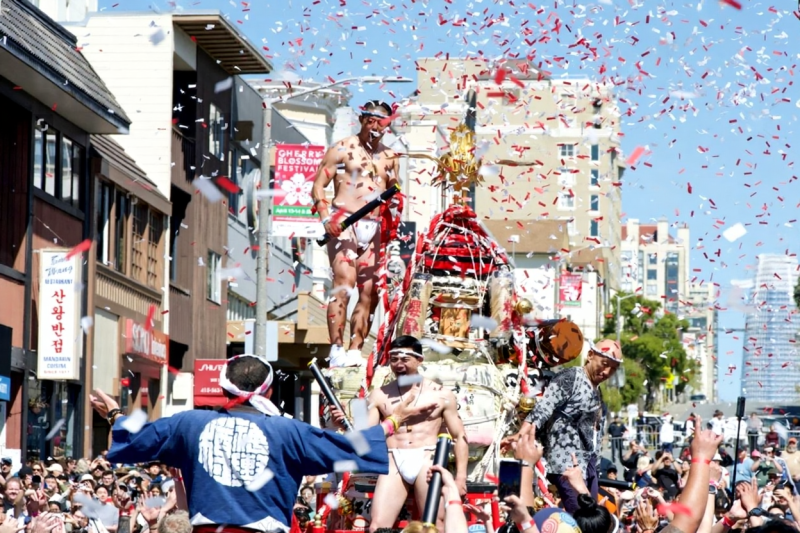
The festival’s crown jewel is the Grand Parade, which closes out the final Sunday of the event. This is a spectacular procession that starts near City Hall and travels up Post Street into the heart of Japantown. You’ll see everything from taiko drummers and dancers to the newly crowned Cherry Blossom Queen and her court—a leadership program for young Japanese American women.
The parade’s incredible finale is the Taru Mikoshi. This is a massive, ornate portable shrine weighing over 1,000 pounds, carried on the shoulders of over 100 chanting participants. It’s a powerful, energetic display of community spirit and a must-see spectacle.
Your Pre-Trip Checklist
A little preparation goes a long way in San Francisco.
Dress in Layers: This is the golden rule of SF. A chilly, foggy morning can become a sunny, breezy afternoon in an instant. A fleece or mid-layer under a windbreaker is the standard local uniform for a reason.
Comfortable Shoes: You will be walking. A lot. The hills are no joke. This is not the time to break in new shoes.
Portable Power Bank: Between navigating, taking photos, and using transit apps, your phone battery won’t stand a chance. A power bank is essential.
Cash: While most vendors take cards, the lines for ATMs are long and the smaller food stalls are often cash-only.
The Cherry Blossom Festival is one of the city's signature spring events. For a complete look at what's happening year-round, our complete guide to San Francisco Holidays: Bay Area Buzz is the essential next read for planning a trip around the city's top seasonal events.
An Unforgettable Bloom
San Francisco’s cherry blossom celebration offers something truly special: a world-class cultural event with the heart of a neighborhood block party. It’s a chance to not only witness the stunning beauty of spring but to feel the powerful spirit of a community that has refused to be erased.
By timing your visit strategically, knowing where to find your own quiet corner, and embracing the city’s public transit, you can bypass the stress and create a truly unforgettable memory. You’re no longer just a tourist; you’re an insider, ready to experience this beautiful and meaningful spectacle to its fullest.
Capture the Perfect Bloom
You’re going to take hundreds of photos of the cherry blossoms—don’t let them get lost on your camera roll. Our free collection of Travel Lightroom Presets is designed to make your photos pop with just one click. Transform your shots of the delicate pink petals and vibrant festival scenes into professional-quality images you’ll be proud to share.
Frequently Asked Questions (FAQ)
When is the absolute best time to see the cherry blossoms in San Francisco? While the festival is in mid-to-late April, the "best" time depends on what you want to see. For the most ethereal, classic blossoms in a garden setting, aim for the first week of April at the Japanese Tea Garden. For the full, vibrant festival experience with the fluffy Kwanzan blossoms, the second weekend of the festival is your best bet.
Is the Northern California Cherry Blossom Festival free? Yes, attending the festival in Japantown, including all the stage performances and watching the parade, is completely free. You will need to pay for food, drinks, and any items from craft vendors. Note that visiting the Japanese Tea Garden in Golden Gate Park requires a separate admission fee.
How much time should I budget for the festival? If you plan to eat, watch a few performances, and browse the stalls, give yourself at least 3-4 hours in Japantown. If you want to see the parade, plan for that to take an additional 2 hours of your day.
Is the festival kid-friendly? Absolutely. Kids love the energy, the food, and the parade. There are also often hands-on cultural activities like origami folding. However, the crowds can be overwhelming for small children, so a weekday visit or arriving right at the opening on a weekend is recommended.
Can I see cherry blossoms in San Francisco outside of Japantown and Golden Gate Park? Yes! Besides our "secret spot" at the Palace of Fine Arts, you can often find beautiful blooming trees scattered in residential neighborhoods like the Richmond and Sunset districts. Keep your eyes peeled in late March and April—you’ll be surprised where they pop up.
Don't Miss Out! Subscribe for Exclusive Content
SubscribeComments 0
No comments yet
Be the first to share your experience!
Dont Miss Out! Subscribe for Exclusive Content

Halloween SF: Haunts Without Horrors

SF Festivals: 7 Must-See Lineups

Christmas SF: Lights & Wharf Wonders

SF Pride: 6 Route & Party Hacks

Chinese New Year SF: Parade Essentials

San Francisco Holidays: Bay Area Buzz
5 Things to Never Do When Traveling Alone
TrekGuider @trekguider
Let’s be honest: society tells women two conflicting stories about traveling alone. On one hand, you have the romanticized, 'Eat, Pray, Love' fantasy of a life-changing journey of self-discovery. On the other, you have a much darker, fear-based narrative—a constant, insidious whisper of warnings about dark alleys and stranger danger. This conflict creates a paralyzing anxiety, trapping would-be adventurers between a deep desire for freedom and a legitimate concern for their well-being. The constant worry about solo travel women safety can feel so overwhelming that the dream of an independent trip starts to feel reckless or irresponsible.
But what if that choice—between being adventurous and being safe—is a false one? What if safety isn't the opposite of adventure, but the very foundation that makes true adventure possible? Confident and secure solo travel is not about eliminating risk; it’s about mastering it. It requires transforming abstract fear into a series of manageable, concrete challenges that you can systematically overcome with the right knowledge and preparation. This guide is your strategic playbook. Bridging the gap between fear and freedom, it combines official expert advice with the hard-won wisdom of experienced travelers. For the bigger picture on planning your first independent journey, explore . This article, however, is your deep dive into the specific art of navigating the world as a strong, savvy, and secure solo female traveler.
Your Pre-Flight Mission: Master Your Destination Before You Go
Incredible journeys are born from careful preparation. The most impactful steps you take to ensure your safety happen long before you ever pack your bag. This proactive phase is the single greatest antidote to travel anxiety, systematically dismantling worries by replacing them with a robust, well-researched plan.
Step 1: Research is Your First and Best Line of Defense
Knowledge is power, and in the context of solo travel, it is your primary shield. A multi-pronged research strategy empowers you to make informed decisions, transforming the unknown into the familiar.
Official Advisories: Your first, non-negotiable stop is the U.S. Department of State's travel advisories. Understand their four-level system (Level 1: Exercise Normal Precautions, Level 2: Exercise Increased Caution, Level 3: Reconsider Travel, Level 4: Do Not Travel). This provides the official, high-level safety assessment for any country you plan to visit.
Cultural Norms: Go beyond government warnings and dig into local customs. Researching appropriate dress codes and social etiquette is not just a sign of respect; it's a key safety strategy. Blending in helps you avoid unwanted attention and navigate social interactions more smoothly.
Location-Specific Vetting: Don't stop at the country level. True safety planning is granular. You must research specific cities and, even more importantly, individual neighborhoods. A city can be generally safe, but have pockets of high crime.
Pro-Tip: Adopt this three-tier research process for total clarity.
Macro-Level (The Official View): Start with the U.S. State Department for the non-negotiable baseline.
Meso-Level (The Community View): Move to community sources like the Solo Female Travelers Club forums or trusted travel blogs for recent, on-the-ground experiences.
Micro-Level (The Street View): Finally, get hyper-local. Use Google Maps Street View to virtually "walk" around a potential hotel. Check local news sites for recent incidents and browse local subreddits for candid discussions about neighborhood safety.

Step 2: Choosing Your Safe Haven: A Masterclass in Vetting Accommodations
Your accommodation is more than just a place to sleep; it’s your secure base of operations. Treat its selection with the seriousness it deserves. While it can be tempting to book the cheapest option, a slight increase in your budget can yield a massive return in safety and peace of mind. Prioritize properties with 24-hour reception, a critical feature for late-night arrivals or if you find yourself in an emergency and need immediate assistance.
When analyzing reviews, learn to read between the lines. Use the search function to look for keywords like "solo female," "safe at night," "helpful staff," and "secure lockers." These comments provide invaluable insights from travelers who share your priorities.
Finally, protect your privacy during the check-in process. When registering, use only your first initial and last name. Avoid titles like "Ms." or "Mrs." that advertise your gender and marital status. It's a small, simple step that prevents staff or other guests from making assumptions about you being alone.
Step 3: Your At-Home Support Network: The Lifeline You Set Up in Advance
Traveling solo never means being completely isolated. A pre-planned, strong communication strategy is a crucial safety net that provides peace of mind for both you and your loved ones back home.
The Itinerary Share: Before you leave, share a comprehensive copy of your itinerary with a trusted friend or family member. This should include flight numbers, hotel names, addresses, and phone numbers, and a general outline of your plans.
The Power of Live Location: Leverage modern technology for an added layer of security. Apps like Apple's "Find My" or the location-sharing feature in WhatsApp allow you to share your real-time GPS location with a trusted contact for the duration of your trip.
Official Registration: Enroll in the U.S. Department of State's free Smart Traveler Enrollment Program (STEP). This service allows the local U.S. embassy to send you security alerts and helps them locate you in an emergency. It's the official, government-backed component of your support network.
Street Smarts on the Ground
Once your trip begins, safety becomes an active practice. It's about conscious behavior, unwavering situational awareness, and projecting a quiet confidence that makes you a less appealing target for opportunistic individuals.
The Golden Rules of Solo Travel Women Safety: 5 Things to Never Do
This is your non-negotiable list of on-the-ground rules, learned from the collective wisdom of thousands of experienced solo female travelers.
NEVER Advertise You're Alone: Master the art of the "white lie." If a stranger's questions make you uncomfortable, mentioning a husband who is "meeting you shortly" or a friend who is "waiting at the hotel" is a highly effective way to shut down unwanted advances. It’s not about shame; it’s about smart information management.
NEVER Bury Your Head in Your Phone: Project confidence, even if you don't feel it. Walk with your head up, shoulders back, and make brief, deliberate eye contact. If you need to check a map, step into a shop or cafe rather than stopping in the middle of a busy sidewalk, which marks you as a lost and distracted tourist.
NEVER Let Politeness Override Your Instincts: This is the most critical rule. Women are often socialized to be polite, but your safety is far more important than a stranger's feelings. If someone or something feels wrong, it is wrong. Trust that gut feeling. Use a firm voice, direct language ("Leave me alone"), and remove yourself from the situation immediately. Being safe is more important than being polite.
NEVER Be Out of Touch: Your communication plan isn't a one-time setup; it's a daily practice. A quick "Goodnight" text or email to your at-home contact maintains that vital link and ensures someone knows you're safe at the end of each day.
NEVER Do Abroad What You Wouldn't Do at Home: This is a simple but powerful gut-check. If you wouldn't walk down a dark, unfamiliar alley alone at 3 AM in your own city, don't do it in Rome or Bangkok. Your common sense is one of your most valuable travel companions.
Mastering Movement: Transportation Safety for the Solo Traveler
How you get from point A to point B is a frequent point of vulnerability. Understanding the hierarchy of safe options is key.
The Gold Standard (App-Based Ride-Shares): Services like Uber and Lyft offer unparalleled safety features. The digital record of the ride, driver identification, PIN verification, and real-time trip sharing create a powerful digital paper trail that deters bad behavior.
Official Taxis: If using a taxi, ensure it is a licensed, reputable one. Look for official markings and a visible meter. Be especially wary of unlicensed "fake taxis," a common scam at airports.
Public Transit: While often practical, public transport requires heightened awareness. Avoid completely empty train cars, which increase isolation, as well as overly crowded ones, which are ideal for pickpockets.
The Hard No: There is no ambiguity here. Do not hitchhike. Ever.
Socializing and Nightlife: How to Stay Safe While Having Fun
Experiencing local culture often includes nightlife, but it demands extra vigilance. One of the biggest concerns is drink spiking. Follow these steps without fail: never accept a drink from a stranger, always watch your drink being made, and physically cover the top of your glass with your hand when you're not sipping it.
Above all, continue to trust your gut. If you get a strange vibe from a new acquaintance, that's all the reason you need to politely excuse yourself and leave. If you ever start to feel strange or unwell in a way that seems inconsistent with your alcohol consumption, immediately inform a trusted person (like a bartender), call for local emergency help, and, if abroad, contact the nearest U.S. embassy.
A Nuanced Guide to Solo Travel Women Safety in the USA
One of the biggest mistakes in travel planning is treating the United States as a single, homogenous entity. Safety in the USA varies dramatically by region, state, city, and even by neighborhood. As one traveler wisely noted, "Do research on specific neighborhoods/towns you want to visit rather than the country as a whole."
The USA is Not a Monolith: A Framework for Regional Risk Assessment
Understanding the context of your environment is critical. The risks in a major city are different from those in a remote national park.
Urban vs. Rural vs. Wilderness: Major cities like New York or Chicago present higher risks of theft and scams, but offer the "safety in numbers" of bustling streets. Rural or wilderness areas, like national parks, involve risks of isolation, wildlife encounters, and the need for self-sufficiency.
State-by-State Variation: Safety metrics can vary wildly. States like Vermont and Maine consistently rank as among the safest, while certain neighborhoods within large cities require a much higher degree of caution, especially after dark.
Pro-Tip: Use this four-step USA Location Vetting Checklist for any domestic trip. 1) Check City-Level Crime Statistics: Look up official data on city police department websites or the FBI's crime data explorer. 2) Use Neighborhood-Specific Tools: Websites like NeighborhoodScout offer detailed local data. Also, use the local knowledge on forums like Reddit (e.g., asking about a specific block on r/AskNYC). 3) Read Local News: A quick Google News search for the neighborhood can reveal any recent patterns of crime. 4) Analyze Accommodation Reviews: Look for reviews that specifically mention feeling safe walking in the immediate area at night.
Practical Scenarios: City Streets, National Parks, and Road Trips
Major Cities (e.g., New York, San Francisco): Understand the rhythm of the city. Subways are generally safe during the day but require more caution late at night. Be aware of common urban scams, like someone trying to "help" you with a broken ATM.
National Parks: The primary risks here are environmental. Always check the weather forecast, carry more water than you think you'll need, be aware of local wildlife, and inform a park ranger or friend of your hiking plans and expected return time.
The Great American Road Trip: Secure your vehicle. Never leave valuables in plain sight, especially at trailheads or in busy city centers. Be cautious at remote, unlit rest stops at night; well-lit, busy truck stops are often a safer choice.
Your Emergency Action Plan & Toolkit
Planning for the worst isn't about fear; it's about building resilience. Knowing exactly what to do in a crisis reduces panic and leads to better outcomes.
Your Step-by-Step Emergency Response Plan
If you are in immediate physical danger, follow these steps in order:
Attract Attention: Get loud. Yell, scream, blow a whistle, or use a personal safety alarm. Creating a disturbance is your best defense.
Contact Local Authorities: In the United States, the emergency number is 911. In Europe, it's 112, and in the UK, it's 999. Save the correct number in your phone.
Contact the U.S. Embassy: If you are abroad, the nearest U.S. embassy or consulate is a critical resource for American citizens who are victims of crime.
Seek Medical Attention: In the event of an assault, seeking immediate medical care is crucial. This is vital for your health and for the collection of potential evidence.
Contact Support Networks: Organizations like the Rape, Abuse, and Incest National Network (RAINN) have 24/7 hotlines and offer confidential support, no matter where you are.

At-a-Glance Emergency Resource Directory
The World is Ready For You. Are You?
Safe solo travel women safety is not about living in a bubble of fear. It is the exact opposite. It's about having the confidence and competence to step out of your comfort zone, armed with the knowledge that you are prepared, aware, and fully capable of handling whatever comes your way. Through diligent research, unwavering trust in your instincts, and a commitment to smart, conscious decision-making, you transform yourself from a potential target into a savvy, empowered world traveler. The world is vast and beautiful, and it is waiting for you to explore it—safely, and on your own terms.
We encourage you to build this community of empowered travelers. Share your own hard-won safety tips in the comments below, and please, share this article with any woman in your life who dreams of a solo adventure.
Read the full guide: Anxious to Adventurous: The Ultimate Guide to Solo Travel Confidence
Don't Miss Out! Subscribe for Exclusive Content
SubscribeComments 0
No comments yet
Be the first to share your experience!
Dont Miss Out! Subscribe for Exclusive Content

How to Avoid Travel Scams: A Global Guide

Is Public WiFi Safe? How to Protect Your Data Abroad

A Woman's Guide to Safe Travel: 10 Critical Tips

7 Hotel Safety & Security Tips for Peace of Mind

9 Beach Safety Tips That Could Save Your Life
