
Christmas SF: Lights & Wharf Wonders

TrekGuider @trekguider
Are you dreaming of a Christmas getaway filled with postcard-perfect lights and unique holiday cheer, but feel paralyzed by the options in a city as dynamic as San Francisco? You want to soak in the magic, but you’re haunted by the fear of missing the best spots, getting stuck in tourist traps, or wasting your precious vacation time navigating crowds instead of making memories. The anxiety of a poorly planned trip can extinguish the holiday spirit before it even has a chance to ignite.
Imagine the frustration: you’ve spent hours researching, only to end up with a mediocre view of a famous light display, shoulder-to-shoulder with a thousand other people. You risk missing out on the distinctly San Franciscan holiday traditions—the ones that fuse historic charm with stunning coastal beauty—and settling for a generic experience you could have had anywhere. Without a clear strategy, your festive adventure can devolve into a logistical nightmare.
This is your definitive guide to avoiding that fate. We’ve forged the ultimate itinerary, focusing laser-like on the city’s most dazzling illuminations and waterfront spectacles. This deep dive will ensure your Christmas in San Francisco is not just a trip, but a masterfully curated collection of magical moments. Think of this as your specialist mission. After getting the high-level overview of the city's entire festive calendar in our guide to San Francisco Holidays: Bay Area Buzz, you're now ready for the deep dive into the twinkling heart of a Bay Area Christmas.

Union Square: The Epicenter of Christmas in San Francisco
Forget what you think you know about a California Christmas. In San Francisco, the holiday season doesn't just arrive; it makes a grand entrance, and Union Square is its glittering, floodlit stage. The air here crackles with a unique energy, where the city’s high-fashion pulse is supercharged by a symphony of lights, music, and palpable joy. This is the undeniable starting point for any holiday tour, where the city’s most iconic traditions come to life.
The Macy's Great Tree: A Towering Beacon of Holiday Joy
Dominating the square like a festive titan, the Macy's Great Tree is the city's official holiday centerpiece. This colossal tree, soaring over 80 feet, is a spectacle of sustainability and sparkle, adorned with tens of thousands of energy-efficient LED lights and hundreds of shimmering ornaments. Its annual lighting ceremony in late November is a beloved ritual that officially flips the switch on the holiday season in San Francisco, drawing enormous crowds for an evening of live music and celebration.
Pro-Tip: For a truly breathtaking, crowd-free view, head inside the adjacent Macy's. The upper floors offer a panoramic perspective of the entire square. The best-kept secret is the view from the Cheesecake Factory on the 8th floor, where you can gaze down upon the tree and ice rink like a VIP.

Ice Skating Under the Lights: A Classic Winter Tradition
There's a certain magic in gliding across the ice under the watchful gaze of a giant Christmas tree, with the city's skyscrapers twinkling all around you. The Safeway Holiday Ice Rink in Union Square delivers this quintessential winter experience with a distinctly urban flair. Open from early November through mid-January, the rink offers 60-minute sessions that are pure, unadulterated holiday fun.
The atmosphere is electric, fueled by a soundtrack of holiday classics and the collective laughter of skaters. Whether you're executing perfect figure eights or clinging to the wall for dear life, lacing up your skates here is a non-negotiable part of the San Francisco Christmas experience. The evening sessions are especially enchanting, as the city lights create a dazzling, reflective canopy over the ice. Book your tickets online well in advance to secure your spot.
Window Shopping & Festive Displays: A Stroll Through Holiday Artistry
Union Square is San Francisco's luxury shopping heartland, and during Christmas, the storefronts become captivating galleries of festive art. Retailers like Saks Fifth Avenue, Neiman Marcus, and Tiffany & Co. engage in a friendly competition to create the most jaw-dropping holiday window displays. A simple stroll around the square becomes a visual feast of complex designs, whimsical animatronics, and brilliant lights.
The most heartwarming tradition, however, belongs to Macy's. For decades, their partnership with the SF SPCA has filled their windows with adorable, adoptable puppies and kittens playing in festive settings. It’s a guaranteed dose of holiday cheer that also helps countless animals find their forever homes.
Fisherman's Wharf & The Piers: Coastal Christmas Charm
If Union Square is the city's elegant holiday ballroom, Fisherman's Wharf is the lively waterfront party. Here, the festive spirit is infused with the salty air of the bay, offering a uniquely San Franciscan take on Christmas where twinkling lights meet maritime history.
PIER 39's Dazzling Christmas Tree & Sea Lion Spectacle
Giving the downtown tree a run for its money, PIER 39 erects its own majestic, 60-foot Christmas tree right at the entrance. This tree is the star of a nightly, synchronized light-and-music show that runs every half hour, bathing the pier in a dynamic kaleidoscope of color. It’s a fun, high-energy spectacle perfect for families.
What makes this experience uniquely San Franciscan is the audience: the famous sea lion colony barking from K-Dock, providing a chaotic, natural soundtrack. This quirky juxtaposition of organized holiday cheer and wild nature is pure San Francisco.
Ghirardelli Square: Chocolate, Lights, and Historic Splendor
A short, scenic walk from the main wharf leads you to the historic Ghirardelli Square, which offers a more refined and cozy holiday atmosphere. The beautiful brick architecture of the former chocolate factory is elegantly draped in lights, with a grand Christmas tree anchoring the main plaza. The iconic, glowing Ghirardelli sign serves as a beacon over the bay.
A visit here is an assault on the senses in the best possible way. The aroma of warm chocolate hangs in the air, drawing you into the Ghirardelli Chocolate Marketplace for a world-famous hot fudge sundae or a rich, soul-warming hot cocoa. It’s the perfect place to refuel and pick up beautifully packaged holiday gifts.

The Illuminated Boat Parade: A Floating Festival of Lights
For a truly unforgettable waterfront event, align your visit with the Fisherman's Wharf Lighted Boat Parade. As one of the oldest and largest in the country, this annual tradition is a spectacular display of maritime merriment. A fleet of fishing boats, sailboats, and private yachts, all decked out in elaborate holiday lights, parade along the waterfront from PIER 39 past the Marina Green. The sight of these floating light sculptures against the dark waters of the bay, with the Golden Gate Bridge in the distance, is pure magic. Prime viewing spots can be found at Aquatic Park, PIER 39, and anywhere along the Marina Green.
Beyond the Hubs: More Dazzling Christmas in San Francisco Lights
While the main hubs are essential, some of the city's most enchanting displays are found elsewhere. San Francisco is a city of neighborhoods, and venturing out reveals a more local and often more creative side of the holiday season.

Golden Gate Park's "Entwined": A Forest of Light
For a holiday experience that speaks to San Francisco's identity as a hub of art and technology, you must visit "Entwined" in Golden Gate Park. Each year, Peacock Meadow is transformed into an otherworldly forest of light by artist Charles Gadeken. This immersive, large-scale installation features towering, tree-like sculptures and geometric shapes illuminated by thousands of color-changing LEDs. Wandering through this dreamlike landscape as the lights shift through mesmerizing patterns is a captivating experience that feels a world away from the urban bustle.
The Fairmont Hotel's Giant Gingerbread House: A Sweet Spectacle
Ascend to the top of Nob Hill to witness one of the city's most beloved—and delicious—holiday traditions. The historic Fairmont San Francisco constructs a two-story, life-sized gingerbread house in its grand lobby. Made from thousands of real gingerbread bricks, gallons of royal icing, and a dizzying amount of candy, this edible marvel is a feast for the senses. You can even walk through it, breathing in the sweet, spicy aroma of gingerbread. The hotel's opulent lobby, with its own massive Christmas tree, completes the fairy-tale setting.
Neighborhood Lights: Discovering Local Gems
To truly capture the spirit of Christmas in San Francisco, take a tour of the residential neighborhoods where locals pour their hearts into decorating.
Tom and Jerry's House (3650 21st St.): A legendary, over-the-top display in the Castro featuring a giant tree, massive stockings, and a working ski lift for dolls.
45 Upper Terrace: Another famous private home known for its dazzling, multi-story cascade of lights and festive figures.
Sea Cliff: For a more elegant and professionally curated experience, a drive through this affluent neighborhood offers stunning views of stately homes adorned in sophisticated holiday decor.

Planning Your Perfect San Francisco Christmas Adventure
A little strategic planning will ensure your holiday trip is seamless and stress-free, allowing you to focus on the magic.
Getting Around: Mastering the City's Grid
San Francisco is famously compact, but its hills are no joke. Public transportation is your greatest asset.
Muni System: The city's network of buses and historic streetcars can get you almost anywhere. The F-line streetcar offers a wonderfully scenic route along the waterfront.
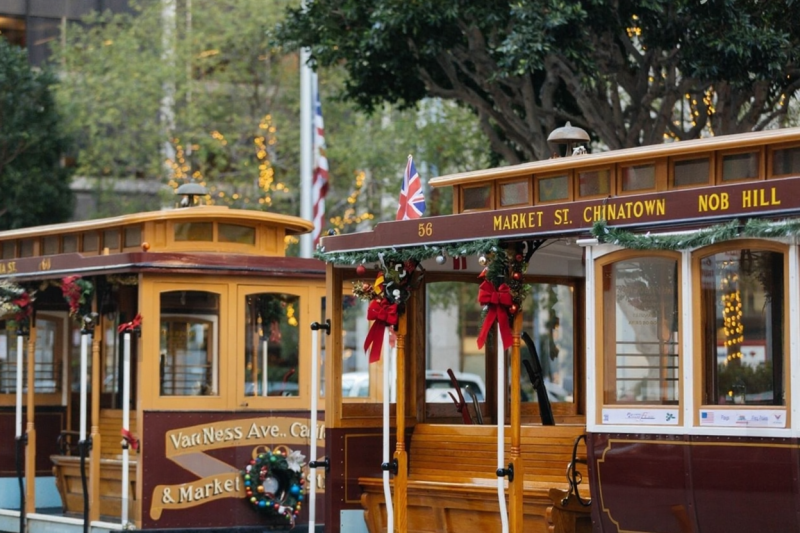
Cable Cars: While more of a moving landmark than practical transport, a ride on a festively decorated cable car is an iconic experience. Just be prepared for long lines.
Walking: The best way to soak in the details of Union Square and the Wharf. Wear your most comfortable shoes—you'll thank yourself later.
What to Pack: The Art of Layering
San Francisco's winter weather is a master of disguise. Mild sunshine can give way to bone-chilling wind and fog in an instant. The golden rule is to dress in layers. A base layer, a sweater or fleece, and a windproof/waterproof jacket will serve you well. A hat and gloves are essential for evenings by the bay.
Traveling with family adds another layer of complexity to packing and planning. The journey itself can be the most daunting part of a family vacation. To ensure your trip to the Bay Area starts smoothly, we’ve created the ultimate resource for parents. Make your travel day as joyful as your destination with our Stress-Free Flying with Kids Guide.
Your Unforgettable San Francisco Christmas Awaits
From the colossal, glittering tree in Union Square to the salty, sea-lion-serenaded festivities at Fisherman's Wharf, a Christmas in San Francisco is an experience that engages all the senses. You are now armed with the insider’s map to the city’s most brilliant lights, cherished traditions, and unique coastal wonders. You are empowered to craft a holiday itinerary filled with genuine magic and unforgettable memories, far from the generic tourist trail.
This deep dive into San Francisco's festive glow is just one chapter in the great American holiday story. The entire country is a mix of incredible celebrations, each with its own unique flavor. To continue your journey and plan your next great adventure, explore our comprehensive Travel Guide.
Don't Miss Out! Subscribe for Exclusive Content
Subscribe


Comments 0
No comments yet
Be the first to share your experience!
Dont Miss Out! Subscribe for Exclusive Content

San Francisco Cherry Blossoms: A Local's Guide to the Blooms


Halloween SF: Haunts Without Horrors

SF Festivals: 7 Must-See Lineups

SF Pride: 6 Route & Party Hacks

Chinese New Year SF: Parade Essentials

San Francisco Holidays: Bay Area Buzz
Solo Travel for Men: An Honest Guide to the Road Less Traveled
TrekGuider @trekguider
You feel that pull, don't you? It's the spark you get from a photo of a rugged coastline or a bustling foreign market—the call to adventure, to test your limits, and see the world on your own terms. But then the "what ifs" rush in. Are the logistics too complicated? Will it be lonely? Is it weird to travel by yourself? This guide is here to tell you those fears are normal, but they shouldn't be the reason you stay home. This is your definitive playbook for planning and executing your first incredible solo trip.
This hesitation is the silent thief of profound, life-altering experiences. It keeps you anchored in the familiar while a world of opportunity for growth, resilience, and radical self-discovery passes you by. Every year you put it off is a year you don't learn what you're truly made of when no one else is around to rely on. The comfort zone, once a safe harbor, slowly becomes a cage.
While the ultimate goal for many is creating unforgettable memories with loved ones, a journey of self-discovery through solo travel can be the most profound preparation. It builds the confidence and worldview that enriches every future trip, including those you'll find in Family Travel Ideas: The 2026 Guide to Unforgettable Trips.
Let's cut through the noise. This isn't another blog post filled with vague platitudes. This is an operational playbook, a mission briefing for one of the most rewarding journeys you'll ever undertake. We will dismantle every one of your concerns and equip you with the tools, tactics, and confidence to take that first monumental step. By the end of this guide, the idea of traveling alone won't be an intimidating fantasy; it will be your next actionable, exciting mission.

Why Going It Alone is a Modern Rite of Passage
In our day-to-day lives, men are often slotted into specific roles: the provider, the leader, the planner, the rock. These roles, while important, can also be limiting. Solo travel is a powerful antidote, a hard reset that strips away these external expectations and forces you to confront a more fundamental question: Who are you when no one is watching? The benefits aren't just about cool stories; they are tangible upgrades to your character.
Radical Self-Reliance: When you're alone in a new country and you miss the last train, there's no one to turn to for a solution. You have to figure it out. This isn't a hypothetical exercise; it's a real-time test of your problem-solving skills. You learn to trust your own judgment, navigate ambiguity, and find solutions under pressure. This builds a deep, unshakable confidence that permeates every other area of your life.
The Power of Decisive Action: At home, decisions can be made by committee. On the road, you are the committee. Where to eat, what to see, when to splurge, when to save—every choice is yours. This constant cycle of decision and consequence sharpens your instincts and teaches you to be decisive, cutting through the paralysis of overthinking.
A Hard Reset for the Mind: Routine is the enemy of growth. Solo travel is the ultimate pattern interrupt. It forces you out of your physical, mental, and social comfort zones, exposing you to new perspectives, cultures, and ways of thinking. This novelty stimulates your brain, fostering a level of creativity and open-mindedness that's difficult to achieve when you're stuck in a rut.
Forging Genuine Human Connection: Traveling with a partner or group can create a social bubble. When you travel alone, you are more approachable and more motivated to connect with others. These interactions—with fellow travelers in a hostel common room, a local shopkeeper, or a guide—are often more authentic and memorable. You learn to listen more and connect with people from vastly different backgrounds, building empathy and social skills.

A Step-by-Step Playbook for Launching Your Solo Journey
The biggest hurdle isn't the cost or the time off; it's inertia. Faced with a world of options, it's easy to get stuck in the planning phase forever. This playbook is designed to break that inertia and propel you from your couch to the boarding gate.
Step 1: Define Your Mission. What Kind of Solo Trip Are You After?
Before you look at a map, look in the mirror. Why are you doing this? Your motivation should define your destination.
The Recharge: Is the goal to decompress and escape the daily grind? You're looking for low-stress, high-comfort environments. Think a quiet coastal town in Portugal, a laid-back island in Thailand, or a cabin in a national park. The mission is relaxation, not a logistical marathon.
The Skill Acquisition: Do you want to learn something new? Pick a place that's a hub for that skill. Head to Costa Rica to learn to surf, to Chiang Mai for a Thai cooking course, or to the Alps for an introductory mountaineering class. This gives your trip a clear purpose and a built-in social structure.
The Frontier Test: Is this about pushing your limits and seeing what you're made of? This calls for a more adventurous destination. Consider trekking in Patagonia, motorbiking through Vietnam, or exploring the cultural depths of Colombia. These trips build maximum resilience.
Step 2: Choose Your Destination
Your first solo trip should be a win. It's about building confidence, not testing your absolute limits. Here are three archetypes for a successful first mission:
The Easy-Win (English-Speaking & High-Infrastructure): These are destinations where the learning curve is gentle. Think Ireland, Scotland, Australia, or New Zealand. The lack of a language barrier removes a major layer of stress, and the well-trodden tourist paths mean logistics are straightforward. You can focus on the experience of being alone without battling constant communication challenges.
The Adventure Hub (Activity-Focused): If your goal is to be active, choose a place known for it. The national parks of the Western USA for hiking, the mountains of British Columbia for biking, or Queenstown, New Zealand for adrenaline sports. These places are full of other active, often solo, travelers, making it easy to meet like-minded people.
The Backpacker's Trail (Social & Budget-Friendly): Southeast Asia (Thailand, Vietnam) or parts of South America (Peru, Colombia) are legendary for a reason. They offer an incredible value for money and a built-in social infrastructure of hostels, tours, and transportation that caters specifically to independent travelers. It's almost impossible not to meet people.
Step 3: The Budget
Your budget dictates your trip's style and duration. Be realistic and thorough. A well-structured plan, perhaps organized with a Travel Itinerary Template, is your best friend here.
Big Ticket Items: Start with the non-negotiables: flights and accommodation. Use tools like Google Flights and Skyscanner to track prices. For lodging, hostels are the most budget-friendly and social option, while private rooms on Airbnb or budget hotels offer more solitude.
Daily Expenses: Research the average daily cost in your chosen destination using sites like Numbeo. This includes food, local transport, and activities. A good rule of thumb is to estimate this and then add a 20% buffer.
Contingency Fund: This is non-negotiable. Have access to an extra $500-$1000 for emergencies—a missed flight, a medical issue, or a lost phone. This isn't for souvenirs; it's your get-out-of-jail-free card.
Pro-Tip: Always carry a portable power bank. A dead phone in an unfamiliar city isn't just an inconvenience; it's a safety risk. It’s your map, translator, and lifeline. Charge it religiously every night.
Step 4: Packing
Overpacking is a rookie mistake. Every item you bring is something you have to carry. The goal is to be prepared, not to bring your entire apartment.

The Right Bag: A travel backpack (40-50L) is far more versatile than a rolling suitcase. It forces you to be disciplined and can handle cobblestone streets, crowded trains, and hostel staircases with ease.
The Clothing Trinity: Pack items that are versatile, quick-drying, and layerable. Merino wool is the gold standard for travel clothing; it's temperature-regulating, odor-resistant, and comfortable. Aim for a week's worth of clothes and plan to do laundry.
3-4 merino wool t-shirts/henleys
1-2 pairs of versatile travel pants (not jeans)
1 pair of shorts (if climate appropriate)
1 packable rain jacket
1 mid-layer fleece or hoodie
4-5 pairs of wool socks and underwear
Essential Gear:
Packing cubes to organize everything.
A quick-dry travel towel.
A universal power adapter.
A basic first-aid kit with pain relievers, blister care, and any personal medications.
A padlock for hostel lockers.
Your Free Toolkit for Smarter Packing
Packing light is a skill. Our free How to Pack Light Guide is a masterclass in efficiency, showing you exactly how to fit everything you need into a single carry-on. Download it now and transform the way you prepare for any trip.
Tactics for Mastering the Solo Experience
Planning is only half the battle. Thriving on the road requires a specific mindset and a set of practical skills. This is where the real growth happens.
Neutralizing the "Big Three" Anxieties of Solo Travel for Men
Let’s address the elephants in the room head-on. These are the primary concerns that hold men back, and each one has a practical solution.
The Fear of Loneliness: This is the most common fear, but it's often misplaced. Being alone is not the same as being lonely.
Stay in Social Environments: Choose hostels with good common areas and organized events (like pub crawls or walking tours). This is the single easiest way to meet other travelers.
Embrace Day Tours: Joining a food tour, a hiking group, or a historical walking tour provides structured, low-pressure social interaction.
Learn a Few Key Phrases: Simply learning "Hello," "Please," and "Thank you" in the local language can break down barriers and make you seem more approachable.
Concerns About Safety: The world is generally safer than the news suggests, but being smart is non-negotiable.
Master Situational Awareness: This is your primary weapon. Constantly run a mental checklist: Where are the exits? Who seems out of place? Walk with purpose and confidence. Avoid flashing expensive electronics or large amounts of cash.
Secure Your Valuables: Keep your passport, extra cash, and credit cards locked in your accommodation. Carry only what you need for the day in a front pocket or a secure bag. Never put your wallet in your back pocket.
Inform Someone: Share your itinerary with a friend or family member back home and check in regularly.
Trust Your Gut: If a situation or a person feels off, it probably is. Remove yourself from the situation immediately. Don't worry about being polite; your safety is your only priority.
The Social Stigma (Is it "Weird"?): Let's be blunt: No one cares. The idea that it's strange for a man to travel alone is a self-imposed mental barrier. In the travel world, it's completely normal. You will see hundreds of other people doing the exact same thing.
How to Meet People Without Being Awkward
The Common Room is Your Stage: In a hostel, the common area is designed for interaction. Don't just sit in a corner on your phone. Sit at a communal table. A simple "Hey, where are you from?" is the universal icebreaker.
Ask for Advice: People love to be helpful. Asking another traveler for a restaurant recommendation is a low-stakes way to start a conversation that can easily lead to "Hey, I was about to head there now, want to join?"
Mastering the Art of Dining Alone: For many, this is surprisingly intimidating.
Sit at the Bar: It's more social and less formal than a table for one. You can chat with the bartender or the people next to you.
Bring a Prop: A book or a journal can make you feel less self-conscious, but try not to hide behind it. Make eye contact and be open to conversation.
Choose Casual Spots: Street food stalls, food halls, and casual eateries are much more comfortable for solo diners than formal restaurants.

Pro-Tip: The "Leading Question" technique is your best conversational tool. Instead of asking a closed question like "Are you having a good trip?" ask an open-ended one like, "What's been the most unexpected thing you've done in this city?" This invites a story, not a one-word answer.
Frequently Asked Questions
What's the best type of accommodation for a first-time solo male traveler?
For maximizing social opportunities and minimizing cost, hostels are unbeatable. Look for ones with highly-rated common areas and organized social events. If you need more privacy and have a larger budget, a private room in an Airbnb or a centrally-located hotel are also great options.
How do I handle eating alone in restaurants without feeling awkward?
Confidence is key. Sit at the bar whenever possible, as it's a more social and casual setting. Choosing less formal spots like food halls or bustling cafes can also feel more comfortable than a quiet, formal restaurant.
Is solo travel for men expensive?
It doesn't have to be. Your biggest expenses will be flights and accommodation. By choosing budget-friendly destinations (like Southeast Asia or Eastern Europe), staying in hostels, and eating like a local, you can travel for a fraction of what a typical resort vacation would cost.
What are some of the safest destinations for a first solo trip?
Countries with a strong tourism infrastructure and low crime rates are excellent starting points. Consider places like Portugal, Ireland, New Zealand, Japan, and South Korea. These destinations offer a great balance of adventure and security.
The Only Thing Left Is to Go
The journey of solo travel for men is far more than a simple vacation. It's a deliberate act of self-investment. It's an opportunity to strip away the noise of daily life, challenge your own preconceived limits, and build a more resilient, resourceful, and worldly version of yourself. The skills you learn are not just travel skills; they are life skills. You will return home not just with photos, but with a quiet confidence that can only be forged in the fires of experience.
The path is laid out. The excuses have been dismantled. The only thing left is to take the first step. Start the research, check the flights, and request the time off. Your adventure is waiting, but it demands that you go out and claim it.

Read the full guide: Family Travel Ideas: The 2026 Guide to Unforgettable Trips
Don't Miss Out! Subscribe for Exclusive Content
SubscribeComments 0
No comments yet
Be the first to share your experience!
Dont Miss Out! Subscribe for Exclusive Content

Ultimate USA Holidays Guide: Top Picks

FTC Affiliate Disclosure Essentials: Stay Compliant as a Travel Creator

Essential Affiliate Tools: From Tracking to Full Optimization

Booking.com Affiliate Program Review: Pros, Cons, and Earnings Potential

Decoding Affiliate Commission Rates: Benchmarks for Travel Creators

Amazon Associates for Travel: Strategies to Maximize Commissions
7 Digital Products That Sell Themselves for Travelers
TrekGuider @trekguider
The creator grind is real. You’re pouring your soul into a travel blog, publishing brilliant content and stunning photos. But the income trickles in, a frustrating mismatch for the mountain of effort you're putting out. Relying on display ads and the occasional affiliate sale feels like a slow, unpredictable climb, leaving you on an income plateau that barely covers your costs, let alone your travel dreams.
You see other creators achieving a level of financial freedom that feels out of reach, and you’re left wondering what secret they know. The path forward is a confusing fog of conflicting advice, and the constant content creation treadmill is exhausting. You’re trading your valuable time and expertise for pennies, leaving you burnt out and questioning if this can ever become a real, sustainable business.
It’s time to stop trading hours for dollars and start building assets. The solution is to ascend the "Monetization Ladder," transforming from a content creator into a true digital entrepreneur by learning how to sell digital products online.
This guide is your playbook. We are breaking down seven proven, high-margin digital product ideas designed specifically for the travel niche—your first step in building a scalable business that works for you, even when you’re not. This is a crucial piece of the puzzle we explore in our ultimate guide to How to Make Money Online: A Creator's Guide for 2026.

Why You Must Sell Digital Products Online
Before diving into what to create, it's critical to understand why this is the single most powerful strategic move for your business. While ads and affiliate marketing have their place, they are fundamentally limited. Digital products, by contrast, offer a level of control and scalability that other models simply can't match. This is the fundamental shift away from the active-income trap of freelance work—where you're constantly trading time for money—to building a portfolio of passive-income assets that work for you around the clock.
The advantages are transformative:
Infinite Scalability: Digital products operate on a "create once, sell forever" model. Whether you sell 10 copies or 10,000, your workload remains the same. There is no inventory to manage and no shipping to worry about.
Exceptionally High Profit Margins: With no manufacturing or distribution costs, the profit margins are extraordinary. Once you recoup your initial time investment, nearly every sale is pure profit.
Full Ownership and Control: When you sell digital products online, you own the entire process. You control the product, the pricing, the marketing, and the customer relationship. You are no longer dependent on an affiliate partner’s commission rates or an ad network's traffic requirements.
Authority and Trust: Creating and selling a high-quality product instantly positions you as an expert. It builds deep trust with your audience, as you are no longer just recommending other people's stuff—you are standing behind your own valuable creation.
The market reflects this opportunity. The e-learning sector alone, a huge component of the digital product world, is projected to surge to an incredible $848 billion by 2030. This isn't a fleeting trend; it's a fundamental shift in how creators build profitable, resilient businesses.

7 High-Margin Digital Products for Travel Creators
But where do you start? The best digital products aren't just random ideas; they are targeted solutions to the most persistent problems your audience faces. Think less about what you can create and more about what your readers desperately need.
Here are seven field-tested ideas that consistently deliver immense value for travelers.
1. The Hyper-Niche eBook Guide
Forget a generic guide to "Italy." The market for successful eBooks is in hyper-specificity. Think "A First-Timer's Foodie Guide to Mexico City" or "A Hiker's 7-Day Guide to the Scottish Highlands." These focused guides solve a precise problem for a well-defined audience, making them an easy purchase. Your first-hand experience is the unique selling proposition that no one else can replicate.
Why it Works: Travelers are drowning in generic information. A curated, expert guide from someone they trust is a valuable shortcut that saves them dozens of hours of stressful research.
Pro-Tip: Include a "digital bonus" to increase perceived value. This could be a printable packing checklist, a list of useful phrases in the local language, or a custom Google Map with all your recommended spots pinned.
2. Customizable Itinerary Templates
One of the biggest pain points for travelers is the planning process itself. Offer a beautifully designed, plug-and-play solution. These aren't just static lists; they are structured planning documents that users can adapt for their own trips. Create them in user-friendly formats like Notion, Trello, Google Sheets, or as a printable PDF.
Why it Works: You are selling organization and peace of mind. A template with built-in budget trackers, booking checklists, and daily planning sheets is an indispensable tool for overwhelmed planners.
Pro-Tip: Create tiered packages. Offer a template for a 3-day weekend, a 7-day week, and a 14-day trip, each at a different price point, to cater to different traveler needs.
3. Interactive Digital Maps
This is one of the easiest and most valuable products to create. Use Google's "My Maps" feature to build a custom map of a city or region, pinning your curated locations: your favorite cafes, hidden-gem restaurants, secret photo spots, and must-see attractions. You then sell access to the map link.
Why it Works: This product is intensely practical. A traveler can open it on their phone in-destination and instantly have your expert recommendations at their fingertips, ready for navigation. It's a perfect, low-cost impulse buy.
Pro-Tip: Bundle your map with a short companion PDF guide that gives a one-paragraph description of why each pinned spot is worth visiting. This adds context and value with minimal extra effort.
4. Lightroom Photo Presets
If you have a distinct photographic style that your audience loves, you can package your editing settings into "presets." These are one-click filters that allow your followers to achieve a similar aesthetic in their own travel photos.
Why it Works: You are selling an aspirational outcome. Your audience wants their photos to look as beautiful as yours, and presets offer an instant, easy way to do that. They are highly scalable and perfect for visually-driven platforms like Instagram.
Pro-Tip: Sell presets in themed bundles. Create a "Moody Mountains" pack, a "Tropical Beaches" pack, or a "European Cities" pack. This allows you to appeal to different types of photographers and increases the average order value.
5. Niche Stock Photo & Video Packs
As a travel creator, your hard drive is filled with thousands of high-quality photos and video clips. These are valuable assets. Curate them into themed bundles and sell them to other creators, small businesses, or marketers who need authentic, royalty-free visual content.
Why it Works: You are saving other professionals time and money. Sourcing authentic, non-generic stock imagery is a constant challenge. A pack of "20 Vertical Videos from Bali" or "50 Photos of Tuscan Sunsets" is a ready-made solution.
Pro-Tip: Focus on a specific visual niche. Instead of generic landscapes, offer packs that capture a certain mood (e.g., "Wanderlust & Adventure") or a specific subject (e.g., "Overhead Food Shots from Around the World").
6. Printable Travel Planners & Journals
While similar to itinerary templates, this product focuses more on the documentation and mindfulness aspect of travel. Create a beautifully designed PDF pack that users can print at home. This can include packing checklists, budget trackers, daily planning sheets, and guided journal prompts.
Why it Works: This appeals to the highly organized traveler who loves the tactile experience of planning and journaling on paper. It helps build anticipation before a trip and serves as a wonderful keepsake after.
Pro-Tip: Market it as part of a "mindful travel" bundle. Include journal prompts that encourage reflection, gratitude, and being present during their travels.
7. Self-Guided Audio Tours
Use your voice and storytelling skills to create a downloadable audio tour. You act as a virtual guide, leading listeners on a walking tour of a specific neighborhood or historical site. The audio file can guide them from point to point, sharing stories, history, and insider tips along the way.
Why it Works: This offers the value of a guided tour with the flexibility for users to go at their own pace. It's a unique and immersive way to experience a destination, guided by a voice they already trust.
Pro-Tip: Partner with a local expert or historian for an interview segment to include in the audio tour. This adds a layer of unique expertise and credibility that makes your product stand out.

From Idea to Income: Your Digital Product Creation Playbook
Having a great idea is only the first step. Creating a high-quality product that people will love involves a structured, multi-phase process.
Step 1: Validate Your Idea (Before You Build Anything)
The biggest mistake new creators make is spending months creating a product no one wants to buy. Validation is non-negotiable.
Listen to Your Audience: Analyze your blog comments, email replies, and social media questions. What destinations do people constantly ask about? What part of the planning process do they find most frustrating? Their questions are your product ideas.
Conduct Keyword Research: Use an SEO tool to check the search volume for terms related to your idea. High search volume for "7-day Japan itinerary" is a strong data signal that a market exists for a guide on that topic.
Analyze Competitors: Find 3-5 similar products. See what they're charging, what they include, and read their reviews. Your goal isn't to copy them, but to identify a gap in the market that your unique expertise can fill.
Step 2: Create Your Content Like a Pro
With a validated idea, it's time to build.
Create a Detailed Outline: A good product flows intuitively. Develop a logical table of contents before you write a single word. This will be your roadmap and ensure you don't miss any crucial information.
Gather Your Unique Assets: Compile your personal notes, journal entries, and high-quality photographs. Your first-hand experience is your most valuable asset and your primary competitive advantage.
Write with Personality: Go beyond just listing facts. Write in your authentic voice. Share anecdotes, insider tips ("skip the line by going at this time"), and vivid descriptions that bring the destination to life. The content must be both inspirational and intensely practical.
Step 3: Design for the Real World (On a Mobile Device)
Your digital guide will almost certainly be used on a smartphone in-destination. A mobile-first design isn't an option; it's essential for the product to be useful.
Prioritize Legibility: Use a clean, simple font of at least 11 points and ensure high contrast between your text and background. Your customer shouldn't have to pinch and zoom to read.
Simplify Navigation: The single most important design element is a hyperlinked Table of Contents at the beginning of the document. This allows users to instantly jump to the section they need with a single tap.
Use the Right Tool: For non-designers, a template-based tool like Canva is the perfect choice. It's built specifically to help you create professional-looking visual documents quickly and efficiently, without the steep learning curve of complex software like Figma or Adobe Illustrator.
Step 4: Price Your Product for Profit
Pricing is one of the most challenging decisions. The most effective strategy for knowledge-based products is value-based pricing. Price your product based on the transformation it provides. If your guide saves a user 20 hours of research, its value is far greater than the software used to create it.
A great starting point is to research comparable products to establish a market range, then price your product based on its unique value. For a first-time, high-quality travel eBook or template bundle, a price point between $19 and $49 is a strong position that communicates value without creating sticker shock.
Your All-in-One Hub for Creation and Commerce
Creating a brilliant product is half the battle; the other half is building a business around it. What if you had a single platform designed not just to sell your products, but to amplify your entire brand as a travel expert?
Welcome to TrekGuider, the ultimate marketplace and ecosystem built for travel creators like you. We handle the complex tech so you can focus on what you do best: creating.
Sell Everything in One Place: List all your digital creations—guides, maps, templates, eBooks, and more—with flexible options for one-time purchases or recurring subscriptions.
Publish and Profit: Don't just sell—build your authority. Publish articles directly on the marketplace to boost your SEO, attract new buyers, and establish yourself as a go-to expert.
Your Personal Creator Page: Claim your customizable landing page—a professional hub to showcase your bio, link your social networks, feature your articles, and display your entire product catalog.
Engage Your Community: With built-in features for donations and subscriptions, your most loyal followers can support your work directly, creating a predictable income stream.
TrekGuider is more than a storefront; it’s a launchpad for your creator business. Join a community of travel experts and unlock the tools you need to grow.
Claim Your Creator Page and Start Selling Today
The Tech & Tools to Sell Digital Products Online
Once your product is created, the next question is distribution. While using a simple e-commerce tool on your own blog is a great start, the real opportunity lies in joining an ecosystem designed to put your work in front of motivated buyers.
This is where a dedicated marketplace like TrekGuider becomes your most powerful asset. Instead of relying solely on your own traffic, you gain access to a platform where passionate travelers are already searching for high-quality guides, maps, and itineraries. It’s a powerful, ready-made sales channel that amplifies your reach from day one. By combining product sales with article publishing, you create a feedback loop: your articles attract new readers, and your creator page converts those readers into customers.

Frequently Asked Questions
1. Why use a marketplace instead of just selling on my own blog?
You should do both! Selling on your blog is great for your existing audience. Listing your products on a marketplace like TrekGuider exposes your work to a brand-new audience of travelers who may not have found your blog otherwise. It's about diversifying your sales channels.
2. How do I build my brand on the TrekGuider platform?
Your personal creator page is your brand's home base. You can customize it with your photo, bio, social media links, and even links to your personal website. More importantly, by publishing high-quality articles on travel topics, you demonstrate your expertise and drive traffic directly to your products and profile.
3. What kind of support is available for creators?
The platform is built on a secure and reliable foundation (using Stripe Connect) to handle all payment processing and digital delivery. As the platform grows, creators can look forward to an expanding set of tools, including advanced analytics, newsletters, and even opportunities for sharing in advertising revenue.
4. Can I sell more than just guides and maps?
Absolutely. The platform is designed for a wide range of digital travel products. In the future, the vision is to expand to include services, event tickets, and even tours, making it a comprehensive solution for the modern travel entrepreneur.
Your Journey to Entrepreneurship Starts Now
Transitioning from a content creator to a business owner is the most empowering step you can take. The path to building a truly profitable and sustainable online business is paved with assets that you own and control. You now have seven concrete ideas and a step-by-step framework to get started. You have the blueprint to sell digital products online and move beyond trading your time for money.
The freedom and scalability you've been dreaming of are not a secret reserved for a select few. They are the direct result of a strategic shift in focus. Choose one idea from this list, start the validation process today, and take the first step toward building a business that funds your life of travel.
Meta Data Suggestions:
SEO Meta Title (58 characters):
7 Digital Products for Travelers That Sell Themselves in 2026
URL Slug:
digital-products-for-travelers
SEO Meta Description (154 characters):
Ready to sell digital products online? Discover 7 high-margin ideas for travel creators, from itinerary templates to photo presets, and start building passive income.
Read the full guide: The Travel Blog Business Plan: How to Make Real Money in 2026
Don't Miss Out! Subscribe for Exclusive Content
SubscribeComments 0
No comments yet
Be the first to share your experience!
Dont Miss Out! Subscribe for Exclusive Content
FTC Affiliate Disclosure Essentials: Stay Compliant as a Travel Creator
Essential Affiliate Tools: From Tracking to Full Optimization

Avoid These 5 Affiliate Landing Page Mistakes for Better Conversions

Affiliate Keyword Research Mastery for Travel Blogs
Booking.com Affiliate Program Review: Pros, Cons, and Earnings Potential