
Solo Travel Seniors Tips: Comfortable Adventures After 50

TrekGuider @trekguider
Are you dreaming of exploring the cobblestone streets of Rome or the vibrant markets of Thailand, but a nagging voice in your head keeps asking, "Is it too late? Is it safe for me to go alone?" You are not alone in feeling this way. For many seniors, the freedom of retirement brings a powerful urge to travel, followed closely by a wave of practical concerns about safety, health, and loneliness. This flood of generic advice online, often aimed at 20-something backpackers, can feel more discouraging than helpful. This guide is here to silence that voice of doubt. We're not just giving you a list of solo travel seniors tips; we're giving you a complete, step-by-step blueprint for transforming apprehension into adventure. This is your practical roadmap to becoming a safe, confident, and empowered senior solo traveler.

Building the Confidence to Go It Alone
Before you book a flight or pack a bag, the most important journey is the one that happens in your mind. Acknowledging your fears is the first step toward conquering them. For many mature travelers, the concerns are not just about logistics but about a deeper sense of vulnerability. Let's dismantle these worries with a new perspective, framing them not as stop signs, but as guideposts for smart preparation.
The Fear of Loneliness
The image of a lonely dinner for one is a powerful deterrent. However, the reality of modern solo travel is far from isolating. The key is to reframe your thinking. You are not "alone"; you are "independent." This is a journey you have gifted yourself, where every decision—from the museum you visit to the time you wake up—is entirely your own. This freedom is a luxury. Remember, solitude can be a profound source of peace and self-discovery, and when you do crave connection, you'll find countless opportunities to engage on your own terms.
The Fear of Safety
It's wise to be cautious, but it's counterproductive to be paralyzed by fear. The 24-hour news cycle can paint the world as a terrifying place, but billions of people live safe, ordinary lives every day. Your strategy is not to build a fortress of fear but to develop a toolkit of awareness. By learning to recognize and avoid common scams, securing your belongings intelligently, and trusting your intuition, you transform yourself from a potential "soft target" into a savvy, confident traveler who is in control of their environment. Many of the safest places for senior solo travel, like Portugal and Japan, have remarkably low crime rates.
The Fear of "Am I Fit Enough?"
Forget the notion that travel must be a whirlwind of non-stop activity. The greatest advantage of traveling solo after 50 is that you set the pace. There is no one to keep up with and no one to impress. If you want to spend an entire afternoon reading at a Parisian café, you can. If you need a mid-day nap to recharge, your schedule allows it. Embracing your own natural rhythm is not a limitation; it's a smarter, more sustainable way to travel that prevents burnout and allows you to truly savor every moment.
A Pre-Trip Checklist for Total Peace of Mind
Confidence is born from competence. There is no greater antidote to pre-travel anxiety than a rock-solid plan that systematically turns "what-ifs" into "I've-got-this." This checklist covers the essential solo travel seniors tips for building an unshakeable foundation for your adventure.

Choosing Your Destination: Prioritize Safety, Accessibility, and Passion
Your first solo trip should be an unequivocal success. Set yourself up for it by choosing a destination that aligns with your needs.
Safety & Infrastructure: Start with countries renowned for safety and excellent tourist infrastructure. Destinations like Iceland, New Zealand, Costa Rica, and much of Scandinavia are popular for a reason. Use resources like the U.S. Department of State's travel advisories to check for any current issues.
Accessibility: Consider the physical demands. Research your target city's topography—are there lots of steep hills? Look into its public transit system. A city known for its walkability and excellent, accessible subway, like Lisbon or Copenhagen, can be far more enjoyable.
Your Passion: This is your trip. Choose a place that genuinely excites you, whether it's the art museums of Florence, the gardens of Kyoto, or the historical sites of Quebec City.
Booking Logistics
The physical and mental stress of travel often peaks during transit. Minimize it with a few key decisions.
Flights: Whenever possible, book direct flights. Avoiding the rush and potential confusion of a tight connection is worth a modest premium. Pay the extra fee to check your luggage; navigating an airport unencumbered is a simple but significant luxury.
Arrival: Pre-book your airport transfer. Knowing a reputable car service or shuttle will be waiting for you eliminates the uncertainty of haggling for a taxi or navigating public transport after a long flight.
Accommodations
Where you stay is your sanctuary. For senior solo travelers, location and comfort matter most.
Location is Everything: Choose a hotel or apartment in a central, well-lit, and safe neighborhood. Use the map view during your search to ensure you're close to public transport and amenities.
Read the Reviews: Look for recent reviews from other solo travelers. Pay attention to comments about the safety of the area at night, noise levels, and the helpfulness of the staff.
Amenities that Matter: An elevator, 24-hour reception, and an in-room safe are non-negotiable for peace of mind.
Your Itinerary and the STEP Program
Sharing your plans is a critical safety measure. Provide a detailed copy of your itinerary—including flight numbers, hotel addresses, and contact numbers—to a trusted friend or family member. For U.S. citizens, enrolling in the free Smart Traveler Enrollment Program (STEP) is a wise move. This registers your trip with the nearest U.S. Embassy or Consulate, who can then contact you in an emergency. Enrolling also makes it easier for family to get in touch with you through the embassy in a true crisis.
With these age-specific details handled, you can broaden your preparation by exploring our ultimate guide, which is packed with dozens of universal applicable to adventurers of all ages.
Your Well-Being on the Road
Managing your health on the road is at the heart of a successful trip. This isn't just about packing pills; it's about a complete approach that ensures you can enjoy every day to the fullest. This is one of the most crucial areas for solo travel seniors tips.

The Pre-Travel Doctor's Visit & Smart Medication Management
Schedule a visit with your doctor 4-6 weeks before your departure.
Discuss your itinerary and any necessary vaccinations or preventative medications.
Obtain a letter from your doctor detailing any prescription medications you carry.
Pro-Tip: When getting a doctor's note for your prescriptions, also ask for the generic names of your medications. Brand names can vary dramatically between countries, and knowing the generic name can be a lifesaver if you need a refill abroad.
Always pack your medications in your carry-on bag in their original containers. Bring more than you need to cover any potential travel delays.
Acknowledging Your Limits
The "fear of missing out" can lead to over-scheduled days and total exhaustion.
The One Big Thing Rule: Plan just one major activity per day (e.g., a museum visit, a walking tour). Anything else you do is a bonus.
Schedule Downtime: Intentionally block out time in your itinerary for rest. An afternoon nap or a quiet hour with a book can make all the difference for your evening energy levels.
Listen to Your Body: If you wake up feeling tired, give yourself permission to have a slow morning. Flexibility is a solo travel superpower.
Leveraging Accessibility Services Everywhere
Asking for assistance is a sign of a smart, prepared traveler, not a weakness.
Airports: Don't hesitate to request wheelchair assistance when booking your flight. It can make navigating long terminals and security lines infinitely less stressful.
Attractions: Most major museums and tourist sites offer accessibility services, such as elevators, ramps, and sometimes even free admission for a companion. Check their websites in advance to know what's available.
A Practical Guide to Situational Awareness
Your best safety tool is your brain. Being aware and projecting confidence makes you a far less appealing target for opportunistic thieves and scammers.

Securing Your Valuables: A Three-Tiered System
The Crossbody Bag: A secure crossbody bag, worn in front of your body with a locking zipper, is your best friend for daily essentials. It keeps your hands free and your belongings in your line of sight.
The Money Belt (for transit days): On days you're moving between cities, a money belt worn under your clothes is the most secure place for your passport, extra credit cards, and the bulk of your cash.
The Hotel Safe: Upon arrival at your hotel, immediately lock your passport, extra cash, and any valuable electronics you don't need for the day in the room safe.
How to Avoid Looking Like an Easy Target
Walk with Purpose: Even when you're just exploring, walk as if you know where you're going. If you need to check a map, step into a shop or café rather than stopping in the middle of a busy sidewalk.
Dress Modestly: Research local customs and aim to dress like the locals. Avoid flashy jewelry or expensive-looking accessories that draw unnecessary attention.
Limit Phone Distraction: Keep your phone tucked away in crowded areas like subways or markets. Being engrossed in your screen makes you oblivious to your surroundings.
Your Oldest and Best Security System
Your intuition is a powerful, time-honed survival mechanism. If a person or a situation feels "off," it is. You don't need to justify it or worry about being rude. Remove yourself from the situation immediately. This is the most important of all safety-related solo travel seniors tips.
Pro-Tip: Learn a few key phrases in the local language, such as "Hello," "Thank you," and most importantly, "No, thank you." A firm "No, thank you" in their own language, delivered with direct eye contact, is a powerful and universally understood deterrent.
Four Low-Pressure Ways to Connect on the Road
Traveling solo doesn't have to mean traveling lonely. The beauty is choosing when and how you connect with others. Here are four easy strategies to meet people.

The Power of a Shared Interest
This is the ultimate hack for effortless socializing. Joining a small-group walking tour, a cooking class, or a wine tasting event instantly connects you with like-minded travelers. The shared activity provides a natural icebreaker, and conversations flow easily. You might just meet a dinner companion for the evening.
The Art of Dining Solo
Eating alone can be a joy, not a fear.
Sit at the Bar: The bar or chef's counter is a more casual setting and perfect for solo diners. You can often strike up a pleasant conversation with the bartender or your neighbors.
Bring a Prop: A book or a journal can be a comfortable companion. It signals you're content but still approachable.
Look for Communal Tables: Many modern restaurants and food halls feature large communal tables, which are an open invitation for conversation.
The "Bold Title Book" Technique
This clever tip comes from veteran solo travelers. Carry a book with an intriguing or bold title. When you're sitting in a park or café, it can be a fantastic conversation starter as curious people inquire about what you're reading.
The "Solo-Friendly" Group Tour
If you want the freedom of a solo trip with the security and social structure of a group, consider companies that specialize in small-group tours for mature travelers. Companies like Road Scholar or Overseas Adventure Travel offer fantastic itineraries that handle all the logistics and provide a built-in community of fellow travelers, often with options to avoid the dreaded single supplement fee.
Your Questions Answered
What is the best travel insurance for seniors?
Look for a comprehensive policy that has high limits for emergency medical coverage and, crucially, a waiver for pre-existing conditions. Companies like Allianz Travel Insurance, Travel Guard, and World Nomads are highly regarded, but always read the policy details carefully to ensure it meets your specific health needs. The best travel insurance for over 65 is one that provides total peace of mind.
How can I avoid the single supplement fee?
The single supplement is an extra charge for a solo traveler to compensate a hotel or tour operator for the loss of a second person's revenue. To avoid it, look for tour companies that either waive the fee or offer to match you with a roommate. Booking accommodations in guesthouses or apartments rather than traditional hotels can also eliminate this cost.
What are the best smartphone apps for a senior solo traveler?
Google Maps: Essential for navigation. Download offline maps of your destination before you leave.
Google Translate: Use the camera and conversation features to overcome language barriers.
WhatsApp: A free and easy way to stay in touch with family and friends back home using Wi-Fi.
TripIt: Organizes all your travel confirmations (flights, hotels, rental cars) into one master itinerary.
You’ve earned the wisdom and the time to see the world on your own terms. Now, with this guide, you also have the playbook for doing it with confidence. Armed with these solo travel seniors tips, you can move forward with the assurance that you are not just capable, but perfectly equipped for the adventure of a lifetime. The world is not just for the young; it's for the curious, the brave, and the young at heart. Go and claim your corner of it.
Read the full guide: Anxious to Adventurous: The Ultimate Guide to Solo Travel Confidence
Don't Miss Out! Subscribe for Exclusive Content
Subscribe



Comments 0
No comments yet
Be the first to share your experience!
Dont Miss Out! Subscribe for Exclusive Content

Ultimate USA Holidays Guide: Top Picks

FTC Affiliate Disclosure Essentials: Stay Compliant as a Travel Creator

Essential Affiliate Tools: From Tracking to Full Optimization

Booking.com Affiliate Program Review: Pros, Cons, and Earnings Potential

Decoding Affiliate Commission Rates: Benchmarks for Travel Creators

Amazon Associates for Travel: Strategies to Maximize Commissions
The 7 Solo Female Travel Safety Rules You Can't Ignore
TrekGuider @trekguider
You feel the magnetic pull of the world, a deep-seated desire to explore ancient cities, wander through breathtaking landscapes, and discover it all on your own terms. The dream of solo travel is vibrant and powerful. But for so many women, that dream is shadowed by a persistent and paralyzing question: "But will I be safe?"
This isn't just a fleeting thought; it's a formidable barrier. It’s a shared, valid concern that echoes across the travel community. A staggering 66% of women who travel solo report worrying about their personal safety, and for the 59% of women who have yet to start their first independent journey, these concerns are the second-largest obstacle holding them back. The fear is real, and it is robbing you of what could be the most transformative experience of your life. But what if you could systematically dismantle that fear, replacing it with an unshakable foundation of competence?
This guide is your tactical blueprint to do exactly that. We are moving beyond vague reassurances and diving into the essential, non-negotiable rules of solo female travel safety. This isn't about seeing the world through a lens of paranoia; it's about equipping yourself with the knowledge to navigate it intelligently. For a complete overview of the journey, start with our comprehensive pillar guide, The Ultimate Guide to Solo Female Travel (15 Essential Tips). These seven rules, however, are the bedrock—the field-tested strategies that will transform you from a worrier into a prepared and confident global explorer.
Rule 1: Build a "Lifeline Home" Before You Leave
The single most important phase of your safety strategy happens before you ever pack a bag. Creating a strong communication and information bridge between you and a trusted emergency contact back home is non-negotiable. This "mission control" is your ultimate safety net, ensuring that if you are ever unreachable, someone you trust has every critical detail needed to help.
Your "lifeline" packet should be a comprehensive dossier containing both physical and digital copies of the following, based on recommendations from the U.S. Department of State:
A Complete Itinerary: Detail your trip on a day-by-day basis, including flight numbers, train schedules, and the names, addresses, and phone numbers of all booked accommodations.
Copies of All Important Documents: Include the photo page of your passport, any necessary visas, your driver's license, and a full copy of your travel insurance policy, complete with the policy number and the 24/7 emergency assistance phone number.
Financial Information: Provide photocopies of the front and back of every credit and debit card you are carrying. The international toll-free numbers on the back are essential for canceling them if they are lost or stolen.
A Pre-Arranged Communication Plan: Establish a clear plan for when you will check in (e.g., a quick text upon arrival in a new city). Crucially, agree on a protocol for what your contact should do if you miss a check-in (e.g., wait 12 hours, then contact your hotel, then contact the nearest embassy).

Pro-Tip: The single most effective safety action you can take in under five minutes is to enroll your trip with the U.S. Department of State’s free Smart Traveler Enrollment Program (STEP). This provides the nearest U.S. Embassy or Consulate with your itinerary, creating a three-way digital bridge connecting you, your emergency contact, and the State Department for a coordinated response in a worst-case scenario.
Rule 2: Master Your Sanctuary with an Unbreakable Arrival Protocol
Think of your accommodation as more than just a place to sleep. It’s your secure base of operations, your private sanctuary to rest and recharge. Ensuring its integrity from the moment you arrive is a critical habit that provides profound peace of mind. Adopt this methodical security check and perform it automatically every single time you enter a new room.
Prop the Door Open. Before you fully enter, use your main piece of luggage to prop the door open. This simple action prevents the door from closing and locking behind you, guaranteeing an immediate escape route should the room not be empty.
Conduct a Full Room Sweep. With the door still open, perform a quick but thorough physical search. Check under the bed, behind all curtains, inside closets, and in the bathroom, including behind the shower curtain.
Verify All Locks. Once the room is confirmed to be empty, close the door and immediately test all locking mechanisms. Engage the deadbolt, chain lock, or security latch. Go to every window and any balcony doors to ensure they lock securely.
Deploy Your Personal Security. Your own devices provide a layer of protection entirely within your control. Immediately place a rubber wedge doorstop alarm under the main door or install a portable door lock like an Addalock. These inexpensive, lightweight devices are highly effective at preventing unauthorized entry, even from someone with a key card.
Locate and Map Emergency Exits. Find the fire exit map on the back of the door. Identify the two nearest exits, then physically walk the route to each one, counting the doors you pass. This mental map is invaluable for navigating in darkness or smoke.
Perform a Hidden Camera Scan. In an age of miniaturized electronics, a quick scan for hidden cameras is a prudent measure. Use your phone's flashlight to look for the tell-tale glint of a tiny lens in unexpected places like smoke detectors, alarm clocks, and USB wall chargers. In the dark, use your phone's front-facing camera (which is more sensitive to infrared light) to scan the space. Look for the small, often blinking, IR lights used by night-vision cameras that are invisible to the naked eye.
Adopt a "Verify, Then Open" Door Policy. Make it your strict policy to never open your door to an unsolicited knock. If someone claims to be from housekeeping, call the front desk using the room phone to verify they sent a staff member to your room.

YOUR ULTIMATE SAFETY TOOLKIT
Mastering your environment is the first step to confident travel. True preparedness means having the right tools for every situation. Our free, downloadable Solo Female Travel Safety Guide is the perfect companion to these rules. It's a comprehensive checklist and resource guide covering everything from what to pack to what to do in an emergency.
Rule 3: Take Absolute Control of Your Ground Transportation
Moving through an unfamiliar city can be a point of high vulnerability. Whether you’re using a ride-sharing app or a local taxi, you must shift from being a passive passenger to an active participant in your own safety. Adhere to this strict set of protocols for every single ride.
The "Match, Name, Share" Protocol for Ride-Shares
Match: Before you get in, carefully match the vehicle's make, model, and license plate number with the information in the app. Check that the driver's appearance matches their profile photo. If anything is off, do not get in the car.
Name: This is a critical verification step. Do not approach a vehicle and ask, "Are you here for Jane?" This gives a potential imposter the information they need. Instead, from a safe position on the curb, ask the driver, "Who are you here for?" A legitimate driver will be able to state your name correctly.
Share: Before your ride begins, use the app's built-in "Share Trip Status" feature. This sends a live map of your journey to a trusted contact, allowing them to track your progress in real-time.
Universal Rules for Every Ride
The Backseat Protocol: As a solo traveler, always sit in the back seat on the side opposite the driver. This creates crucial physical distance and gives you access to two separate exits.
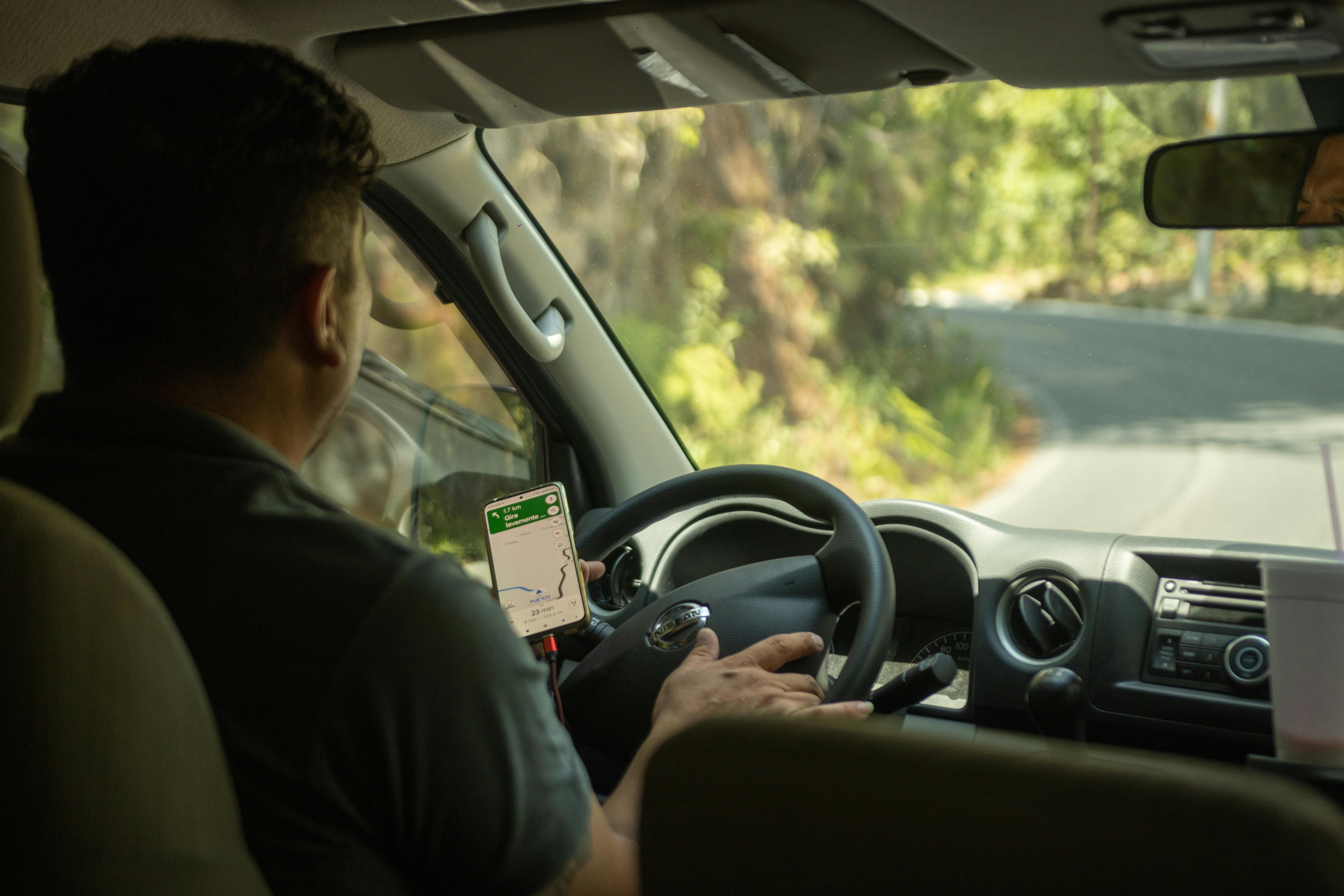
The Route Protocol: Keep your own mapping application, like Google Maps, open on your phone throughout the journey. If the driver takes a significant, unexplained detour, you are empowered to question it. If the response makes you uncomfortable, end the ride in a safe, well-lit public area.

Rule 4: Create Layers of Personal and Digital Security
Your solo female travel safety strategy should be built on layers and redundancy. This means pairing smart practices with an effective toolkit of personal security devices and ensuring your digital lifelines are always active.
Your Personal Security Toolkit
Personal Safety Alarm: This is arguably the most valuable device for a solo traveler. An alarm like the She's Birdie emits an extremely loud siren (130+ decibels) and a flashing strobe light to startle an attacker and attract immediate attention. They are small, legal everywhere, and attach to a keychain for instant access.
Anti-Theft Bag: Invest in a bag with features like RFID-blocking pockets (to protect from electronic skimming), slash-proof fabric, and lockable zippers. A crossbody style worn in front of your body offers the most security.
Portable Door Lock / Alarm: As mentioned in Rule 2, carrying your own lock gives you absolute control over the security of your room, ensuring your sanctuary remains impenetrable.

Your Digital Security Layer
Your phone is your map, translator, and lifeline. A solar-powered power bank adds a critical layer of resilience to a standard one, ensuring you can maintain a charge even during power outages or on multi-day treks.
Rule 5: Project Confidence and Practice Proactive Situational Awareness
How you carry yourself has a profound impact on how you are perceived. Projecting confidence—even when you're feeling uncertain—is a powerful deterrent. Walk with purpose, keep your head up, and make brief eye contact. This signals that you are aware of your surroundings, not an easy target.
This confidence is fueled by situational awareness. It's not about being paranoid; it's about being present.
Understand the Local Landscape: Before arriving, research common tourist scams. A 2024 report noted that 29% of solo female travelers had experienced a theft or attempted scam. Knowing the playbook for ploys like the "friendship bracelet" or "spilled drink" allows you to disengage before you become a victim.
Trust Your Intuition: Your intuition is your most finely tuned security equipment. If a person, place, or situation feels "off," it probably is. You do not need a logical reason. Honor it. Cross the street, leave the bar, get in a different train car. Acting on your intuition is not rude; it is intelligent.
Manage Your Inputs: Be mindful of your alcohol consumption. Your awareness is your primary defense, and anything that dulls it increases your vulnerability.

Rule 6: Embrace That Safety Anxiety Decreases with Experience
It's crucial to understand the psychology of solo travel fear. The data reveals a powerful truth: the act of traveling solo is the most effective antidote to the fear of it.
Among women who have taken fewer than six solo trips, 77% report worrying about safety. That number drops dramatically to just 55% for those who have traveled solo more than ten times. This establishes a direct, negative correlation between experience and anxiety.
Every time you successfully navigate a new city and overcome a challenge, you are collecting real-world evidence of your own competence. This direct experience systematically replaces abstract, media-fueled fear with managed, situational awareness. You learn that while vigilance is essential, you are far more capable than you imagined. The goal of your first trip is to break this cycle of fear and begin the empowering loop of experience.
Rule 7: Never Outsource Your Safety to Chance—The Travel Insurance Mandate
For a solo traveler, travel insurance isn't an optional add-on; it is a foundational pillar of your financial security. A cheap policy is not a good deal if it doesn't have the right coverage. When evaluating policies, ensure the plan includes strong coverage in these key areas:
Emergency Medical Coverage: A policy should offer a minimum of $250,000 in benefits.
Emergency Medical Evacuation: This covers the potentially astronomical cost of transporting you to a hospital with adequate facilities or back home.
Emergency Medical Reunion (Companion Coverage): This is vital for solo travelers. If you are hospitalized, this coverage pays for a family member's transportation and accommodation to be at your bedside, providing invaluable logistical and emotional support.
Trip Interruption and Cancellation: This reimburses your non-refundable trip costs if you have to cancel or cut your trip short for a covered reason.
Frequently Asked Questions About Solo Female Travel Safety
What's the single most important safety device I should buy?
A personal safety alarm. While a doorstop and anti-theft bag are excellent, a loud, attention-grabbing alarm is the most versatile tool for deterring a potential threat in any public situation, day or night.
I'm nervous about nightlife. Should I just avoid going out after dark?
Not at all! The key is to be strategic. Have your transportation planned in advance—know exactly how you're getting home. Nurse your drink and never leave it unattended. Stick to well-lit, reputable areas and consider starting with a structured activity, like a group tour or a show, rather than just wandering.
How do I handle street harassment without escalating the situation?
The most effective strategy is confident disengagement. Do not respond or make prolonged eye contact. Project purpose and keep walking. In many cases, a reaction is what the harasser is seeking. If you feel you are being followed, walk into a busy, open shop or restaurant immediately.
Are group tours a good option for a safety-conscious first-timer?
Absolutely. An estimated 75% of women who have never traveled alone would be more likely to do so on a group tour. They provide a "scaffolded" entry into the world of solo travel. You can find tours vetted and reviewed by other solo female travelers on platforms like TrekGuider, which is a great way to build foundational confidence.
Your Journey to Confident Exploration Starts Now
The narrative around solo female travel safety is too often dominated by fear. But the data tells a different, more empowering story of capability and resilience. These seven rules are your framework—a practical system for managing risk and moving through the world with intelligent confidence. By internalizing these strategies, you build a foundation of competence from which you can freely and bravely explore.
Now that you have the safety blueprint, the truly exciting part can begin. Explore our collection of expert-written Travel Guide resources to find your perfect destination, and remember to download the essential Solo Female Travel Safety Guide. The world is waiting for you to discover it—and yourself.
Meta Data Suggestions:
SEO Meta Title (59 characters): The 7 Essential Solo Female Travel Safety Rules for 2026
URL Slug: solo-female-travel-safety-rules
SEO Meta Description (154 characters): From accommodation security to transport protocols, these 7 non-negotiable solo female travel safety rules will empower you to explore the world with confidence.
Don't Miss Out! Subscribe for Exclusive Content
SubscribeComments 0
No comments yet
Be the first to share your experience!
Dont Miss Out! Subscribe for Exclusive Content

How to Avoid Travel Scams: A Global Guide

Is Public WiFi Safe? How to Protect Your Data Abroad

A Woman's Guide to Safe Travel: 10 Critical Tips

7 Hotel Safety & Security Tips for Peace of Mind

9 Beach Safety Tips That Could Save Your Life

How to Stay Safe While Hiking: A Hiker's Safety Guide
How to Make Money Online: A Creator's Guide for 2026
TrekGuider @trekguider
The creator economy is no longer a quiet corner of the internet—it’s a global phenomenon, a seismic shift in how we work, create, and build businesses on our own terms. Valued at an astonishing $250 billion in 2023, this market is on a trajectory to nearly double to almost $500 billion by 2027. This explosive growth presents a historic opportunity for anyone with expertise, a passion, and a laptop to build a life of freedom and financial independence.
But behind these staggering numbers lies a crucial, often unspoken truth. Success isn't accidental, and it certainly isn't guaranteed. The digital landscape is littered with abandoned blogs and dormant social media accounts—ghosts of creative dreams deferred. The data reveals a stark reality: while the opportunity is immense, the rewards are concentrated. Only about 4% of global creators manage to earn an income exceeding $100,000 per year.
The difference between those who succeed and those who stall isn't luck, talent, or audience size alone. It's strategy. The top 4% aren't just hobbyists; they are strategic business operators. They are "Creator CEOs"—entrepreneurs architecting resilient, profitable, and passion-driven digital enterprises.
This is your blueprint for joining them. Forget fleeting trends and surface-level tips. We’re going to give you the foundational strategies, proven monetization models, and tactical playbooks required for making money online as a modern creator. From establishing your owned platform and mastering affiliate marketing to creating scalable digital products that generate income while you sleep, this is the definitive roadmap for turning your passion into a durable career in 2026 and beyond.
The Modern Creator's Blueprint: Adopting a CEO Mindset
The single most important shift you can make on your journey is a mental one: from content creator to business owner. A creator thinks about their next post. A CEO thinks about building an asset. A creator chases viral moments. A CEO builds a sustainable system. This mindset is the foundation upon which all profitable businesses are built. It informs how you structure your time, where you focus your energy, and how you approach monetization.
The Monetization Ladder: A Phased Approach to Profit
Successful creators don't view the dozens of ways to make money online as an à la carte menu. They approach it as a strategic progression, a "Monetization Ladder" that allows them to de-risk their journey and build a diversified business over time.
This journey typically begins with active income models—like offering freelance services—which is often the fastest way to generate significant cash flow and validate your expertise. As you build an audience and establish trust, you can begin to climb the ladder by layering in performance-based models like affiliate marketing. Finally, with an engaged community and proven authority, you ascend to the highest-leverage, highest-ownership models: creating and selling your own digital products or launching a subscription service.
This strategic progression is key to long-term resilience. It allows you to systematically move from trading your time for money to building assets that generate revenue independently. But before you can choose the right model for you, you must understand the entire landscape. For a comprehensive analysis that breaks down the pros, cons, and profit potential of each core approach, our strategic overview is the foundational session every new creator needs.

➤ Read the full guide: 6 Proven Models to Make Money Online Blogging
Active vs. Passive Income: Architecting Your Freedom
The ultimate goal for most creators is to build a business that provides not just income, but also freedom. This is where understanding the distinction between active and passive income becomes the central pillar of your strategy.
Active Income is revenue generated from the direct and continuous exchange of your time and effort for money. If you stop working, the income stops. This includes freelance writing, brand sponsorships, and one-on-one coaching.
Passive Income is revenue that, after an initial investment of time and effort, continues to be generated with minimal ongoing labor. You create an asset once, and it generates revenue for months or even years. This is the key to decoupling your income from the hours you work.
For a travel creator, the ultimate goal is to build a business that funds your travels, not one that chains you to a desk. This requires a deliberate shift toward building passive income streams. Think of an SEO-optimized blog post with affiliate links that earns commissions for years, or a digital guide that sells automatically every single day. These are the assets that build true freedom.
To explore the most effective models for building income streams that work for you around the clock, our dedicated guide provides a proven framework.
➤ Read the full guide: 5 Passive Income Ideas for Your Travel Blog

The Foundation of Your Empire: Building Your Digital Home Base
Before you can build a skyscraper, you need to own the land and pour a solid foundation. In the digital world, a critical strategic decision every creator faces is where to build their business: on an "owned" platform like a blog or on "rented" platforms like Instagram or TikTok. While social media offers the allure of rapid growth, it comes with a potentially fatal flaw: you don't own your audience or your account. An algorithm change can decimate your reach overnight, and an account suspension can erase your entire business with no recourse.
The Hub-and-Spoke Model: Your Blueprint for a Resilient Business
This is why the most successful and durable strategy is the "Hub-and-Spoke" model.
The Hub: Your self-hosted blog is the hub—the core business asset you own and control completely. It’s where you build your email list, sell your products, and house your valuable, long-form content that appreciates in value over time.
The Spokes: Social media platforms are the spokes—powerful distribution and discovery channels designed to capture attention and drive traffic back to your hub.
This model leverages the strengths of each platform while protecting you from their inherent risks. It uses the rapid reach of social media to accelerate growth, and the ownership and stability of the blog to build a defensible, long-lasting business.

Getting Started: Your Digital Groundbreaking
Starting a self-hosted WordPress blog is the professional standard for any serious creator. It provides complete control over your brand, content, and monetization—making it the essential first step in building your digital hub. The process is more straightforward than ever, but it begins with a few key decisions. For a complete, A-to-Z walkthrough that holds your hand through every technical step, from choosing a domain to launching your first post, our definitive beginner’s guide is the perfect place to start.
➤ Read the full guide: How to Start a Travel Blog (And Get Noticed)
Finding Your Niche: Your Superpower in a Crowded World
A house is only as strong as its location. Before you can build, you must answer the most critical question: what will you write about? In a vast online world, specificity is your superpower. Trying to create content for "everyone" often results in connecting with no one. Choosing a well-defined niche allows you to build authority faster, attract a dedicated and loyal audience, and face far less competition in search engine rankings.
A great niche sits at the intersection of your passion, your audience’s most pressing problems, and its potential for profitability. Before you write a single word, validating your niche idea is the most important strategic step you can take. For a masterclass in uncovering profitable, low-competition spaces and a list of fresh ideas for 2026, explore our detailed guide.
➤ Read the full guide: 15 Travel Blog Niche Ideas with Low Competition
The First Revenue Engines: Mastering Monetization
With your foundation poured and your niche defined, it’s time to start building your revenue engines. This is where we climb the Monetization Ladder, beginning with the most accessible models and progressing toward the most scalable.
Affiliate Marketing: Earning by Recommending
Affiliate marketing is one of the most popular and effective monetization models for new creators. It allows you to earn a commission by promoting products or services you already use and love, without having to create a product yourself.
The key to success, however, is trust. Your entire strategy must be built on a foundation of authenticity and radical transparency. This means strictly adhering to FTC disclosure guidelines and only recommending products you genuinely believe in. The most effective strategy is built on three pillars: legal compliance, strategic promotion of high-quality products, and data-driven optimization. For a masterclass that covers everything from the nuances of FTC law and conversion tactics to getting accepted into major affiliate networks, our definitive guide is required reading.

➤ Read the full guide: Affiliate Marketing for Bloggers: The Definitive Guide
Choosing the right partners is also crucial for maximizing your affiliate revenue. A diversified portfolio of programs allows you to monetize every stage of your audience's journey. Programs like Booking.com, G Adventures, and World Nomads are essential for travel creators, offering strong commissions on high-value products your audience already needs. To discover more top-performing programs with detailed breakdowns of their commission rates and strategic value, explore our curated list.
➤ Read the full guide: Top 10 Travel Affiliate Programs for 2026
The Ultimate Scalable Asset: Creating and Selling Your Own Digital Products
Transitioning from promoting others' products to creating and selling your own is the single most powerful step you can take toward building a highly profitable and independent business. Digital products represent the top of the Monetization Ladder. They offer exceptionally high profit margins, infinite scalability, and give you complete control over your revenue.
The opportunity here is immense. The e-learning market alone, a huge component of the digital product world, is projected to surge to an incredible $848 billion by 2030. This is how you transform from a content creator into a true digital entrepreneur. The best products solve a specific, painful problem for your audience, packaging your expertise into a solution that saves them time, money, or stress. For travel creators, the possibilities are endless.
➤ Read the full guide: 7 Digital Products That Sell Themselves for Travelers

Creating a digital product that people will love and recommend involves a structured process that moves from idea to finished product. It begins with thorough research and validation to ensure you're creating something people actually want to buy. Then comes the process of outlining, content creation, and professional design. Finally, you need a distribution plan and a high-converting sales page.
Once you’ve created your masterpiece, you need a world-class storefront. This is where the TrekGuider platform becomes an invaluable partner. Every creator gets a customizable landing page—a central hub to showcase their bio, articles, and products—giving you a professional, ready-made marketplace to connect with travelers actively searching for expert resources like your Travel Guide. For a detailed workflow that walks you through every step of the research, writing, design, and launch process, explore our complete playbook.
➤ Read the full guide: How to Create a Digital Travel Guide People Will Buy
The Engine of Your Business: Building and Monetizing Your Audience
None of these monetization strategies will work without the most important ingredient: an audience. Building a community of people who know, like, and trust you is the engine that drives your entire business. This isn't just about accumulating followers on social media; it's about creating real connections and, most importantly, building an email list—the only audience you truly own.

The Financial Roadmap to a Six-Figure Blog
The journey from a new blog to a thriving business is a marathon marked by distinct financial milestones. It starts with the "Proof of Concept" phase, where your only goal is to earn your first $100. Next comes the "Traffic" phase, where you focus on mastering SEO to hit the thresholds for premium ad networks, which can single-handedly take your income past $1,000 per month. The "Diversification" phase is where you scale to $5,000/month by launching your first digital product. Finally, you reach the "CEO" phase, operating a mature digital business with a diversified portfolio earning $10,000/month and beyond. For a detailed breakdown of the exact strategies and actions required at each financial stage, see our comprehensive roadmap.
➤ Read the full guide: How to Make Money Blogging (From $0 to $10k/mo)
Your Most Valuable Asset: The Email List
An email list is the single most valuable asset you will ever build. It's a direct line of communication to your most loyal fans, an audience you own and can reach anytime, without having to battle an algorithm. The system for turning a casual website visitor into an engaged subscriber is called an email marketing funnel.
This process begins with creating a compelling lead magnet—a free, valuable resource you offer in exchange for an email address. This could be a printable packing checklist or a 3-day city itinerary. The most crucial part of the system is the automated welcome sequence, a series of emails that every new subscriber automatically receives to build a strong relationship from day one. To get a head start on creating your own assets, be sure to download our free creator toolkit.
➤ Free Resource: The Travel Creator's Toolkit

For a step-by-step playbook on creating lead magnets, setting up your email funnel, and writing a welcome sequence that turns subscribers into superfans, our complete guide has you covered.
➤ Read the full guide: Email Marketing for Bloggers: A Step-by-Step Playbook
Your Journey Starts Now
The creator economy of 2026 is defined by immense opportunity, but success is reserved for those who approach it with a clear strategy. The path to building a profitable online business requires you to adopt the mindset of a "Creator CEO"—a business owner who prioritizes building owned assets and creating long-term value. The most resilient framework for this is the Hub-and-Spoke model, with your blog as the central asset you control, insulated from the whims of third-party platforms.
Your monetization strategy should be an evolution, a deliberate climb up the "Monetization Ladder," starting with active income to prove your expertise and systematically adding scalable, passive models like affiliate marketing and your own digital products. By integrating these pillars—adopting a CEO mindset, building owned assets, and committing to authenticity—you have the complete blueprint for making money online. You can navigate the complexities of the digital world and build not just an audience, but a durable, profitable, and passion-driven enterprise.

Read the full guide: The Travel Blog Business Plan: How to Make Real Money in 2026
Don't Miss Out! Subscribe for Exclusive Content
SubscribeComments 0
No comments yet
Be the first to share your experience!
Dont Miss Out! Subscribe for Exclusive Content

Avoid These 5 Affiliate Landing Page Mistakes for Better Conversions

Affiliate Keyword Research Mastery for Travel Blogs

7 Proven Affiliate Marketing Tips to Skyrocket Travel Income

Top 11 High-Paying Affiliate Programs for Travel Bloggers

Referral Affiliate Programs in Travel: Boost Earnings Through Networks
